Evergrande founder Hui Ka Yan pleads guilty as China's property crash moves deeper into the courts
China Evergrande founder Hui Ka Yan pleaded guilty in Shenzhen to fraud, bribery and related charges, pushing the long property bust into a sharper legal phase while Beijing still tries to contain the economic fallout.[1][2][3]
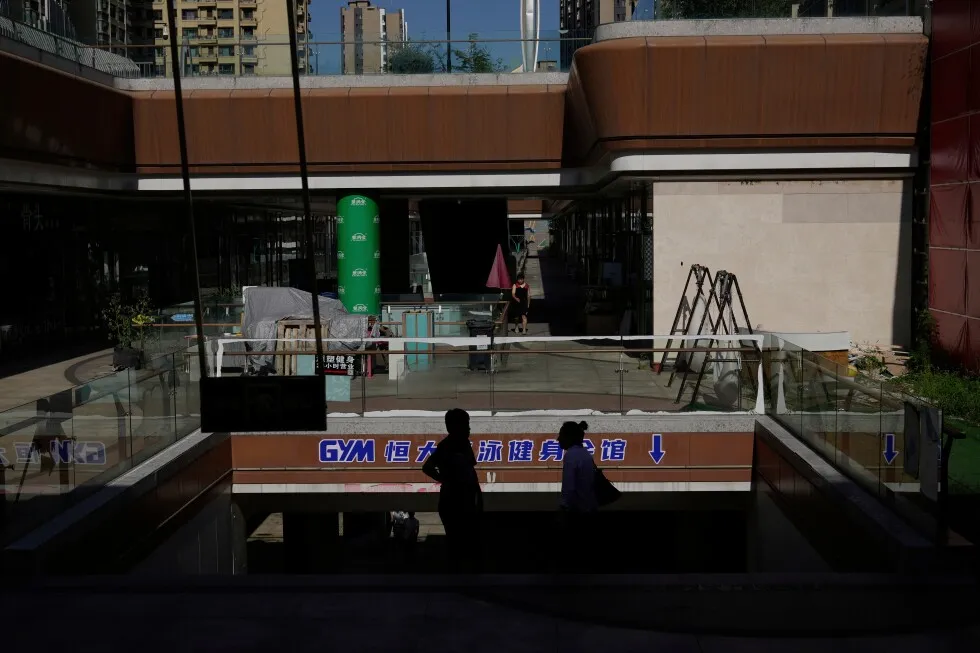
Hui Ka Yan, the founder of China Evergrande and one of the most recognizable faces of the country’s debt-fueled property boom, pleaded guilty in Shenzhen on Tuesday to charges that include fraud, corporate bribery and the illegal absorption of public deposits, according to court statements carried by Chinese state channels and reported by BBC and AP. The court said Hui expressed remorse during hearings held on Monday and Tuesday and will announce a verdict later, meaning the criminal case has moved from speculation and investigation into a formal adjudication phase. That development matters well beyond one tycoon because Evergrande’s implosion became one of the clearest symbols of how China’s long real-estate expansion turned into a balance-sheet crisis for developers, lenders, suppliers and homebuyers.
The case is not just about alleged misconduct inside a single company. It is also about the way Evergrande financed growth for years through aggressive borrowing, presales and expansion into new projects even as the underlying funding model became harder to sustain. BBC reported that the court heard millions of dollars of presale funding from homebuyers were not used for the construction those buyers expected, and were instead diverted into new projects, leaving hundreds of unfinished homes across China.China Evergrande founder pleads guilty to fraud in Shenzhen courti-invdn-com.investing.com·Secondary AP separately reported that Evergrande and its mainland property arm face allegations including fundraising fraud, illegal lending and fraudulent securities issuance, broadening the legal picture beyond a narrow bribery case.China Evergrande founder Hui Ka Yan pleads guilty to a set of charges including fraud and briberyapnews.com·SecondaryFILE -People stand in a partially shuttered Evergrande commercial complex, in Beijing, China, Aug. 25, 2025. (AP Photo/Mahesh Kumar A.), File) HONG KONG (AP) — The founder of the debt-ridden real estate developer China Evergrande pleaded guilty to a series of charges, including illegal absorption of public deposits, fraud and corporate bribery, according to a mainland Chinese court statement Tuesday.
That is why Hui’s guilty plea lands as more than a personal fall from grace. Evergrande was once China’s biggest real-estate company by some measures and at its peak carried a market valuation above $50 billion, before a debt crisis that erupted in 2021 unraveled the business and turned it into a cautionary tale for Beijing, investors and would-be homebuyers. AP said the group had more than $300 billion in liabilities when a Hong Kong court ordered liquidation in 2024, making it the world’s most heavily indebted developer. The same company that once represented confidence in China’s urban growth story ended up embodying the costs of leverage, weak demand visibility and political efforts to rein in speculative borrowing.
Beijing’s own policy choices are central to the story and deserve equal attention. Both BBC and AP trace Evergrande’s break point to the 2020 regulatory crackdown on excessive borrowing in the property sector, which cut off the easy financing that had sustained highly leveraged developers for years. Chinese authorities argued that curbing debt was necessary to prevent deeper financial instability and restore order to a market that had come to rely on endless credit expansion. Critics, however, say the state moved late, then tightened abruptly, turning a managed correction into a broader confidence shock that left unfinished apartments, squeezed local finances and slower growth across related industries.
There is also a political dimension that official narratives cannot fully smooth over. The court’s WeChat statement, as described by AP, noted the attendance of representatives connected to past fundraising and members of the National People’s Congress, signaling that authorities want this process seen as orderly, supervised and institutionally grounded. Yet skepticism remains justified because China’s handling of corporate failures often mixes legal accountability, political messaging and macroeconomic management in ways that are not always easy to separate. A guilty plea can show that the state is willing to punish wrongdoing, but it can also function as a controlled public demonstration that the excesses of the old property model will be pinned on executives as much as on structural incentives encouraged during the boom years.China Evergrande founder pleads guilty to fraud in Shenzhen courti-invdn-com.investing.com·Secondary
The conservative critique of this episode is straightforward: growth built on opaque debt, state-shaped incentives and weak market discipline was always likely to end badly. The more progressive or interventionist critique is different but no less important: once millions of ordinary households were drawn into the presale model, the state had a responsibility to move faster to protect buyers and finish homes rather than merely punish executives after the fact. Both perspectives point to the same reality that Evergrande’s collapse was not an isolated corporate accident but a system-wide stress event whose costs were dispersed across citizens who never sat in the boardroom. That is why the legal case still resonates internationally, especially for investors trying to judge how China will distribute losses between insiders, creditors, local governments and households.China Evergrande founder Hui Ka Yan pleads guilty to a set of charges including fraud and briberyapnews.com·SecondaryFILE -People stand in a partially shuttered Evergrande commercial complex, in Beijing, China, Aug. 25, 2025. (AP Photo/Mahesh Kumar A.), File) HONG KONG (AP) — The founder of the debt-ridden real estate developer China Evergrande pleaded guilty to a series of charges, including illegal absorption of public deposits, fraud and corporate bribery, according to a mainland Chinese court statement Tuesday.
Hui’s personal trajectory sharpens the symbolism. BBC noted that he rose from rural poverty, founded Evergrande in 1996 and at one point became Asia’s richest person, with Forbes estimating his fortune at $42.5 billion in 2017. Evergrande expanded beyond property into electric vehicles, food and drink, and even football through a controlling stake in Guangzhou FC, illustrating how the company came to reflect the exuberance of a period when scale itself often stood in for discipline. By August 2025, BBC said, the company’s shares had been removed from the Hong Kong exchange after its market valuation had shrunk by 99 percent. Few corporate arcs capture the speed of China’s turn from debt optimism to retrenchment more clearly.China Evergrande founder pleads guilty to fraud in Shenzhen courti-invdn-com.investing.com·Secondary
What happens next is legally narrow but economically broad. The Shenzhen court still has to issue a judgment, and the proceedings do not by themselves resolve the unfinished-housing problem, the creditor fights or the drag on a property sector that has already weakened confidence in the world’s second-largest economy. Investors will watch for any sign that Beijing is pairing criminal accountability with more credible clean-up measures for the broader market. Homebuyers and local officials, meanwhile, are likely to care less about courtroom theater than about whether projects get completed, losses are allocated transparently and the property sector can settle into a more sustainable role in China’s economy.
For now, the headline fact is simple and heavy with consequence: the man who built Evergrande into a giant of modern Chinese real estate has admitted guilt as the wreckage of that model continues to shape policy, markets and public trust. The plea does not close the chapter on China’s property bust. If anything, it underlines that the crisis has entered a new stage in which legal reckoning, political narrative control and economic triage are all unfolding at once.
AI Transparency
Why this article was written and how editorial decisions were made.
Why This Topic
This cluster is strong because it combines a fresh legal development with long-tail economic relevance. Hui Ka Yan’s guilty plea is not merely celebrity-business news; Evergrande’s collapse became a proxy for China’s larger property unwind, cross-border credit anxiety and the unresolved problem of unfinished homes. The story also naturally supports balanced framing because there is a clear official rationale for the debt crackdown alongside substantive criticism of how the correction was handled.
Source Selection
The cluster signals are sufficient for a high-confidence draft because BBC and AP independently confirm the plea, the charge set, the hearing timeline and the broader Evergrande background. I used the cluster’s AP and BBC reporting as the numbered citation base and limited external research to context checking rather than core fact support. That reduces evidence-quality risk while still allowing a fuller explanation of why the plea matters for China’s property sector and for international investors.
Editorial Decisions
Lead with the guilty plea as a new legal phase of the property crash, not as a morality play. Keep the tone descriptive and restrained. Give fair weight to the state case for debt control and to critics who argue regulators acted too late and then too abruptly. Avoid loaded language about China; skepticism should be analytical, not theatrical.
Reader Ratings
About the Author
Sources
- 1.i-invdn-com.investing.comSecondary
- 2.apnews.comSecondary
- 3.bbc.comSecondary
Editorial Reviews
1 approved · 0 rejectedPrevious Draft Feedback (1)
• depth_and_context scored 5/3 minimum: The article excels at providing deep context, moving far beyond the simple guilty plea to explain the systemic nature of the property boom, the role of debt, and the regulatory environment. It successfully frames the event as a 'system-wide stress event,' which is highly contextual. • narrative_structure scored 4/3 minimum: The structure is strong, using the guilty plea as an effective hook and maintaining a clear arc from the specific event to the broader economic implications. To improve, the transition between the political dimension and the critique sections could be slightly smoother to guide the reader more explicitly. • perspective_diversity scored 5/3 minimum: The piece is excellent at presenting multiple viewpoints, contrasting the 'conservative critique' (market failure) with the 'progressive or interventionist critique' (state responsibility to buyers). It also incorporates the state's narrative control versus external skepticism. • analytical_value scored 5/3 minimum: The analysis is consistently high, interpreting the plea not just as a legal event but as a signal of how the state plans to 'distribute losses' and manage the narrative. It effectively discusses the implications for investors and the broader economy. • filler_and_redundancy scored 5/2 minimum: The writing is dense with information but avoids padding; every paragraph advances the core argument by adding a new layer of context or analysis. The repetition of key themes (e.g., systemic risk) is thematic reinforcement, not filler. • language_and_clarity scored 4/3 minimum: The language is highly sophisticated, precise, and engaging, avoiding clichés. The only minor area for improvement is ensuring that when discussing political labels (like 'speculative borrowing'), the article always grounds the description in specific policy actions rather than relying on the label itself.



Discussion (0)
No comments yet.