Iran-Linked Hackers Publish Material From FBI Director Kash Patel’s Personal Email Account
Iran-linked group Handala says it accessed Kash Patel’s personal Gmail account and posted photos, emails and documents online. The FBI says the material is historical and contains no government information, but the breach still raises questions about exposure, deterrence and cyber escalation.
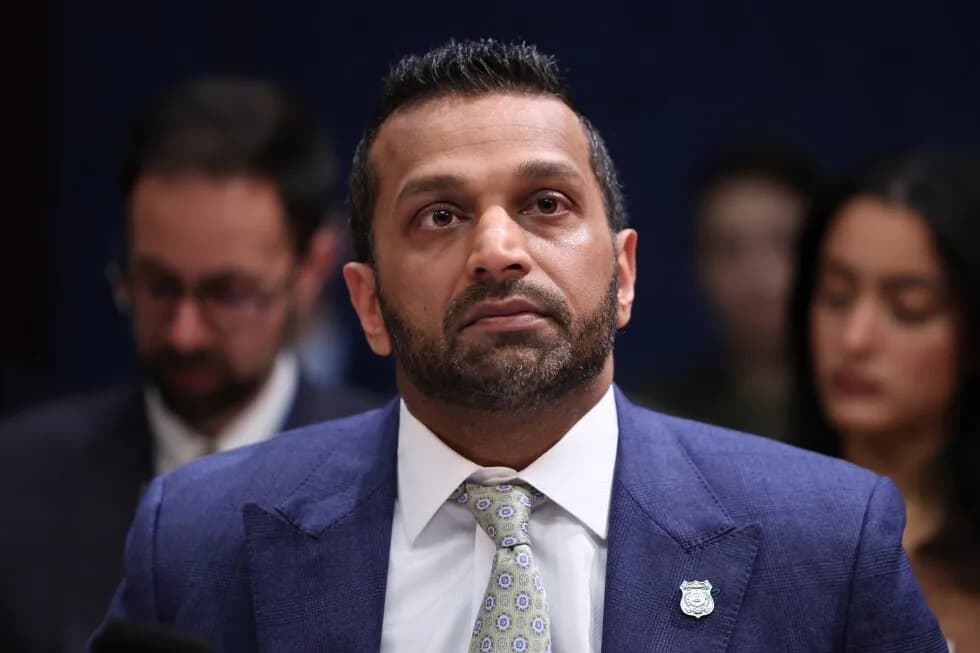
The exposure of material from FBI Director Kash Patel’s personal email account lands at an awkward intersection of cybersecurity, public trust and information warfare. According to multiple outlets on Friday, the Iran-linked Handala Hack Team posted photographs, documents and samples of emails it said came from Patel’s personal account, while the FBI acknowledged that malicious actors had targeted his personal email information. The bureau’s core message was designed to calm the immediate panic: the information, it said, was historical in nature and did not involve government systems or government data. That distinction matters. It also does not end the story.
The basic facts are reasonably consistent across the current reporting. Handala publicly claimed responsibility, published personal-looking photographs of Patel, and released or previewed emails and documents linked to a Gmail address associated with him. Reuters reported that more than 300 emails appeared to span roughly 2010 to 2019 and seemed to include a mix of personal and work-related correspondence, though Reuters said it could not independently authenticate the full trove. TechCrunch went further on authentication, saying it examined message headers and cryptographic signatures on several messages and found signs that at least some of the leaked emails were genuine, including messages tied to Patel’s former Justice Department address.Iran-backed Handala hackers breach FBI director Kash Patel's emailsbbc.com·SecondaryFBI Director Kash Patel's personal email account has been hacked by an Iran-linked group, the agency has confirmed. A group, known as the Handala Hack Team, shared Patel's purported resume and photos of him on its website on Friday along with a statement that says: "This is just our beginning." "If your director can be compromised this easily, what do you expect from your lower-level employees?," it says. AP likewise described records that appeared to be years old, including personal documents and photographs, and said many seemed to date back more than a decade.Iranian Hackers Breached Kash Patel’s Email—but Not the FBI’sired.com·UnverifiedAs the United States-Israel war with Iran barrels into its second month, President Donald Trump is reportedly plotting a potential mission to send US special forces into the country to take Tehran’s enriched uranium. Experts WIRED spoke to say such a plan would be extremely risky, likely putting the lives of troops in peril with a low chance of success. Since the war with Iran started at the end of February, a mysterious radio station has been broadcasting seemingly random numbers in Persian.
That timeline is central to the government’s preferred interpretation of the incident. The FBI said the information in question was historical and involved no government information, and several reports noted that Patel’s private communications had reportedly been targeted before he became FBI director. The BBC cited a former FBI cyber official, Cynthia Kaiser, who said the material looked old enough that it may reflect a prior compromise being repackaged for release now rather than a dramatic fresh penetration of sensitive federal systems. In other words, the evidence available so far points more toward a politically timed leak operation than toward proof that Handala broke into current FBI infrastructure. That is an important distinction because Handala’s own rhetoric sought to blur the line, implying that the FBI itself had been humiliated and its defenses overwhelmed.FBI confirms hackers targeted Director Kash Patel’s personal emailspolitico.com·UnverifiedIran-linked hacking group Handala posted documents and photos they claimed to have stolen from the FBI director. The FBI confirmed the agency was "aware of malicious actors targeting" Director Kash Patel’s personal email. | Alex Wroblewski/AFP via Getty Images The FBI on Friday confirmed that hackers targeted the personal emails of Director Kash Patel, hours after an Iranian government-linked hacking group posted documents and images online, claiming to have stolen them from Patel.
Still, minimizing the breach too aggressively would be a mistake. Personal accounts used by senior officials are attractive targets precisely because they tend to be less hardened, less continuously monitored and more vulnerable to compromise, according to experts cited by the BBC. Even if no classified or official FBI data was exposed, a senior law-enforcement official’s private inbox can reveal travel patterns, personal networks, past business dealings, habits, pressure points and contextual details that hostile services or proxy actors may exploit later. For an adversary, embarrassment is not a side effect; it is often the point. Reuters quoted Israeli cybersecurity executive Gil Messing saying Iran-linked operators are trying to make American officials feel vulnerable as the regional conflict drags on. That assessment fits the pattern here: the leak was curated for humiliation as much as for intelligence value.
There is also a political and institutional dimension that Washington cannot easily wave away. Patel is not a mid-level bureaucrat but the public face of the FBI at a moment when the bureau has been warning of Iranian cyber operations and, only days earlier, the Justice Department announced seizures of Handala-linked web domains. The administration has also attached a reward of up to $10 million for information leading to identification of Handala members. Handala explicitly framed the Patel release as retaliation for those takedowns and for U.S. pressure on the group. That does not mean the hackers proved some strategic cyber superiority. It does mean they found a way to answer a U.S. law-enforcement move with a propaganda win that instantly traveled across global media.
A fair reading requires giving the official position its due. There is, at least on the public record so far, no evidence that current FBI case files, classified systems or active investigative material were breached. Reuters said Google did not comment, and several outlets were careful to note the limits of independent verification for the entire cache. That caution matters because hack-and-leak campaigns routinely exaggerate what they obtained, mix authentic material with theatrical claims and rely on the panic effect created by partial disclosure. If the material is mostly old, personal and selectively packaged, then the operational damage may prove more reputational than substantive.Cyberangriff auf FBI-Chef: Iranische Hacker knacken das private E-Mail-Konto von Kash Pateltagesanzeiger.ch·SecondaryDie Hackergruppe Handala veröffentlichte persönliche Daten des FBI-Direktors im Netz. Der Angriff gilt als Vergeltung für die Beschlagnahmung iranischer Domains durch das US-Justizministerium. Gemäss einem Bericht der Nachrichtenagentur Reuters ist das persönliche E-Mail-Konto des FBI-Direktors Kash Patel Ziel eines Hackerangriffs geworden. Dahinter werden Akteure mit Verbindungen zum Iran vermutet. Verantwortung für die Cyberattacke übernimmt demnach die Gruppierung «Handala HackTeam».
But the more skeptical case also deserves equal weight. When officials say a breach is old, personal or non-governmental, the public is often being asked to take the least alarming interpretation before outside review is complete. That may be fair in some cases; it is not automatically sufficient in this one. TechCrunch’s verification of some message headers suggests at least part of the leak is authentic, and Reuters linked the exposed address to prior breaches tracked by a dark-web intelligence firm. That combination raises a harder question: why was a mailbox tied to a future top law-enforcement official vulnerable long enough, or repeatedly enough, to become a useful influence target years later? A breach can be historical and still expose a current security culture problem.Cyberangriff auf FBI-Chef: Iranische Hacker knacken das private E-Mail-Konto von Kash Pateltagesanzeiger.ch·SecondaryDie Hackergruppe Handala veröffentlichte persönliche Daten des FBI-Direktors im Netz. Der Angriff gilt als Vergeltung für die Beschlagnahmung iranischer Domains durch das US-Justizministerium. Gemäss einem Bericht der Nachrichtenagentur Reuters ist das persönliche E-Mail-Konto des FBI-Direktors Kash Patel Ziel eines Hackerangriffs geworden. Dahinter werden Akteure mit Verbindungen zum Iran vermutet. Verantwortung für die Cyberattacke übernimmt demnach die Gruppierung «Handala HackTeam».
The Handala backdrop makes the story larger than one official’s inbox. Reuters, the BBC, TechCrunch and AP all connect the group to a broader cycle of Iran-linked cyber activity during the U.S.-Israeli war with Iran, including claims of attacks against Stryker and threats or data releases aimed at other Western or defense-linked targets. The Justice Department has said Handala-linked sites were used for hacking claims, propaganda and threats against dissidents and journalists. Whether every public claim by the group is true is almost beside the point. The strategic model is clear: low-cost cyber intrusion, noisy leak tactics and psychological pressure designed to show that even senior U.S. figures can be touched.
That is why the Patel episode matters beyond the gossip value of leaked photographs. It is a test of whether American institutions can separate real technical risk from theatrical overstatement without slipping into complacency. The conservative critique is straightforward: senior officials entrusted with national-security authority should not get a pass simply because compromised material came from a personal account instead of an official one. The institutional defense is also straightforward: not every personal-account compromise amounts to a state-security catastrophe, especially when the published material appears old and non-governmental. Both arguments are plausible. The responsible conclusion, for now, is narrower and more useful: the breach does not appear to prove that the FBI’s internal networks were penetrated, but it does show that adversaries and their proxies can still score strategic hits by exploiting the softer edge where personal digital life meets public power.
What happens next will determine whether this becomes a one-day embarrassment or a more damaging symbol. If additional leaked material reveals current operational details, hidden contacts or contradictions in the official timeline, pressure will intensify quickly. If instead the cache proves to be largely old personal material recycled for maximum humiliation, the episode will still stand as a reminder that in modern conflict, adversaries do not need to breach the whole fortress to produce political effect. They only need one door left less secure than the others.
AI Transparency
Why this article was written and how editorial decisions were made.
Why This Topic
This cluster is the strongest available story because it combines national-security symbolism, cyber conflict, U.S.-Iran escalation and immediate public relevance. A leak involving the FBI director is inherently more newsworthy than a routine corporate or campaign item, even if the compromised material appears historical. The topic also supports balanced reporting: officials are downplaying direct operational damage, while outside experts and the hackers’ chosen presentation point to reputational pressure, personal-account vulnerability and the broader use of cyber leaks as political theater.
Source Selection
The cluster contains multiple high-quality signals from Reuters, AP, BBC, TechCrunch and other outlets that broadly align on the core facts: Handala claimed the breach, the FBI confirmed targeting of Patel’s personal email information, and the known material appears old rather than tied to current government systems. Reuters and AP provide the strongest baseline on the official response and timeline, while BBC and TechCrunch add useful context on prior targeting, likely historical compromise and the technical question of authenticity. I avoided unsupported inferences and did not treat the hackers’ self-description as established fact where reporting remains careful.
Editorial Decisions
Neutral, descriptive framing with institutional skepticism. Do not exaggerate Handala’s claims into proof that FBI internal systems were breached. Keep equal weight on the FBI’s position that the material was historical and non-governmental, and on the counterargument that compromising a senior official’s personal account still has strategic and reputational significance. Avoid moralizing language and treat the incident as both a cyber event and an information operation.
Reader Ratings
About the Author
Sources
- 1.tagesanzeiger.chSecondary
- 2.bbc.comSecondary
- 3.politico.comUnverified
- 4.ired.comUnverified
- 5.euronews.comSecondary
- 6.arstechnica.comSecondary
- 7.apnews.comSecondary
- 8.aljazeera.comSecondary
- 9.cbsnews.comSecondary
- 10.techcrunch.comSecondary
- 11.atson.chUnverified
Editorial Reviews
1 approved · 0 rejectedPrevious Draft Feedback (1)
• depth_and_context scored 4/3 minimum: The article provides a good amount of background on Handala, the Justice Department's actions, and the broader context of Iran-linked cyber activity. However, it could benefit from exploring *why* Kash Patel, in particular, was targeted – what specific actions or associations might have made him a desirable target for Handala? • perspective_diversity scored 4/3 minimum: The article incorporates perspectives from the FBI, Reuters, TechCrunch, AP, BBC, and cybersecurity experts, presenting a range of viewpoints on the incident. While it attempts to represent the official position, it also includes skeptical counterpoints, which strengthens the analysis. • analytical_value scored 4/3 minimum: The article goes beyond simply recounting events, offering analysis on the motivations behind the leak, the potential for exploitation, and the broader implications for U.S. institutions. It effectively contrasts the official narrative with a more skeptical assessment, adding significant value for the reader. Warnings: • [article_quality] narrative_structure scored 3 (borderline): The article generally follows a logical flow, presenting the facts and then exploring different interpretations. However, the lede is a bit dense and could be more immediately engaging. A stronger nut graf, explicitly stating the central tension (official reassurance vs. lingering skepticism), would improve clarity. • [article_quality] filler_and_redundancy scored 2 (borderline): The article suffers from significant redundancy, particularly in repeatedly referencing the same sources and reiterating the same points across multiple paragraphs. For example, the constant citation of [1][2][3][4][5] after nearly every sentence becomes distracting and adds no new information; streamline the writing and reduce these repetitive citations. Focus on conveying information concisely. • [article_quality] language_and_clarity scored 3 (borderline): The writing is generally clear, but occasionally uses slightly convoluted phrasing and passive voice. While it avoids overtly loaded labels, it could benefit from more precise language and a more active voice to enhance readability. For example, instead of saying something 'appeared' to be true, state it directly with supporting evidence. • [image_relevance] Image relevance check failed: Service request failed. Status: 502 (Bad Gateway)

Discussion (0)
No comments yet.