Kim Jong Un backs China’s ‘multipolar world’ push as Wang Yi visit marks a new phase in North Korea ties
Kim Jong Un used Wang Yi’s visit to endorse Beijing’s call for a more multipolar world, back the one-China principle and signal that North Korea wants deeper strategic coordination with China as regional diplomacy shifts ahead of a Trump-Xi meeting.[1][2]
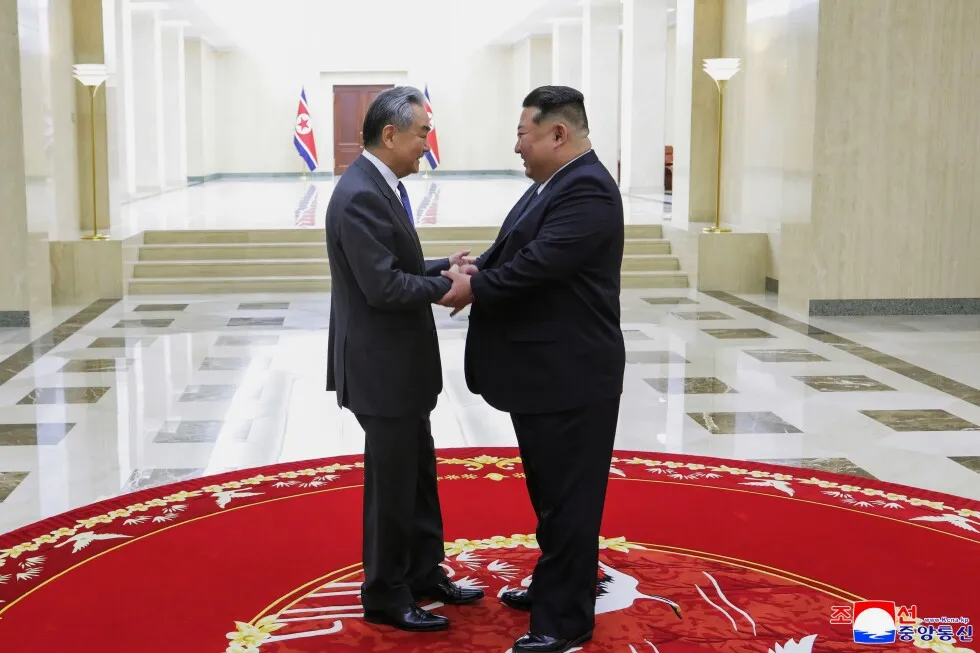
North Korean leader Kim Jong Un used a high-level visit by Chinese Foreign Minister Wang Yi to signal that Pyongyang wants a more explicit strategic alignment with Beijing, not merely a ceremonial reaffirmation of an old alliance. State media in both countries said Kim backed China’s call for a more multipolar world, endorsed Beijing’s one-China position on Taiwan and argued that the relationship had become more important in the current geopolitical environment.North Korean leader Kim Jong Un backs China's push for ‘multipolar world’ in talks with Wang Yichannelnewsasia.com·SecondaryWang, on a two-day trip to North Korea, said the countries’ relations were entering a “new phase” following a summit last year between Kim and Chinese President Xi Jinping. In this photo provided by the North Korean government, leader Kim Jong Un (right) meets Chinese Foreign Minister Wang Yi in Pyongyang, North Korea on Apr 10, 2026.
The meeting matters because it comes at a moment when North Korea has spent much of the past two years drawing closer to Russia, leading some observers to question whether Beijing had lost influence in Pyongyang. Instead, the Wang visit suggests Kim is trying to widen his diplomatic room, keep both major authoritarian partners engaged and present North Korea as part of a broader bloc resisting U.S.-led pressure rather than as a state dependent on a single patron.North Korean leader Kim Jong Un backs China's push for ‘multipolar world’ in talks with Wang Yichannelnewsasia.com·SecondaryWang, on a two-day trip to North Korea, said the countries’ relations were entering a “new phase” following a summit last year between Kim and Chinese President Xi Jinping. In this photo provided by the North Korean government, leader Kim Jong Un (right) meets Chinese Foreign Minister Wang Yi in Pyongyang, North Korea on Apr 10, 2026.
According to the Korean Central News Agency account carried by AP and Channel NewsAsia, Kim told Wang on Friday that his government would fully support Chinese efforts to defend territorial integrity under the one-China principle. In practice, that language is a direct endorsement of Beijing’s position that Taiwan is part of China, and it places Pyongyang more openly on China’s side in one of the most sensitive disputes in East Asia. For Beijing, that public support from a treaty ally has symbolic value even if North Korea’s practical leverage over the Taiwan issue is limited.North Korean leader Kim Jong Un backs China's push for ‘multipolar world’ in talks with Wang Yichannelnewsasia.com·SecondaryWang, on a two-day trip to North Korea, said the countries’ relations were entering a “new phase” following a summit last year between Kim and Chinese President Xi Jinping. In this photo provided by the North Korean government, leader Kim Jong Un (right) meets Chinese Foreign Minister Wang Yi in Pyongyang, North Korea on Apr 10, 2026.
Chinese readouts from the trip also pointed in the same direction. Wang said the relationship had entered a new phase after Kim’s summit last year with Chinese President Xi Jinping, and he urged stronger communication and coordination on major regional and international affairs. He also said China wanted to expand exchanges and practical cooperation with North Korea, language that usually points to a broader reopening of political, economic and transport links after the pandemic-era freeze.North Korean leader Kim Jong Un backs China's push for ‘multipolar world’ in talks with Wang Yichannelnewsasia.com·SecondaryWang, on a two-day trip to North Korea, said the countries’ relations were entering a “new phase” following a summit last year between Kim and Chinese President Xi Jinping. In this photo provided by the North Korean government, leader Kim Jong Un (right) meets Chinese Foreign Minister Wang Yi in Pyongyang, North Korea on Apr 10, 2026.
That reopening is already visible. Both cluster sources note that China and North Korea resumed direct flights and passenger train services last month after years of interruption during the COVID period. Those steps do not by themselves amount to a dramatic alliance shift, but they show that the two governments are rebuilding the mechanics of routine state-to-state contact, which tends to precede more substantive economic and political coordination.North Korean leader Kim Jong Un backs China's push for ‘multipolar world’ in talks with Wang Yichannelnewsasia.com·SecondaryWang, on a two-day trip to North Korea, said the countries’ relations were entering a “new phase” following a summit last year between Kim and Chinese President Xi Jinping. In this photo provided by the North Korean government, leader Kim Jong Un (right) meets Chinese Foreign Minister Wang Yi in Pyongyang, North Korea on Apr 10, 2026.
Kim’s broader strategy looks less ideological than transactional, even if both sides speak in ideological language. By embracing talk of a new Cold War and a multipolar world, he is trying to break out of isolation, raise North Korea’s diplomatic value and show Washington, Seoul and Tokyo that Pyongyang still has options. China, for its part, has reasons to stabilize its North Korea channel as competition with the United States sharpens and as uncertainty rises over how the Trump administration may handle both Taiwan and the Korean peninsula.North Korean leader Kim Jong Un backs China's push for ‘multipolar world’ in talks with Wang Yichannelnewsasia.com·SecondaryWang, on a two-day trip to North Korea, said the countries’ relations were entering a “new phase” following a summit last year between Kim and Chinese President Xi Jinping. In this photo provided by the North Korean government, leader Kim Jong Un (right) meets Chinese Foreign Minister Wang Yi in Pyongyang, North Korea on Apr 10, 2026.
There is, however, another side to the story that deserves equal weight. Western and South Korean officials have long argued that closer China-North Korea coordination can reduce pressure on Pyongyang to negotiate over its nuclear program and can weaken the practical effect of sanctions. Critics of engagement with North Korea also say ceremonial phrases about peace and development often mask a simpler reality: Beijing wants to prevent instability on its border, while Pyongyang wants economic breathing room without giving up weapons or changing behavior in any fundamental way.North Korean leader Kim Jong Un backs China's push for ‘multipolar world’ in talks with Wang Yichannelnewsasia.com·SecondaryWang, on a two-day trip to North Korea, said the countries’ relations were entering a “new phase” following a summit last year between Kim and Chinese President Xi Jinping. In this photo provided by the North Korean government, leader Kim Jong Un (right) meets Chinese Foreign Minister Wang Yi in Pyongyang, North Korea on Apr 10, 2026.
Official positions remain far apart. North Korean media said Kim continues to reject the U.S. demand that denuclearisation be a precondition for renewed talks, while AP reported that he has kept meaningful diplomacy with Washington and Seoul frozen since the collapse of his 2019 negotiations with Trump. At the same time, some South Korean officials still hope a rescheduled Trump-Xi meeting in May could create an opening for contact with Pyongyang, even if neither side offered evidence during Wang’s trip that such a channel is close to reopening.North Korean leader Kim Jong Un backs China's push for ‘multipolar world’ in talks with Wang Yichannelnewsasia.com·SecondaryWang, on a two-day trip to North Korea, said the countries’ relations were entering a “new phase” following a summit last year between Kim and Chinese President Xi Jinping. In this photo provided by the North Korean government, leader Kim Jong Un (right) meets Chinese Foreign Minister Wang Yi in Pyongyang, North Korea on Apr 10, 2026.
That uncertainty is why the visit is more important than the slogans alone. A public North Korean endorsement of China’s geopolitical language, paired with resumed transport links and talk of deeper coordination, suggests Beijing is re-establishing a more active role in Pyongyang’s external strategy. It does not prove China controls North Korea, and it does not erase Kim’s parallel bet on Moscow, but it does show that the old China-North Korea axis is becoming more operational again after a period when Russia had captured most of the attention.North Korean leader Kim Jong Un backs China's push for ‘multipolar world’ in talks with Wang Yichannelnewsasia.com·SecondaryWang, on a two-day trip to North Korea, said the countries’ relations were entering a “new phase” following a summit last year between Kim and Chinese President Xi Jinping. In this photo provided by the North Korean government, leader Kim Jong Un (right) meets Chinese Foreign Minister Wang Yi in Pyongyang, North Korea on Apr 10, 2026.
Another reason the meeting drew attention is its timing within a wider diplomatic calendar. Wang’s visit was his first trip to North Korea in seven years, according to the cluster reporting, and it came after Kim’s summit with Xi last year and after the restoration of transport links that had been frozen since the pandemic. That sequence makes the encounter look less like an isolated photo opportunity and more like part of a deliberate effort to normalize a relationship that had been functioning below its historical ceiling.North Korean leader Kim Jong Un backs China's push for ‘multipolar world’ in talks with Wang Yichannelnewsasia.com·SecondaryWang, on a two-day trip to North Korea, said the countries’ relations were entering a “new phase” following a summit last year between Kim and Chinese President Xi Jinping. In this photo provided by the North Korean government, leader Kim Jong Un (right) meets Chinese Foreign Minister Wang Yi in Pyongyang, North Korea on Apr 10, 2026.
For regional governments, the central question is whether this renewed coordination remains defensive and symbolic or evolves into something more concrete. Japan, South Korea and the United States have to assume that tighter China-North Korea contacts could mean more diplomatic shielding for Pyongyang at exactly the moment when North Korea still refuses to re-enter serious denuclearisation talks on Washington’s terms. Beijing, however, can argue that maintaining channels with Pyongyang reduces the risk of miscalculation on China’s border and preserves leverage in any future crisis or negotiation.North Korean leader Kim Jong Un backs China's push for ‘multipolar world’ in talks with Wang Yichannelnewsasia.com·SecondaryWang, on a two-day trip to North Korea, said the countries’ relations were entering a “new phase” following a summit last year between Kim and Chinese President Xi Jinping. In this photo provided by the North Korean government, leader Kim Jong Un (right) meets Chinese Foreign Minister Wang Yi in Pyongyang, North Korea on Apr 10, 2026.
What happens next will depend less on rhetoric than on whether this new phase produces tangible follow-through. If Beijing expands economic exchanges, political visits and diplomatic cover while Washington heads into a high-stakes summit season with China, the Korean peninsula could once again become part of a larger bargaining environment between major powers. If the visit proves mostly symbolic, then the headlines about a multipolar world will age quickly. For now, the safest conclusion is that Kim wanted to remind every capital in the region that North Korea is not diplomatically isolated, and that China was willing to help him make that point.North Korean leader Kim Jong Un backs China's push for ‘multipolar world’ in talks with Wang Yichannelnewsasia.com·SecondaryWang, on a two-day trip to North Korea, said the countries’ relations were entering a “new phase” following a summit last year between Kim and Chinese President Xi Jinping. In this photo provided by the North Korean government, leader Kim Jong Un (right) meets Chinese Foreign Minister Wang Yi in Pyongyang, North Korea on Apr 10, 2026.
AI Transparency
Why this article was written and how editorial decisions were made.
Why This Topic
This is the strongest distinct story on the visible newsworthy board above the 6.0 floor and it carries clear international gravity. A public Kim endorsement of China’s ‘multipolar world’ line, paired with support for the one-China principle and a fresh Wang Yi visit to Pyongyang, affects the balance around China-DPRK relations, Taiwan messaging and any future U.S.-China-North Korea diplomacy. It is materially different from the recent CT feed, which has already covered Meta/CoreWeave, Artemis splashdown, Intel/Terafab and Harris 2028, so the overlap risk is low.
Source Selection
The cluster has two high-richness tier-1 style wire reports carrying the same core facts from AP and Channel NewsAsia’s AP-based report, which is enough for a tightly sourced piece without overreaching beyond the signal set. Both sources agree on the key claims: Kim backed the one-China principle, endorsed a multipolar-world framing, Wang described ties as entering a new phase, and recent flights/trains have resumed. External research from Reuters and UPI was used only for background orientation and recency checking, not for numbered factual claims outside the cluster signal set.
Editorial Decisions
Straight geopolitical framing. Keep the lede focused on the meeting and its practical meaning rather than ideological theatrics. Give equal weight to Beijing/Pyongyang messaging and to the view from U.S., South Korean and sanctions critics who see tighter coordination as a way to blunt pressure on North Korea. Avoid loaded Cold War rhetoric unless attributed. No moralizing; treat the one-China endorsement and sanctions concerns as strategic facts to be weighed, not slogans to celebrate or denounce.
Reader Ratings
About the Author
Sources
- 1.channelnewsasia.comSecondary
- 2.apnews.comSecondary
Editorial Reviews
1 approved · 0 rejectedPrevious Draft Feedback (1)
• depth_and_context scored 4/3 minimum: The article does a good job of situating the visit within the broader context of US-China-Russia competition and North Korea's strategic maneuvering. To improve, it could add more specific details on the economic mechanisms or sanctions regimes that are currently in place, explaining *how* the renewed coordination might practically circumvent them. • narrative_structure scored 4/3 minimum: The structure is strong, moving logically from the event (the visit) to the immediate implications, then to the strategic analysis, and concluding with future outlooks. The lede is effective, but the transition between the 'China's view' and 'Critics' view could be slightly smoother to guide the reader through the complexity. • perspective_diversity scored 4/3 minimum: The article successfully incorporates multiple viewpoints: Pyongyang's stated goals, Beijing's stated goals, Western/South Korean concerns, and the transactional view. It could strengthen this by dedicating a slightly more robust section to a third, non-state actor perspective, such as regional economic bodies or civil society groups, to broaden the scope beyond just major powers. • analytical_value scored 5/3 minimum: The analysis is excellent, consistently moving beyond mere reporting to interpret the *meaning* of the actions (e.g., viewing the rhetoric as transactional rather than ideological). It provides strong forward-looking analysis regarding the potential for tangible follow-through. • filler_and_redundancy scored 4/2 minimum: The article is dense with information but manages to avoid significant padding. The repetition of the core theme (China re-establishing influence) is necessary for emphasis in geopolitical writing. A minor tightening of the concluding paragraphs could eliminate some slight reiteration of the 'symbolic vs. concrete' tension. • language_and_clarity scored 4/3 minimum: The writing is highly professional, precise, and engaging, using sophisticated geopolitical language appropriately. The article avoids overused labels by focusing on stated policies (e.g., 'one-China principle'). To achieve a 5, the author should ensure that every instance of 'geopolitical' or 'strategic' is immediately followed by a concrete example of what that means in this specific context.
Discussion (0)
No comments yet.