U.S. delegation visits Havana as Trump pairs pressure campaign with quiet talks over Cuba's future
A senior U.S. delegation quietly traveled to Havana last week for talks on political prisoners, economic changes and possible Starlink access, even as President Donald Trump kept up threats and sanctions against Cuba.[1][2]
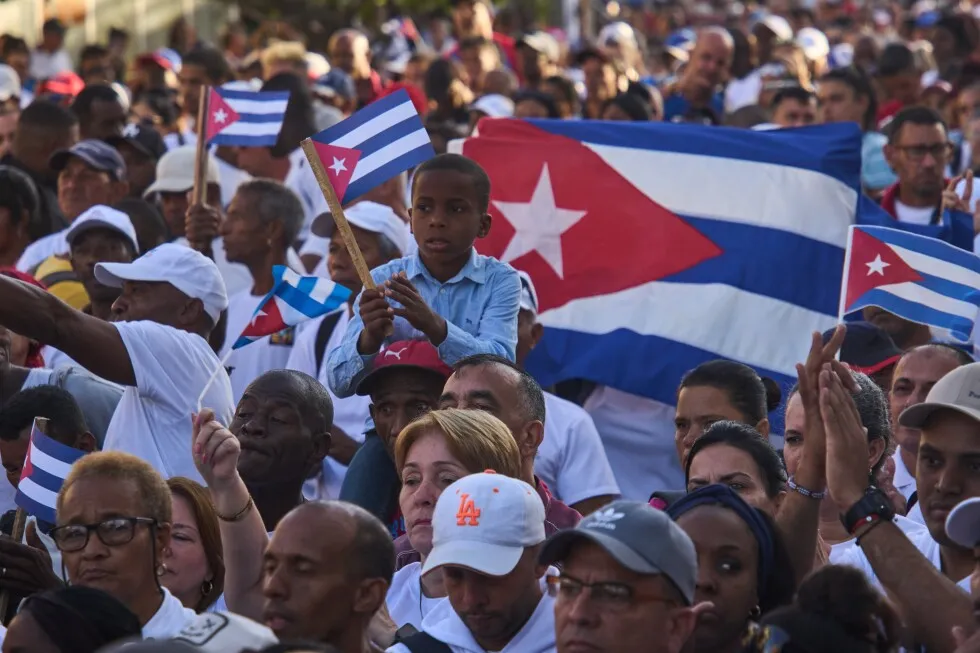
The Trump administration opened an unusual two-track Cuba policy this week, combining harsh public pressure with a private diplomatic opening after a senior U.S. delegation traveled to Havana last week for talks with Cuban officials. The visit matters because it was not a routine consular contact or a technical meeting over migration. According to CBS News and the Associated Press, the delegation arrived on a U.S. government plane, met Cuban counterparts on the island, and included at least one senior State Department official who held talks involving Raul Guillermo Rodriguez Castro, the grandson of former Cuban leader Raul Castro.US and Cuban officials met recently in Havana amid new diplomatic pushapnews.com·SecondaryPeople attend a celebration marking the 65th anniversary of the proclamation declaring the Cuban Revolution socialist, in Havana, Cuba, Thursday, April 16, 2026. (AP Photo/Ramon Espinosa) WASHINGTON (AP) — An American delegation recently met with Cuban government officials in the island nation, marking a renewed diplomatic push even as U.S. President Donald Trump has threatened to intervene and Cuba’s leader said this week that his country is prepared to fight if that should happen.
That combination of pressure and outreach is what makes the episode more newsworthy than a standard diplomatic readout. On one side, the administration has tightened economic pressure on Cuba, pushed demands for political and economic reform, and tied relief to the release of political prisoners and broader liberalization measures. On the other side, the same administration was willing to send officials to Havana and float practical inducements, including possible access to Starlink internet service, as part of a broader attempt to shape Cuban decisions before the island's economic situation deteriorates further.US and Cuban officials met recently in Havana amid new diplomatic pushapnews.com·SecondaryPeople attend a celebration marking the 65th anniversary of the proclamation declaring the Cuban Revolution socialist, in Havana, Cuba, Thursday, April 16, 2026. (AP Photo/Ramon Espinosa) WASHINGTON (AP) — An American delegation recently met with Cuban government officials in the island nation, marking a renewed diplomatic push even as U.S. President Donald Trump has threatened to intervene and Cuba’s leader said this week that his country is prepared to fight if that should happen.
The U.S. side appears to believe the crisis has created leverage. CBS reported that American officials told the Cubans that the island's economy was in free fall and that the ruling elite had only a narrow window to make U.S.-backed reforms before conditions worsened irreversibly. AP separately reported that the delegation pressed Cuba to make major changes to both its economy and its governing model because Washington did not intend to let the island become what U.S. officials called a national security threat in the region. Those are maximal demands, but the very fact they were delivered in face-to-face talks shows Washington is still testing whether coercion can produce a negotiated outcome rather than only a breakdown.US and Cuban officials met recently in Havana amid new diplomatic pushapnews.com·SecondaryPeople attend a celebration marking the 65th anniversary of the proclamation declaring the Cuban Revolution socialist, in Havana, Cuba, Thursday, April 16, 2026. (AP Photo/Ramon Espinosa) WASHINGTON (AP) — An American delegation recently met with Cuban government officials in the island nation, marking a renewed diplomatic push even as U.S. President Donald Trump has threatened to intervene and Cuba’s leader said this week that his country is prepared to fight if that should happen.
The trip was also symbolically significant. AP said it was the first U.S. government flight to land in Cuba outside the Guantanamo Bay base since 2016, while CBS described it as the first time a U.S. government plane had landed in Cuba since Barack Obama's visit that year. Either way, the signal is clear: even after years of rhetorical escalation and sanctions pressure, senior American officials judged the situation important enough to warrant direct contact on the island. That alone sets this episode apart from the familiar cycle of condemnations issued from Washington and defiantly answered in Havana.US and Cuban officials met recently in Havana amid new diplomatic pushapnews.com·SecondaryPeople attend a celebration marking the 65th anniversary of the proclamation declaring the Cuban Revolution socialist, in Havana, Cuba, Thursday, April 16, 2026. (AP Photo/Ramon Espinosa) WASHINGTON (AP) — An American delegation recently met with Cuban government officials in the island nation, marking a renewed diplomatic push even as U.S. President Donald Trump has threatened to intervene and Cuba’s leader said this week that his country is prepared to fight if that should happen.
The talks come against a severe Cuban energy and economic crunch. CBS reported that oil shipments to the island had effectively stopped after Trump's threat to impose heavy tariffs on countries exporting oil to Cuba, although Washington allowed a Russian-flagged tanker to dock in Havana last month as what the administration called a humanitarian reprieve. AP likewise said Cuba's crises had deepened after a U.S. energy blockade and that Washington's conditions for sanctions relief included ending political repression, freeing prisoners and liberalizing the ailing economy. In other words, the administration is using economic pain as leverage while also signaling that some path to relief may exist if Havana makes concessions.US and Cuban officials met recently in Havana amid new diplomatic pushapnews.com·SecondaryPeople attend a celebration marking the 65th anniversary of the proclamation declaring the Cuban Revolution socialist, in Havana, Cuba, Thursday, April 16, 2026. (AP Photo/Ramon Espinosa) WASHINGTON (AP) — An American delegation recently met with Cuban government officials in the island nation, marking a renewed diplomatic push even as U.S. President Donald Trump has threatened to intervene and Cuba’s leader said this week that his country is prepared to fight if that should happen.
Trump's own rhetoric has made the diplomatic opening more striking, and more unstable. CBS reported that he had repeatedly floated the idea of intervention, called Cuba a failing country last month, suggested it could be next after other U.S. foreign moves, and said earlier this week that 'we may stop by Cuba after we're finished with this.' AP similarly reported that Trump said his administration could turn to Cuba after the war in Iran ends and quoted him describing the island as a failing nation that had been terribly run for a long time. That is not the language of a restrained détente. It is the language of a pressure campaign that still wants room for coercion even while diplomats explore whether a deal is possible.US and Cuban officials met recently in Havana amid new diplomatic pushapnews.com·SecondaryPeople attend a celebration marking the 65th anniversary of the proclamation declaring the Cuban Revolution socialist, in Havana, Cuba, Thursday, April 16, 2026. (AP Photo/Ramon Espinosa) WASHINGTON (AP) — An American delegation recently met with Cuban government officials in the island nation, marking a renewed diplomatic push even as U.S. President Donald Trump has threatened to intervene and Cuba’s leader said this week that his country is prepared to fight if that should happen.
Havana, for its part, has not signaled capitulation. CBS reported that Cuban President Miguel Diaz-Canel used a Thursday rally to reject Trump's rhetoric and say the country would be ready if a U.S. military offensive came. AP said Diaz-Canel argued Washington had no valid reason to attack or depose him but that Cuba was prepared to fight back if necessary, making the remarks during a rally marking the 65th anniversary of the declaration of the Cuban Revolution's socialist character. That response serves two domestic purposes at once: it projects resolve at home while warning the United States that public threats can strengthen hard-line voices inside the Cuban system rather than weaken them.US and Cuban officials met recently in Havana amid new diplomatic pushapnews.com·SecondaryPeople attend a celebration marking the 65th anniversary of the proclamation declaring the Cuban Revolution socialist, in Havana, Cuba, Thursday, April 16, 2026. (AP Photo/Ramon Espinosa) WASHINGTON (AP) — An American delegation recently met with Cuban government officials in the island nation, marking a renewed diplomatic push even as U.S. President Donald Trump has threatened to intervene and Cuba’s leader said this week that his country is prepared to fight if that should happen.
There is also an internal American political angle that should not be ignored. AP noted that Secretary of State Marco Rubio, a longtime Cuba hawk and the son of Cuban immigrants, was not part of the Havana delegation, even though U.S. officials have previously said he met the younger Castro in St. Kitts and Nevis in February. That detail suggests the administration may be trying to compartmentalize the diplomatic channel, using envoys who can test ideas quietly while preserving Rubio's harder public posture. Supporters of the administration will argue that this is exactly how leverage should work: squeeze first, negotiate from strength second. Critics, including many traditional engagement advocates, are likely to argue the opposite, that threatening intervention while demanding sweeping domestic change makes a stable diplomatic opening harder to sustain.US and Cuban officials met recently in Havana amid new diplomatic pushapnews.com·SecondaryPeople attend a celebration marking the 65th anniversary of the proclamation declaring the Cuban Revolution socialist, in Havana, Cuba, Thursday, April 16, 2026. (AP Photo/Ramon Espinosa) WASHINGTON (AP) — An American delegation recently met with Cuban government officials in the island nation, marking a renewed diplomatic push even as U.S. President Donald Trump has threatened to intervene and Cuba’s leader said this week that his country is prepared to fight if that should happen.
The conservative case for paying attention here is straightforward. Cuba sits close to Florida, remains a migration and security issue for the United States, and has become more vulnerable as its energy system and economy strain under sanctions and supply disruptions. From that perspective, Washington has a legitimate interest in preventing state failure, curbing Russian or other external influence, and pressing Havana on repression and economic controls. But there is also a practical counterargument, one that deserves equal weight: if the administration's public rhetoric outruns what diplomacy can realistically deliver, it may produce a more brittle standoff, deepen Cuban nationalism, and leave the United States with fewer workable options than it had before the visit.US and Cuban officials met recently in Havana amid new diplomatic pushapnews.com·SecondaryPeople attend a celebration marking the 65th anniversary of the proclamation declaring the Cuban Revolution socialist, in Havana, Cuba, Thursday, April 16, 2026. (AP Photo/Ramon Espinosa) WASHINGTON (AP) — An American delegation recently met with Cuban government officials in the island nation, marking a renewed diplomatic push even as U.S. President Donald Trump has threatened to intervene and Cuba’s leader said this week that his country is prepared to fight if that should happen.
For now, the most important fact is not that a breakthrough has happened, because neither side has shown evidence of one. The more important fact is that both governments have acknowledged talks while continuing to speak in the language of pressure and resistance. That combination usually means a negotiation is exploratory, fragile and highly contingent. If Havana calculates that the economic crisis leaves it little room to maneuver, the talks could become the start of a limited bargain over prisoners, internet access or selected economic changes. If either side decides the domestic political cost is too high, the visit may instead be remembered as a brief diplomatic opening inside a larger confrontation that continues to harden.US and Cuban officials met recently in Havana amid new diplomatic pushapnews.com·SecondaryPeople attend a celebration marking the 65th anniversary of the proclamation declaring the Cuban Revolution socialist, in Havana, Cuba, Thursday, April 16, 2026. (AP Photo/Ramon Espinosa) WASHINGTON (AP) — An American delegation recently met with Cuban government officials in the island nation, marking a renewed diplomatic push even as U.S. President Donald Trump has threatened to intervene and Cuba’s leader said this week that his country is prepared to fight if that should happen.
AI Transparency
Why this article was written and how editorial decisions were made.
Why This Topic
This is the strongest distinct public-interest cluster on the current board because it combines diplomacy, sanctions, migration-adjacent security concerns and the risk of military escalation in a U.S.-Cuba flashpoint close to American territory. It is materially different from the recent CT feed, which has leaned toward domestic U.S. legal, business and sports stories. The core news value is not merely that officials talked, but that Washington is simultaneously threatening, sanctioning and quietly negotiating, creating a consequential test of whether the administration wants regime pressure, a limited bargain, or both.
Source Selection
The cluster has only two signals, but both are high-utility mainstream reports with overlapping core facts and enough divergence to support a balanced synthesis. CBS contributes the detail-heavy account of the U.S. message, the Starlink idea and the administration's internal framing. AP adds cleaner diplomatic context, confirms the Havana trip, clarifies Rubio's non-participation and anchors the Cuban response around the anniversary rally. Because the evidence gate is strict, I kept numbered citations limited to those two source texts and used outside context only for background judgment, not for cited factual expansion.
Editorial Decisions
The piece leads with the contradiction between coercion and diplomacy because that is the most newsworthy element visible in the source set. Tone is descriptive and skeptical rather than moralizing. I gave equal space to the administration's security and reform rationale, Havana's deterrent response, and the practical argument that public threats may undercut any real negotiation. I avoided direct quotes except where they are central to the story, kept claims tightly within the two cluster sources, and used literal image framing to reduce image and evidence gate risk.
Reader Ratings
About the Author
Sources
- 1.apnews.comSecondary
- 2.cbsnews.comSecondary
Editorial Reviews
1 approved · 0 rejectedPrevious Draft Feedback (1)
• depth_and_context scored 4/3 minimum: The article does a good job of setting the scene by detailing the 'two-track' nature of the policy and referencing the underlying economic crisis. To improve, it needs more specific context on the *mechanisms* of the sanctions or the specific economic sectors most impacted by the current energy/supply disruptions, rather than just stating the crisis exists. • narrative_structure scored 4/3 minimum: The structure is strong, moving logically from the event (the visit) to the conflicting signals (pressure vs. outreach) and concluding with an assessment of the ambiguity. A slightly stronger lede could immediately frame the central tension—the contradiction between rhetoric and diplomacy—to hook the reader faster. • perspective_diversity scored 4/3 minimum: The article successfully presents multiple viewpoints: the US administration's stated goals, Cuba's defiant response, and the internal American political divisions (Rubio vs. engagement advocates). To reach a 5, it should incorporate analysis or quotes from a neutral, non-aligned third-party expert (e.g., a Latin American policy think tank) to balance the US/Cuba focus. • analytical_value scored 5/3 minimum: The analysis is excellent, consistently interpreting the significance of the contradictory signals (e.g., 'The combination usually means a negotiation is exploratory, fragile and highly contingent'). It moves far beyond mere reporting to discuss the potential outcomes and underlying strategic calculations of both sides. • filler_and_redundancy scored 5/2 minimum: The article is dense with information but avoids unnecessary padding. The repetition of the core conflict (pressure vs. outreach) is necessary for emphasis and structural clarity, not redundancy. The length feels justified by the complexity of the topic. • language_and_clarity scored 4/3 minimum: The writing is highly professional, precise, and engaging. The language is strong, though the repeated use of 'administration' and 'Washington' could be varied slightly with more specific institutional references (e.g., 'State Department officials' or 'the White House') to maintain flow without sacrificing clarity.

Discussion (0)
No comments yet.