US Lifts Sanctions on Delcy Rodriguez as Washington Deepens Its Bet on Venezuela's Interim Government
Washington removed Delcy Rodriguez from its sanctions list on Wednesday, expanding a broader U.S. policy shift that recognizes her interim government, reopens diplomatic channels and encourages new oil-sector engagement with Caracas.[1][2][4][5][6]
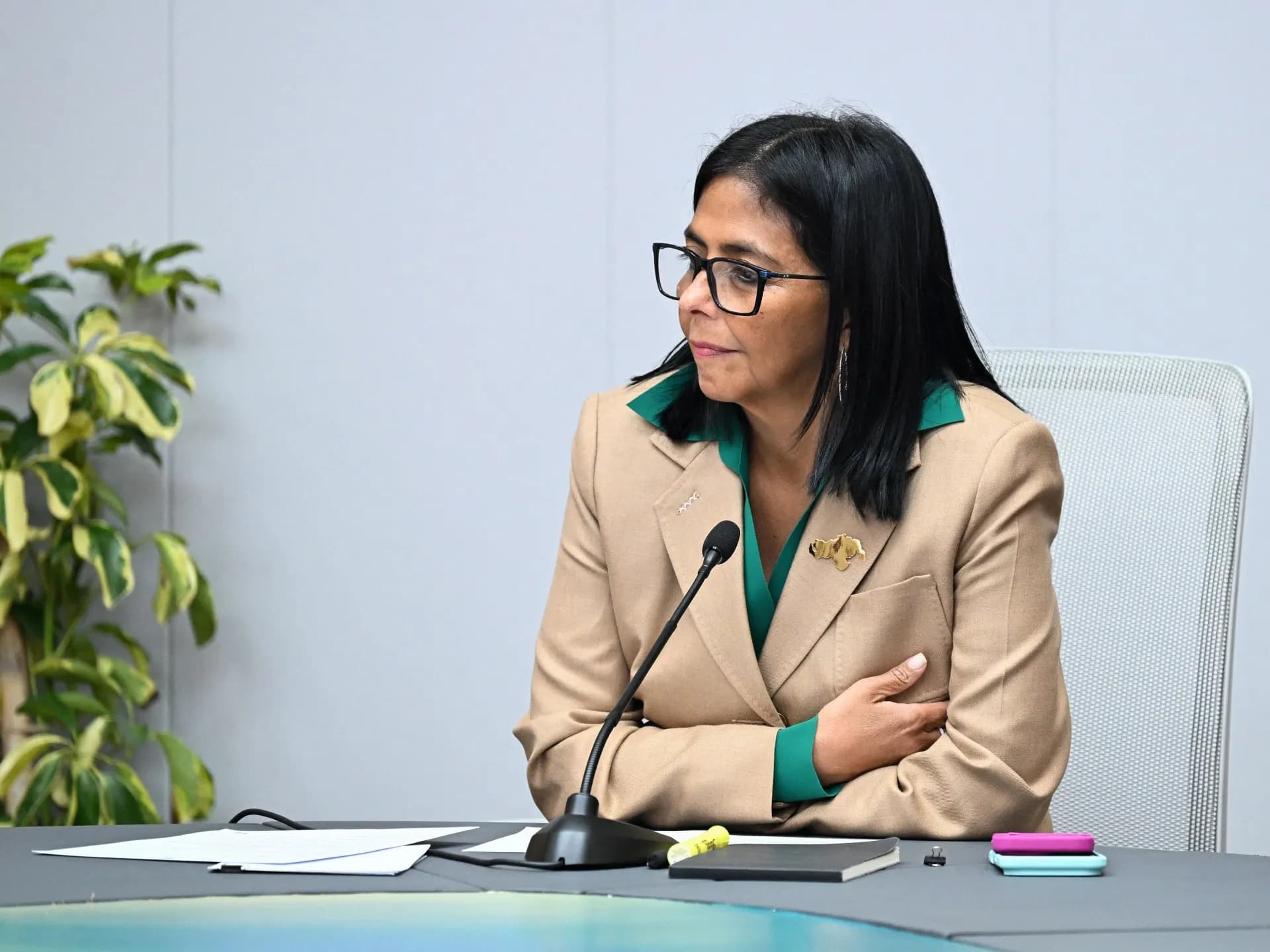
The Trump administration on Wednesday removed Venezuela's interim President Delcy Rodriguez from the Treasury Department's sanctions list, a move that went beyond symbolism and immediately widened her room to deal with U.S. companies, investors and officials. The decision came less than three months after U.S. forces captured her predecessor, Nicolas Maduro, in Caracas, and it marked the latest step in Washington's effort to treat Rodriguez not as a temporary placeholder but as the authority it is prepared to work with in public and in business.
The immediate legal change was narrow but important. Rodriguez's removal from the Specially Designated Nationals list means U.S.-based parties are no longer broadly barred from transacting with her personally, and several reports framed that shift as part of a wider normalization drive between Washington and Caracas. AP, Reuters-linked coverage through France 24, CBS and DW each described the decision as another stage in a policy sequence that has included formal U.S. recognition of Rodriguez, sanctions relief for major Venezuelan industries and efforts to reopen the U.S. Embassy in Caracas.
That sequence matters because Rodriguez was not a longtime Washington favorite suddenly embraced out of nowhere. She and her brother Jorge Rodriguez were sanctioned during Donald Trump's first term, when the Treasury Department accused senior Maduro allies of helping preserve what it called authoritarian rule after the contested 2018 Venezuelan election. In other words, the same U.S. political camp that once treated Rodriguez as part of Maduro's inner circle is now presenting engagement with her as the practical route to influence events inside Venezuela after Maduro's removal.
Supporters of the policy shift argue that this is precisely the point. The White House and administration officials have cast the sanctions rollback as evidence that cooperation with Washington can bring concrete rewards. CBS reported that one administration official described the move as support for a more constructive U.S.-Venezuela relationship and for wider private-sector engagement aimed at economic recovery and political transition, while another official said the decision reflected a choice to work with the interim authorities led by Rodriguez. In that reading, sanctions relief is not charity. It is leverage, signaling that the United States will deal with actors inside the old governing apparatus if they open the oil sector, accept outside capital and help stabilize a country that still holds some of the world's largest crude reserves.
The case for skepticism is at least as strong. Rodriguez did not emerge from Venezuela's anti-Maduro opposition. She served as Maduro's deputy and had been sanctioned because of that role. Opposition voices cited by CBS, including Maria Corina Machado, have argued that Rodriguez should not be treated as a clean break from the old order and that her current moves reflect pressure from Washington more than an organic democratic realignment inside Venezuela. Al Jazeera, from a more critical angle, emphasized legal objections to Maduro's January capture and noted that critics question the conditions under which Rodriguez's market-opening reforms have advanced. Even for observers who favor a harder U.S. posture toward Maduro, there is a real question about whether Washington is engineering a transition or merely repackaging continuity under a more cooperative figure.Trump administration lifts sanctions on Venezuela’s interim leaderfrance24.com·SecondaryThe US has lifted sanctions on Delcy Rodriguez, Venezuela’s interim president, in a significant shift following the ouster of Nicolas Maduro. The move comes as relations between Washington and Caracas begin to thaw, with Rodriguez taking steps to open the country’s energy sector to US companies after assuming power earlier this year.
That tension runs through every part of the new relationship. Multiple outlets reported that Washington formally recognized Rodriguez as Venezuela's leader in March and has since moved to restore a diplomatic presence in Caracas after a seven-year closure. At the same time, Maduro is still described in parts of the Venezuelan legal system as the country's president, with the ruling-party-aligned high court declaring his absence temporary and allowing Rodriguez to hold office with the approval of the National Assembly, which is controlled by the same broader political camp and presided over by her brother. From the American side, that ambiguity may be acceptable because it creates a usable governing partner. From the Venezuelan side, it leaves unresolved whether this is a transition to a new settlement or an adaptation by the same power network.
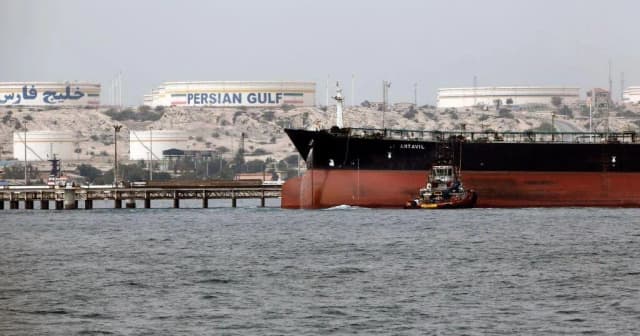
Economics sits at the center of the story. The U.S. has already relaxed restrictions on major Venezuelan industries, and several reports said Treasury in March authorized state oil company PDVSA to sell Venezuelan oil directly to U.S. companies and on global markets. France 24 and DW both said Rodriguez has been complying with U.S. demands to open the energy sector to American firms, while CBS described the administration as actively encouraging American investment in Venezuelan oil infrastructure and production. That is not a minor side issue. Oil is the clearest area where both governments have something tangible to gain: Caracas needs revenue, legitimacy and capital, while Washington wants influence over supply, contracts and the post-Maduro economic order.
Official rhetoric from Rodriguez has tracked that logic closely. After the Treasury action, she publicly welcomed Trump's decision and said she hoped it would lead to broader sanctions relief on Venezuela itself and make room for a bilateral cooperation agenda that benefits both peoples. Those comments can be read in two different ways. One reading is pragmatic: Rodriguez is trying to secure breathing room for a battered state and to reconnect Venezuela with outside markets. The other is political: she is using conciliatory language because she knows her government's near-term survival depends on continued U.S. tolerance. Both interpretations may be true at once. Her balancing act has been noted repeatedly in coverage describing her as caught between U.S. demands and expectations from her own domestic backers.US lifts sanctions on Venezuela’s acting President Delcy Rodríguezapnews.com·SecondaryThe U.S. on Wednesday lifted sanctions on Venezuela’s acting President Delcy Rodríguez, according to an Office of Foreign Assets Control entry on the Treasury Department website. Venezuela’s acting President Delcy Rodriguez, right, speaks next to the World Baseball Classic trophy a day after her team’s victory over the United States in the championship match, at Miraflores presidential palace in Caracas, Venezuela, Wednesday, March 18, 2026. (AP Photo/Ariana Cubillos) WASHINGTON (AP) — The U.
The deeper political question is whether sanctions relief will broaden Venezuela's governing coalition or simply strengthen one faction within it. AP said Rodriguez has pitched Venezuela to international investors and opened the country to private capital, arbitration and scrutiny, but it also noted that the National Assembly and top institutions remain in the hands of the ruling movement that backed Maduro.US lifts sanctions on Venezuelan interim leader Delcy Rodriguezlemonde.fr·SecondaryA required part of this site couldn’t load. This may be due to a browser extension, network issues, or browser settings. Please check your connection, disable any ad blockers, or try using a different browser. Reuters, cited through fetched reporting, added another layer by linking the sanctions move to preparations for Rodriguez's administration to take over the boards of PDVSA's U.S. subsidiaries, including Citgo. If that process advances, the fight will no longer be only about diplomatic recognition. It will be about who controls the most valuable foreign assets associated with the Venezuelan state and who gets to negotiate from that position.[Reuters background]
For conservative and realist observers, this episode is a reminder that foreign policy often runs on incentives and leverage rather than moral clarity. Washington spent years describing Rodriguez as part of a corrupt and anti-democratic order, and now it is treating her as a partner because she is useful to a broader regional and energy strategy. Defenders of the decision can say the administration is dealing with the Venezuela that exists, not the Venezuela activists hoped for. Critics can answer that the United States is normalizing a figure tied to the same machinery it once condemned, while sidelining opposition actors who expected that Maduro's removal would produce a cleaner break.
There is also a narrower but important legal point. The sanctions rollback does not settle the status of every other senior official from Maduro's era, and reports noted that several of the top-ranking figures around the former government remain sanctioned or face criminal charges in the United States. That means Washington still retains substantial coercive tools even as it selectively rewards Rodriguez. Rather than a wholesale reconciliation, the pattern looks more like targeted conditional engagement: recognition and sanctions relief for the actors who cooperate, isolation or prosecution for those who do not.US lifts sanctions on Venezuela’s acting President Delcy Rodríguezapnews.com·SecondaryThe U.S. on Wednesday lifted sanctions on Venezuela’s acting President Delcy Rodríguez, according to an Office of Foreign Assets Control entry on the Treasury Department website. Venezuela’s acting President Delcy Rodriguez, right, speaks next to the World Baseball Classic trophy a day after her team’s victory over the United States in the championship match, at Miraflores presidential palace in Caracas, Venezuela, Wednesday, March 18, 2026. (AP Photo/Ariana Cubillos) WASHINGTON (AP) — The U.
For now, the practical result is clear enough. Rodriguez is more internationally usable today than she was a week ago, and the Trump administration has signaled that it sees political, diplomatic and commercial value in accelerating that trend. What remains unclear is whether this produces a more plural Venezuelan settlement, a more prosperous but still tightly managed system, or simply a U.S.-backed rearrangement inside the same governing class. The answer will likely depend less on Wednesday's sanctions notice by itself than on what follows next: control over oil assets, the terms of future investment, the role of the opposition, and whether Washington keeps rewarding compliance faster than it demands structural change.
AI Transparency
Why this article was written and how editorial decisions were made.
Why This Topic
This was the most newsworthy non-duplicate cluster on the board because it combines a concrete U.S. sanctions action with wider geopolitical, diplomatic and energy-market implications. The move alters the status of Venezuela's interim leader, signals a deeper Trump administration bet on a post-Maduro arrangement, and has obvious downstream consequences for oil, diplomacy and opposition politics. It is materially different from recent CT coverage and strong enough to justify a lead slot.
Source Selection
The draft relies on six cluster signals from AP, France 24, Al Jazeera, CBS and DW, which together provide both the core factual event and the main competing interpretations. AP and CBS supply the clearest account of the sanctions rollback and prior U.S. treatment of Rodriguez; France 24 and DW reinforce the embassy and energy-opening context; Al Jazeera contributes the strongest critical framing and legal skepticism. I used Reuters only as off-cluster background for editorial understanding, not for numbered citations, to stay within citation-gate rules.
Editorial Decisions
Descriptive headline, no loaded moral language. Framed the policy shift as a power and leverage story rather than a morality play. Gave genuine space to both administration defenders and opposition skeptics, while keeping the official U.S. and Rodriguez positions explicit. Avoided direct quotes in the body except where already normalized in paraphrase-sensitive context.
Reader Ratings
About the Author
Sources
- 1.lemonde.frSecondary
- 2.apnews.comSecondary
- 3.cbsnews.comSecondary
- 4.france24.comSecondary
- 5.aljazeera.comSecondary
- 6.dw.comSecondary
Editorial Reviews
1 approved · 0 rejectedPrevious Draft Feedback (1)
Warnings: • [article_quality] Gate check failed: Service request failed. Status: 502 (Bad Gateway) • [image_relevance] Image relevance check failed: Service request failed. Status: 502 (Bad Gateway)
Discussion (0)
No comments yet.