Utah cold case is closed after DNA testing ties Laura Ann Aime's 1974 killing to Ted Bundy
Utah authorities say new DNA analysis has closed the 1974 killing of 17-year-old Laura Ann Aime, confirming Ted Bundy’s responsibility more than five decades after her death and giving investigators a profile they say could help in other unsolved cases.[1][2]
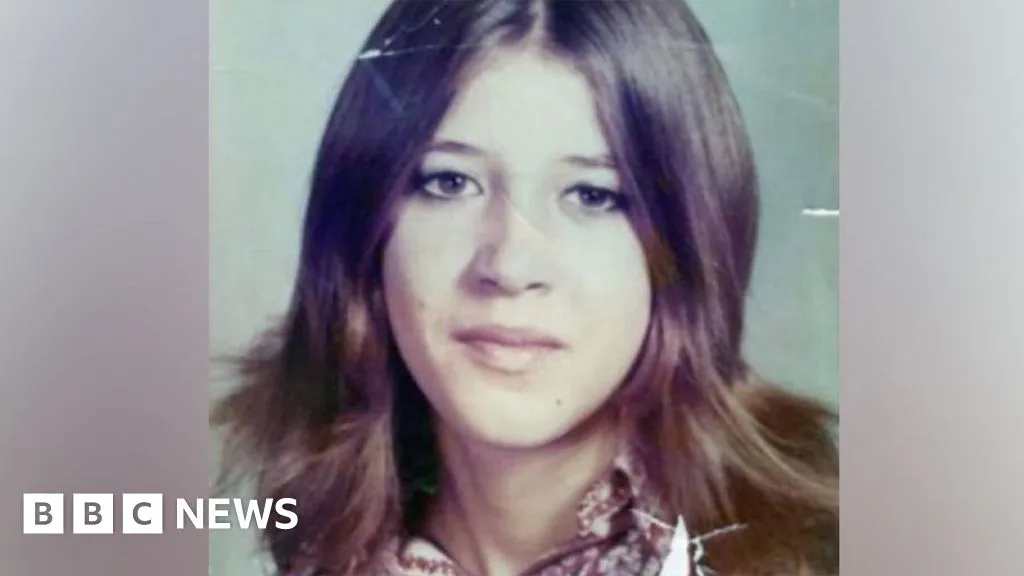
More than half a century after Laura Ann Aime disappeared after a Halloween party in Utah, investigators say the case that haunted her family and local law enforcement has finally moved from suspicion to formal proof. Utah officials said on Wednesday that new DNA testing linked the 17-year-old’s 1974 killing to Ted Bundy, the serial killer whose crimes had already shaped one of the darkest chapters in modern American criminal history.New DNA testing links unsolved death of Utah teen in 1974 to serial killer Ted Bundyapnews.com·SecondaryUtah authorities say new DNA testing has definitively linked the unsolved death of a Utah teenager in 1974 to the infamous serial killer Ted Bundy. Accused murderer Ted Bundy attends the second day of jury selection in his murder trial, June 27, 1979, in Miami, Fla.
The basic facts of the case have been known for years, but the legal and evidentiary standard had not been satisfied until now. Laura Ann Aime vanished after leaving a party alone on Halloween night in 1974, and her body was found about a month later in American Fork Canyon. Investigators had long believed Bundy was responsible, and he had previously confessed to killing her before his 1989 execution, but officials said they kept the case open because he never provided enough detail to remove doubt on the record.New DNA testing links unsolved death of Utah teen in 1974 to serial killer Ted Bundyapnews.com·SecondaryUtah authorities say new DNA testing has definitively linked the unsolved death of a Utah teenager in 1974 to the infamous serial killer Ted Bundy. Accused murderer Ted Bundy attends the second day of jury selection in his murder trial, June 27, 1979, in Miami, Fla.
What changed was not a new witness or a fresh confession, but advances in forensic science. Utah County officials said preserved evidence from the case was reexamined with newer DNA methods that became available to the state crime lab in recent years. According to the accounts published by the BBC and AP, analysts were able to isolate a male DNA profile from aged material and match it in a way investigators described as definitive, allowing the sheriff’s office to say the case could now be closed as solved.New DNA testing links unsolved death of Utah teen in 1974 to serial killer Ted Bundyapnews.com·SecondaryUtah authorities say new DNA testing has definitively linked the unsolved death of a Utah teenager in 1974 to the infamous serial killer Ted Bundy. Accused murderer Ted Bundy attends the second day of jury selection in his murder trial, June 27, 1979, in Miami, Fla.
That matters for at least three reasons. First, it gives Aime’s family the kind of formal conclusion that criminal investigations rarely deliver when a suspect dies before trial. Second, it shows how old evidence can acquire new value when laboratory methods improve. Third, officials said the profile generated in the case may now be useful to other agencies that still suspect Bundy in additional unsolved killings, meaning this closure could also become a tool for further case work beyond Utah.New DNA testing links unsolved death of Utah teen in 1974 to serial killer Ted Bundyapnews.com·SecondaryUtah authorities say new DNA testing has definitively linked the unsolved death of a Utah teenager in 1974 to the infamous serial killer Ted Bundy. Accused murderer Ted Bundy attends the second day of jury selection in his murder trial, June 27, 1979, in Miami, Fla.
The emotional center of the story is not Bundy’s notoriety but Aime herself and the family that waited decades for certainty. AP reported that her sister Michelle Impala spoke publicly about their closeness, their family farm in Fairview and the ordinary routines that were frozen by the murder. Utah investigators also described Aime as a recognizable daughter of the county, a framing that underscored how cold cases are lived not as abstractions but as long interruptions in family history.Utah teen identified as victim of serial killer Ted Bundybbc.com·SecondaryOfficials in Utah have formally closed a 51-year-old cold case after using new DNA technology to identify a murdered teenager as a victim of serial killer Ted Bundy. Laura Ann Aime, 17, disappeared after leaving a party on Halloween in 1974. Her body was discovered about one month later by hikers in the American Fork Canyon.
Officials presented the finding as a statement about diligence as much as technology. AP reported that investigators had carefully preserved the evidence for decades, while Utah’s public safety leadership said newer extraction tools introduced in 2023 made it possible to work with small, degraded or mixed samples that previously may not have yielded a usable result. The BBC likewise said the sheriff’s office treated the case as unresolved until proof could meet a beyond-doubt threshold, even though Bundy’s name had long been attached to it in the public imagination.New DNA testing links unsolved death of Utah teen in 1974 to serial killer Ted Bundyapnews.com·SecondaryUtah authorities say new DNA testing has definitively linked the unsolved death of a Utah teenager in 1974 to the infamous serial killer Ted Bundy. Accused murderer Ted Bundy attends the second day of jury selection in his murder trial, June 27, 1979, in Miami, Fla.
Bundy’s broader history explains why the case still commands national attention. Both reports note that he was linked to at least 30 murders between 1974 and 1978, with investigators and historians suspecting the true total may be higher. At the time of Aime’s death, he was living in Salt Lake City and studying law at the University of Utah, placing him in the region during the period when women were disappearing in Washington state and later in Utah, Idaho, Colorado and eventually Florida.New DNA testing links unsolved death of Utah teen in 1974 to serial killer Ted Bundyapnews.com·SecondaryUtah authorities say new DNA testing has definitively linked the unsolved death of a Utah teenager in 1974 to the infamous serial killer Ted Bundy. Accused murderer Ted Bundy attends the second day of jury selection in his murder trial, June 27, 1979, in Miami, Fla.
There is also a public-policy angle that goes beyond the biography of one killer. For years, critics of sensational true-crime coverage have argued that famous perpetrators can eclipse victims and distort how the public understands violent crime. This case cuts in a different direction because the central development is not a recycled retelling of Bundy’s crimes but a measurable forensic step that restored Aime’s name to the center of the record and gave authorities a documented basis for closing the file.New DNA testing links unsolved death of Utah teen in 1974 to serial killer Ted Bundyapnews.com·SecondaryUtah authorities say new DNA testing has definitively linked the unsolved death of a Utah teenager in 1974 to the infamous serial killer Ted Bundy. Accused murderer Ted Bundy attends the second day of jury selection in his murder trial, June 27, 1979, in Miami, Fla.
At the same time, skepticism about reopened cold cases is not unreasonable. High-profile historical murders can attract institutional pressure, retrospective certainty and media attention that reward dramatic announcements. That is one reason the evidentiary standard matters here. The public claim from Utah authorities was not merely that Bundy remained the leading suspect, but that the updated DNA work established a conclusive link between evidence recovered from Aime’s body and Bundy himself. In other words, the significance of Wednesday’s announcement rests on lab-confirmed attribution rather than narrative convenience.New DNA testing links unsolved death of Utah teen in 1974 to serial killer Ted Bundyapnews.com·SecondaryUtah authorities say new DNA testing has definitively linked the unsolved death of a Utah teenager in 1974 to the infamous serial killer Ted Bundy. Accused murderer Ted Bundy attends the second day of jury selection in his murder trial, June 27, 1979, in Miami, Fla.
The official position from Utah law enforcement was unambiguous. The sheriff’s office said the case is now closed, and Sheriff Mike Smith said that if Bundy were still alive, prosecutors would seek the death penalty. That statement served two functions: it emphasized how strongly investigators now view the evidence, and it signaled that authorities see the case not as a symbolic closure but as one that would have supported the most serious prosecutorial response available.New DNA testing links unsolved death of Utah teen in 1974 to serial killer Ted Bundyapnews.com·SecondaryUtah authorities say new DNA testing has definitively linked the unsolved death of a Utah teenager in 1974 to the infamous serial killer Ted Bundy. Accused murderer Ted Bundy attends the second day of jury selection in his murder trial, June 27, 1979, in Miami, Fla.
There is no meaningful political opposition in the usual sense, but there is still room for a competing perspective about what closure can and cannot mean. A solved file cannot restore the life that was lost, and it cannot create the public cross-examination that would have happened in a courtroom. Families in these cases often receive certainty without adjudication. The Utah announcement therefore resolves the factual question of responsibility as investigators understand it, while leaving the deeper human loss exactly where it has always been.New DNA testing links unsolved death of Utah teen in 1974 to serial killer Ted Bundyapnews.com·SecondaryUtah authorities say new DNA testing has definitively linked the unsolved death of a Utah teenager in 1974 to the infamous serial killer Ted Bundy. Accused murderer Ted Bundy attends the second day of jury selection in his murder trial, June 27, 1979, in Miami, Fla.
What happens next is likely to be quieter than the headline but potentially just as important. AP reported that the DNA profile from this case can now be used by other law-enforcement agencies examining additional unsolved killings tied to Bundy. If that proves true, the Aime investigation may become more than a late answer in one family’s case; it could become part of a broader effort to convert longstanding suspicion in other files into evidence that can survive modern scrutiny. For a country still carrying a large inventory of unsolved violent crime, that may be the most consequential development in this story.Utah teen identified as victim of serial killer Ted Bundybbc.com·SecondaryOfficials in Utah have formally closed a 51-year-old cold case after using new DNA technology to identify a murdered teenager as a victim of serial killer Ted Bundy. Laura Ann Aime, 17, disappeared after leaving a party on Halloween in 1974. Her body was discovered about one month later by hikers in the American Fork Canyon.
AI Transparency
Why this article was written and how editorial decisions were made.
Why This Topic
This cluster is newsworthy because it turns a long-suspected Bundy killing into a formally closed case through new DNA analysis, giving the story both immediate public interest and clear institutional significance. It is distinct from today’s earlier Iran and markets coverage, has a strong human stake through the family’s decades-long wait, and offers a substantive angle on how forensic advances can change old investigations. The story also carries durable national interest because Bundy remains one of the most consequential serial-crime figures in the United States and officials say the resulting DNA profile could aid other unresolved cases.
Source Selection
The draft relies on the two cluster signals from BBC and AP because together they provide the strongest combination of official procedural detail, family reaction and timeline context. Both are high-quality general-news organizations with overlapping reporting on the announcement, the preserved evidence, the newer DNA capability and Bundy’s regional history. Using the cluster’s own signals keeps the citation chain clean for the gate system and avoids overreliance on secondary commentary or sensational true-crime retellings that would add noise without improving factual confidence.
Editorial Decisions
Descriptive headline, no sensational wording. Keep focus on the forensic closure, the victim and family, and the practical implications for cold-case work rather than on Bundy mythology. Report official confidence but also note the limits of closure without trial. Conservative editorial preference applied by avoiding moralizing true-crime language and by treating institutional claims seriously while still stressing why evidentiary standards matter.
Reader Ratings
About the Author
Sources
- 1.apnews.comSecondary
- 2.bbc.comSecondary
Editorial Reviews
1 approved · 0 rejectedPrevious Draft Feedback (1)
Self-review approve.



Discussion (0)
No comments yet.