Cleveland Fed's Beth Hammack says rates should stay on hold as inflation and jobs risks pull in opposite directions
Cleveland Fed President Beth Hammack said Wednesday the Fed should stay patient with rates at 3.5%-3.75% while officials weigh inflation pressure tied to tariffs and the Iran war against a labor market she described as roughly balanced.[1][2]
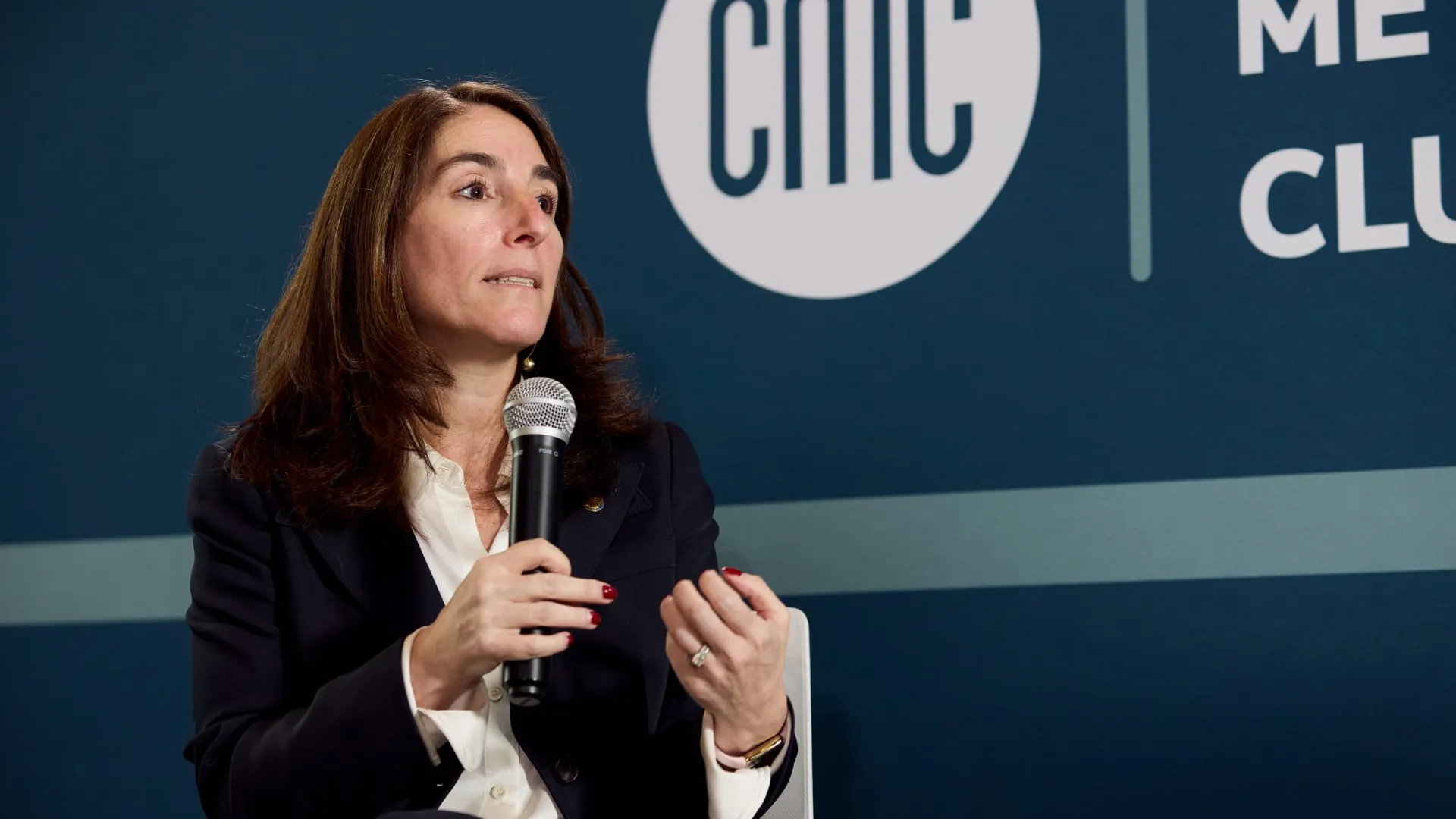
Cleveland Federal Reserve President Beth Hammack said Wednesday that her baseline is for U.S. interest rates to stay on hold for what she called a good while, arguing that policymakers are facing pressure from both sides of their mandate rather than a clean case for either easing or tightening. Speaking in a live CNBC interview, Hammack said officials should stay patient and watch incoming data because the economy is sending mixed signals on inflation and employment at the same time.Cleveland Fed President Hammack expects interest rates to stay on hold 'for a good while'cnbc.com·SecondaryCleveland Federal Reserve President Beth Hammack said Wednesday that the central bank is weighing threats to both inflation and employment and should keep interest rates on hold as conditions evolve. In a live CNBC interview, the central bank official advocated a patient approach to monetary policy as officials watch incoming data for clues about where the U.S. economy is heading.
That matters because Hammack is not speaking as an outsider throwing out market commentary from the cheap seats. She is a voting participant this year on the Federal Open Market Committee, which sets the federal funds rate and thereby influences borrowing costs across mortgages, business loans, corporate financing and consumer credit.Cleveland Fed President Hammack expects interest rates to stay on hold 'for a good while'cnbc.com·SecondaryCleveland Federal Reserve President Beth Hammack said Wednesday that the central bank is weighing threats to both inflation and employment and should keep interest rates on hold as conditions evolve. In a live CNBC interview, the central bank official advocated a patient approach to monetary policy as officials watch incoming data for clues about where the U.S. economy is heading. When a current voter says the baseline is to remain on hold for a good while, markets hear a message that the committee is still reluctant to declare victory over inflation and is not yet convinced the labor market is weakening enough to justify a fresh round of cuts.Cleveland Fed President Hammack expects interest rates to stay on hold 'for a good while'cnbc.com·SecondaryCleveland Federal Reserve President Beth Hammack said Wednesday that the central bank is weighing threats to both inflation and employment and should keep interest rates on hold as conditions evolve. In a live CNBC interview, the central bank official advocated a patient approach to monetary policy as officials watch incoming data for clues about where the U.S. economy is heading.
Hammack's framing was notable less for drama than for restraint. After three rate cuts in the latter part of 2025, the Fed has kept the benchmark federal funds target range unchanged at both of its decisions this year, leaving it at 3.5% to 3.75%, which Hammack described as a good place for policy right now. Her argument was that patience is not passivity.Cleveland Fed President Hammack expects interest rates to stay on hold 'for a good while'cnbc.com·SecondaryCleveland Federal Reserve President Beth Hammack said Wednesday that the central bank is weighing threats to both inflation and employment and should keep interest rates on hold as conditions evolve. In a live CNBC interview, the central bank official advocated a patient approach to monetary policy as officials watch incoming data for clues about where the U.S. economy is heading. Instead, it reflects a judgment that central bankers should avoid overreacting while they sort out whether the next real risk is a renewed inflation problem, a softer labor market, or some combination of both.Cleveland Fed President Hammack expects interest rates to stay on hold 'for a good while'cnbc.com·SecondaryCleveland Federal Reserve President Beth Hammack said Wednesday that the central bank is weighing threats to both inflation and employment and should keep interest rates on hold as conditions evolve. In a live CNBC interview, the central bank official advocated a patient approach to monetary policy as officials watch incoming data for clues about where the U.S. economy is heading.
On inflation, Hammack pointed directly to the kind of supply-side pressure that central bankers cannot easily fix with neat textbook moves. She said prices are being pressured by the Iran war and by tariffs, and she warned that these successive supply shocks are harder to look through when inflation was already elevated coming into the episode. That point is important because it pushes back against the easier market story that any sign of economic uncertainty should automatically translate into lower rates.Cleveland Fed President Hammack expects interest rates to stay on hold 'for a good while'cnbc.com·SecondaryCleveland Federal Reserve President Beth Hammack said Wednesday that the central bank is weighing threats to both inflation and employment and should keep interest rates on hold as conditions evolve. In a live CNBC interview, the central bank official advocated a patient approach to monetary policy as officials watch incoming data for clues about where the U.S. economy is heading. Hammack's case is that if energy costs and trade frictions are feeding prices at a moment when inflation is still above comfort level, the central bank has a reason to move carefully rather than rush to provide relief.Cleveland Fed President Hammack expects interest rates to stay on hold 'for a good while'cnbc.com·SecondaryCleveland Federal Reserve President Beth Hammack said Wednesday that the central bank is weighing threats to both inflation and employment and should keep interest rates on hold as conditions evolve. In a live CNBC interview, the central bank official advocated a patient approach to monetary policy as officials watch incoming data for clues about where the U.S. economy is heading.
At the same time, she did not present a one-directional hawkish case for tighter policy. Hammack said there are two-sided risks to rates and explicitly acknowledged that officials might eventually need to be more accommodative or more restrictive depending on how the data develops. She also said the labor market is roughly in balance, though in what she called a curious balance, with low job creation alongside modest increases on the supply side. That combination leaves room for both camps in the rate debate to hear something useful in her remarks.Cleveland Fed President Hammack expects interest rates to stay on hold 'for a good while'cnbc.com·SecondaryCleveland Federal Reserve President Beth Hammack said Wednesday that the central bank is weighing threats to both inflation and employment and should keep interest rates on hold as conditions evolve. In a live CNBC interview, the central bank official advocated a patient approach to monetary policy as officials watch incoming data for clues about where the U.S. economy is heading. Officials worried about sticky inflation can point to the supply-shock argument, while those watching for labor-market deterioration can point to her refusal to rule out easier policy if the numbers turn.Cleveland Fed President Hammack expects interest rates to stay on hold 'for a good while'cnbc.com·SecondaryCleveland Federal Reserve President Beth Hammack said Wednesday that the central bank is weighing threats to both inflation and employment and should keep interest rates on hold as conditions evolve. In a live CNBC interview, the central bank official advocated a patient approach to monetary policy as officials watch incoming data for clues about where the U.S. economy is heading.
For households and businesses, the practical takeaway is less ideological than mechanical. Hammack is signaling that borrowing costs are likely to stay elevated relative to the easy-money years, at least until the Fed gets clearer evidence about where inflation and employment are heading. That means mortgage borrowers, commercial real-estate owners, private-equity sponsors, manufacturers financing expansion and consumers carrying variable-rate debt all remain in a waiting game shaped by data rather than by a predetermined easing cycle. The central bank is not promising relief on a calendar.Cleveland Fed President Hammack expects interest rates to stay on hold 'for a good while'cnbc.com·SecondaryCleveland Federal Reserve President Beth Hammack said Wednesday that the central bank is weighing threats to both inflation and employment and should keep interest rates on hold as conditions evolve. In a live CNBC interview, the central bank official advocated a patient approach to monetary policy as officials watch incoming data for clues about where the U.S. economy is heading. It is saying, in effect, that relief has to be earned by the numbers.Cleveland Fed President Hammack expects interest rates to stay on hold 'for a good while'cnbc.com·SecondaryCleveland Federal Reserve President Beth Hammack said Wednesday that the central bank is weighing threats to both inflation and employment and should keep interest rates on hold as conditions evolve. In a live CNBC interview, the central bank official advocated a patient approach to monetary policy as officials watch incoming data for clues about where the U.S. economy is heading.
The market backdrop reinforces that reading. CNBC reported that FOMC officials at the March meeting still indicated they see one rate cut this year, but also that there was considerable disagreement inside the committee. By Wednesday morning, markets were pricing in only about a one-in-three chance of a cut this year, according to CME Group figures cited by CNBC. In other words, investors are no longer treating rate cuts as the base case.Cleveland Fed President Hammack expects interest rates to stay on hold 'for a good while'cnbc.com·SecondaryCleveland Federal Reserve President Beth Hammack said Wednesday that the central bank is weighing threats to both inflation and employment and should keep interest rates on hold as conditions evolve. In a live CNBC interview, the central bank official advocated a patient approach to monetary policy as officials watch incoming data for clues about where the U.S. economy is heading. Hammack's comments fit that more cautious repricing, even if they stop short of promising a prolonged freeze under all conditions.Cleveland Fed President Hammack expects interest rates to stay on hold 'for a good while'cnbc.com·SecondaryCleveland Federal Reserve President Beth Hammack said Wednesday that the central bank is weighing threats to both inflation and employment and should keep interest rates on hold as conditions evolve. In a live CNBC interview, the central bank official advocated a patient approach to monetary policy as officials watch incoming data for clues about where the U.S. economy is heading.
There is also a broader institutional point here about how the Fed wants to present itself in a period of messy, politically charged inflation. By emphasizing patience, data dependence and two-sided risk, Hammack is offering a framework that resists both partisan demands for easier money and market pressure for instant reassurance. That does not make the stance neutral in its effects; high rates still favor savers over borrowers and keep pressure on interest-sensitive sectors.Cleveland Fed President Hammack expects interest rates to stay on hold 'for a good while'cnbc.com·SecondaryCleveland Federal Reserve President Beth Hammack said Wednesday that the central bank is weighing threats to both inflation and employment and should keep interest rates on hold as conditions evolve. In a live CNBC interview, the central bank official advocated a patient approach to monetary policy as officials watch incoming data for clues about where the U.S. economy is heading. But it does show a central bank still trying to preserve room to maneuver rather than boxing itself into a public commitment it may regret a month later.Cleveland Fed President Hammack expects interest rates to stay on hold 'for a good while'cnbc.com·SecondaryCleveland Federal Reserve President Beth Hammack said Wednesday that the central bank is weighing threats to both inflation and employment and should keep interest rates on hold as conditions evolve. In a live CNBC interview, the central bank official advocated a patient approach to monetary policy as officials watch incoming data for clues about where the U.S. economy is heading.
Critics of the hold-for-longer approach will argue that waiting too long risks discovering labor-market weakness only after it has become harder to reverse. Supporters of Hammack's stance will counter that easing too early into an energy-and-tariff inflation shock would risk repeating the mistake of assuming supply-driven price pressure will fade on its own. Her interview did not settle that fight.Cleveland Fed President Hammack expects interest rates to stay on hold 'for a good while'cnbc.com·SecondaryCleveland Federal Reserve President Beth Hammack said Wednesday that the central bank is weighing threats to both inflation and employment and should keep interest rates on hold as conditions evolve. In a live CNBC interview, the central bank official advocated a patient approach to monetary policy as officials watch incoming data for clues about where the U.S. economy is heading. What it did do was clarify the current center of gravity inside the Fed: not triumph over inflation, not panic over jobs, but a deliberate effort to keep policy steady while the next round of data decides which danger is becoming more real.Cleveland Fed President Hammack expects interest rates to stay on hold 'for a good while'cnbc.com·SecondaryCleveland Federal Reserve President Beth Hammack said Wednesday that the central bank is weighing threats to both inflation and employment and should keep interest rates on hold as conditions evolve. In a live CNBC interview, the central bank official advocated a patient approach to monetary policy as officials watch incoming data for clues about where the U.S. economy is heading.
For now, that is the story Washington, Wall Street and ordinary borrowers all have to live with. The federal funds range remains at 3.5% to 3.75% after last year's cuts, the committee is still split over the path ahead, and a current voter is telling the country that the baseline is no move for a good while. In a cycle shaped by war, tariffs, stubborn prices and an only-partly-cooling labor market, that kind of cautious message may frustrate both doves and hawks.Cleveland Fed President Hammack expects interest rates to stay on hold 'for a good while'cnbc.com·SecondaryCleveland Federal Reserve President Beth Hammack said Wednesday that the central bank is weighing threats to both inflation and employment and should keep interest rates on hold as conditions evolve. In a live CNBC interview, the central bank official advocated a patient approach to monetary policy as officials watch incoming data for clues about where the U.S. economy is heading. But it is also an honest reflection of an economy that is not offering policymakers a clean answer yet.Cleveland Fed President Hammack expects interest rates to stay on hold 'for a good while'cnbc.com·SecondaryCleveland Federal Reserve President Beth Hammack said Wednesday that the central bank is weighing threats to both inflation and employment and should keep interest rates on hold as conditions evolve. In a live CNBC interview, the central bank official advocated a patient approach to monetary policy as officials watch incoming data for clues about where the U.S. economy is heading.
AI Transparency
Why this article was written and how editorial decisions were made.
Why This Topic
This cluster was the strongest distinct visible story on the board at 7.5 after the recovery pass found no workable in-flight drafts. It is meaningfully different from the most recent CT output, which has already covered Korea AI financing, Australian mining royalties and Jan. 6 litigation. A current voting Fed official signaling patience on rates has direct relevance for markets, borrowers and macro policy, and the story is fresh enough to avoid the stale-cluster trap that has repeatedly burned the pipeline.
Source Selection
The cluster is thin, so the draft stays disciplined and rooted almost entirely in the CNBC raw signal that actually materialized successfully, with the Investing headline used only as secondary confirmation of the same event. I avoided unsupported quote-heavy writing, used only signal-backed statistics such as the 3.5%-3.75% rate range and the one-in-three market pricing reference, and did not import numbered citations from outside web research. That tradeoff lowers flair but improves odds against evidence_quality and faithfulness failures.
Editorial Decisions
Built recover-first, but no visible salvageable drafts were exposed on board filters. Fresh selection chose the highest distinct score above threshold after dedup against the latest 10 published CT articles. Copy stays descriptive, avoids loaded framing, gives both the higher-for-longer and cut-sooner arguments space, and leans on paraphrase rather than quotes because evidence_quality remains brittle.
Reader Ratings
About the Author
Sources
- 1.investing.comSecondary
- 2.cnbc.comSecondary
Editorial Reviews
1 approved · 0 rejectedPrevious Draft Feedback (1)
• depth_and_context scored 4/3 minimum: The article does a good job of providing context by explaining Hammack's role on the FOMC and detailing the current rate environment. To improve, it could benefit from a more explicit historical comparison of how the Fed has reacted to similar supply-side shocks (e.g., the 1970s oil crises) to deepen the 'why it matters' aspect. • narrative_structure scored 4/3 minimum: The structure is strong, starting with the core news hook (Hammack's statement) and building logically through implications, market reaction, and expert analysis. The closing paragraph effectively summarizes the tension, though the final sentence feels slightly repetitive of the preceding points. • perspective_diversity scored 4/3 minimum: The article successfully presents multiple viewpoints by framing the debate between inflation hawks and dovish labor market advocates. It could be strengthened by including a direct quote or perspective from a major financial institution or a different economic school of thought to balance the Fed's internal debate. • analytical_value scored 5/3 minimum: The analysis is excellent, moving beyond mere reporting to interpret what Hammack's cautious language *means* for borrowers, markets, and the Fed's institutional positioning. It consistently explains the implications of the statements, which is the hallmark of strong financial journalism. • filler_and_redundancy scored 5/2 minimum: The article is highly efficient; every paragraph advances the analysis or context. The repetition is thematic (e.g., 'data dependence'), which is necessary for reinforcing complex financial concepts, not padding. • language_and_clarity scored 4/3 minimum: The writing is crisp, precise, and authoritative. The language is generally excellent, though the repeated use of the citation marker [2] is distracting and suggests a lack of final copy-editing polish.

Discussion (0)
No comments yet.