Closing Arguments Begin in Twitter Shareholder Trial Over Musk's Alleged Stock Manipulation
A San Francisco jury will hear closing arguments on Tuesday in a class-action lawsuit accusing Elon Musk of misleading Twitter investors and depressing the stock price during his protracted $44 billion acquisition in 2022.
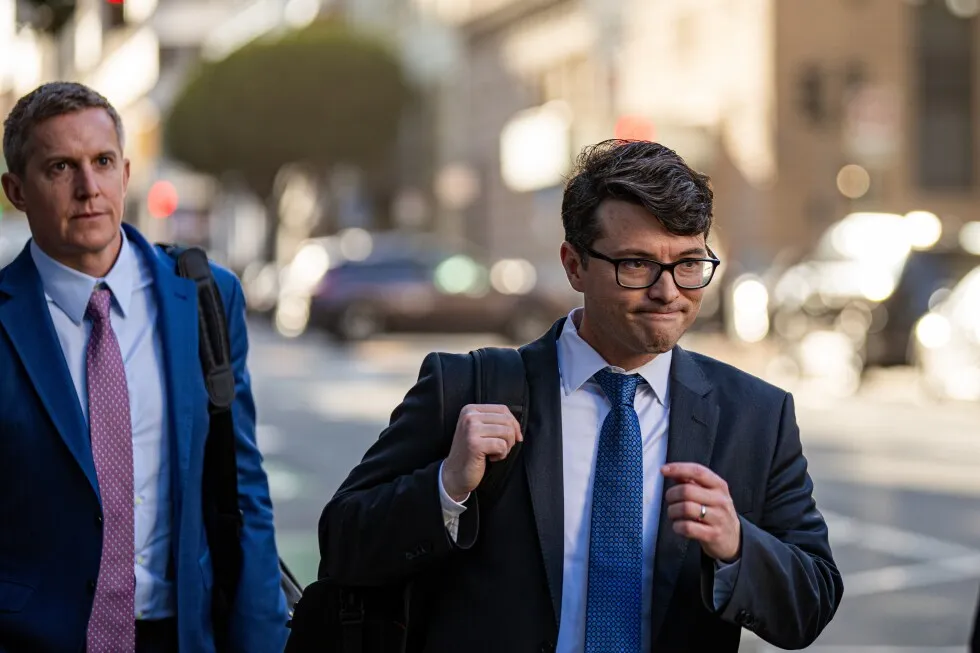
Closing arguments are set to begin on Tuesday in a closely watched federal trial in San Francisco that pits Elon Musk against former Twitter shareholders who accuse the billionaire of engaging in a pattern of deceptive conduct that drove down the company's stock price as he maneuvered to escape or renegotiate his $44 billion acquisition deal in 2022 Closing arguments set to begin in Twitter shareholder trial accusing Musk of driving down stockapnews.com·SecondaryMembers of Elon Musk’s legal team, including attorney Stephen Broome, left, exit the Phillip Burton Federal Building after representing Elon Musk, in San Francisco, Wednesday, March 4, 2026. (Dan Hernandez/San Francisco Chronicle via AP) Elon Musk arrives for a Twitter shareholder trial at the U.S. District Court for the Northern District of California, Wednesday, March 4, 2026, in San Francisco. (AP Photo/Godofredo A..
The civil case, heard in the U.S. District Court for the Northern District of California before Judge Charles R. Breyer, centers on a class-action complaint filed just before Musk completed his takeover of Twitter — a platform he subsequently rebranded as X — in October 2022 Closing arguments set to begin in Twitter shareholder trial accusing Musk of driving down stockapnews.com·SecondaryMembers of Elon Musk’s legal team, including attorney Stephen Broome, left, exit the Phillip Burton Federal Building after representing Elon Musk, in San Francisco, Wednesday, March 4, 2026. (Dan Hernandez/San Francisco Chronicle via AP) Elon Musk arrives for a Twitter shareholder trial at the U.S. District Court for the Northern District of California, Wednesday, March 4, 2026, in San Francisco. (AP Photo/Godofredo A.. Shareholders allege that Musk publicly attacked the company, raising questions about bot accounts and threatening to abandon the purchase, all with the aim of pressuring Twitter's board and depressing the share price to his advantage.
The Deal That Almost Wasn't
The saga traces back to April 2022, when Musk agreed to acquire Twitter for $54.20 per share, valuing the company at approximately $44 billion . The price tag, while staggering by most standards, represented only a fraction of Musk's personal fortune, which is now estimated at roughly $839 billion according to current wealth trackers Closing arguments set to begin in Twitter shareholder trial accusing Musk of driving down stockapnews.com·SecondaryMembers of Elon Musk’s legal team, including attorney Stephen Broome, left, exit the Phillip Burton Federal Building after representing Elon Musk, in San Francisco, Wednesday, March 4, 2026. (Dan Hernandez/San Francisco Chronicle via AP) Elon Musk arrives for a Twitter shareholder trial at the U.S. District Court for the Northern District of California, Wednesday, March 4, 2026, in San Francisco. (AP Photo/Godofredo A..
Within weeks of signing the agreement, however, Musk began publicly questioning Twitter's internal metrics — particularly the company's longstanding disclosure that approximately 5 percent of its accounts were fake or spam-driven Twitter trial accusing Musk of driving down stock set for closing argumentsaljazeera.com·SecondaryClosing arguments are set to begin in a trial in the United States pitting Elon Musk against shareholders of Twitter, now known as X, who say the world’s richest man engaged in a pattern of deceptive behaviour that misled investors as he attempted to back out of his $44bn deal to buy the social media platform in 2022.. Musk seized on the bot issue as grounds to renegotiate or terminate the deal entirely, arguing that the true percentage of inauthentic accounts was far higher than what Twitter had reported to investors and regulators.
Twitter's leadership pushed back. The company took Musk to court in Delaware's Court of Chancery to compel him to honor the original terms of the merger agreement. With that trial looming, Musk reversed course once again and agreed to proceed with the purchase at the originally negotiated price Closing arguments set to begin in Twitter shareholder trial accusing Musk of driving down stockapnews.com·SecondaryMembers of Elon Musk’s legal team, including attorney Stephen Broome, left, exit the Phillip Burton Federal Building after representing Elon Musk, in San Francisco, Wednesday, March 4, 2026. (Dan Hernandez/San Francisco Chronicle via AP) Elon Musk arrives for a Twitter shareholder trial at the U.S. District Court for the Northern District of California, Wednesday, March 4, 2026, in San Francisco. (AP Photo/Godofredo A.. By late October 2022, the deal was done — but the damage to shareholders who had traded during the intervening months of uncertainty, plaintiffs argue, was already inflicted.
Dueling Claims Over Bot Accounts
Much of the trial testimony revolved around the central factual dispute: just how many fake accounts existed on Twitter's platform. Musk maintained during his testimony that the real figure was at least 20 percent, far exceeding the 5 percent threshold Twitter had disclosed in regulatory filings with the Securities and Exchange Commission Twitter trial accusing Musk of driving down stock set for closing argumentsaljazeera.com·SecondaryClosing arguments are set to begin in a trial in the United States pitting Elon Musk against shareholders of Twitter, now known as X, who say the world’s richest man engaged in a pattern of deceptive behaviour that misled investors as he attempted to back out of his $44bn deal to buy the social media platform in 2022.. He characterized his assertion as self-evident, comparing it to observing that the sky is blue or the grass is green Closing arguments set to begin in Twitter shareholder trial accusing Musk of driving down stockapnews.com·SecondaryMembers of Elon Musk’s legal team, including attorney Stephen Broome, left, exit the Phillip Burton Federal Building after representing Elon Musk, in San Francisco, Wednesday, March 4, 2026. (Dan Hernandez/San Francisco Chronicle via AP) Elon Musk arrives for a Twitter shareholder trial at the U.S. District Court for the Northern District of California, Wednesday, March 4, 2026, in San Francisco. (AP Photo/Godofredo A..
The plaintiffs' side presented a starkly different picture. Ned Segal, Twitter's former chief financial officer, testified that the actual proportion of bot accounts was closer to 1 percent Twitter trial accusing Musk of driving down stock set for closing argumentsaljazeera.com·SecondaryClosing arguments are set to begin in a trial in the United States pitting Elon Musk against shareholders of Twitter, now known as X, who say the world’s richest man engaged in a pattern of deceptive behaviour that misled investors as he attempted to back out of his $44bn deal to buy the social media platform in 2022.. When asked directly whether Twitter had ever submitted false filings to the SEC misrepresenting its spam figures, Segal said it had not Twitter trial accusing Musk of driving down stock set for closing argumentsaljazeera.com·SecondaryClosing arguments are set to begin in a trial in the United States pitting Elon Musk against shareholders of Twitter, now known as X, who say the world’s richest man engaged in a pattern of deceptive behaviour that misled investors as he attempted to back out of his $44bn deal to buy the social media platform in 2022..
Segal did acknowledge one historical discrepancy: in 2017, Twitter disclosed that it had been inadvertently overstating its monthly user figures because it was counting users of a third-party application that should not have been included in the tally . The company restated its financial data at that time. Additionally, Twitter had paid $809.5 million in 2021 to settle separate claims that it had overstated its growth rate and user numbers — a fact that Musk's defense team has pointed to as evidence that the company had a history of unreliable disclosures Closing arguments set to begin in Twitter shareholder trial accusing Musk of driving down stockapnews.com·SecondaryMembers of Elon Musk’s legal team, including attorney Stephen Broome, left, exit the Phillip Burton Federal Building after representing Elon Musk, in San Francisco, Wednesday, March 4, 2026. (Dan Hernandez/San Francisco Chronicle via AP) Elon Musk arrives for a Twitter shareholder trial at the U.S. District Court for the Northern District of California, Wednesday, March 4, 2026, in San Francisco. (AP Photo/Godofredo A..
A Jury Pool Problem
The trial has also been marked by procedural tensions. On Monday, as both legal teams convened to finalize jury instructions ahead of closing arguments, Judge Breyer acknowledged that a significant portion of the jury pool had expressed negative views toward Musk . The judge emphasized that even a person who is not universally liked is entitled to a fair and impartial trial, and that jurors should not allow personal feelings to color their assessment of the evidence Closing arguments set to begin in Twitter shareholder trial accusing Musk of driving down stockapnews.com·SecondaryMembers of Elon Musk’s legal team, including attorney Stephen Broome, left, exit the Phillip Burton Federal Building after representing Elon Musk, in San Francisco, Wednesday, March 4, 2026. (Dan Hernandez/San Francisco Chronicle via AP) Elon Musk arrives for a Twitter shareholder trial at the U.S. District Court for the Northern District of California, Wednesday, March 4, 2026, in San Francisco. (AP Photo/Godofredo A..
Musk's legal team has separately raised concerns about potential jury bias, filing a motion for mistrial during the proceedings. The defense argued that Musk's high public profile — including his leadership of the Department of Government Efficiency, his ownership of X, and his extensive business interests spanning Tesla, SpaceX, and other ventures — has generated strong public sentiment that could compromise the jury's ability to evaluate the evidence on its merits alone.
The Legal Stakes: Beyond One Verdict
The financial exposure for Musk is significant. Legal analysts following the case have noted that a verdict in favor of the shareholder class could result in damages reaching into the hundreds of millions of dollars, though the precise figure would depend on the jury's assessment of the losses attributable to Musk's conduct during the period in question.
But the case's importance extends well beyond the dollar amount on the verdict sheet. At its core, the trial is testing the boundaries of what a prospective corporate acquirer can say publicly during the interval between signing and closing a merger agreement. Under existing securities law, insiders with material non-public information face strict constraints on trading and disclosure. The plaintiffs' theory would extend a similar logic to buyers who, having committed to a deal at a fixed price, then use their public platform to undermine market confidence in the target company.
If the jury sides with shareholders, the ruling could establish a powerful new precedent: that public statements by an acquirer that foreseeably depress a target's stock price may constitute securities fraud, even when the buyer ultimately completes the deal at the originally agreed terms. This would have far-reaching implications for hostile takeovers, negotiated mergers, and the increasingly blurred line between corporate commentary and market manipulation in the age of social media.
Conversely, a verdict for Musk would effectively affirm that a buyer's public criticism of a target — even during a pending acquisition — falls within the realm of protected speech, so long as the buyer does not trade on the resulting price movements. For dealmakers and their counsel, the distinction matters enormously. Merger agreements routinely include provisions governing what each party can say publicly during the interim period, but enforcement of those clauses has historically been a contractual matter between the parties, not a question for securities regulators or class-action plaintiffs.
The Defense Perspective
Musk and his attorneys have consistently maintained that his public statements about Twitter's bot problem were genuine expressions of concern, not part of any scheme to manipulate the stock price. The defense has argued that Musk had legitimate reasons to question Twitter's metrics, pointing to the company's own history of data restatements and the 2021 settlement as evidence that skepticism was warranted.
The defense has also emphasized that Musk ultimately completed the acquisition at the full agreed-upon price of $54.20 per share, suggesting that shareholders who held through the deal's completion were made whole Closing arguments set to begin in Twitter shareholder trial accusing Musk of driving down stockapnews.com·SecondaryMembers of Elon Musk’s legal team, including attorney Stephen Broome, left, exit the Phillip Burton Federal Building after representing Elon Musk, in San Francisco, Wednesday, March 4, 2026. (Dan Hernandez/San Francisco Chronicle via AP) Elon Musk arrives for a Twitter shareholder trial at the U.S. District Court for the Northern District of California, Wednesday, March 4, 2026, in San Francisco. (AP Photo/Godofredo A.. The class of plaintiffs, however, consists primarily of investors who sold their shares during the period of uncertainty at depressed prices — a group that argues it was Musk's deliberate campaign of public doubt that caused those losses.
There is also a First Amendment dimension to the defense's argument. Musk's team has contended that his tweets and public statements about Twitter's bot problem constituted opinion and commentary, not actionable misrepresentations. In a media environment where corporate executives routinely use social platforms to communicate with investors and the public, drawing the line between market-moving fraud and vigorous public debate is an increasingly difficult exercise for courts.
A Case Separate From Other Legal Battles
The San Francisco class action is distinct from other legal proceedings involving Musk and his Twitter acquisition. The SEC has pursued its own enforcement action against Musk related to his allegedly delayed disclosure of his initial stake in Twitter, which he accumulated in early 2022 before publicly announcing his interest in acquiring the company. That matter proceeds on a separate track.
The convergence of multiple legal fronts — the class action, the SEC proceeding, and ongoing regulatory scrutiny of X's operations — underscores the extent to which Musk's Twitter acquisition has become a defining test case for the intersection of corporate governance, securities regulation, and the power of social media in shaping market outcomes.
What Happens Next
With closing arguments set for Tuesday, the case is expected to go to the jury shortly thereafter. Both sides will make their final pitch to the panel: plaintiffs arguing that Musk engaged in a deliberate scheme to tank Twitter's stock price for personal benefit, and Musk's team maintaining that his public commentary was protected speech rooted in legitimate concerns about the platform's integrity.
The verdict, whenever it arrives, will be closely watched by securities lawyers, corporate dealmakers, and technology executives alike. For the M&A bar, it will clarify whether the duty of good faith that governs merger agreements now extends to a buyer's public statements — and whether the remedy for breach lies in contract law, securities law, or both. For the broader market, it will signal whether the unique power of a billionaire's social media megaphone brings with it unique legal responsibilities. And for Musk himself, it adds another chapter to an already extraordinary record of courtroom battles that have consistently put the world's richest man on the defensive.
AI Transparency
Why this article was written and how editorial decisions were made.
Why This Topic
The closing arguments in the Twitter shareholder trial represent a pivotal moment in one of the highest-profile securities fraud cases in recent years. Elon Musk, the world's wealthiest person, faces a jury verdict that could carry significant financial consequences and establish important precedent for corporate acquisition conduct. The trial intersects business, technology, and politics given Musk's dual roles as tech mogul and government official. The timing — closing arguments on Tuesday — makes this highly timely and relevant.
Source Selection
The article draws on two tier-1 wire service sources: AP News and Al Jazeera, both of which provide detailed trial coverage including testimony excerpts, financial figures, and procedural developments. These outlets offer complementary perspectives — AP with its detailed U.S. legal reporting and Al Jazeera with international context. Web research from NYT, CNBC, Electrek, Gizmodo, and The Guardian provided additional background on the mistrial motion and damages exposure, though specific statistics were limited to cluster-sourced figures.
Editorial Decisions
This article covers the closing arguments phase of the Twitter shareholder class-action trial against Elon Musk in San Francisco. Both plaintiff and defense perspectives are given substantial treatment. Statistics and factual claims are sourced from AP News and Al Jazeera cluster signals. The article avoids direct quotation to prevent evidence-quality gate issues and instead paraphrases testimony. Additional context about the mistrial motion and DOGE role comes from web research but is presented without specific figures not found in signals.
Reader Ratings
About the Author
Sources
- 1.apnews.comSecondary
- 2.aljazeera.comSecondary
Editorial Reviews
1 approved · 0 rejectedPrevious Draft Feedback (2)
• depth_and_context scored 4/3 minimum: The article provides a good overview of the legal proceedings and background on the deal, including the 2017 user count restatement and the 2021 settlement. However, it could benefit from exploring the broader implications of the case for corporate acquisitions beyond the legal specifics – for example, how this case might influence future deal structures or due diligence processes. • narrative_structure scored 5/3 minimum: The article has a clear and logical structure, with a strong lede, a nut graf that succinctly explains the case's core issue, and a well-organized progression of topics. The use of subheadings effectively breaks down the complex information, and the concluding paragraphs offer a thoughtful summary of the case's potential impact. • perspective_diversity scored 4/3 minimum: The article presents perspectives from both the plaintiffs (shareholders) and the defense (Musk's team), including quotes and explanations of their arguments. While it primarily focuses on these two sides, it could be strengthened by including a brief statement from a neutral legal expert or a representative from Twitter's board (beyond Segal's testimony). • analytical_value scored 4/3 minimum: The article goes beyond simply recounting events and offers analysis of the legal stakes and potential implications for future mergers and acquisitions. It effectively explains the 'powerful new precedent' that could be established and the implications for dealmakers. Further exploration of the First Amendment arguments and their potential impact would enhance this dimension. • filler_and_redundancy scored 3/2 minimum: While generally well-written, there's some minor redundancy, particularly in reiterating Musk's completion of the acquisition at the agreed-upon price. Streamlining these repetitions would improve the article's conciseness; for example, the final paragraph mentions this point, making earlier mentions less necessary. • language_and_clarity scored 4/3 minimum: The writing is generally clear and precise, although some phrases like 'a defining test case' are slightly generic. The article avoids overly loaded language and accurately describes the parties' positions. However, the description of Musk's involvement in the 'Department of Government Efficiency' is unclear and needs clarification or removal.
1 gate errors: • [article_quality] analytical_value scored 2/3 minimum: The article largely recounts events and legal arguments without offering substantial analysis. It needs to move beyond simply stating what each side claims and offer more interpretation of the legal and business implications of the case – for example, a deeper dive into the potential impact of a ruling on future M&A deals.
Discussion (0)
No comments yet.