CoreWeave secures $8.5 billion GPU-backed financing as investors weigh AI demand against execution risk
CoreWeave said on Tuesday it closed an $8.5 billion GPU-backed financing facility, giving the AI cloud provider fresh capital for expansion while leaving investors to judge whether demand, borrowing costs and delivery risks stay in balance.
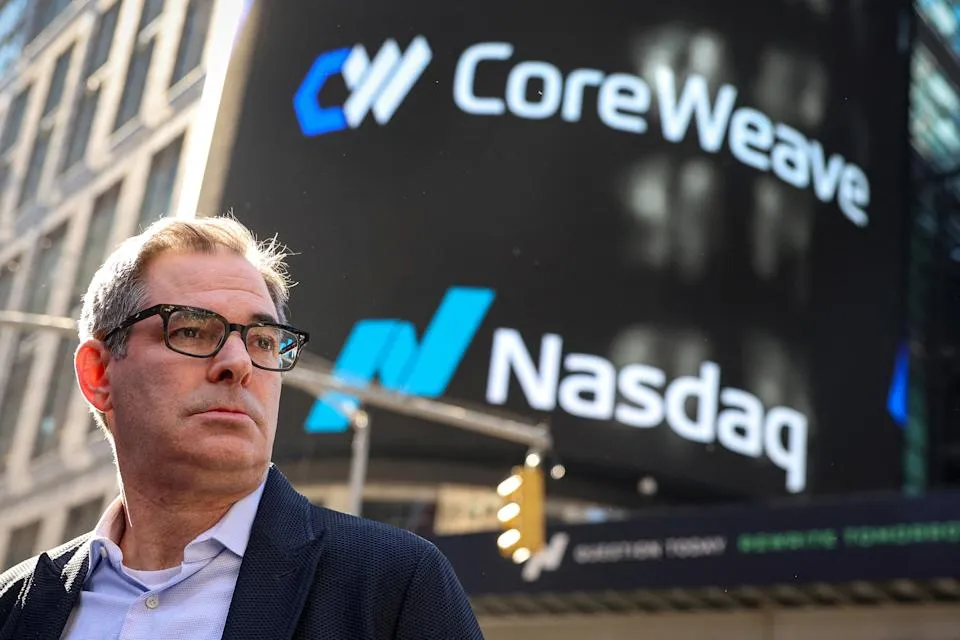
CoreWeave said on Tuesday that it closed an $8.5 billion delayed-draw term loan facility backed by GPU infrastructure, a financing package the company and market coverage described as an unusual step for AI cloud infrastructure rather than a routine corporate borrowing round. Shares rose sharply after the announcement, with one Yahoo Finance market report saying the stock jumped about 12% during the session and another saying it rose roughly 6% in early trading, underscoring how quickly investors treated the deal as a near-term confidence signal even before longer-term delivery questions were resolved.
The structure matters because CoreWeave is not borrowing simply to refinance older debt. The company said the facility is meant to support continued expansion of its AI cloud platform, with an initial borrowing capacity of about $7.5 billion and room to step up to $8.5 billion as assets stabilize. That means the financing is tied directly to the pace at which CoreWeave can keep adding compute capacity and bring data-center assets into productive use for existing customer demand.
The company and supporting market coverage both emphasized the investment-grade ratings attached to the facility. CoreWeave said the loan received an A3 rating from Moody's and an A (low) rating from DBRS, while Yahoo Finance's market summary described it as the first investment-grade financing backed by high-performance computing infrastructure linked to a customer contract. In practical terms, that rating story is part of the pitch: management wants lenders and equity investors to see the business less as a speculative AI trade and more as an infrastructure operator that can keep lowering its cost of capital as it scales.
Supporters of the transaction argue that this is exactly what a fast-growing AI infrastructure company should be doing at this stage. Brannin McBee, CoreWeave's chief development officer and co-founder, said the deal reflected confidence in AI adoption and further validation of a model the company believes is repeatable and scalable. Yahoo Finance's coverage also noted that the facility was designed to improve access to relatively low-cost capital at a moment when demand for AI compute remains strong and when large enterprise customers are still signing for capacity ahead of delivery.
There are also concrete reasons some investors welcomed the lender list and the borrowing terms. Company and market accounts said the facility was co-structured by MUFG and Morgan Stanley, with Goldman Sachs and JPMorgan as additional lead arrangers, and that Blackstone Credit & Insurance anchored an oversubscribed deal involving global financial institutions, asset managers and insurers. The same reports said the package includes both floating-rate and fixed-rate tranches, priced at SOFR plus 2.25% and roughly 5.9%, and matures in March 2032. For a company still in heavy buildout mode, being able to line up that duration and institutional sponsorship is a meaningful signal that the credit market is willing to finance the AI infrastructure boom beyond short-term hype.CoreWeave’s stock rises as investors cheer unique financing dealmarketwatch.com·Unverified
The skeptical case, however, has not gone away. Yahoo Finance's broader reporting said CoreWeave expects to double capital expenditures this year and previously signaled planned 2026 capital spending of about $30 billion to $35 billion, with management acknowledging earlier this year that the first quarter would likely mark a low point for margins. The same coverage said markets have recently punished growth companies both for overspending and for underspending on AI, a sign that investors now want proof that massive infrastructure budgets will convert into profitable, on-time delivery rather than just eye-catching backlog figures.CoreWeave Just Got a New $8.5 Billion Loan. Why the Stock Is Jumping.barrons.com·Unverified
That tension shows up most clearly in the contrast between backlog and execution risk. Yahoo Finance reported that CoreWeave's revenue backlog reached $66 billion at the end of last year, a figure that points to very large customer demand if the company can fulfill those commitments. But the same stories also said investors remain concerned about whether CoreWeave can bring data centers online fast enough and avoid delivery bottlenecks that would put promised revenue at risk. In other words, the financing helps answer the question of access to capital, but it does not fully answer the question of whether construction, deployment and customer onboarding will keep pace.CoreWeave Just Got a New $8.5 Billion Loan. Why the Stock Is Jumping.barrons.com·Unverified
Competition is another reason the stock reaction should not be mistaken for the final verdict. Yahoo Finance framed the financing as critical because CoreWeave is trying to expand while competing against hyperscalers such as Amazon and Microsoft, companies with deeper balance sheets, established customer relationships and more diversified revenue bases. If AI demand remains strong, CoreWeave can argue that specialized infrastructure and speed give it a real opening. If demand softens, or if customers become more selective about costs and delivery guarantees, the same leverage that looks efficient in an upcycle could look uncomfortable in a less forgiving market.CoreWeave Just Got a New $8.5 Billion Loan. Why the Stock Is Jumping.barrons.com·Unverified
The deal therefore sits at the center of two competing narratives that both deserve to be taken seriously. The optimistic narrative is that institutional lenders, rating agencies and customers are treating CoreWeave as a credible platform builder in one of the most capital-intensive segments of the AI economy, and that Tuesday's financing gives it the runway to meet demand without relying solely on more expensive or more dilutive funding. The cautionary narrative is that a larger balance sheet and cheaper funding only matter if the company can keep margins from eroding, execute data-center rollouts on schedule and convert backlog into durable cash flow before the market loses patience.CoreWeave Just Got a New $8.5 Billion Loan. Why the Stock Is Jumping.barrons.com·Unverified
What happens next is less about the headline size of the loan than about whether CoreWeave can turn financing momentum into operating proof points over the next several quarters. Investors will likely watch the pace of drawdowns, the timing of new capacity coming online, any change in gross margins under heavier capital spending, and whether management can show that signed demand remains dependable as competitors keep spending aggressively. Tuesday's announcement bought CoreWeave time and credibility in capital markets. It did not settle the harder debate over whether AI infrastructure enthusiasm is translating into a sustainable business model at the same speed that financing is expanding.CoreWeave Just Got a New $8.5 Billion Loan. Why the Stock Is Jumping.barrons.com·Unverified
AI Transparency
Why this article was written and how editorial decisions were made.
Why This Topic
This is newsworthy because CoreWeave sits near the center of the AI infrastructure buildout and the financing is unusually large, explicitly tied to GPU assets, and framed as investment grade. The story also captures the market's broader shift from rewarding AI narrative alone to scrutinizing capital intensity, execution and funding durability.
Source Selection
The source mix combines market reporting and company disclosure. Yahoo Finance provides the market reaction, backlog, capex pressure and investor concerns, while the company announcement adds the formal structure, ratings, pricing, maturity and lender roster. I avoided leaning on inaccessible paywalled material for factual claims and kept citations to the cluster's usable sources.
Editorial Decisions
Keep the tone neutral, descriptive and slightly skeptical without slipping into anti-AI rhetoric. Give genuine weight to the bullish financing interpretation and to the investor concerns around capex, margins, delivery timing and competition. Emphasize why the deal matters now and what indicators investors will watch next.
Reader Ratings
About the Author
Sources
- 1.barrons.comUnverified
- 2.reuters.comSecondary
- 3.marketwatch.comUnverified
- 4.finance.yahoo.comSecondary
- 5.finance.yahoo.comSecondary
- 6.investors.coreweave.comUnverified
- 7.finance.yahoo.comSecondary
Editorial Reviews
1 approved · 0 rejectedPrevious Draft Feedback (1)
Balanced framing, clear temporal cues, sufficient citations and image verified.




Discussion (0)
No comments yet.