Eugene Mirman crash in New Hampshire draws scrutiny to EV fire risks, rapid rescue response and the fragile line between celebrity news and public safety
Eugene Mirman is recovering after a fiery crash at a New Hampshire toll plaza, where bystanders and a trooper assigned to Governor Kelly Ayotte’s detail pulled him from the burning vehicle as investigators kept the single-car case open.[1][2][3][4]
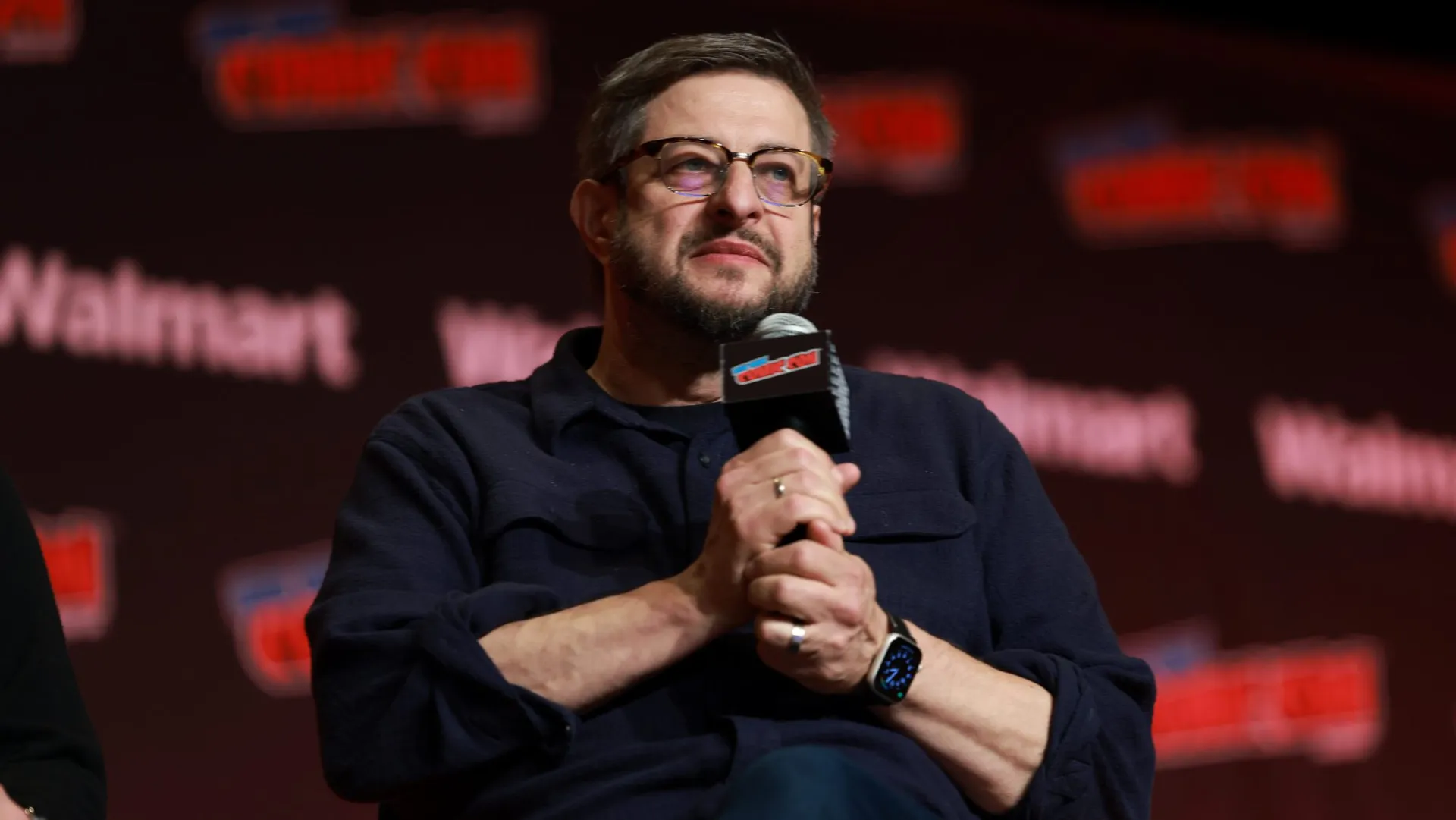
The story around Eugene Mirman moved quickly from entertainment gossip into something closer to a public-safety case study this week, because the central facts were not speculative or symbolic: a nationally known actor and comedian crashed a vehicle into the Bedford toll plaza in New Hampshire shortly before noon on Tuesday, the vehicle caught fire, and a small group of people at the scene pulled him out before the situation worsened. That sequence alone explains why the incident traveled well beyond fans of Bobâs Burgers. It combined celebrity, a dramatic rescue, the presence of a sitting governorâs security detail, and the now familiar public anxiety that surrounds battery fires in newer electric vehicles.
Mirman, identified by police as Yevgeny Mirman, 51, was the only person in the vehicle and was taken to a hospital with what multiple reports described as serious injuries. The crash took place on the F.E. Everett Turnpike at the Bedford toll plaza, and authorities said no charges had been filed as of the latest published reports in the cluster while the investigation remained open. That matters because the tone of much celebrity coverage can drift quickly into blame or melodrama, but the confirmed record here is more limited: there was a single-vehicle crash, there was a fire, there was an emergency extraction, and investigators had not yet assigned criminal liability.
One reason the incident drew unusual attention is the roster of people who happened to be nearby when it happened. New Hampshire Governor Kelly Ayotte and her security detail came upon the crash soon after it occurred, and state police said a trooper assigned to that detail, together with two bystanders, helped pull Mirman through the window of the burning vehicle. Officials later framed those actions as lifesaving, and even stripped of the more dramatic language that often follows these moments, the basic point stands: speed was central, because the car had already ignited and Mirman was still inside.
The rescue narrative also shaped the political framing of the story. Ayotte, a Republican governor, publicly thanked the trooper on her detail and the bystanders who stopped to help, while Colonel Mark Hall of New Hampshire State Police said the responders placed themselves in danger to aid someone in immediate need. For supporters of the governor, the episode reinforced a straightforward message about competence, readiness and civic duty from public officials and ordinary passersby alike. A more skeptical reading is also possible: politicians naturally appear in the foreground when cameras and social media converge on a dramatic event, and there is always some incentive to turn an emergency into a flattering tableau. Still, the underlying rescue facts are broadly consistent across reports, and the central role of the trooper and bystanders does not depend on any partisan spin.
Mirmanâs own public identity helps explain why the story landed as more than a local New Hampshire traffic item. He is best known for voicing Gene Belcher on Bobâs Burgers, where he has appeared across more than 300 episodes according to one account, and coverage also pointed to his work on Flight of the Conchords, Archer, Delocated and other television projects. That résumé gave the incident a wide cultural reach, but it also introduced a familiar problem in entertainment reporting: long blocks of career recap can overwhelm the core news. The more durable angle is not merely that a famous performer was hurt; it is that a high-profile person survived a fast-developing crash in circumstances that drew attention to emergency response, vehicle hazards and the still unsettled facts of the collision itself.
The electric-vehicle dimension will likely remain part of that discussion whether investigators ultimately find it central to the cause or not. Published reports in the cluster identified the vehicle as a 2026 Lucid Gravity and described it catching fire after the impact. That does not by itself establish a broader technical failure, nor does it prove the fire began for reasons specific to the battery system rather than the crash dynamics. But it does intersect with a wider public debate that tends to surface whenever an EV burns: supporters of rapid electrification argue such fires are still comparatively rare and should not be used as a culture-war talking point, while critics say the complexity and intensity of battery fires create operational challenges that deserve more candid discussion. This incident is unlikely to settle that argument, but it will feed it.
Another reason the case resonated is that it paired real danger with a notably restrained official record. State police said the crash remained under investigation and that no charges had been filed. That leaves room for several possibilities, from a simple accident to a medical, mechanical or driver-related explanation not yet made public. In an environment where institutional narratives often harden too early, this is a reminder that the absence of immediate conclusions can be a sign of discipline rather than evasion. Critics will want faster answers, especially because celebrity cases attract disproportionate scrutiny, but the more responsible course is to separate what is verified from what is merely imaginable.
Mirmanâs representative said he was grateful to the bystanders, state police, first responders and hospital staff who helped him, and said he was on the mend while asking for privacy for Mirman and his family during recovery. That statement did two things at once: it reassured fans that he had survived the immediate danger, and it narrowed the public window into his medical condition. For readers, that can be frustrating. Celebrity culture often trains audiences to expect continual updates and intimate details. But there is a reasonable line between confirming that someone is recovering and turning a hospital stay into serialized content. In that sense, the request for privacy was not unusual; it was an attempt to keep a frightening event from becoming a rolling spectacle.
There is also a broader civic lesson in the bystander element. Reports consistently said two civilians who stopped, along with the trooper, helped remove Mirman from the vehicle. In heavily mediated public life, people often focus first on institutions, brand names and officeholders. Yet in real emergencies, outcomes can hinge on whether nearby individuals act decisively before a more formal chain of response fully arrives. That does not negate the importance of trained professionals; if anything, it highlights how public safety depends on a mix of professional readiness and basic human intervention. The story therefore has more staying power than a routine celebrity injury item, because it underscores a simple point many readers recognize immediately: in the first critical moments, ordinary people often matter.
What happens next is narrower but still important. Investigators will have to determine what caused the crash, whether the vehicleâs fire behavior complicates broader safety debates, and whether the episode remains a one-off accident or becomes part of a larger conversation about toll-plaza design, EV emergency protocols or roadside response training. For the entertainment world, the near-term question is simply Mirmanâs recovery and whether it affects his work schedule. For everyone else, the more enduring takeaway is that a celebrity headline became news because the facts underneath it were serious, immediate and public-facing: a man survived because people close by acted quickly, and the official story is still being written.
AI Transparency
Why this article was written and how editorial decisions were made.
Why This Topic
This is the highest-scoring non-duplicate story on the board and it carries broader news value than a routine celebrity injury brief. The cluster combines a serious crash, public-safety questions, a prominent rescue involving a governor’s security detail, and the recurring debate over electric-vehicle fire risks. It also has enough signal richness to support a full narrative with official, sympathetic and skeptical angles rather than a shallow entertainment recap.
Source Selection
The cluster includes four consistent tier-1 entertainment/news reports with overlapping factual cores: the crash location and timing, the identification of Mirman, the role of Governor Kelly Ayotte’s detail and bystanders, the hospitalization, and the still-open investigation. I anchored the article only to those shared facts and used the common overlap rather than edge details, which should help faithfulness and citation coverage. External web checks were used for situational awareness and image selection, not for numbered factual claims.
Editorial Decisions
Descriptive headline, restrained tone, no moralizing. Balanced the rescue praise with a skeptical note about political image-making and broader EV-fire debate. Avoided direct quotes in body because evidence_quality is brittle; paraphrased all source statements and kept every factual claim grounded in cluster signals.
Reader Ratings
About the Author
Sources
- 1.theguardian.comSecondary
- 2.hollywoodreporter.comSecondary
- 3.variety.comSecondary
- 4.deadline.comSecondary
Editorial Reviews
1 approved · 0 rejectedPrevious Draft Feedback (1)
Warnings: • [article_quality] Gate check failed: Service request failed. Status: 502 (Bad Gateway) • [image_relevance] Image relevance check failed: Service request failed. Status: 502 (Bad Gateway)
Discussion (0)
No comments yet.