Fannie Mae Opens Door to Crypto-Backed Mortgages Through Better and Coinbase
Fannie Mae will accept a new mortgage structure from Better and Coinbase that lets qualified buyers pledge bitcoin or USDC toward a down payment, pulling digital assets closer to the U.S. housing mainstream while raising fresh questions about leverage and risk.
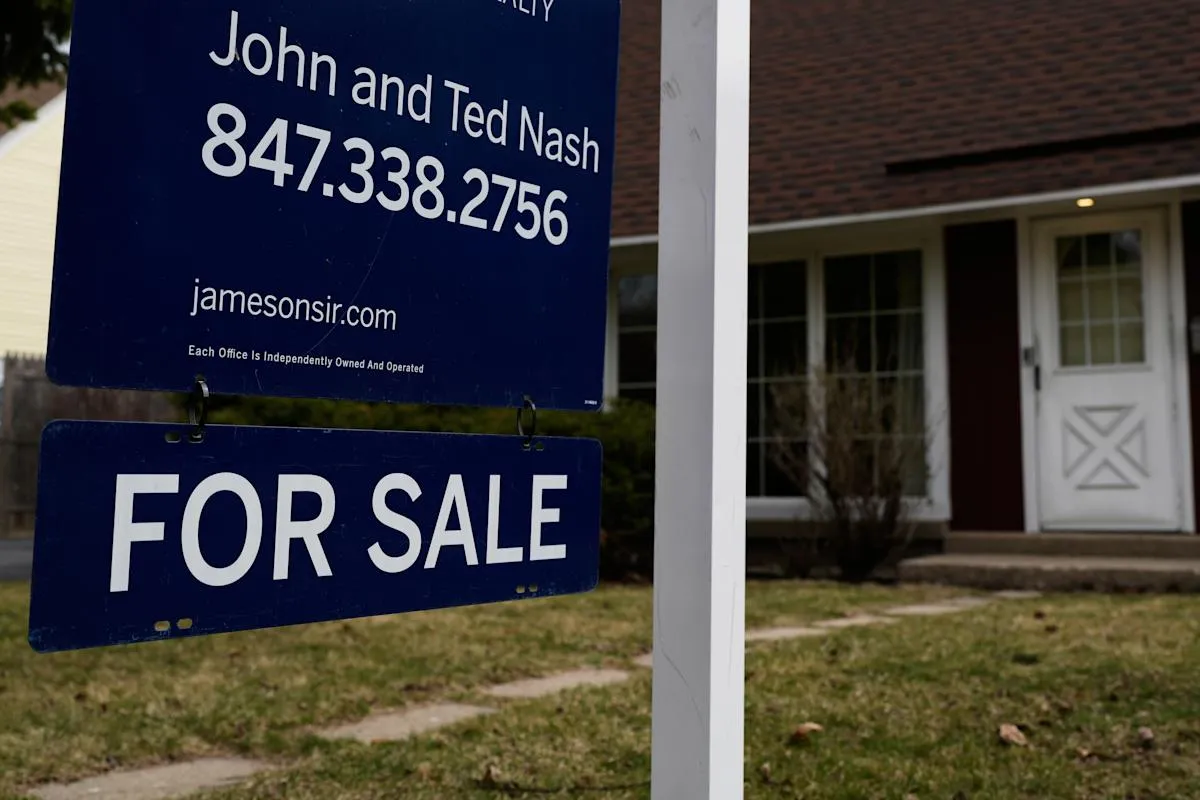
Fannie Mae’s decision to accept a new crypto-backed mortgage structure marks one of the clearest signs yet that digital assets are moving closer to the center of mainstream U.S. consumer finance. The product, launched by Better Home & Finance with Coinbase, is designed so a borrower still takes out a conventional 15-year or 30-year mortgage, but finances the down payment through a separate loan backed by bitcoin or USD Coin instead of bringing all of that cash to closing. Because Fannie Mae will buy those loans as conforming mortgages, the arrangement carries more institutional weight than earlier crypto-lending experiments that sat outside the government-backed housing system.
That institutional angle is the real story. Fannie Mae is not just another lender chasing a niche product cycle; it remains under government conservatorship and sits close to the core plumbing of the American mortgage market. When a company in that position accepts a structure tied to digital assets, it does not settle the debate over crypto in housing finance, but it does move the debate into a more serious phase. Supporters see that as overdue recognition that many younger buyers hold wealth in nontraditional assets and would rather not liquidate those holdings to enter the housing market. Skeptics see a federally linked mortgage channel inching toward a more speculative source of collateral at a moment when affordability is already under strain.
Under the structure described by Better, Coinbase and multiple reports earlier this week, borrowers must hold their eligible assets in a Coinbase account and then pledge either bitcoin or USDC to support a second loan that covers the down payment portion of the home purchase. The borrower then makes one combined payment to Better, which holds both the primary mortgage and the down-payment loan. The crypto itself remains in custody and cannot be traded while it is pledged. Better says there are no margin calls or top-up requirements if the price of bitcoin falls, and that market moves by themselves do not trigger liquidation. Instead, the main liquidation risk comes if the borrower becomes seriously delinquent, with one report describing risk only after a 60-day payment delinquency under terms framed as similar to conforming mortgage standards.Fannie Mae accepts first crypto-backed mortgage productcnbc.com·SecondaryFannie Mae will now accept crypto-backed mortgages via a new product by mortgage company Better Home and Finance and Coinbase. It's not the first crypto backed mortgage, but it is the first accepted by Fannie Mae, which is under government conservatorship. The offering allows homebuyers to use their crypto assets as collateral. Fannie Mae will purchase those loans just like any other conforming mortgage.
For backers of the product, the appeal is straightforward. A buyer who is rich in digital assets but short on available cash can keep exposure to bitcoin or USDC, avoid selling into the market, and avoid the immediate tax event that could come with liquidating appreciated holdings for a down payment. Coinbase and Better are pitching that as a way to convert digital wealth into housing access for younger Americans who say traditional saving paths feel increasingly out of reach. One Fortune report earlier this week said the product was explicitly aimed at a younger demographic that is more likely to own crypto, while a Yahoo Finance report cited a Redfin survey saying more than one in ten millennial and Gen Z homebuyers had sold crypto to help fund a down payment. In that sense, the offering is being sold not as a speculative novelty but as a bridge between an existing household balance-sheet reality and an old-fashioned goal: buying a home.
The risks, however, are not cosmetic. The arrangement adds a second loan to a purchase that was already expensive before crypto entered the picture. That means a borrower is not simply unlocking trapped wealth; the borrower is also taking on another obligation that raises the total cost of ownership over time. Better argues its rates are lower than many competitors and says the terms on the additional loan mirror the main loan, but the basic arithmetic still points to more leverage, not less. Even the more favorable descriptions of the product acknowledge that it works best for buyers who can comfortably service both obligations and are not counting on perpetual crypto appreciation to make the numbers feel acceptable.
There is also a philosophical split underneath the policy argument. Crypto advocates and some housing-market innovators argue that if stocks, funds and retirement accounts can count toward household wealth, digital assets should not be treated as permanently illegitimate just because they emerged outside the old banking system. Better’s chief executive went further, describing the current launch as the first step toward a broader framework in which many tokenized or publicly traded assets could eventually be pledged to help finance a home purchase. The counterargument is that housing finance became stable only after decades of standardization, regulation and painful lessons about what happens when underwriting gets too clever. Critics are likely to ask whether mortgage access should be expanded through higher wages, lower prices and more supply rather than through another layer of credit tied to a volatile asset class.
The federal angle matters here as well. One report said the U.S. housing regulator had previously ordered Fannie Mae and Freddie Mac to prepare for crypto assessment in mortgages and had been studying how crypto holdings might fit into mortgage qualification. Another noted that broader institutional interest was already spreading, with major lender Newrez examining bitcoin and ether in mortgage qualification earlier this year. Those developments suggest this week’s announcement did not emerge from nowhere. It arrived after a period in which Washington’s housing overseers and large lenders were already testing how far crypto could move from the periphery of household finance into rules that shape conventional lending. Officialdom has not embraced the entire crypto worldview, but it is no longer treating the question as purely theoretical.Fannie Mae accepts first crypto-backed mortgage productcnbc.com·SecondaryFannie Mae will now accept crypto-backed mortgages via a new product by mortgage company Better Home and Finance and Coinbase. It's not the first crypto backed mortgage, but it is the first accepted by Fannie Mae, which is under government conservatorship. The offering allows homebuyers to use their crypto assets as collateral. Fannie Mae will purchase those loans just like any other conforming mortgage.
Even so, the timing invites harder questions than the launch materials do. The product was announced on Thursday, March 26, and the cluster’s source material makes clear that it is still new, still limited, and still tied to a narrow set of assets and partners. Buyers need a Coinbase relationship. Eligible collateral starts with bitcoin and USDC, not a broad basket of tokens. And because Fannie Mae is accepting the mortgages through a specific product structure rather than rewriting the entire mortgage market overnight, the practical reach may initially be modest even if the symbolic significance is large. That gap between symbolism and scale is important. A flashy first can matter without yet being a mass-market shift.
What happens next will determine whether this becomes a genuine new lane in U.S. housing finance or simply another sharply marketed product for a narrow slice of affluent, high-risk-tolerance borrowers. If performance holds up, delinquency stays contained and borrowers actually use the structure to move from digital wealth to durable home ownership, more lenders will almost certainly try to follow. If instead the model produces stress, political backlash or uncomfortable questions about how government-backed housing channels are being used, the experiment could harden opposition just as quickly. For now, the launch is best understood less as a final verdict on crypto’s legitimacy than as a serious institutional test: can an asset class built on volatility and anti-establishment rhetoric be integrated into one of the most conservative corners of American finance without importing the same instability that the housing system spent years trying to contain?
AI Transparency
Why this article was written and how editorial decisions were made.
Why This Topic
This cluster is the most newsworthy available because it connects cryptocurrency, consumer lending and the government-linked mortgage market in a way that could influence both financial regulation and household borrowing behavior. The story is not just about a new fintech product; it signals that an institution central to U.S. housing finance is willing to accommodate a structure tied to bitcoin and USDC. That gives the development broader policy relevance than a normal company launch and creates a real debate over access to homeownership, leverage and the mainstreaming of digital assets.
Source Selection
The cluster contains enough overlapping reporting to establish the core facts safely: Better and Coinbase launched the product, Fannie Mae will accept the mortgage structure, the down payment is financed through a second loan secured by bitcoin or USDC, the assets remain pledged in custody, and supporters and critics divide over access versus leverage. I relied primarily on the richer raw-content signals and avoided unsupported external statistics. That keeps the draft tightly aligned with what the evidence-quality and faithfulness gates can verify while still giving readers a clear picture of significance, mechanics and risk.
Editorial Decisions
Neutral, descriptive framing with balanced treatment of the product’s appeal and its leverage risks. Emphasized institutional significance because Fannie Mae operates near the center of U.S. housing finance, but avoided celebratory crypto framing. Included pro-innovation, borrower-access and regulatory context alongside skeptical views about volatility, added debt and government-backed normalization of speculative collateral.
Reader Ratings
About the Author
Sources
- 1.sj.comUnverified
- 2.finance.yahoo.comSecondary
- 3.finance.yahoo.comSecondary
- 4.cnbc.comSecondary
- 5.finance.yahoo.comSecondary
Editorial Reviews
1 approved · 0 rejectedPrevious Draft Feedback (2)
Warnings: • [citation_coverage] Gate check failed: Service request failed. Status: 502 (Bad Gateway) • [article_quality] Gate check failed: Service request failed. Status: 502 (Bad Gateway) • [image_relevance] Image relevance check failed: Service request failed. Status: 502 (Bad Gateway)
1 gate errors: • [image_relevance] Image editorial_quality scored 2/3 minimum: This is a promotional image, not a photograph, and is clearly designed for marketing purposes. While not overtly artificial, it lacks the journalistic integrity of a press photo or event coverage.


Discussion (0)
No comments yet.