Federal Reserve Proposes Sweeping Cuts to Bank Capital Requirements in Post-Crisis Overhaul
The Fed unveiled proposals on Thursday to lower capital requirements for the largest U.S. banks by 4.8%, marking a major reversal of post-2008 crisis safeguards as the industry gains billions in potential relief amid internal dissent.
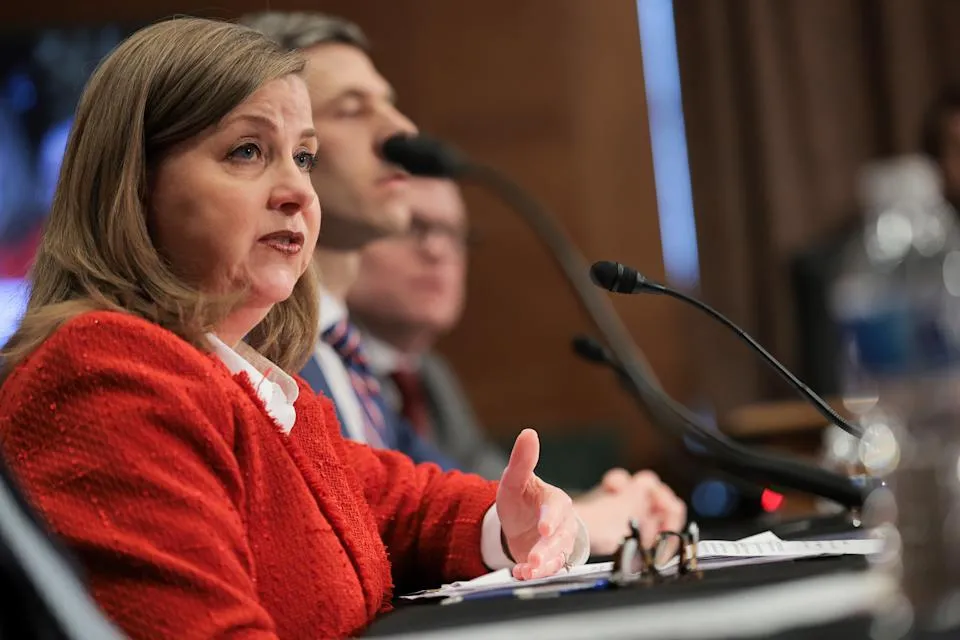
The Federal Reserve on Thursday unveiled a sweeping set of proposals to reduce capital requirements for American banks, marking the most significant rollback of post-2008 financial crisis safeguards in nearly two decades. The long-awaited plan, led by Fed Vice Chair for Supervision Michelle Bowman, would cut capital buffers across the banking sector while aiming to recalibrate rules that regulators say have become overly punitive.
Under the proposals approved by the Fed board, the largest U.S. banks — including institutions like JPMorgan Chase and Bank of America — would see their capital requirements fall by 4.8% on a net basis Federal Reserve proposes lowering capital requirements for banksfinance.yahoo.com·SecondaryA long-awaited proposal from the Federal Reserve released Thursday would tweak financial crisis-era capital requirements, reducing banks' cash cushions to align with changes in the economy while aiming to boost lending. Under the proposal, the largest banks, like JPMorgan Chase (JPM) and Bank of America (BAC), would see capital fall on net by 4.8%, while other large banks — those with assets between $100 billion and $700 billion — would see their capital requirements drop by 5.2%.. Large regional banks with assets between $100 billion and $700 billion would experience a 5.2% reduction, while smaller banks with less than $100 billion in assets stand to benefit the most, with requirements dropping by 7.8% Federal Reserve proposes lowering capital requirements for banksfinance.yahoo.com·SecondaryA long-awaited proposal from the Federal Reserve released Thursday would tweak financial crisis-era capital requirements, reducing banks' cash cushions to align with changes in the economy while aiming to boost lending. Under the proposal, the largest banks, like JPMorgan Chase (JPM) and Bank of America (BAC), would see capital fall on net by 4.8%, while other large banks — those with assets between $100 billion and $700 billion — would see their capital requirements drop by 5.2%..
Even after the proposed reductions take effect, the largest banks in the country would still hold more than $800 billion in capital reserves to guard against economic downturns Federal Reserve proposes lowering capital requirements for banksfinance.yahoo.com·SecondaryA long-awaited proposal from the Federal Reserve released Thursday would tweak financial crisis-era capital requirements, reducing banks' cash cushions to align with changes in the economy while aiming to boost lending. Under the proposal, the largest banks, like JPMorgan Chase (JPM) and Bank of America (BAC), would see capital fall on net by 4.8%, while other large banks — those with assets between $100 billion and $700 billion — would see their capital requirements drop by 5.2%.. Capital levels would remain approximately double what they were before the 2008 financial crisis, according to Fed estimates.
A Nine-Month Review Culminates
The proposals are the product of a comprehensive nine-month review of the capital framework that examined overlaps between Basel III rules and annual stress testing Federal Reserve proposes lowering capital requirements for banksfinance.yahoo.com·SecondaryA long-awaited proposal from the Federal Reserve released Thursday would tweak financial crisis-era capital requirements, reducing banks' cash cushions to align with changes in the economy while aiming to boost lending. Under the proposal, the largest banks, like JPMorgan Chase (JPM) and Bank of America (BAC), would see capital fall on net by 4.8%, while other large banks — those with assets between $100 billion and $700 billion — would see their capital requirements drop by 5.2%.. The review sought to ensure that when these regulatory tools are combined, they capture genuine risk rather than imposing redundant or excessive burdens on banks.
Bowman, who has spearheaded the overhaul since being appointed by President Donald Trump, argued that the changes would better align requirements with actual risk while maintaining the safety and soundness of the financial system . She has consistently maintained that while post-crisis capital buffers were necessary, experience has shown that excessive requirements can restrict credit availability and push banking activities into less-regulated sectors without meaningfully improving systemic safety Federal Reserve proposes lowering capital requirements for banksfinance.yahoo.com·SecondaryA long-awaited proposal from the Federal Reserve released Thursday would tweak financial crisis-era capital requirements, reducing banks' cash cushions to align with changes in the economy while aiming to boost lending. Under the proposal, the largest banks, like JPMorgan Chase (JPM) and Bank of America (BAC), would see capital fall on net by 4.8%, while other large banks — those with assets between $100 billion and $700 billion — would see their capital requirements drop by 5.2%..
The proposals also aim to bring traditional lending activities — including mortgage origination, mortgage servicing, and business lending — back into the regulated banking system Federal Reserve proposes lowering capital requirements for banksfinance.yahoo.com·SecondaryA long-awaited proposal from the Federal Reserve released Thursday would tweak financial crisis-era capital requirements, reducing banks' cash cushions to align with changes in the economy while aiming to boost lending. Under the proposal, the largest banks, like JPMorgan Chase (JPM) and Bank of America (BAC), would see capital fall on net by 4.8%, while other large banks — those with assets between $100 billion and $700 billion — would see their capital requirements drop by 5.2%.. In recent years, these activities have increasingly migrated to non-bank lenders that face lighter regulatory scrutiny, a trend that some analysts view as a systemic risk in itself.
Basel III Endgame Rewritten
At the heart of the overhaul is a rewrite of the contentious Basel III Endgame rules, the final piece of international capital standards introduced following the 2008 crisis. These standards govern how banks assess and allocate funds to cover credit, market, and operational risks.
The previous attempt to implement these rules, led by former Fed Vice Chair for Supervision Michael Barr, would have hiked capital requirements for some banks by as much as 20%. That proposal triggered an unprecedented lobbying campaign by Wall Street, which successfully won over many lawmakers and created deep divisions among regulators. The effort ultimately dragged the project into the current administration, which has sided with the banking industry.
Bowman indicated during a Cato Institute speech earlier this month that the central bank's revised implementation of Basel III would result in only a modest increase in certain requirements, which would be more than offset by reductions elsewhere Federal Reserve unveils its proposal for lower bank capital requirementsfinance.yahoo.com·SecondaryA long-awaited proposal from the Federal Reserve released Thursday would tweak financial crisis-era capital requirements, reducing banks' cash cushions to align with changes in the economy while aiming to boost lending. Under the proposal, the largest banks, like JPMorgan Chase (JPM) and Bank of America (BAC), would see capital fall on net by 4.8%, while other large banks — those with assets between $100 billion and $700 billion — would see their capital requirements drop by 5.2%.. Part of the recalibration involves lowering the weight given to short-term funding risks in capital calculations and adjusting buffers for inflation and economic growth to prevent automatic increases as bank balance sheets expand Federal Reserve unveils its proposal for lower bank capital requirementsfinance.yahoo.com·SecondaryA long-awaited proposal from the Federal Reserve released Thursday would tweak financial crisis-era capital requirements, reducing banks' cash cushions to align with changes in the economy while aiming to boost lending. Under the proposal, the largest banks, like JPMorgan Chase (JPM) and Bank of America (BAC), would see capital fall on net by 4.8%, while other large banks — those with assets between $100 billion and $700 billion — would see their capital requirements drop by 5.2%..
The Fed also proposed changes to the Global Systemically Important Bank surcharge, updating economic inputs and adjusting how short-term funding risk is calculated for the eight largest U.S. financial institutions.
Internal Dissent and Warnings
Not all Fed officials support the direction of the overhaul. Governor Michael Barr, who previously led the regulatory effort under a different approach, argued that the proposed reductions are both unnecessary and potentially dangerous for the stability of the financial system Federal Reserve proposes lowering capital requirements for banksfinance.yahoo.com·SecondaryA long-awaited proposal from the Federal Reserve released Thursday would tweak financial crisis-era capital requirements, reducing banks' cash cushions to align with changes in the economy while aiming to boost lending. Under the proposal, the largest banks, like JPMorgan Chase (JPM) and Bank of America (BAC), would see capital fall on net by 4.8%, while other large banks — those with assets between $100 billion and $700 billion — would see their capital requirements drop by 5.2%.. Barr estimated that when combined with previously proposed changes to the Fed's stress tests, the effective reduction for the largest banks could amount to roughly 6%, or approximately $60 billion in freed-up capital Federal Reserve proposes lowering capital requirements for banksfinance.yahoo.com·SecondaryA long-awaited proposal from the Federal Reserve released Thursday would tweak financial crisis-era capital requirements, reducing banks' cash cushions to align with changes in the economy while aiming to boost lending. Under the proposal, the largest banks, like JPMorgan Chase (JPM) and Bank of America (BAC), would see capital fall on net by 4.8%, while other large banks — those with assets between $100 billion and $700 billion — would see their capital requirements drop by 5.2%..
The dissent highlights a genuine tension within the central bank. Proponents of the changes argue that overly conservative capital rules have stifled lending and economic growth, while critics worry that easing requirements during a period of rising geopolitical uncertainty and growing private credit risks is precisely the wrong move.
Ratings agency Moody's weighed in on Thursday, describing the potential decline in capital levels as a negative development for bank creditworthiness. The agency noted that the impact would vary significantly depending on individual banks' business models and balance sheet compositions.
Industry Response
The banking industry's initial reaction was measured but positive. A coalition of major trade groups — including the Bank Policy Institute, American Bankers Association, Consumer Bankers Association, Financial Services Forum, and National Bankers Association — issued a joint statement describing the proposals as an important step forward Federal Reserve proposes lowering capital requirements for banksfinance.yahoo.com·SecondaryA long-awaited proposal from the Federal Reserve released Thursday would tweak financial crisis-era capital requirements, reducing banks' cash cushions to align with changes in the economy while aiming to boost lending. Under the proposal, the largest banks, like JPMorgan Chase (JPM) and Bank of America (BAC), would see capital fall on net by 4.8%, while other large banks — those with assets between $100 billion and $700 billion — would see their capital requirements drop by 5.2%.. The groups said they would carefully review the details before providing formal feedback.
TD Cowen analyst Jaret Seiberg suggested that the proposals could become even more favorable for banks through the notice and comment process, characterizing the current numbers as a floor rather than a ceiling for capital relief Federal Reserve proposes lowering capital requirements for banksfinance.yahoo.com·SecondaryA long-awaited proposal from the Federal Reserve released Thursday would tweak financial crisis-era capital requirements, reducing banks' cash cushions to align with changes in the economy while aiming to boost lending. Under the proposal, the largest banks, like JPMorgan Chase (JPM) and Bank of America (BAC), would see capital fall on net by 4.8%, while other large banks — those with assets between $100 billion and $700 billion — would see their capital requirements drop by 5.2%..
Morgan Stanley analysts estimated earlier this month that major banks are currently sitting on roughly $175 billion in excess capital due to years of uncertainty over where U.S. rules would settle. With greater clarity now emerging, banks could begin deploying that excess through additional lending, capital markets activity, and share buybacks.
What Happens Next
The proposals approved on Thursday by the Fed, the Federal Deposit Insurance Corporation, and the Office of the Comptroller of the Currency now enter a 90-day public comment period. Banks and other stakeholders will have until June 18 to submit feedback on the thousands of pages of proposed rules Federal Reserve proposes lowering capital requirements for banksfinance.yahoo.com·SecondaryA long-awaited proposal from the Federal Reserve released Thursday would tweak financial crisis-era capital requirements, reducing banks' cash cushions to align with changes in the economy while aiming to boost lending. Under the proposal, the largest banks, like JPMorgan Chase (JPM) and Bank of America (BAC), would see capital fall on net by 4.8%, while other large banks — those with assets between $100 billion and $700 billion — would see their capital requirements drop by 5.2%..
Fed Chair Jerome Powell acknowledged during the proceedings that certain elements of the post-crisis regulatory regime warrant fresh scrutiny, noting that it is healthy practice to re-examine rules over time to ensure they remain effective Federal Reserve proposes lowering capital requirements for banksfinance.yahoo.com·SecondaryA long-awaited proposal from the Federal Reserve released Thursday would tweak financial crisis-era capital requirements, reducing banks' cash cushions to align with changes in the economy while aiming to boost lending. Under the proposal, the largest banks, like JPMorgan Chase (JPM) and Bank of America (BAC), would see capital fall on net by 4.8%, while other large banks — those with assets between $100 billion and $700 billion — would see their capital requirements drop by 5.2%..
The outcome of the comment period will determine the final shape of the rules, but the direction is clear: nearly two decades after the financial crisis prompted a massive tightening of bank regulation, the pendulum is swinging decisively back toward looser requirements. Whether that represents a sensible recalibration or a dangerous erosion of financial safeguards will likely depend on what happens in the broader economy — and whether the risks that critics warn about materialize before the new framework is fully in place.
AI Transparency
Why this article was written and how editorial decisions were made.
Why This Topic
The Federal Reserve's proposal to lower bank capital requirements represents a watershed moment in post-2008 financial regulation. This affects every major U.S. bank, trillions of dollars in capital allocation, and the broader stability of the global financial system. The 4-1 split on the Fed board underscores the controversy. With the Iran conflict already straining markets and private credit risks rising, the timing of this deregulatory push adds urgency. The story has clear implications for lending, economic growth, and systemic risk — making it essential reading for anyone following financial markets or economic policy.
Source Selection
Primary sourcing from Yahoo Finance articles that provide the most detailed breakdown of the Fed's proposals, including specific percentage reductions by bank category, direct statements from Bowman and Barr, and industry reaction. The cluster contains three signals from Yahoo Finance — two are near-identical detailed reports and one is a shorter overview from Retail Banker International. Additional context from Reuters and other outlets consulted during web research to verify facts and gather broader market reaction including Moody's assessment. All cited statistics trace back to the cluster signal set.
Editorial Decisions
Balanced coverage of the Fed capital requirements overhaul with perspectives from both proponents (Bowman, Powell, banking industry groups) and critics (Barr, Moody's). Statistics and figures sourced exclusively from cluster signals. Temporal framing included throughout — proposal released on Thursday. German version is natively written with Swiss orthographic conventions.
Reader Ratings
About the Author
Sources
- 1.finance.yahoo.comSecondary
- 2.finance.yahoo.comSecondary
- 3.finance.yahoo.comSecondary
Editorial Reviews
1 approved · 0 rejectedPrevious Draft Feedback (1)
Warnings: • [source_diversity] Single-source story — consider adding corroborating sources • [evidence_quality] Statistic "20%" not found in any source material • [evidence_quality] Statistic "$175 billion" not found in any source material • [article_quality] Gate check failed: Service request failed. Status: 502 (Bad Gateway) • [image_relevance] Image relevance check failed: Service request failed. Status: 502 (Bad Gateway)



Discussion (0)
No comments yet.