Intel joins Musk's Terafab project as Austin chip buildout becomes a test of U.S. AI manufacturing ambitions
Intel has joined Elon Musk's Terafab effort with SpaceX, xAI and Tesla, giving the proposed Austin chip complex an experienced manufacturing partner while sharpening questions about cost, timing and whether U.S. AI demand can justify such a large buildout.[1][2][3][4]
On Tuesday, Intel said it would join Elon Musk's Terafab chip project alongside SpaceX, xAI and Tesla, adding a veteran semiconductor manufacturer to what had looked like one of the more audacious industrial bets in the current AI cycle. The project is aimed at producing chips for Musk's robotics, autonomous-vehicle and data-center ambitions, with Intel saying its design, fabrication and packaging capabilities could help Terafab pursue a target of 1 terawatt per year of compute. That announcement immediately gave the story a different weight: what had been presented last month as a grand Musk vision now has a partner that actually knows how to run fabs, manage packaging at scale and speak credibly about process technology.
The market reaction showed why the partnership matters to Intel as much as it matters to Musk. Reuters-reported coverage carried by Channel NewsAsia and Yahoo Finance said Intel shares rose more than 2% after the announcement, while TechCrunch reported the stock was up more than 3% intraday and trading around $52.28 by mid-afternoon in New York. For a company that has spent years trying to persuade investors that its foundry strategy can attract major outside demand, a high-profile commitment from Musk's empire is more than a headline; it is evidence, however preliminary, that Intel may finally be landing the kind of anchor customer relationship its turnaround plan requires. Intel has been lagging Nvidia and AMD in the AI boom, and the agreement arrives while chief executive Lip-Bu Tan is still trying to convince the market that Intel can recover technological relevance and restore confidence in its manufacturing arm.Intel will help build Elon Musk’s Terafab AI chip factorytheverge.com·SecondaryThe chipmaker will help design and build a semiconductor factory for SpaceX and Tesla. The chipmaker will help design and build a semiconductor factory for SpaceX and Tesla. Elon Musk’s Terafab AI chip project in Austin, Texas, is gaining a crucial new partner: Intel. On Tuesday, the American chipmaker announced it was signing on to help design and build the sprawling facility, which would supply AI chips to Musk’s two companies, SpaceX (newly merged with xAI) and Tesla.
The appeal for Musk's companies is straightforward. Building advanced chip fabs is brutally difficult, capital intensive and slow, typically taking years and requiring more than $20 billion for a state-of-the-art facility, according to TechCrunch's description of the economics of fab construction. SpaceX and Tesla know how to build rockets, satellites, cars and battery plants, but neither company has direct experience operating semiconductor fabrication plants, a gap that outside observers identified almost immediately when Musk first outlined Terafab in March. The Verge said Intel's arrival relieves some of the pressure on Musk to build the factory himself, while TechCrunch argued that the new arrangement makes it clearer that the semiconductor-heavy part of the project is likely to lean on Intel's industrial expertise rather than on a purely greenfield engineering model imported from Tesla or SpaceX. That is the conservative read of the deal: if Terafab becomes real, it now looks less like a personality-driven moonshot and more like a hybrid structure in which Musk supplies demand and urgency while Intel supplies execution discipline.
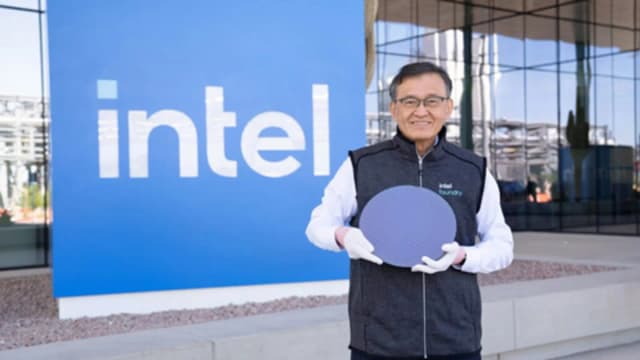
Still, the bullish case is not the only serious one. Even sympathetic coverage noted that the scope of Intel's contribution remains unclear, and neither Intel nor SpaceX offered much beyond public social-media statements and limited confirmation of the arrangement. TechCrunch said Intel declined to comment in detail and SpaceX did not respond to its query, leaving open basic questions about capital commitments, manufacturing ownership, process-node responsibilities and how much demand from Tesla, xAI and SpaceX would actually be captive to the site. Investopedia-republished reporting said Morgan Stanley analysts had already described the broader Terafab plan as a daunting task that, even under an aggressive scenario, might not be ready to start producing chips until mid-2028. For skeptics, that matters more than the splashy handshake photo with Tan and Musk: semiconductor history is full of announcements that sounded transformational well before they confronted construction timelines, tool bottlenecks, yield problems and the simple fact that fabs cannot be willed into existence by charisma.
Intel's own condition is another reason to read the news with some caution. Reuters-based reports said Intel Foundry, the company's contract-manufacturing arm, posted an operating loss of $10.32 billion in 2025 while revenue rose only 3%, underscoring how expensive and unfinished the turnaround remains. Tan has been pursuing restructuring through job cuts, asset sales and renewed focus on Intel's 18A manufacturing technology, which Reuters reporting said could again be offered to external customers after being pushed largely toward internal use last year. D.A. Davidson analyst Gil Luria said the apparent Tesla-linked partnership was an important step because Intel needs to show it can support the largest customers with their most important projects. That is the supportive interpretation. The harder interpretation is that Intel may be taking on another giant, politically visible project before it has fully demonstrated that its foundry economics work at scale. Both readings can be true at once, which is why this announcement is more consequential than a routine supplier deal.
There is also a broader industrial-policy angle that gives the partnership more significance than a normal corporate collaboration. Reuters-based coverage said the U.S. government is now Intel's biggest shareholder after providing major support, and TechCrunch argued that having Intel on board could offer Musk's project not just technical know-how but political goodwill. In practical terms, a Terafab complex tied to Intel would fit neatly with Washington's long-running push to rebuild domestic semiconductor capacity, reduce reliance on Asian manufacturing concentration and secure more of the AI hardware stack on U.S. soil. Supporters of that approach will see the deal as a pragmatic alignment of state-backed industrial policy, private capital and a surge in domestic AI demand. Critics, especially fiscal conservatives and market purists, can reasonably argue that this is exactly how strategic-industrial policy becomes murky: government-backed incumbents, celebrity founders and speculative future demand all get bundled into a narrative before the economics are fully proven.
The case for Terafab itself rests on Musk's claim that future demand in robotics and AI compute will be enormous. Reuters-based reports said one planned facility would power cars and humanoid robots while another would be designed for AI data centers in space, an idea that fits Musk's tendency to connect terrestrial manufacturing with far larger infrastructure visions. The Verge described Terafab as part of Musk's wider effort to secure chips for large fleets of self-driving vehicles and humanoid robots while also serving data-center plans linked to space-based infrastructure. Even those who think Musk's framing runs ahead of reality have to admit the demand question is not trivial: if AI compute remains supply constrained, then controlling more of the chip pipeline could become strategically valuable for companies that want to operate at the frontier rather than buy capacity from others. But that same logic can become circular. It assumes that projected AI demand, robotics adoption and Musk's own execution all arrive on schedule, and each of those assumptions deserves scrutiny rather than applause.
What happens next is likely to determine whether this becomes a turning point for Intel or just another oversized AI-era promise. Investors will want specifics: who pays for what, whether Intel Foundry books the business in a financially meaningful way, how 18A or later process technology fits into the arrangement, and whether Tesla, xAI and SpaceX are committing to volumes that can justify a buildout of this scale. Regulators and policymakers will also be watching, because the project sits at the intersection of national industrial strategy, export-control politics, capital markets and the race to keep advanced compute inside the United States. For now, the announcement does not prove that Terafab will be built on the timeline Musk's ecosystem would prefer. It does prove something narrower but still important: the proposal has moved beyond speculation far enough to pull Intel into the room, and that alone makes it one of the more newsworthy tests of whether America's AI-manufacturing revival is becoming concrete or simply getting better at telling stories about itself.
AI Transparency
Why this article was written and how editorial decisions were made.
Why This Topic
This cluster is the strongest distinct story on the board because it combines a high newsworthiness score with real consequences across AI infrastructure, U.S. semiconductor policy and capital markets. Intel joining Terafab materially changes the credibility of Musk's project and creates a concrete angle beyond hype. It is also clearly different from the recently published ceasefire, mine rescue and social-media-ban stories.
Source Selection
The core factual spine comes from Reuters-syndicated reporting in the cluster, which provides the cleanest account of Intel's formal announcement, the target use cases, Intel Foundry's recent losses and analyst reaction. TechCrunch and The Verge add skeptical context about fab economics, the difficulty of building new semiconductor capacity and the execution gap facing Tesla and SpaceX. Together, these sources support a balanced article that gives both the bullish industrial-policy view and the execution-risk critique genuine weight.
Editorial Decisions
Neutral, descriptive framing. Lead with the industrial and strategic significance of Intel entering the project, not with Musk fandom or anti-Musk outrage. Give the supportive case and the skeptical case equal room. Avoid loaded language. Question the economics and execution timeline without dismissing the strategic rationale. No moralizing about subsidies or personalities.
Reader Ratings
About the Author
Sources
- 1.theverge.comSecondary
- 2.i-invdn-com.investing.comSecondary
- 3.channelnewsasia.comSecondary
- 4.finance.yahoo.comSecondary
- 5.finance.yahoo.comSecondary
- 6.techcrunch.comSecondary
- 7.i-invdn-com.investing.comSecondary
- 8.channelnewsasia.comSecondary
Editorial Reviews
1 approved · 0 rejectedPrevious Draft Feedback (1)
Warnings: • [article_quality] Gate check failed: Service request failed. Status: 502 (Bad Gateway) • [image_relevance] Image relevance check failed: Service request failed. Status: 502 (Bad Gateway)
Discussion (0)
No comments yet.