Italian Museum Heist Puts Renoir, Cézanne and Matisse Works at Center of Expanding Security Hunt
Italian police are investigating a three-minute break-in at the Magnani Rocca Foundation near Parma after thieves stole works by Renoir, Cézanne and Matisse with an estimated combined value of about €9 million, raising fresh questions about museum security and Europe’s illicit art market.[1][2][3]
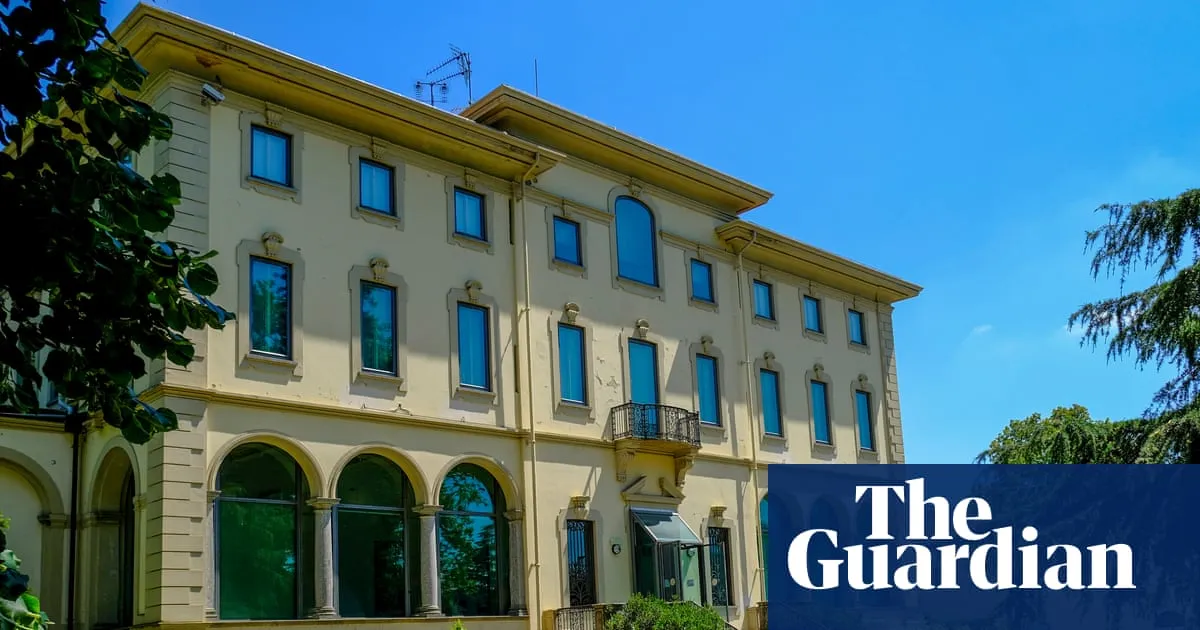
Italian investigators are hunting for the thieves who carried out a fast, tightly planned break-in at the Magnani Rocca Foundation near Parma, where three paintings by Pierre-Auguste Renoir, Paul Cézanne and Henri Matisse were taken from the museum’s French Room during the night of March 22, according to police statements and multiple media reports published Sunday and Monday.
The theft immediately stood out not only because of the names attached to the missing works, but because of the speed and selectivity of the operation. Police said four masked men entered the villa, forced open an entrance door, reached a first-floor room, seized the paintings and escaped across the grounds or over a fence in roughly three minutes before getting away. The museum, as cited by BBC and Guardian reporting, said the alarm system and the arrival of police and security personnel appear to have stopped the group from taking additional works.Renoir, Cézanne and Matisse paintings stolen in Italian jobbbc.com·SecondaryPaitings by Renoir, Cézanne and Matisse worth millions were stolen in a heist on a museum near the Italian city of Parma, police say. Four masked men entered the Magnani Rocca Foundation villa on 22 March, police said, making off with Les Poissons by Pierre-Auguste Renoir, Still Life with Cherries by Paul Cézanne and Odalisque on the Terrace by Henri Matisse.
The three missing works were identified as Fish by Renoir, Still Life with Cherries by Cézanne and Odalisque on the Terrace by Matisse. Reports converged around an estimated combined value of about €9 million, with the BBC saying the Renoir alone was valued at around €6 million, a detail that underlines why investigators are likely to treat the case as more than an opportunistic burglary. In practical terms, the theft combines the prestige of blue-chip artists with a target set small enough to move quickly, a pattern that often worries museums because it suggests prior reconnaissance rather than random vandalism.
That matters because the Magnani Rocca Foundation is not a marginal institution. The museum, located around 20 kilometers from Parma, houses the collection of art historian and collector Luigi Magnani and includes works by Dürer, Rubens, Van Dyck, Goya and Monet, according to the cluster sources. The BBC said the foundation traces its institutional origins to Magnani’s family home and was established after his death, while the Guardian reported that the foundation itself was founded in 1977. Either way, the key point is that the museum holds recognizable works by major European masters, making it a high-value but less globally fortified target than the biggest national museums.
The official investigation is now being handled by Italy’s Carabinieri alongside the Cultural Heritage Protection Unit in Bologna, according to the BBC, while other reports say police are also reviewing surveillance video from the museum and surrounding businesses. That detail is important because art-theft investigations often hinge less on immediate recovery at the scene than on tracing vehicles, routes and any attempted movement into private channels after the theft. For now, authorities have not publicly announced arrests, recoveries or a confirmed destination for the paintings.
The story also exposes a familiar tension in museum security debates. On one side is the institutional position: the museum’s security systems appear to have triggered quickly enough to limit the damage and interrupt what may have been a broader theft attempt. On the other side is the harder question critics inevitably raise after incidents like this: if a team of four masked men could reach a first-floor gallery, identify three specific works and leave within minutes, then the perimeter, access control or overnight staffing arrangements were still penetrable at the most important moment. That does not by itself prove negligence, but it does explain why cases like this tend to provoke scrutiny well beyond the immediate criminal investigation.
Another reason the case is drawing wider attention is timing. The theft took place on the night of March 22, but public reporting only gathered momentum about a week later, with news becoming widely known on Sunday, March 29, and Monday, March 30. That delay may reflect standard investigative caution, but it also means the initial recovery window may already have narrowed by the time the public learned which works were missing. In art-crime cases, the first days can matter because stolen works may be hidden, broken up from frames, moved through intermediaries or held as collateral in illicit circles rather than openly offered for sale.
The broader European context adds to the story’s weight. The Guardian and BBC both framed the theft as part of a recent run of high-profile crimes against cultural institutions, citing the Louvre jewelry robbery in Paris last October as another example of criminals targeting prestigious collections with speed and confidence. The parallels should not be overstated, because the objects, location and security environment were different, but the comparison does reinforce a less comfortable reality for museums: prestige itself can become a vulnerability when attackers believe a famous institution offers both symbolic impact and a marketable prize.Renoir, Cézanne and Matisse paintings stolen in Italian jobbbc.com·SecondaryPaitings by Renoir, Cézanne and Matisse worth millions were stolen in a heist on a museum near the Italian city of Parma, police say. Four masked men entered the Magnani Rocca Foundation villa on 22 March, police said, making off with Les Poissons by Pierre-Auguste Renoir, Still Life with Cherries by Paul Cézanne and Odalisque on the Terrace by Henri Matisse.
There is also a legitimate argument from more security-minded observers that the case should be read as a warning about the gap between public-facing reputation and real-world hardening. Smaller or mid-sized museums often hold world-class works yet do not have the same budgets, staffing depth or layered defenses as national capitals’ flagship institutions. If that is what happened here, then the lesson is not simply that one museum was unlucky, but that many European collections may be carrying concentration risk: masterpieces in comparatively accessible buildings that are celebrated for their intimacy but harder to secure like fortresses.
At the same time, defenders of the institution can point to an obvious counterargument. The operation was reportedly highly organized, lasted only minutes and appears to have been cut short by alarms and intervention. Even large museums with strong systems have suffered serious thefts when thieves moved quickly, exploited timing and relied on prior planning. In that reading, the Magnani Rocca case may say less about uniquely poor protection at one museum and more about the reality that determined crews still look for narrow windows of access in an art world that cannot seal every historic building like a military installation.
The artistic importance of the missing works guarantees that the case will not be treated as an ordinary property offense. Renoir, Cézanne and Matisse sit at the center of the modern European canon, and the individual works described in the reporting span late Impressionist and modernist traditions that are immediately recognizable to museums, collectors and police databases alike. That visibility can cut both ways: it may make lawful resale nearly impossible, but it can also increase the allure of the theft as a status crime, a bargaining chip or a commission job undertaken for private demand.
For now, the facts remain narrower than the speculation. What is established in the reporting is that four masked men entered the Magnani Rocca Foundation, stole three identified paintings, escaped within minutes, and left Italian investigators trying to track both the perpetrators and the route the works may have taken after the break-in. What remains unresolved is whether the theft was an order-driven job, a sophisticated burglary aimed at resale or leverage, or part of a broader pattern in which criminal groups increasingly view cultural institutions as softer targets than the aura surrounding them would suggest.
That unresolved question is why this case matters beyond the art world. If the paintings are recovered quickly, the story may ultimately be remembered as a dramatic but contained museum heist. If they disappear into the shadow market for years, the episode will be cited instead as another reminder that Europe’s cultural heritage sector still struggles to reconcile open access, historic architecture and the hard security demands created by globally recognizable works worth millions. Either way, investigators and museum directors alike now face the same test: whether a three-minute theft can be turned into a rapid recovery before the trail goes cold.
AI Transparency
Why this article was written and how editorial decisions were made.
Why This Topic
This cluster is the strongest non-duplicate item on the board and carries clear cross-border news value. The theft involves globally recognized artists, a named Italian cultural institution, a credible ongoing police investigation and wider implications for museum security in Europe. It is more distinctive than routine financing or sports-discipline stories and materially different from the recently published CT slate.
Source Selection
The cluster provides three aligned reports from BBC, Guardian/AFP and CNA/AFP with overlapping factual cores: date of the theft, number of suspects, named works, estimated value, escape method, and the security/investigative response. I kept numbered citations tied only to these cluster sources and avoided unsupported web-only factual additions. That reduces evidence-quality risk while still allowing analytical framing around museum security and illicit-art-market incentives.
Editorial Decisions
Neutral, factual framing with institutional skepticism but no loaded wording. Emphasis on the crime, security implications, investigation status and competing interpretations of what the break-in says about museum protection. Conservative and official perspectives are treated seriously without moralizing.
Reader Ratings
About the Author
Sources
- 1.bbc.comSecondary
- 2.channelnewsasia.comSecondary
- 3.theguardian.comSecondary
Editorial Reviews
1 approved · 0 rejectedPrevious Draft Feedback (1)
• depth_and_context scored 4/3 minimum: The article provides good background on the Magnani Rocca Foundation, its collection, and the broader context of art theft, explaining why this incident is significant beyond a simple robbery. However, it could benefit from a bit more detail on the specific security measures typically employed at institutions of this size and the historical context of art theft in the region. • analytical_value scored 4/3 minimum: The article goes beyond simply recounting events, offering analysis of the theft's implications for museum security, the art market, and the balance between accessibility and protection. The discussion of 'concentration risk' is particularly insightful. • language_and_clarity scored 4/3 minimum: The writing is generally clear and precise, although the phrasing occasionally leans towards slightly formal and passive constructions. Avoid phrases like 'the story also exposes' and strive for more active voice. The article avoids politically loaded labels, which is commendable. Warnings: • [article_quality] narrative_structure scored 3 (borderline): The article generally follows a logical flow, but the lede could be more immediately gripping. While the nut graf is present, it feels a little late in the piece; consider moving it earlier to more clearly establish the story's significance. • [article_quality] perspective_diversity scored 3 (borderline): The article presents multiple perspectives – the museum's, critics', security experts', and investigators' – which is positive. However, it could benefit from including a statement from someone directly involved in the Magnani Rocca Foundation, such as a curator or board member, to offer a more personal perspective. • [article_quality] filler_and_redundancy scored 2 (borderline): The article suffers from significant redundancy due to the constant citation of sources ([1][2][3]). While referencing sources is important, the sheer volume of citations disrupts the flow and makes the writing feel clunky. Remove the citation markers entirely and integrate the information more seamlessly into the narrative; trust the reader that the information is sourced. • [image_relevance] Image relevance scored 3 (borderline): The image depicts the Magnani Rocca Foundation, which is directly related to the article's subject. However, it's an exterior shot of the building rather than a photo of the stolen artwork or the scene of the crime, reducing its impact.



Discussion (0)
No comments yet.