Meta rolls out Muse Spark as it resets its AI strategy around speed, scale and tighter control
Meta has unveiled Muse Spark, the first model from its superintelligence unit, as it tries to recover from Llama setbacks, justify heavy AI spending and turn Meta AI into a more commercial consumer product.[1][2]
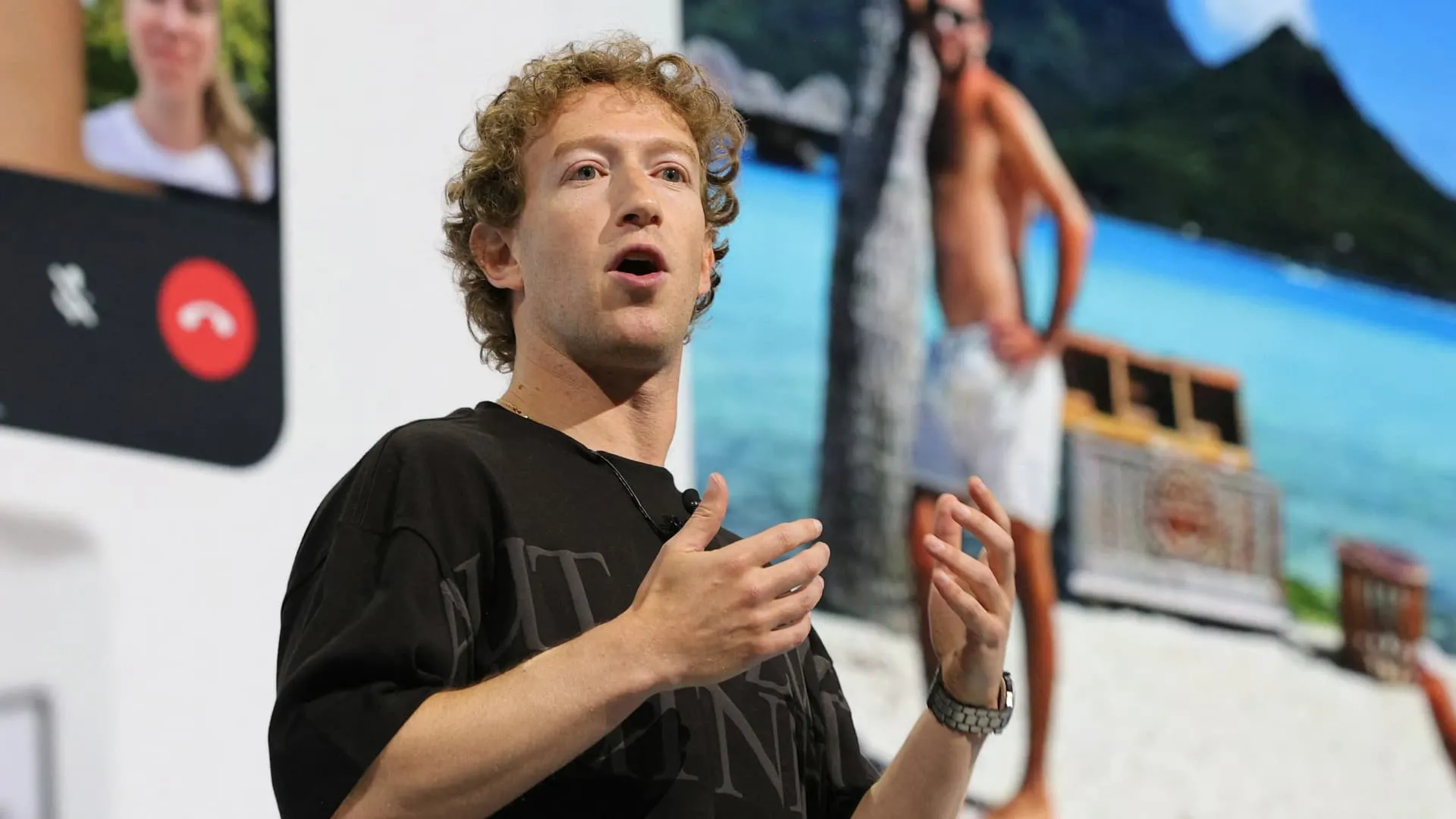
Meta’s latest AI release is less about winning a benchmark beauty contest than about showing investors, developers and rivals that the company still has a coherent path back into the front rank of the model race. On Wednesday, Meta unveiled Muse Spark, the first model produced by the superintelligence effort it assembled after its earlier Llama push failed to keep the company at the center of the market conversation. The release comes after a year in which Meta spent heavily, hired Alexandr Wang through its $14.3 billion Scale AI deal, and signaled that Zuckerberg was no longer satisfied with playing the role of open-source counterweight while OpenAI, Google and Anthropic defined the frontier.Meta debuts new AI model, attempting to catch Google, OpenAI after spending billionscnbc.com·SecondaryMeta is debuting its first major artificial intelligence model since the costly hiring of Scale AI's Alexandr Wang nine months ago, as the Facebook parent aims to carve out a niche in a market that's being dominated by OpenAI, Anthropic and Google. Dubbed Muse Spark and originally code-named Avocado, the AI model announced Wednesday is the first from the company's new Muse series developed by Meta Superintelligence Labs, the AI unit that Wang oversees.
What Meta is shipping, at least in this first step, is deliberately narrower than some of the company’s past rhetoric about open ecosystems and frontier leadership. Reuters reported that Muse Spark is initially available only through the Meta AI app and website, with broader deployment to WhatsApp, Instagram, Facebook and Meta’s glasses promised in the coming weeks. CNBC added that Meta is also limiting outside access by keeping the model in a private API preview for select partners rather than immediately throwing it open to developers at large. That is a notable shift for a company that had spent years using the Llama brand to argue that openness itself was a strategic advantage.Meta debuts new AI model, attempting to catch Google, OpenAI after spending billionscnbc.com·SecondaryMeta is debuting its first major artificial intelligence model since the costly hiring of Scale AI's Alexandr Wang nine months ago, as the Facebook parent aims to carve out a niche in a market that's being dominated by OpenAI, Anthropic and Google. Dubbed Muse Spark and originally code-named Avocado, the AI model announced Wednesday is the first from the company's new Muse series developed by Meta Superintelligence Labs, the AI unit that Wang oversees.
Meta is also trying to reframe the conversation around what counts as success. Instead of claiming that Muse Spark has overtaken the field, the company and the reporting around the launch stress that the model is small, fast and competitive in specific categories rather than dominant across the board. Reuters said independent evaluations showed Muse Spark catching up to top models in language and visual understanding while still lagging in coding and abstract reasoning, and that the model tied for fourth on an Artificial Analysis index. CNBC, citing Meta’s own technical materials, said the company believes improved training and rebuilt infrastructure let it match an older midsize Llama 4 variant with an order of magnitude less compute. The message is straightforward: Meta wants credit now for efficiency and trajectory, not just for absolute first-place scores.Meta debuts new AI model, attempting to catch Google, OpenAI after spending billionscnbc.com·SecondaryMeta is debuting its first major artificial intelligence model since the costly hiring of Scale AI's Alexandr Wang nine months ago, as the Facebook parent aims to carve out a niche in a market that's being dominated by OpenAI, Anthropic and Google. Dubbed Muse Spark and originally code-named Avocado, the AI model announced Wednesday is the first from the company's new Muse series developed by Meta Superintelligence Labs, the AI unit that Wang oversees.
That argument matters because the company’s AI spending is no longer abstract. CNBC reported that Meta’s AI-related capital expenditure guidance for 2026 stands between $115 billion and $135 billion, nearly double the prior year’s level. Reuters separately noted that investors have been pressuring major technology firms to prove that their vast AI outlays can produce tangible returns, and Meta’s share price rose roughly 6.5% to 7% on the day of the announcement. Bulls can read that market reaction as evidence that Wall Street still rewards credible signs of product momentum. Skeptics, though, will note that one launch-day rally does not settle the deeper question of whether consumer AI assistants can become a durable revenue engine rather than an expensive feature layer wrapped around existing platforms.Meta debuts new AI model, attempting to catch Google, OpenAI after spending billionscnbc.com·SecondaryMeta is debuting its first major artificial intelligence model since the costly hiring of Scale AI's Alexandr Wang nine months ago, as the Facebook parent aims to carve out a niche in a market that's being dominated by OpenAI, Anthropic and Google. Dubbed Muse Spark and originally code-named Avocado, the AI model announced Wednesday is the first from the company's new Muse series developed by Meta Superintelligence Labs, the AI unit that Wang oversees.
Meta’s answer, at least for now, is to push Muse Spark into products where the company already has distribution and behavioral data at enormous scale. Reuters said Meta is betting that AI applied to ordinary personal tasks can deepen engagement across its more than 3.5 billion users. CNBC said the model will power the company’s standalone assistant first and later extend into Facebook, Instagram, Messenger, WhatsApp, Ray-Ban Meta glasses and eventually parts of its Vibes video tooling. In Meta’s own announcement, the company highlighted quick-answer and thinking modes, multimodal understanding for image-based prompts, shopping assistance, travel planning and richer context drawn from content inside its own apps. That is less a pure-model strategy than a platform strategy: use the social graph, the creator ecosystem and consumer habit to make the assistant harder to ignore.Meta unveils first AI model from superintelligence teamchannelnewsasia.com·SecondaryMeta logo is seen in this illustration taken June 18, 2025. REUTERS/Dado Ruvic/Illustration April 8 : Meta Platforms on Wednesday unveiled Muse Spark, the first artificial intelligence model from a costly team it assembled last year to catch up with rivals in the AI race. Shares of the company extended gains to trade up nearly 7 per cent. U.S. tech giants are under pressure to prove their massive AI outlays will pay off.
The commercial logic is easier to see than the technical finish. Reuters said Wang acknowledged there were still rough edges in model behavior and that larger versions were already in development. CNBC reported that Meta is testing direct monetization paths, including shopping features and eventual paid API access for a broader pool of developers after the initial private preview. Meta’s launch post put particular emphasis on shopping recommendations, location context, visual search and health-related assistance, areas where a useful assistant could influence purchasing decisions or keep users inside Meta’s own products for longer stretches. Supporters will say this is exactly the practical discipline the market has been demanding after years of AI theater. Critics will counter that consumer convenience demos do not automatically translate into margins, especially when inference costs and infrastructure bills remain so high.Meta debuts new AI model, attempting to catch Google, OpenAI after spending billionscnbc.com·SecondaryMeta is debuting its first major artificial intelligence model since the costly hiring of Scale AI's Alexandr Wang nine months ago, as the Facebook parent aims to carve out a niche in a market that's being dominated by OpenAI, Anthropic and Google. Dubbed Muse Spark and originally code-named Avocado, the AI model announced Wednesday is the first from the company's new Muse series developed by Meta Superintelligence Labs, the AI unit that Wang oversees.
There is also a philosophical shift hiding in the product plan. Meta once treated open release as both ideology and competitive wedge, arguing that broad developer adoption would help it outmaneuver more closed rivals. Muse Spark suggests a more controlled posture, at least at launch, with the company holding back model-size details, limiting access and emphasizing selective partner previews. Meta says it still hopes to open-source future versions, but the immediate move is plainly more proprietary than the Llama posture that made the company popular with portions of the developer community. From a business standpoint, that is understandable: if Meta believes the next phase of AI advantage lies in integrated consumer experiences, distribution and monetization, it has less reason to give away the most commercially relevant layers too early.Meta unveils first AI model from superintelligence teamchannelnewsasia.com·SecondaryMeta logo is seen in this illustration taken June 18, 2025. REUTERS/Dado Ruvic/Illustration April 8 : Meta Platforms on Wednesday unveiled Muse Spark, the first artificial intelligence model from a costly team it assembled last year to catch up with rivals in the AI race. Shares of the company extended gains to trade up nearly 7 per cent. U.S. tech giants are under pressure to prove their massive AI outlays will pay off.
The competitive case for Muse Spark is therefore mixed but serious. Reuters described a model that is no longer obviously behind on every front and that can credibly claim relevance in language and visual tasks. CNBC framed the launch as Meta’s first major model since the Wang deal and as an attempt to regain momentum after developers were underwhelmed by the previous Llama release. Neither account suggests that Google, OpenAI or Anthropic have suddenly been displaced. But neither does this look like a token release meant only to buy time. Meta has tied the model to distribution, revenue experiments and a broader reorganization of its AI program, which makes the launch politically significant inside the company even before it proves itself commercially outside it.Meta unveils first AI model from superintelligence teamchannelnewsasia.com·SecondaryMeta logo is seen in this illustration taken June 18, 2025. REUTERS/Dado Ruvic/Illustration April 8 : Meta Platforms on Wednesday unveiled Muse Spark, the first artificial intelligence model from a costly team it assembled last year to catch up with rivals in the AI race. Shares of the company extended gains to trade up nearly 7 per cent. U.S. tech giants are under pressure to prove their massive AI outlays will pay off.
For policymakers, investors and users, the next question is not whether Meta can produce a respectable model once. It is whether the company can turn a respectable model into a defensible business system without repeating the familiar pattern of huge promises, expensive buildouts and only modest downstream payoff. Meta says new capabilities and wider country rollout will follow in the coming weeks, and it is already talking about richer visual results and stronger safeguards around safety and privacy. That gives the company a clearer story than it had a few months ago. Still, the most disciplined reading of this launch is that Muse Spark is a serious reset, not a final victory: a sign that Meta has found a new operating thesis for AI, but not yet proof that the thesis wins.
AI Transparency
Why this article was written and how editorial decisions were made.
Why This Topic
This cluster is the strongest fresh, non-duplicative board item available to CT Editorial Board at publish time. It scored just under 9 on the newsroom board, sits at the center of the global AI arms race, and matters beyond technology because Meta is tying model development directly to capital spending, platform distribution and consumer commerce. The story is also richer than a narrow product launch because it captures a strategic pivot: after the market's lukewarm response to later Llama releases, Meta is moving toward tighter control, selective API access and a more overt monetization plan.
Source Selection
The draft leans primarily on the Reuters/CNA signal for the hard news spine because it cleanly establishes timing, rollout scope, comparative performance limits and market reaction. CNBC adds the deeper business framing: capex guidance, the Wang/Scale AI transaction, private API plans and the shift away from broad open release. Meta's own launch post is used for product specifics such as instant/thinking modes, multimodal use cases, shopping features and the company's stated roadmap. Together these sources support a balanced article that includes official claims, outside reporting and skeptical market context.
Editorial Decisions
Keep the tone descriptive and business-focused. Avoid triumphal or alarmist language about superintelligence. Give Meta's commercial case and the skeptical case equal weight: heavy capex, product integration, private API rollout, and questions about whether engagement features can justify the spend. Do not moralize about AI safety; mention safeguards only as stated by the company and note that proof will come from execution.
Reader Ratings
About the Author
Sources
- 1.cnbc.comSecondary
- 2.channelnewsasia.comSecondary
- 3.i-invdn-com.investing.comSecondary
- 4.channelnewsasia.comSecondary
Editorial Reviews
1 approved · 0 rejectedPrevious Draft Feedback (1)
Warnings: • [evidence_quality] Statistic "7%" not found in any source material • [citation_coverage] Gate check failed: Service request failed. Status: 502 (Bad Gateway) • [article_quality] Gate check failed: Service request failed. Status: 502 (Bad Gateway) • [image_relevance] Image relevance check failed: Service request failed. Status: 502 (Bad Gateway)
Discussion (0)
No comments yet.