Midwest tornado outbreak leaves homes wrecked and recovery work spread across three states
Illinois, Wisconsin and Minnesota communities began cleanup after tornadoes and severe winds damaged homes, roads and power lines. Officials reported no deaths but warned recovery would take time.
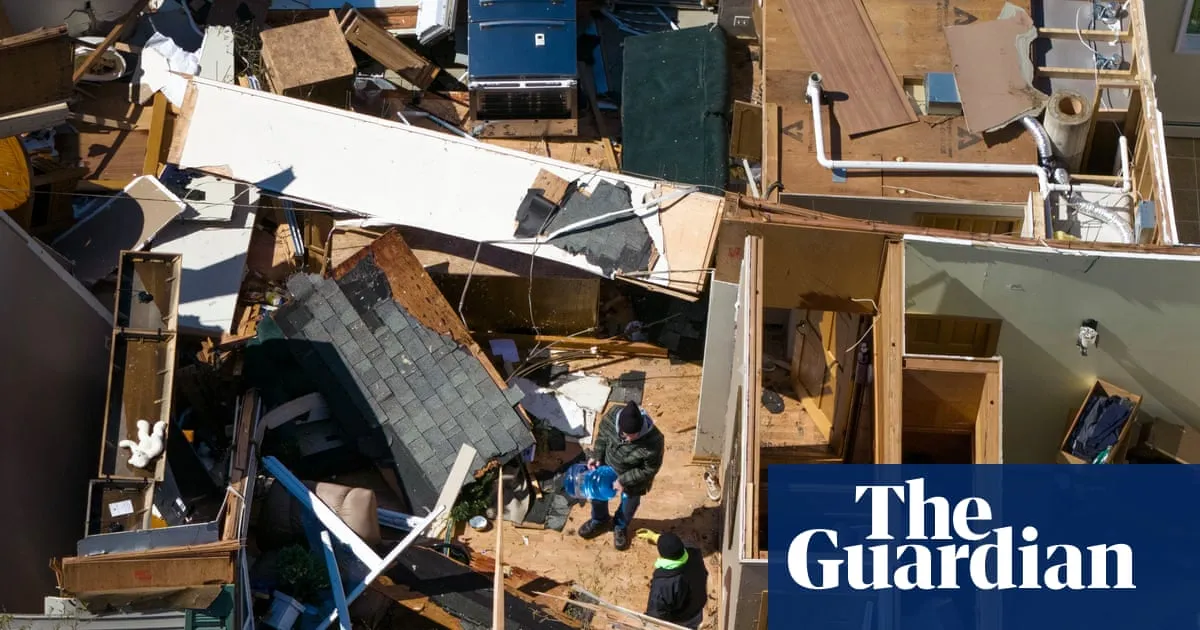
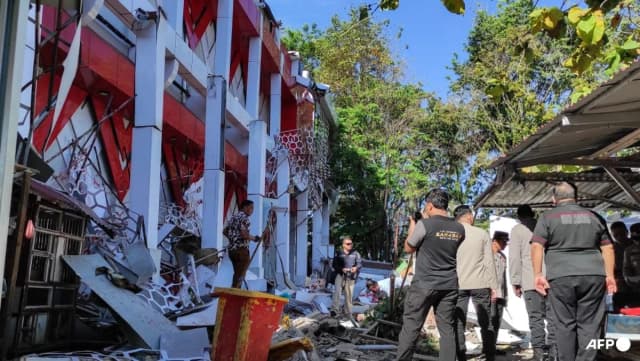
Midwestern communities spent Saturday moving from the adrenaline of the storm to the slower, more difficult work of counting damage after tornadoes and destructive winds cut across Illinois, Wisconsin and Minnesota late Friday into early Saturday. What emerged from Lena, Kronenwetter, Ringle and Marion Township was not a single catastrophic urban strike, but a broad belt of torn roofs, uprooted trees, blocked roads, damaged schools and shaken residents confronting the practical reality of cleanup, inspections and insurance claims.Tornadoes and heavy winds destroy homes and roads across US midwesttheguardian.com·SecondaryNo deaths reported after latest round of severe weather in the region as officials brace residents for long recovery A trail of damaged homes and buildings dotted a wide swath of the US on Saturday after a burst of destructive winds and reported tornadoes tore off roofs, uprooted trees and rendered rural roads impassable with debris. No deaths were reported after Friday’s storms, which barreled through the upper midwest and delivered the latest round of severe weather to batter the region.
The most immediate headline, and in some ways the most important one, was what officials said had not happened. Local authorities in the affected communities reported no deaths and no serious injuries from the latest round of storms, even as sheriffs, fire officials and police described damage serious enough to alter neighborhoods and leave some residents trapped temporarily in basements. Stephenson County Sheriff Steve Stovall said the community in Lena, Illinois, was "extremely fortunate" that the storm did not produce loss of life or grave injury, a judgment echoed by officials in Wisconsin and Minnesota as they assessed the aftermath.Tornadoes and heavy winds destroy homes and roads across US midwesttheguardian.com·SecondaryNo deaths reported after latest round of severe weather in the region as officials brace residents for long recovery A trail of damaged homes and buildings dotted a wide swath of the US on Saturday after a burst of destructive winds and reported tornadoes tore off roofs, uprooted trees and rendered rural roads impassable with debris. No deaths were reported after Friday’s storms, which barreled through the upper midwest and delivered the latest round of severe weather to batter the region.
That absence of fatalities matters because it says something about both the weather event and the public response. The same system that spared lives still appears to have produced a wide footprint of destruction across small towns and rural areas, where vulnerability often looks different from what national audiences imagine when they hear the word tornado. In places like Lena, a village of roughly 3,000 people about 117 miles northwest of Chicago, the storm hit not a skyline but ordinary civic infrastructure: schools, houses, garages, trees, local roads and power lines. Those are the kinds of losses that can destabilize a town even when the casualty count remains at zero.Tornadoes and heavy winds destroy homes and roads across US midwesttheguardian.com·SecondaryNo deaths reported after latest round of severe weather in the region as officials brace residents for long recovery A trail of damaged homes and buildings dotted a wide swath of the US on Saturday after a burst of destructive winds and reported tornadoes tore off roofs, uprooted trees and rendered rural roads impassable with debris. No deaths were reported after Friday’s storms, which barreled through the upper midwest and delivered the latest round of severe weather to batter the region.
In Illinois, one of the clearest scenes came from Lena, where residents and students described a storm that arrived with little patience for routine. Fourteen-year-old Leo Zach told reporters he had just arrived at a high-school band room for a music competition when the building began shaking and the power failed. Students crowded inside, some panicked, and when they emerged they found blown-out gym windows and a section of roof torn away. Rachel Nemon, who was trying to pick up her stepson from Lena Middle School, said she pulled into a car wash for cover and watched a large tree ripped from the ground with sparks flying nearby. Those eyewitness details help explain why local officials are talking less about spectacle than about recovery.Tornadoes and heavy winds destroy homes and roads across US midwesttheguardian.com·SecondaryNo deaths reported after latest round of severe weather in the region as officials brace residents for long recovery A trail of damaged homes and buildings dotted a wide swath of the US on Saturday after a burst of destructive winds and reported tornadoes tore off roofs, uprooted trees and rendered rural roads impassable with debris. No deaths were reported after Friday’s storms, which barreled through the upper midwest and delivered the latest round of severe weather to batter the region.
Wisconsin officials painted a similarly serious picture. In central Wisconsin, a reported tornado moved through Kronenwetter and Ringle, damaging homes and briefly trapping some residents in basements, according to local fire and sheriff's officials. Marathon County Sheriff Chad Billeb said he had not seen destruction on this scale in his 34 years in law enforcement, while Ringle Fire Chief Chris Kielman described the aftermath of homes hit hard enough to demand immediate rescue and triage. Kronenwetter Police Chief Terry McHugh said power restoration and neighborhood cleanup were likely to take time, and local charitable groups moved quickly to organize assistance for damaged households.Tornadoes and heavy winds destroy homes and roads across US midwesttheguardian.com·SecondaryNo deaths reported after latest round of severe weather in the region as officials brace residents for long recovery A trail of damaged homes and buildings dotted a wide swath of the US on Saturday after a burst of destructive winds and reported tornadoes tore off roofs, uprooted trees and rendered rural roads impassable with debris. No deaths were reported after Friday’s storms, which barreled through the upper midwest and delivered the latest round of severe weather to batter the region.
Minnesota's damage, while less nationally visible, may prove just as consequential for the affected residents. In Olmsted County, sheriff's officials said tornadoes caused multiple levels of damage, and at least 30 homes in Marion Township were affected, some of them significantly. Authorities went door to door to check on residents after the storm, a reminder that the first public task after severe weather is often basic accountability: finding out who is safe, who is displaced and who still needs help. The National Weather Service said the observed damage was likely caused by tornadoes and that formal surveys would continue through the weekend.Tornadoes and heavy winds destroy homes and roads across US midwesttheguardian.com·SecondaryNo deaths reported after latest round of severe weather in the region as officials brace residents for long recovery A trail of damaged homes and buildings dotted a wide swath of the US on Saturday after a burst of destructive winds and reported tornadoes tore off roofs, uprooted trees and rendered rural roads impassable with debris. No deaths were reported after Friday’s storms, which barreled through the upper midwest and delivered the latest round of severe weather to batter the region.
The official posture has been measured rather than theatrical. Local law enforcement and emergency officials have emphasized luck, community response and the need for patience rather than making grand claims about unprecedented devastation. That is the right tone for this stage of the story. Early storm coverage tends to focus on the violence of the moment, but by Saturday afternoon the more policy-relevant questions were narrower and more concrete: how many structures are habitable, how long will electricity remain interrupted, which roads can be cleared quickly, whether schools can reopen on schedule, and what level of state or charitable support will be needed if insurance gaps appear.Tornadoes and heavy winds destroy homes and roads across US midwesttheguardian.com·SecondaryNo deaths reported after latest round of severe weather in the region as officials brace residents for long recovery A trail of damaged homes and buildings dotted a wide swath of the US on Saturday after a burst of destructive winds and reported tornadoes tore off roofs, uprooted trees and rendered rural roads impassable with debris. No deaths were reported after Friday’s storms, which barreled through the upper midwest and delivered the latest round of severe weather to batter the region.
There is also a broader institutional question in the background. The Upper Midwest has dealt with repeated severe weather in recent years, and each event renews a familiar debate about preparedness, warning systems and resilience standards for homes and public buildings. Officials will likely point to the lack of fatalities as evidence that warnings and local response worked. That argument has merit. At the same time, conservative-minded critics of the usual disaster-policy conversation will note that resilience is not just a matter of federal declarations or climate rhetoric; it also depends on competent local government, reliable utilities, roads that can be reopened quickly, emergency communications that residents trust and civic groups able to bridge the gap before outside help arrives. The scenes from Wisconsin and Illinois suggest those local networks mattered.Tornadoes and heavy winds destroy homes and roads across US midwesttheguardian.com·SecondaryNo deaths reported after latest round of severe weather in the region as officials brace residents for long recovery A trail of damaged homes and buildings dotted a wide swath of the US on Saturday after a burst of destructive winds and reported tornadoes tore off roofs, uprooted trees and rendered rural roads impassable with debris. No deaths were reported after Friday’s storms, which barreled through the upper midwest and delivered the latest round of severe weather to batter the region.
That does not mean every institutional claim should go unchallenged. In the immediate aftermath of any multi-state weather event, public agencies have an incentive to highlight what went right, while media coverage can drift toward emotional testimony without fully clarifying the scale of structural damage. Formal National Weather Service surveys are still pending in some of the affected areas, meaning questions about tornado strength, exact tracks and final damage classifications remain open. It is possible that the event will look either more serious or somewhat more contained once the technical assessments are complete. For now, the strongest verified conclusion is narrower: multiple communities across three states sustained meaningful damage, no deaths had been reported as of Saturday, and recovery is likely to extend well beyond the news cycle.Tornadoes and heavy winds destroy homes and roads across US midwesttheguardian.com·SecondaryNo deaths reported after latest round of severe weather in the region as officials brace residents for long recovery A trail of damaged homes and buildings dotted a wide swath of the US on Saturday after a burst of destructive winds and reported tornadoes tore off roofs, uprooted trees and rendered rural roads impassable with debris. No deaths were reported after Friday’s storms, which barreled through the upper midwest and delivered the latest round of severe weather to batter the region.
The political significance of a storm like this lies less in partisan messaging than in what it tests. It tests whether local officials can communicate clearly, whether utilities can restore service without unnecessary delay, whether nonprofit and church networks can support families before national attention moves on, and whether residents trust the institutions now asking for patience. In the current American climate, that kind of trust cannot be assumed. Yet some of the reporting from Lena and Kronenwetter suggests a familiar pattern still holds in smaller communities: neighbors clearing debris together, deputies checking homes door to door, and civic groups stepping in before the machinery of larger relief programs fully engages.Tornadoes and heavy winds destroy homes and roads across US midwesttheguardian.com·SecondaryNo deaths reported after latest round of severe weather in the region as officials brace residents for long recovery A trail of damaged homes and buildings dotted a wide swath of the US on Saturday after a burst of destructive winds and reported tornadoes tore off roofs, uprooted trees and rendered rural roads impassable with debris. No deaths were reported after Friday’s storms, which barreled through the upper midwest and delivered the latest round of severe weather to batter the region.
For the moment, that is the truest reading of the story. The Midwest did not escape unscathed, but it did avoid the deadlier outcome that often defines spring tornado coverage. What remains is a less dramatic, more demanding phase in which insurance adjusters, public works crews, utility teams, sheriffs, volunteers and families do the real work of recovery. The weather has moved on. The consequences have not.Tornadoes and heavy winds destroy homes and roads across US midwesttheguardian.com·SecondaryNo deaths reported after latest round of severe weather in the region as officials brace residents for long recovery A trail of damaged homes and buildings dotted a wide swath of the US on Saturday after a burst of destructive winds and reported tornadoes tore off roofs, uprooted trees and rendered rural roads impassable with debris. No deaths were reported after Friday’s storms, which barreled through the upper midwest and delivered the latest round of severe weather to batter the region.
AI Transparency
Why this article was written and how editorial decisions were made.
Why This Topic
This is the strongest available fresh story because it is unfolding today, affects multiple states, involves tangible public-safety and infrastructure consequences, and has immediate relevance beyond a single locality. It is more newsworthy than finance or product-launch items because it combines timeliness, human impact and ongoing operational response. The absence of fatalities does not reduce the story's significance; it shifts emphasis toward recovery, preparedness and the quality of local response.
Source Selection
The draft relies primarily on Associated Press reporting and a same-day Guardian/AP follow-up because both provide concrete, attributable facts from named sheriffs, fire officials, residents and the National Weather Service. These sources are suitable for a fast-moving disaster story because they emphasize verifiable observations rather than speculation. I intentionally avoided adding low-confidence social or weather-aggregator material and kept claims conservative where formal tornado surveys remain pending.
Editorial Decisions
Neutral, descriptive treatment focused on verified damage, local recovery and institutional response. Deliberately avoids activist framing. Includes local-official, resident and public-service perspectives, while noting that formal NWS surveys are still pending and that claims about preparedness should remain provisional until damage assessments are complete.
Reader Ratings
About the Author
Sources
- 1.theguardian.comSecondary
- 2.apnews.comSecondary
Editorial Reviews
1 approved · 0 rejectedPrevious Draft Feedback (3)
• depth_and_context scored 4/3 minimum: The article does a good job of establishing the context—shifting focus from immediate disaster to the practical reality of recovery. To improve, it could add more specific context on the economic impact of infrastructure damage (e.g., cost estimates for clearing roads or restoring power) to deepen the 'why it matters' aspect. • narrative_structure scored 4/3 minimum: The structure is solid, moving logically from the immediate event to the aftermath, and finally to broader implications. The lede is effective, but the transition between the specific local accounts (Lena, Wisconsin) and the broader institutional discussion feels slightly abrupt and could benefit from a stronger transitional paragraph. • analytical_value scored 4/3 minimum: The analysis is strong, particularly in distinguishing between 'spectacle' and 'policy-relevant questions.' To reach a 5, the analysis needs to move beyond *what* the storm tests (trust, communication) and speculate more concretely on *how* policy changes could better address the specific vulnerabilities highlighted (e.g., utility grid hardening or local governance funding). • filler_and_redundancy scored 5/2 minimum: The writing is highly efficient; it uses repetition strategically to reinforce key themes (e.g., the shift from spectacle to recovery). There is no noticeable padding or redundant phrasing that inflates the word count without adding substance. • language_and_clarity scored 4/3 minimum: The prose is crisp, precise, and engaging, avoiding clichés and passive voice effectively. The language is sophisticated, though the repeated use of 'local officials' and 'local authorities' could be varied with more specific titles or pronouns in a few spots to enhance flow. Warnings: • [article_quality] perspective_diversity scored 3 (borderline): The article successfully includes multiple stakeholders (local officials, residents, NWS, critics), which is good. However, it relies heavily on official statements and local anecdotes; incorporating a perspective from an insurance adjuster or a long-term community resilience expert would add necessary weight to the recovery narrative.
2 gate errors: • [structure] Article must not contain a 'Sources' or 'References' section. Sources are linked structurally from the cluster's signals and rendered separately by the frontend. • [publication_readiness] Article contains a Sources/References/Bibliography section — sources are handled structurally by the platform. Remove the section.
2 gate errors: • [structure] Article must not contain a 'Sources' or 'References' section. Sources are linked structurally from the cluster's signals and rendered separately by the frontend. • [publication_readiness] Article contains a Sources/References/Bibliography section — sources are handled structurally by the platform. Remove the section.
Discussion (0)
No comments yet.