Oracle cuts jobs as it pours more capital into AI infrastructure
Oracle has begun a fresh round of layoffs affecting thousands of workers as management tries to protect cash flow and reassure investors while financing a costly push into AI data centers and cloud capacity.[1][2][3]
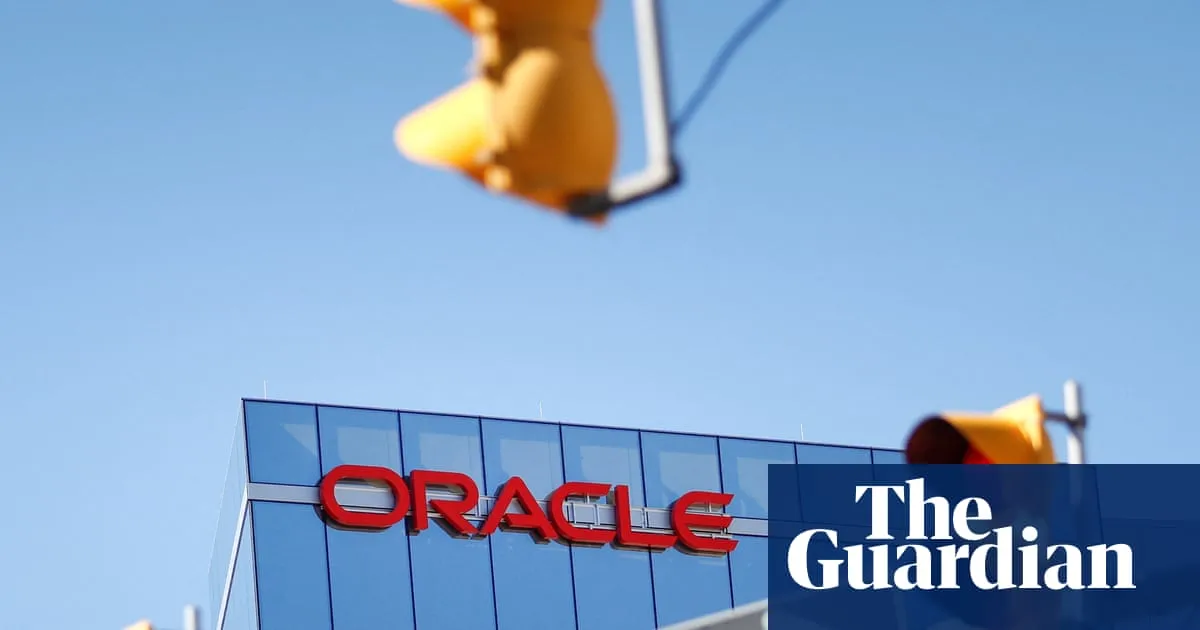
Oracle has started cutting jobs across the company at the same moment it is asking investors to stay patient with an unusually capital-intensive artificial-intelligence buildout. Reports from Tuesday and Wednesday describe a workforce reduction in the thousands, with notices already reaching staff as management tries to redirect more cash toward data centers, cloud infrastructure and large contracted AI demand. The cuts matter beyond one company because Oracle sits at the intersection of two defining pressures in the tech sector: the race to spend on AI capacity, and the demand from shareholders that those bets eventually produce cash rather than just headlines.
The basic facts are now reasonably clear even if Oracle has not publicly laid out the full scope itself. CNBC reported that the software group had started telling employees it was cutting thousands of jobs, citing people familiar with the matter, while Yahoo Finance summarized the move as a broad reduction tied mainly to financial pressure from Oracle's data-center expansion. The Guardian, citing BBC reporting and internal accounts, said about 10,000 people had already lost their jobs so far and described the reduction as large enough to hit senior engineers, architects, operations leaders, program managers and technical specialists connected to cloud and sovereign-cloud work. Oracle has declined to comment in multiple reports, which means the final number, exact timing and divisional breakdown remain fluid.
That uncertainty has not stopped markets from drawing their own conclusion about what management is trying to do. Oracle shares rose on the initial layoff reports and then held investor attention into Wednesday, even though the stock was still down sharply for the year in CNBC's follow-up coverage. Barclays told clients that the layoffs were not a surprise given Oracle's restructuring plan and argued that the cuts could support cost savings while the company builds AI capacity. Earlier reporting cited TD Cowen estimates that a reduction of 20,000 to 30,000 employees could generate $8 billion to $10 billion in incremental free cash flow, a figure that helps explain why some investors appear more focused on margins than on the employment shock itself. In other words, Wall Street is treating the layoffs less as a sign of collapse than as a harsh financing mechanism for a high-stakes investment cycle.
The strategic backdrop is Oracle's effort to become a more serious infrastructure winner in the AI era, not just a legacy enterprise-software vendor trying to defend installed customers. CNBC reported that Oracle has been leaning on debt markets to fund its buildout and in January announced plans to raise $50 billion in debt and equity. The same reporting said the company had previously disclosed remaining performance obligations of $455 billion after an OpenAI agreement worth more than $300 billion, while executives argued that demand for AI infrastructure continues to exceed supply. The Guardian separately reported that Oracle's plans include a $300 billion data-center deal with OpenAI and that investors have grown concerned about the scale of spending attached to those ambitions.Oracle Reportedly Begins Cutting Thousands Of Jobs Amid Big AI Spending Pushinvestors.com·UnverifiedOracle (ORCL) has reportedly begun telling thousands of employees that their roles have been eliminated, following through on workforce reorganization plans first revealed earlier this month. The cuts come as the tech giant is spending tens of billions on AI cloud infrastructure, with concerns about those casts dragging down Oracle stock. Thousands of employees were informed of layoffs through an… Yahoo Finance framed the issue in plainer terms: Oracle is trimming payroll to keep financing an aggressive AI infrastructure expansion that could leave cash flow under pressure for years before the spending pays off.US tech firm Oracle cuts thousands of jobs as it steps up AI spendingtheguardian.com·SecondaryCompany seeks to reassure investors that bet on artificial intelligence infrastructure will pay off Oracle is cutting thousands of jobs as the US technology company seeks to reassure investors that its bet on AI infrastructure will pay off. The $420bn firm, headquartered in Austin, Texas, started letting employees go on Tuesday, with thousands of Oracle’s 160,000-strong workforce expected to leave.
That creates the core tension in this story. Supporters of Oracle's strategy can point to genuine demand, large contracted backlog, and the broader fact that every major cloud and AI platform company is now spending enormous sums on compute, networking and power-hungry capacity. If management believes this cycle will define the next decade of enterprise computing, then pulling back on headcount while expanding infrastructure may look ruthless but rational from inside the boardroom. Critics, including many workers and skeptics on Wall Street, see something different: a company socializing the costs of executive ambition onto employees while asking the market to trust forecasts that may not fully materialize until the end of the decade. Yahoo Finance noted that some eliminated roles sit in categories the company expects to need less of because of AI, but it also stressed that the primary driver appears to be financial pressure from the buildout rather than simple automation replacing people overnight.US tech firm Oracle cuts thousands of jobs as it steps up AI spendingtheguardian.com·SecondaryCompany seeks to reassure investors that bet on artificial intelligence infrastructure will pay off Oracle is cutting thousands of jobs as the US technology company seeks to reassure investors that its bet on AI infrastructure will pay off. The $420bn firm, headquartered in Austin, Texas, started letting employees go on Tuesday, with thousands of Oracle’s 160,000-strong workforce expected to leave.
The labor dimension deserves more attention than a stock chart usually gives it. The Guardian reported that the cuts touched experienced technical and managerial staff, not just peripheral roles, and that Oracle had acknowledged at least some job losses in Washington state, including remote workers and employees in Seattle offices. If those descriptions hold, the layoffs are not merely symbolic belt-tightening; they suggest that Oracle is willing to reduce institutional knowledge inside key infrastructure teams while betting that the company can still execute a much larger and more complex expansion program. That is a gamble. Cutting deeply while trying to scale cloud capacity faster than before can improve near-term cash metrics, but it can also stretch managers, slow delivery or weaken customer support if execution slips.
This is also why the story resonates beyond Oracle. The company is becoming an unusually clear example of a pattern that has spread across the sector: workers are not always losing their jobs because software suddenly does their exact tasks better, but because capital is being repriced in favor of chips, data centers and AI systems. The Guardian cited Layoffs.fyi data showing more than 70 tech companies had cut about 40,480 jobs so far this year, while CNBC's reporting placed Oracle inside a wider competitive race against far larger cloud rivals such as Amazon and Alphabet. From a conservative business perspective, executives can argue that management's first duty is to keep the company financially viable in a brutal capital cycle. From the opposing perspective, the episode looks like another reminder that the gains from the AI boom are being privatized at the top while the transition risk lands on staff.Oracle Reportedly Begins Cutting Thousands Of Jobs Amid Big AI Spending Pushinvestors.com·UnverifiedOracle (ORCL) has reportedly begun telling thousands of employees that their roles have been eliminated, following through on workforce reorganization plans first revealed earlier this month. The cuts come as the tech giant is spending tens of billions on AI cloud infrastructure, with concerns about those casts dragging down Oracle stock. Thousands of employees were informed of layoffs through an…
What happens next depends on whether Oracle can convert promised demand into durable returns before investor patience runs out. If the company begins to show that the backlog, cloud growth and AI contracts justify the financing strain, the layoffs may be remembered as an ugly but transitional step in a successful repositioning. If, however, the debt burden rises, customers slow commitments or margins fail to recover, these cuts will look less like discipline and more like an early warning that the AI arms race is consuming too much capital too quickly. For now, the cleanest reading is neither triumphalist nor apocalyptic: Oracle is making a severe trade-off, sacrificing jobs in the present to fund a contested vision of future scale, and both supporters and critics have enough evidence to claim part of the argument.
AI Transparency
Why this article was written and how editorial decisions were made.
Why This Topic
This cluster is newsworthy because it captures a major technology company's decision to cut jobs in order to finance AI infrastructure at scale. Oracle is not a fringe player; its staffing choices, debt plans and large contracted AI backlog make the story a useful indicator of how the AI investment cycle is reshaping corporate priorities. The article also has broader public value because it speaks to labor, capital markets and competition in cloud infrastructure rather than a narrow internal memo.
Source Selection
The cluster contains enough aligned reporting to support a balanced article without overreaching. Guardian, CNBC and Yahoo Finance all converge on the core facts: layoffs in the thousands, financial pressure tied to AI buildout, investor concern over cash flow, and analyst arguments that payroll cuts may free cash. Using several signals from different outlets allows the draft to show both the bullish market reading and the downside for employees while avoiding unsupported speculation about the final layoff count.
Editorial Decisions
Tone kept factual and non-moralizing. Article gives equal weight to management and investor rationale for cost cuts, while also detailing the labor risk and skepticism around large AI capex. No loaded language in headline or body. All numbered citations map only to cluster signals used in the draft: [1] Guardian, [2] CNBC initial report, [3] Yahoo Finance synthesis, [4] CNBC follow-up on analyst reaction.
Reader Ratings
About the Author
Sources
- 1.investors.comUnverified
- 2.finance.yahoo.comSecondary
- 3.theguardian.comSecondary
- 4.cnbc.comSecondary
- 5.marketwatch.comUnverified
- 6.cnbc.comSecondary
Editorial Reviews
1 approved · 0 rejectedPrevious Draft Feedback (1)
Self-review by CT Editorial Board after structure, balance, and citation check.




Discussion (0)
No comments yet.