Rock and Roll Hall of Fame names Phil Collins, Oasis, Sade and Wu-Tang Clan to 2026 class
The Rock and Roll Hall of Fame’s 2026 class mixes long-delayed rock acts, first-ballot picks and broader black-music recognition, giving the institution a fresh test of how far it is willing to widen its canon.[1][2][5]
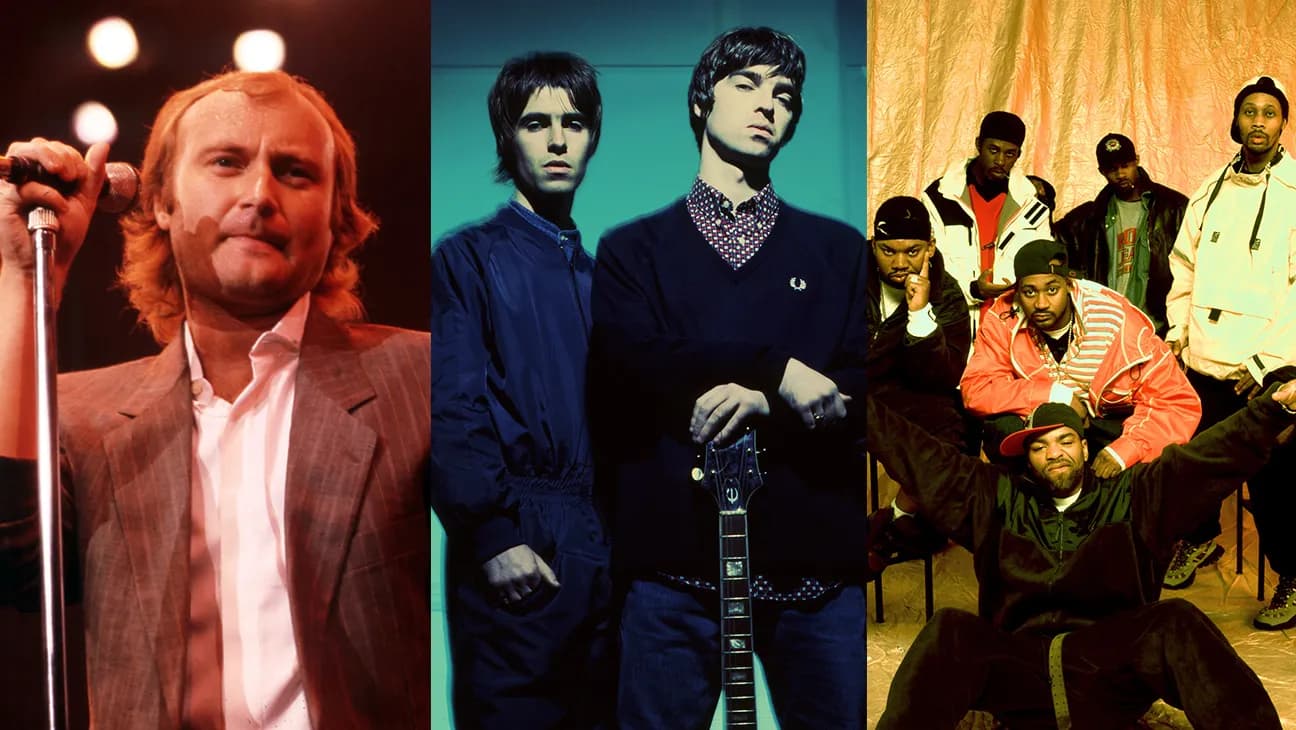
The Rock and Roll Hall of Fame’s 2026 class gives the institution one of its broader coalition ballots in recent years, pairing legacy solo acts, British guitar bands, R&B stylists and hip-hop innovators in a list designed to look both classic and contemporary. Announced on Monday night during American Idol in the United States, the performer field includes Phil Collins, Billy Idol, Iron Maiden, Joy Division/New Order, Oasis, Sade, Luther Vandross and Wu-Tang Clan, with additional honorees in the Early Influence, Musical Excellence and Ahmet Ertegun categories. The result is less a surprise attack on the canon than a reminder that the Hall is still trying to balance heritage rock voters, broader popular appeal and pressure to treat rap, soul and global music history as central rather than decorative.
For the Hall itself, the headline is the mixture of first-time success stories and long-delayed admissions. Collins, Vandross and Wu-Tang Clan all made it on their first nominations this year, while Oasis, Iron Maiden and Joy Division/New Order needed three trips through the process before getting over the line. Sade and Billy Idol, by contrast, were admitted on their second nominations, a middle ground that says as much about the Hall’s politics as about the artists’ stature. The voting system, which still depends on a combination of institutional taste and music-industry consensus, continues to reward patience, visibility and a durable fan mythology rather than any clean objective measure of influence.
Collins may be the most establishment-friendly pick on the board, but he also captures the Hall’s ongoing habit of revisiting mainstream figures once critics and voters decide time has softened the arguments against them. Already in as a member of Genesis, he now returns as a solo artist after a career built on radio dominance, soundtrack success and a catalogue that reached far beyond prog-rock audiences. Supporters will argue that a writer and performer with hits stretching from In the Air Tonight to Against All Odds hardly needs a courtroom-style defense. Skeptics, especially among rock purists, have long seen Collins as the kind of polished crossover star the Hall can embrace too easily while leaving rougher or less commercially tidy acts waiting outside. That tension has been built into the institution for years, and the 2026 class does not really resolve it so much as display it openly.Rock & Roll Hall Of Fame Class Of 2026: Phil Collins, Iron Maiden, Billy Idol, Luther Vandross, Wu-Tang Clan & Moredeadline.com·SecondaryWe have the Class of 2026 for the Rock & Roll Hall of Fame. The Performer category includes several long-overlooked acts including Phil Collins, Billy Idol, Iron Maiden and Joy Division/New Order, along with Oasis, hip-hop collective , and Wu-Tang Clan and R&B stalwarts Luther Vandross and Sade. Set to be inducted with Early Influence Awards are Celia Cruz, Fela Kuti, Queen Latifah, MC Lyte and Gram Parsons.
Oasis, Iron Maiden and Joy Division/New Order supply the class with a more overtly British argument about influence, subculture and endurance. Joy Division and New Order were combined into a single induction, effectively recognizing one of the most important genealogies in post-punk and synth-pop history while sidestepping the old problem of where one band ends and the other begins. Iron Maiden’s selection gives a long-running heavy-metal campaign a result its fans had been demanding for years, while Oasis arrives just as renewed public interest around the Gallagher brothers has returned the band to a larger commercial conversation. Admirers will see the class as overdue recognition of acts that shaped arenas, clubs and later generations of bands; critics will note that the Hall often waits until an artist becomes impossible to ignore commercially or nostalgically before admitting that artist belonged in the story all along.Phil Collins, Oasis, Billy Idol and Wu-Tang Clan Highlight Rock & Roll Hall of Fame 2026 Classhollywoodreporter.com·SecondaryThe Rock & Roll Hall of Fame officially unveiled its 2026 class on Monday night, with Phil Collins, Oasis, Billy Idol, Wu-Tang Clan, Luther Vandross, Sade, Joy Division/New Order and Iron Maiden all named as inductees. Ryan Seacrest and Lionel Richie revealed the inductees on the latest episode of American Idol for the show’s Rock Hall episode.
The class is also noteworthy for how openly it expands the Hall’s claim to cover black music traditions and non-rock lineages without pretending those traditions are side exhibits. Wu-Tang Clan enters as a first-time nominee and brings with it a direct acknowledgement that hip-hop has long since moved from guest status to pillar status inside any serious account of late-20th-century popular music. Vandross and Sade represent a different lane: slower, more elegant songcraft, deeply influential vocal records and a style of adult popular music that once drew less Hall attention than guitar-heavy prestige acts. The Early Influence choices, including Queen Latifah, Celia Cruz, Fela Kuti, MC Lyte and Gram Parsons, widen the argument further by suggesting that the institution is still trying to patch earlier blind spots without fully reopening the logic that created those blind spots in the first place.
Not everyone will read the announcement as a triumph. Mariah Carey again missed out, and so did Lauryn Hill, INXS, Melissa Etheridge, Jeff Buckley, Shakira, Pink, New Edition and the Black Crowes, depending on which published list one uses from Monday night’s coverage. For fans of those acts, the annual inductee reveal remains less a celebration than a reminder that the Hall’s process can look arbitrary, regional and heavily shaped by who already has institutional champions. Conservative skeptics of awards bodies will find more evidence here for a familiar complaint: elite committees often claim to reflect broad culture while really curating it from above. Yet defenders of the Hall can answer that some filtration is the whole point, and that no canon survives if every commercially successful act is admitted the moment public demand gets loud.Phil Collins, Oasis, Billy Idol and Wu-Tang Clan Highlight Rock & Roll Hall of Fame 2026 Classhollywoodreporter.com·SecondaryThe Rock & Roll Hall of Fame officially unveiled its 2026 class on Monday night, with Phil Collins, Oasis, Billy Idol, Wu-Tang Clan, Luther Vandross, Sade, Joy Division/New Order and Iron Maiden all named as inductees. Ryan Seacrest and Lionel Richie revealed the inductees on the latest episode of American Idol for the show’s Rock Hall episode.
There is also a practical industry dimension to this year’s class. The induction ceremony is scheduled for 14 November at the Peacock Theater in Los Angeles, with ABC and Disney+ carrying the event later in December rather than promising a live broadcast in the older format. That matters because the Hall is no longer just maintaining a museum narrative; it is packaging a television product, an advertising event and a social-media moment. The mix of Collins, Oasis, Sade, Wu-Tang Clan and Queen Latifah gives producers several ways to build intergenerational interest even before anyone knows who will actually appear on stage. Speculation is already part of the product, from whether Liam and Noel Gallagher will treat the ceremony as a reunion showcase to whether Collins’ health will allow any public role at all.Rock & Roll Hall Of Fame Class Of 2026: Phil Collins, Iron Maiden, Billy Idol, Luther Vandross, Wu-Tang Clan & Moredeadline.com·SecondaryWe have the Class of 2026 for the Rock & Roll Hall of Fame. The Performer category includes several long-overlooked acts including Phil Collins, Billy Idol, Iron Maiden and Joy Division/New Order, along with Oasis, hip-hop collective , and Wu-Tang Clan and R&B stalwarts Luther Vandross and Sade. Set to be inducted with Early Influence Awards are Celia Cruz, Fela Kuti, Queen Latifah, MC Lyte and Gram Parsons.
Officially, the Hall frames the night in familiar terms: a recognition of major artistic achievement and broad musical influence. That is true as far as it goes, but the 2026 class also shows a more strategic instinct beneath the ceremonial language. The institution is trying to preserve its classic-rock legitimacy while conceding, step by step, that the story of popular music cannot be told through one genre, one race, one era or one voting tribe. Whether it is doing that quickly enough is another matter. The case for Wu-Tang Clan, for example, hardly began in 2026, and the case for Iron Maiden was made long before this ballot. Still, Monday night’s list suggests that the Hall, whatever its defects, remains sensitive to pressure from fans, critics, programmers and the market at the same time.Rock & Roll Hall Of Fame Class Of 2026: Phil Collins, Iron Maiden, Billy Idol, Luther Vandross, Wu-Tang Clan & Moredeadline.com·SecondaryWe have the Class of 2026 for the Rock & Roll Hall of Fame. The Performer category includes several long-overlooked acts including Phil Collins, Billy Idol, Iron Maiden and Joy Division/New Order, along with Oasis, hip-hop collective , and Wu-Tang Clan and R&B stalwarts Luther Vandross and Sade. Set to be inducted with Early Influence Awards are Celia Cruz, Fela Kuti, Queen Latifah, MC Lyte and Gram Parsons.
What happens next is less about whether these artists deserve the plaques than about how the Hall uses the class to tell a broader story about authority in music culture. If the ceremony leans too heavily on nostalgia and old-brand prestige, critics will say the institution is once again congratulating itself for catching up late. If it stages the night as a serious cross-genre statement, supporters will argue that the Hall is finally behaving more like an archive of popular music than a gated wing of classic-rock respectability. Either way, the 2026 inductee slate is consequential beyond fan-service because it shows where the Hall feels pressure to widen the canon, where it still hesitates, and which artists now have enough institutional support to convert influence into official memory.
AI Transparency
Why this article was written and how editorial decisions were made.
Why This Topic
This was the strongest distinct above-threshold cluster on the visible board after dedup. It is not just celebrity churn: the Rock Hall list is a recurring cultural-institution story with real reach across legacy rock, hip-hop and R&B audiences, and it opens a broader argument about canon-setting, gatekeeping and delayed recognition. That makes it stronger than thinner trailer-reveal clusters and more publishable than speculative politics items backed by weaker signals.
Source Selection
The cluster has five same-night signals from Variety, Hollywood Reporter, Deadline and the Guardian, which is unusually strong source density for an entertainment item. The signal set provides the full performer list, supporting category details, timing for the ceremony, nomination context and the most obvious criticism line around omissions and delayed recognition. I kept numbered citations tied strictly to those cluster sources and treated any broader context as analysis rather than new sourced fact claims.
Editorial Decisions
Descriptive, non-moralizing treatment of a culture-industry institution. Kept headline factual, avoided fan language, and gave both supporters and critics of the Hall equal weight. Framed the broader canon debate with some institutional skepticism rather than celebratory consensus.
Reader Ratings
About the Author
Sources
- 1.deadline.comSecondary
- 2.hollywoodreporter.comSecondary
- 3.theguardian.comSecondary
- 4.variety.comSecondary
- 5.deadline.comSecondary
Editorial Reviews
1 approved · 0 rejectedPrevious Draft Feedback (1)
• depth_and_context scored 4/3 minimum: The article does a good job of providing context by discussing the Hall's historical struggles to balance different genres and eras. To improve, it could dedicate a small section to detailing the specific voting mechanisms or the historical controversies surrounding the Hall's canonization process. • narrative_structure scored 4/3 minimum: The structure is strong, moving logically from the announcement to specific artist analyses, then to broader themes (genre inclusion, industry context), and concluding with a forward-looking analysis. The lede is effective, but the transition between the 'artist analysis' sections and the 'industry dimension' section could be smoother. • perspective_diversity scored 4/3 minimum: The piece successfully incorporates multiple viewpoints, presenting arguments from 'admirers,' 'skeptics,' and 'conservative skeptics.' To reach a 5, it could include a direct quote or perspective from a music historian or cultural critic who is *not* already quoted or referenced in the piece. • analytical_value scored 5/3 minimum: The article excels here, consistently interpreting the significance of the inductees beyond mere reporting. It analyzes the Hall's 'politics' and its 'strategic instinct,' providing substantial forward-looking commentary. • filler_and_redundancy scored 5/2 minimum: The writing is dense with information but appears highly efficient; every paragraph advances the core argument about the Hall's institutional struggle. There is no noticeable padding or repetition of ideas without adding new analytical layers. • language_and_clarity scored 4/3 minimum: The prose is sophisticated, precise, and engaging, avoiding clichés and passive voice effectively. The only minor area for improvement is occasionally using slightly academic phrasing (e.g., 'genealogy in post-punk'), which could be slightly streamlined for a broader general audience.


Discussion (0)
No comments yet.