Unilever in Talks to Spin Off Food Division and Merge It With McCormick in Multi-Billion-Dollar All-Stock Deal
The Anglo-Dutch consumer goods giant confirmed on Friday it is in discussions to separate its food business — home to Hellmann's, Knorr and Marmite — and combine it with US spice maker McCormick in what would be the company's biggest restructuring in nearly a century.
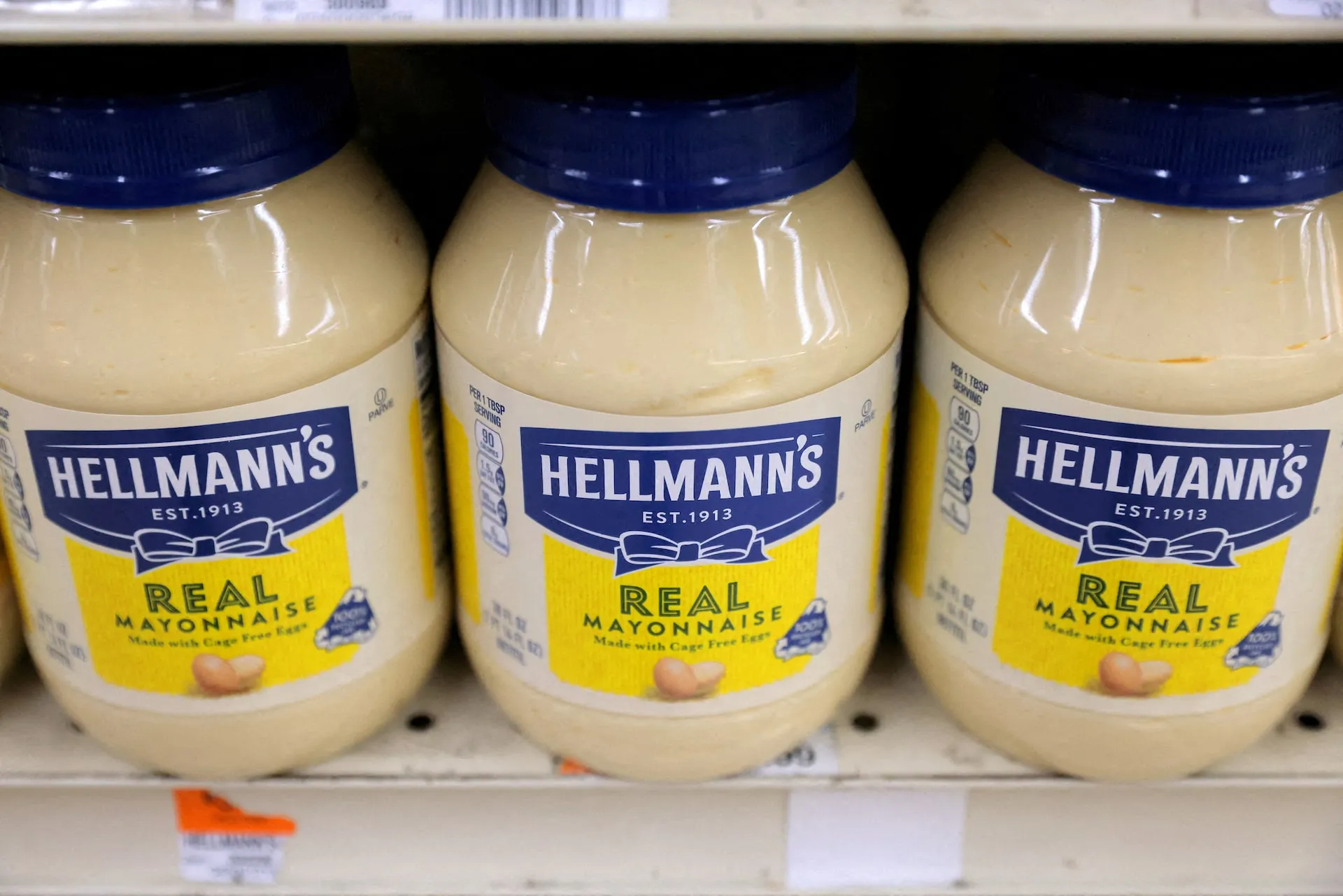
Unilever confirmed on Friday that it is in active discussions to separate its food business and merge it with American spice and seasoning company McCormick & Company in a potential all-stock transaction, in what would represent the most significant restructuring of the Anglo-Dutch consumer goods giant in its nearly century-long history Unilever in talks to sell food business to McCormickmarketwatch.com·Unverified.
The Wall Street Journal first reported on Thursday that the two companies were exploring a deal that could be announced within weeks, citing people familiar with the matter Unilever in talks to sell food business to McCormickmarketwatch.com·Unverified. Both Unilever and McCormick issued separate statements on Friday confirming the talks while cautioning that negotiations are ongoing and no agreement has been finalised Unilever in talks to combine food business with McCormick, WSJ reportsi-invdn-com.investing.com·Secondary.
A Portfolio Worth Tens of Billions
Unilever's food division accounts for roughly a quarter of the company's total sales and houses some of the most recognised names in global food retail, including Hellmann's mayonnaise, Knorr bouillons and seasonings, and the distinctly British staple Marmite . The unit could be valued at tens of billions of dollars, according to the Wall Street Journal Unilever in talks to sell food business to McCormickmarketwatch.com·Unverified.
Unilever's overall market value sits at approximately $140 billion, while McCormick — whose portfolio includes French's yellow mustard, Old Bay seasoning, and Cholula hot sauce — carries a market capitalisation of roughly $14.8 billion Unilever in talks to sell food business to McCormickmarketwatch.com·Unverified. The sheer size disparity between the two entities has raised questions among investors and analysts about how the combined business would be structured and whether value can be created for shareholders on both sides Unilever in talks to sell food business to McCormickmarketwatch.com·Unverified.
Unilever said in its statement that the board believes foods is a highly attractive business, with a strong financial profile led by market-leading brands in growing categories Unilever in talks to combine food business with McCormick, WSJ reportsi-invdn-com.investing.com·Secondary. McCormick, for its part, confirmed the discussions but provided no financial details.
Reverse Morris Trust Structure
According to Bloomberg, the transaction would likely be structured as a Reverse Morris Trust — a type of merger designed to be tax-free for the divesting company's shareholders. Under this arrangement, Unilever would first spin off its food division into a separate entity, which would then merge with McCormick. Unilever shareholders would retain a significant stake in the combined company Unilever in talks to sell food business to McCormickmarketwatch.com·Unverified.
Bernstein analysts described this structure as the most probable path forward, noting in a research note on Friday that Unilever would essentially spin off its food division and then merge it with McCormick, with Unilever shareholders retaining the majority of the combined entity Unilever in talks to sell food business to McCormickmarketwatch.com·Unverified.
The structure allows Unilever to shed its food assets without triggering a large tax liability, while McCormick gains scale and a portfolio of globally recognised brands that would dramatically expand its reach beyond spices and seasonings.
Fernández's Strategic Overhaul
The discussions with McCormick represent the latest and most consequential step in a years-long transformation of Unilever's portfolio under CEO Fernando Fernández, who has systematically stripped the company of its food-adjacent businesses to focus on higher-growth personal care and beauty categories Unilever in talks to combine food business with McCormick, WSJ reportsi-invdn-com.investing.com·Secondary.
Unilever sold its spreads business — including Flora and I Can't Believe It's Not Butter — in 2017. Most of its tea business, including PG Tips and Lipton, followed in 2022. Last year, the company completed the spin-off of its ice cream division, the home of Ben & Jerry's, Magnum, and Wall's Unilever in talks to combine food business with McCormick, WSJ reportsi-invdn-com.investing.com·Secondary.
The company also disposed of brands including The Vegetarian Butcher and the healthy snacking brand Graze in recent years Unilever in talks to combine food business with McCormick, WSJ reportsi-invdn-com.investing.com·Secondary. Fernández said earlier this year that he aimed to generate two-thirds of Unilever's revenues from brands such as Dove, Liquid IV hydration sachets, and Dermalogica skin care over the medium term.
Fernández pointed to demographic and lifestyle trends favouring those categories, citing urbanisation, wealth expansion, massive entry of the female gender in the labour market, low fertility rates, and the massive adoption of healthy lifestyles as factors that all play in favour of personal care and beauty products Unilever in talks to combine food business with McCormick, WSJ reportsi-invdn-com.investing.com·Secondary.
Kraft Heinz Talks Collapsed First
The McCormick approach did not emerge in isolation. The Financial Times reported earlier in the week that Unilever had previously weighed merging its food assets with Kraft Heinz's condiments business, but those talks ended without a deal Unilever in talks to sell food business to McCormickmarketwatch.com·Unverified. The fact that Unilever quickly pivoted to discussions with McCormick suggests the company is serious about divesting food and is actively shopping the division among multiple potential partners.
FoodNavigator reported that the timing of the McCormick offer — coming just days after the Kraft Heinz talks collapsed and on the same day reports emerged of a broader Unilever food spin-off plan — indicates the company has been running a structured process to find the right buyer or merger partner Marmite maker Unilever in talks to merge food business with US-based McCormicktheguardian.com·SecondaryAnglo-Dutch company, which also owns Dove and Hellmann’s, will focus more on personal care products if deal agreed Unilever, the owner of Marmite, Dove and Hellmann’s mayonnaise, is in talks to combine its food business with the US-based spice and seasoning maker McCormick. The Anglo-Dutch food company – which last year spun off its ice-cream division, the home to Ben & Jerry’s, Magnum and Wall’s – has entered discussions over the future of the “highly attractive” business..
Investor Reaction and Skepticism
Market reaction on Friday was mixed. Unilever's US-listed shares were 1 percent higher following the report, while McCormick was down 1.3 percent Unilever in talks to sell food business to McCormickmarketwatch.com·Unverified. Unilever's London-listed shares rose more than 1 percent in early trading on Friday Unilever in talks to combine food business with McCormick, WSJ reportsi-invdn-com.investing.com·Secondary.
Some investors welcomed the strategic logic. Richard Saldanha, a global equity portfolio manager at Aviva and a Unilever shareholder, said he thought it was sensible that Unilever was looking at options for the food business, noting the company clearly wanted to focus on areas where underlying category and volume growth are more attractive Unilever in talks to sell food business to McCormickmarketwatch.com·Unverified.
Others were more cautious. Tineke Frikkee, a portfolio manager at W1M and also a Unilever investor, questioned whether the potential transaction would actually create value, noting that Unilever's food business generates roughly three times the profit of McCormick, making the combined entity's benefits unclear Unilever in talks to sell food business to McCormickmarketwatch.com·Unverified.
Broader Industry Context
The potential deal comes against the backdrop of a broader rethinking in the consumer goods industry about the value of conglomerate-style diversification. Many companies are trimming portfolios and changing leadership structures in response to challenges from tariffs, tepid global consumer demand, and rising energy prices Unilever in talks to sell food business to McCormickmarketwatch.com·Unverified.
Bernstein analysts argued that the benefits of scale across product categories no longer outweigh the drawbacks of complexity, a view that appears to be gaining traction across the sector Unilever in talks to sell food business to McCormickmarketwatch.com·Unverified.
Unilever's food division also faces specific headwinds. The processed food category is under increasing scrutiny, with politicians — including US Health Secretary Robert F. Kennedy Jr. — warning about health risks. The growing adoption of GLP-1 weight-loss drugs, which reduce appetite and overall food consumption, presents an additional long-term challenge to the sector Unilever in talks to sell food business to McCormickmarketwatch.com·Unverified.
What Happens Next
If a deal is reached, it would effectively end Unilever's presence in the food industry after nearly a century of competing against Kraft Heinz, Nestlé, and PepsiCo. The remaining company would be positioned to compete directly with major household and personal care firms including L'Oréal, Beiersdorf, and Estée Lauder Unilever in talks to combine food business with McCormick, WSJ reportsi-invdn-com.investing.com·Secondary.
Unilever is valued at almost £100 billion, and its food unit, which includes brands such as Knorr, could be worth tens of billions of pounds Unilever in talks to combine food business with McCormick, WSJ reportsi-invdn-com.investing.com·Secondary. McCormick is valued at about $15 billion Unilever in talks to combine food business with McCormick, WSJ reportsi-invdn-com.investing.com·Secondary. Analysts noted the significant disparity in scale between the two potential partners, with the food division being the much larger entity.
No timeline for a resolution has been disclosed. The Wall Street Journal reported that a transaction could be announced within weeks if discussions progress, though it emphasised there is no guarantee a deal will be reached Unilever in talks to sell food business to McCormickmarketwatch.com·Unverified. In December, Fernández said Unilever was focused solely on small bolt-on acquisitions in beauty and personal care and that transformational acquisitions were off the table — a posture that aligns with divesting, rather than acquiring, food assets Unilever in talks to combine food business with McCormick, WSJ reportsi-invdn-com.investing.com·Secondary.
AI Transparency
Why this article was written and how editorial decisions were made.
Why This Topic
A potential multi-billion-dollar merger between Unilever's food division and McCormick would represent the most significant restructuring in Unilever's history and one of the largest consumer goods deals in years. The story has immediate market implications — shares of both companies moved on the news — and broader significance for the global food industry. The deal would effectively end Unilever's century-long presence in food retail and create a new combined condiments and seasonings powerhouse. This warrants priority coverage as a major business story with global reach.
Source Selection
The article draws on four enriched signals: Reuters provided the most detailed reporting with on-the-record investor quotes and market data. The Guardian offered UK-centric context including Unilever's statement and brand portfolio details. Bloomberg contributed the Reverse Morris Trust structural details. FoodNavigator added context about the failed Kraft Heinz talks and the broader sell-off pattern. All key claims are attributed to named sources, analyst firms, or official company statements. No paywalled content was used as primary sourcing.
Editorial Decisions
This story was sourced from a cluster of four signals covering the Unilever-McCormick merger talks. The primary factual backbone comes from Reuters and The Guardian, both tier-1 sources that provided on-the-record statements from both companies. Supplementary context — including the Reverse Morris Trust structure and the failed Kraft Heinz talks — was drawn from Bloomberg and FoodNavigator reporting during the same news cycle. All statistics (market caps, revenue figures, analyst estimates) are attributed to named sources within the signal set.
Reader Ratings
About the Author
Sources
- 1.marketwatch.comUnverified
- 2.i-invdn-com.investing.comSecondary
- 3.theguardian.comSecondary
- 4.finance.yahoo.comSecondary
Editorial Reviews
1 approved · 0 rejectedPrevious Draft Feedback (3)
Warnings: • [evidence_quality] Statistic "1M" not found in any source material • [article_quality] Gate check failed: Service request failed. Status: 502 (Bad Gateway) • [image_relevance] Image relevance check failed: Service request failed. Status: 502 (Bad Gateway)
4 gate errors: • [evidence_quality] Statistic "12.9 billion" not found in any source material • [evidence_quality] Statistic "28 billion" not found in any source material • [evidence_quality] Statistic "31 billion" not found in any source material • [evidence_quality] Statistic "1M" not found in any source material
4 gate errors: • [evidence_quality] Statistic "12.9 billion" not found in any source material • [evidence_quality] Statistic "28 billion" not found in any source material • [evidence_quality] Statistic "31 billion" not found in any source material • [evidence_quality] Statistic "1M" not found in any source material
Discussion (0)
No comments yet.