Chuck Redd Seeks Dismissal of Kennedy Center Lawsuit Over Canceled Christmas Eve Performance
Chuck Redd is asking a D.C. judge to dismiss the Kennedy Center’s lawsuit over his canceled 2025 Christmas Eve appearance, arguing no contract was ever signed and casting the case as a broader fight over speech, governance and artistic independence.
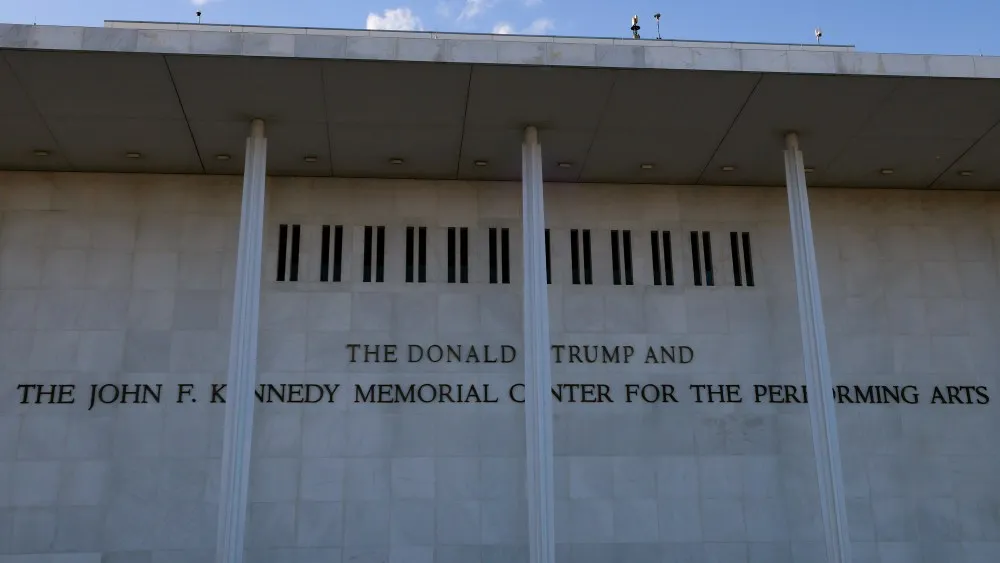
Washington’s fight over the renamed Kennedy Center has moved from symbolism into court procedure. On Friday, jazz musician Chuck Redd asked a judge in D.C. Superior Court to dismiss the Kennedy Center’s breach-of-contract case against him after he canceled a planned Christmas Eve 2025 performance following the institution’s decision to add President Donald Trump’s name to the building.
Redd’s filing matters because it turns a culture-war dispute into a narrower legal test: whether an unsigned agreement and a public cancellation can support a damages claim at all. His lawyers say the answer is no. They argue Redd never signed the contract the center sent, was therefore never legally bound to perform, and cannot fairly be held liable for losses tied to a free public concert that they say generated no ticket revenue in the first place.
The timeline is unusually important here. According to the reporting and the court filing described in it, the Kennedy Center did not send Redd a contract for signature until Dec. 9, 2025. Redd says he never signed or even opened that document, and a Kennedy Center employee later voided the unsigned agreement after he withdrew. The center nonetheless sued him on March 6, alleging breach of contract after he publicly explained in late December that he had decided not to perform once the institution’s website and building reflected the Trump name change.
That sequence gives Redd an argument that goes beyond ordinary artist-management friction. His lawyers filed not only a motion to dismiss for failure to state a claim, but also a special motion under the District’s Anti-SLAPP law, which is designed to protect people from lawsuits aimed at punishing public participation or speech on matters of public concern. In their framing, this is not just a dispute over one missed appearance. It is a test of whether a powerful national cultural institution can threaten litigation after an artist publicly objects to a politically charged rebranding.Jazz Musician Chuck Redd Seeks Dismissal of ‘Trump Kennedy Center’ Lawsuit Against Him Over Canceled Christmas Eve Gigvariety.com·SecondaryThe “Trump Kennedy Center” earlier this month followed through on its threat to sue acclaimed jazz musician Chuck Redd, after he backed out of a Christmas Eve 2025 concert over the Washington, D.C., cultural institution’s name change to add President Donald Trump. A lawyer representing the Kennedy Center offered to drop the lawsuit against Redd if he paid $7,500 and committed to a future performance at the center “without making any political commentary,” according to Redd’s attorneys.
The center’s side, at least from the record now available, rests less on rhetoric than on the fact that it did sue and has not backed away from defending its broader governance decisions. Earlier, then-president Richard Grenell told Redd the center would seek $1 million in damages over what Grenell characterized as a political stunt, and the institution later filed suit seeking unspecified damages. Supporters of the center’s position are likely to say a major arts institution cannot function if performers can abandon scheduled appearances at the last minute after public promotion, especially when leadership believes the cancellation inflicted reputational or operational harm even for a free event.Jazz Musician Chuck Redd Seeks Dismissal of ‘Trump Kennedy Center’ Lawsuit Against Him Over Canceled Christmas Eve Gigvariety.com·SecondaryThe “Trump Kennedy Center” earlier this month followed through on its threat to sue acclaimed jazz musician Chuck Redd, after he backed out of a Christmas Eve 2025 concert over the Washington, D.C., cultural institution’s name change to add President Donald Trump. A lawyer representing the Kennedy Center offered to drop the lawsuit against Redd if he paid $7,500 and committed to a future performance at the center “without making any political commentary,” according to Redd’s attorneys.
At the same time, the reporting makes clear why Redd’s side believes the case looks punitive. His attorneys disclosed that in a March 15 communication, a lawyer for the center offered to settle if Redd paid $7,500 and agreed to make a public commitment to a future appearance without political commentary about the center, his appearance or his cancellation. That condition will likely attract scrutiny because it links resolution of the dispute not only to money and future performance, but also to the terms of what Redd could publicly say. For backers of Redd’s anti-SLAPP theory, that detail strengthens the claim that speech was part of the target, not just collateral damage.Jazz Musician Chuck Redd Seeks Dismissal of ‘Trump Kennedy Center’ Lawsuit Against Him Over Canceled Christmas Eve Gigvariety.com·SecondaryThe “Trump Kennedy Center” earlier this month followed through on its threat to sue acclaimed jazz musician Chuck Redd, after he backed out of a Christmas Eve 2025 concert over the Washington, D.C., cultural institution’s name change to add President Donald Trump. A lawyer representing the Kennedy Center offered to drop the lawsuit against Redd if he paid $7,500 and committed to a future performance at the center “without making any political commentary,” according to Redd’s attorneys.
The broader institutional backdrop also matters. Trump said earlier this month that the center would close starting July 4, 2026 for a complete rebuilding expected to last about two years, and on March 13 he announced that Grenell would be replaced by Matt Floca, the former vice president of facilities operations. Separately, Rep. Joyce Beatty has been pursuing federal litigation challenging the legality of the renaming itself, arguing that the 1964 law establishing the center did not permit the board to add another name to the exterior. The Kennedy Center, through vice president of public relations Roma Daravi, has said it is confident the courts will uphold both the board’s naming decision and the renovation plans.Jazz Musician Chuck Redd Seeks Dismissal of ‘Trump Kennedy Center’ Lawsuit Against Him Over Canceled Christmas Eve Gigvariety.com·SecondaryThe “Trump Kennedy Center” earlier this month followed through on its threat to sue acclaimed jazz musician Chuck Redd, after he backed out of a Christmas Eve 2025 concert over the Washington, D.C., cultural institution’s name change to add President Donald Trump. A lawyer representing the Kennedy Center offered to drop the lawsuit against Redd if he paid $7,500 and committed to a future performance at the center “without making any political commentary,” according to Redd’s attorneys.
That means Redd’s case is landing in a volatile moment for the center, when legal, managerial and political questions are already colliding. The institution is not just defending one lawsuit; it is operating in the middle of a larger battle over who controls an iconic cultural venue, how aggressively politics should shape arts governance, and whether dissenting performers should be treated as professionals in breach or as speakers taking a public stand. None of that guarantees Redd will win dismissal. Courts can be skeptical of attempts to recast contract fights as free-speech cases, and the center may still argue that reliance, scheduling disruption or other non-ticket harms were real even without a signed final contract.Jazz Musician Chuck Redd Seeks Dismissal of ‘Trump Kennedy Center’ Lawsuit Against Him Over Canceled Christmas Eve Gigvariety.com·SecondaryThe “Trump Kennedy Center” earlier this month followed through on its threat to sue acclaimed jazz musician Chuck Redd, after he backed out of a Christmas Eve 2025 concert over the Washington, D.C., cultural institution’s name change to add President Donald Trump. A lawyer representing the Kennedy Center offered to drop the lawsuit against Redd if he paid $7,500 and committed to a future performance at the center “without making any political commentary,” according to Redd’s attorneys.
Still, the filing changes the balance of the story. Earlier this week, the public image was of a famous venue suing a longtime holiday performer after an embarrassing cancellation. Now the legal record described by AP and Variety points to more complicated facts: an unsigned contract, a free concert, an alleged settlement demand involving speech limits, and a center already under separate challenge for renaming itself after Trump. That does not settle the merits, but it does raise the stakes. If the court dismisses the case, the ruling could become an early marker for how far politically connected institutions can go when artists publicly resist them. If the case survives, it may embolden venues to test harder lines against performers who mix art, reputation and politics in high-profile disputes.
For now, the official positions remain sharply opposed. Redd’s lawyers say the suit should be thrown out because there was no enforceable contract and because the litigation resembles retaliation for protected speech. The Kennedy Center did not immediately comment on the dismissal motion, but it has already demonstrated through its lawsuit and its public defense of the renaming fight that it is not inclined to retreat quietly. In that sense, this case is about more than one canceled jazz set. It is becoming a measure of how America’s flagship cultural institutions handle loyalty, dissent and political power when all three collide in public.
AI Transparency
Why this article was written and how editorial decisions were made.
Why This Topic
This is the most newsworthy available cluster because it sits at the intersection of national politics, arts governance, litigation and speech. The Kennedy Center is a symbolic U.S. institution, the Trump renaming fight is already part of a broader legal and political battle, and Redd’s dismissal motion introduces concrete new facts that move the story beyond commentary into court-tested claims.
Source Selection
The cluster contains two rich Variety crawls and an AP report that substantially overlap on the core facts. That source set is enough for a disciplined article because it covers the filing date, contract-signature dispute, settlement terms, damages threat, leadership change at the center and the parallel renaming lawsuit. I stayed inside those signals for factual assertions to reduce evidence-quality risk.
Editorial Decisions
Neutral, descriptive framing. Avoid moralizing language around Trump, the Kennedy Center or artist speech. Give equal weight to Redd’s anti-SLAPP argument and the institution-first argument that venues need enforceable commitments and operational reliability.
Reader Ratings
About the Author
Sources
- 1.variety.comSecondary
- 2.apnews.comSecondary
- 3.variety.comSecondary
Editorial Reviews
1 approved · 0 rejectedPrevious Draft Feedback (1)
Warnings: • [article_quality] Gate check failed: Service request failed. Status: 502 (Bad Gateway) • [image_relevance] Image relevance check failed: Service request failed. Status: 502 (Bad Gateway)


Discussion (0)
No comments yet.