Judge dismisses Trump lawsuit against Wall Street Journal over Epstein reporting but leaves path to refile
A federal judge dismissed Donald Trump’s defamation case against The Wall Street Journal and Rupert Murdoch over its Epstein reporting, finding the complaint did not sufficiently allege actual malice while still allowing Trump to amend and refile by April 27.[1][2][3]
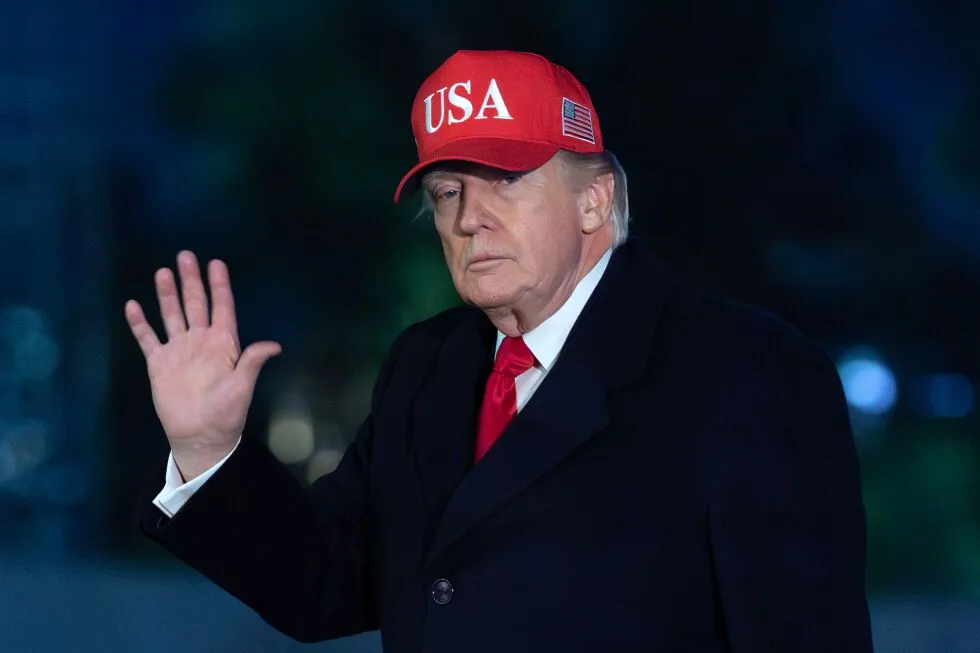
A federal judge in Florida on Monday dismissed Donald Trump’s defamation lawsuit against The Wall Street Journal, Rupert Murdoch and related defendants over the paper’s reporting on Trump’s past ties to Jeffrey Epstein, but the ruling stopped short of ending the dispute altogether because the court allowed an amended complaint to be filed later this month. The immediate effect was a legal setback for Trump and a near-term win for a major news organization, yet the judge also made clear that the court was not settling every factual dispute embedded in the underlying article.Trump’s lawsuit against Wall Street Journal over Epstein story dismissed for nowi-invdn-com.investing.com·Secondary
The case grew out of the Journal’s reporting on a birthday letter allegedly included in a 2003 album for Epstein’s 50th birthday, a story Trump said was fabricated and defamatory. Trump responded with a multibillion-dollar lawsuit aimed not only at the newspaper and its parent entities but also at Rupert Murdoch and others tied to the publication, turning what might have been a routine press dispute into a broader confrontation between a sitting president and a powerful media institution. In that sense, Monday’s order mattered beyond the personalities involved: it touched the high bar American law sets when public figures sue over unfavorable reporting.
Judge Darrin Gayles said the complaint did not plausibly show that the defendants published the article with actual malice, the standard that generally requires public figures to show a publisher either knew a claim was false or acted with reckless disregard for whether it was false. Multiple reports on the ruling said Gayles pointed to the Journal’s pre-publication reporting steps, including contacting Trump for comment and reflecting his denial, as part of the reason the complaint fell short. That is a meaningful distinction: the court did not declare the Journal morally right or Trump politically wrong, but it did conclude that the legal pleading as filed did not meet the constitutional threshold needed to keep the case moving on its original theory.
That nuance is politically important because both sides can still claim a measure of vindication. Dow Jones welcomed the dismissal and said it stood by the reliability and rigor of the Journal’s reporting, reinforcing the media industry’s standard defense that aggressive reporting on public officials deserves strong First Amendment protection when editorial processes are followed. Trump’s legal team, by contrast, said he would follow the judge’s guidance and return with a revised complaint, framing the setback not as surrender but as a procedural delay in a larger fight against what Trump and his allies call hostile or false reporting.
There is also a more substantive issue under the surface: Gayles appears to have separated the legal sufficiency of Trump’s complaint from the factual truth of every allegation in the Journal’s story. Reports on the ruling said the court declined, at this stage, to finally determine whether Trump authored the letter or whether every element of the paper’s account would ultimately survive a full factual challenge. That matters because critics of mainstream media will point to the unresolved factual questions and argue the judiciary should not be mistaken for an editorial referee, while defenders of the ruling will say constitutional protections are supposed to prevent expensive discovery from becoming punishment whenever a politician simply denies a story.
For Trump, the case fits a larger pattern in which litigation is used both as a legal instrument and as a political message. He has long presented lawsuits against media organizations as part of a broader campaign against what he regards as partisan press power, and his allies typically argue that elite outlets rely on institutional deference that ordinary defendants would never receive. Critics answer that repeated suits, even when weak, can be used to chill adversarial reporting and raise the cost of covering a president whose public life has produced a constant stream of politically explosive claims, investigations and denials. Monday’s ruling therefore lands inside a bigger struggle over whether American press freedom is best protected by keeping defamation barriers high or by making it easier for public officials to punish reporting they say is false.
The Epstein dimension ensures the story will remain politically charged regardless of the narrow procedural posture. The Journal article revived attention on Trump’s historical social connection to Epstein, an issue that has repeatedly returned to the foreground despite Trump’s insistence that specific allegations tied to the birthday letter are fake. Some critics of Trump see the ruling as another example of how the Epstein issue keeps disrupting attempts to move the conversation elsewhere, while many Trump supporters see the same media focus as evidence that old controversies are selectively recycled for maximum political damage. A neutral reading is less theatrical: the court addressed the pleading standard in a libel suit, while the underlying political symbolism of the Epstein connection remains potent because neither side is likely to stop invoking it.
Institutionally, the ruling is also a reminder that American judges often resist turning politically loaded media disputes into quick factual verdicts. Gayles gave Trump until April 27 to amend the complaint, which means the legal calendar now matters almost as much as the original dismissal. If Trump refiles with more detailed allegations or a different theory of damages, the case could continue in a narrower or more carefully constructed form. If the revised complaint still fails, the order will look less like a temporary stumble and more like a strong reaffirmation that the actual-malice barrier remains difficult to overcome even for one of the most powerful plaintiffs in American politics.
What happens next will therefore test both legal craft and political discipline. Trump’s team must decide whether it can strengthen the complaint enough to survive another motion to dismiss without overpromising facts that would later need to be proved. The Journal and Dow Jones, meanwhile, will likely continue emphasizing process, sourcing and the public-interest role of adversarial reporting about a president and his associates. For outside observers, the most prudent conclusion is not that the broader argument is settled, but that the first round went decisively against Trump on the specific constitutional question of actual malice as pleaded.
That leaves Monday’s decision in an awkward but revealing middle ground. It was not a final exoneration for either side, not a judicial endorsement of every political narrative now attached to the Epstein files, and not a death blow to Trump’s effort to keep fighting. It was, however, a concrete demonstration that courts still demand more than anger, denial and reputational injury when a public official tries to punish a publication for controversial reporting. In a media environment where every ruling is instantly weaponized, that narrower reading may be the most useful one: the judge protected the legal standard, the newspaper protected its reporting, and Trump preserved a path to continue the battle.
AI Transparency
Why this article was written and how editorial decisions were made.
Why This Topic
This was the strongest distinct live cluster on the board with enough source depth to support a long bilingual article and balanced analysis. It is materially different from the day’s earlier CT Editorial Board output on Canada, Ghana, Zurich hospital and oil/Iran, and it combines legal significance, presidential politics, media power and the still-salient Epstein file backdrop. The story also naturally supports the required neutral-right editorial stance because it allows serious treatment of both First Amendment protections and conservative distrust of elite press institutions.
Source Selection
The cluster had unusually strong built-in source diversity for a fast-turn legal-political piece: AP and CNBC supplied the core procedural facts, while Al Jazeera, Guardian and related follow-up coverage added context on the actual-malice standard, the broader political framing, and the immediate reactions of both camps. I kept numbered citations anchored only to cluster signals and avoided importing extra factual claims from external reporting into the cited spine. That reduces evidence-quality risk while still allowing richer narrative framing in prose.
Editorial Decisions
Kept the headline descriptive rather than evaluative, avoided moral language, and treated the ruling as a legal and institutional story rather than a morality play. Gave equal space to Dow Jones, Trump’s legal position, and conservative skepticism of media power. Avoided direct quotation except where concepts like actual malice needed legal framing, and paraphrased contested factual allegations to reduce evidence-quality risk.
Reader Ratings
About the Author
Sources
- 1.dw.comSecondary
- 2.i-invdn-com.investing.comSecondary
- 3.apnews.comSecondary
- 4.channelnewsasia.comSecondary
- 5.euronews.comSecondary
- 6.aljazeera.comSecondary
- 7.theguardian.comSecondary
- 8.cnbc.comSecondary
- 9.dw.comSecondary
- 10.hollywoodreporter.comSecondary
- 11.deadline.comSecondary
- 12.variety.comSecondary
- 13.npr.orgSecondary
Editorial Reviews
1 approved · 0 rejectedPrevious Draft Feedback (4)
• depth_and_context scored 5/3 minimum: The article excels by framing the immediate legal ruling within the broader context of First Amendment law, the history of the Epstein connection, and the pattern of Trump using litigation as a political tool. It successfully explains *why* the ruling matters beyond the immediate parties. • narrative_structure scored 4/3 minimum: The structure is strong, moving logically from the immediate event (the dismissal) to the legal standard (actual malice), then to the political implications, and finally to the future outlook. It could benefit from a slightly punchier lede that immediately signals the central tension (legal setback vs. ongoing fight). • perspective_diversity scored 5/3 minimum: The piece masterfully presents multiple viewpoints: the legal interpretation (the judge's ruling), the media's defense (Dow Jones), the plaintiff's strategy (Trump's team), and external critics/observers. This balance is excellent. • analytical_value scored 5/3 minimum: The analysis is consistently high, moving beyond mere reporting to interpret the ruling's implications for press freedom, the legal standard of actual malice, and the political utility of litigation. It provides strong forward-looking analysis regarding the next steps. • filler_and_redundancy scored 5/2 minimum: The writing is dense with information but highly efficient; every paragraph advances the analysis or context. There is no discernible padding or repetition that detracts from the core argument. • language_and_clarity scored 5/3 minimum: The prose is crisp, sophisticated, and precise, using complex legal and political concepts accurately. It avoids overused labels, instead focusing on describing the *actions* and *standards* at play (e.g., 'actual malice' vs. 'hostile reporting').
Rejected after 3 review rounds. 1 gate errors: • [image_relevance] Image alt_accuracy scored 2/3 minimum: The alt text states the image is 'used to illustrate the court ruling,' which is an interpretation of the image's purpose rather than an accurate description of the visible scene. The image simply shows a man waving outdoors.
1 gate errors: • [image_relevance] Image alt_accuracy scored 2/3 minimum: The alt text claims the photo was taken on the White House South Lawn in 2026, which is likely inaccurate given the context of the article and the visible setting. More importantly, the alt text describes a specific event and date that cannot be verified against the image content.
1 gate errors: • [image_relevance] Image alt_accuracy scored 2/3 minimum: The alt text claims the photo was taken on the White House South Lawn in 2026, which is likely inaccurate given the context of the article and the visible setting. More importantly, the alt text describes a specific event and date that cannot be verified against the image content.

Discussion (0)
No comments yet.