Eric Swider leaves Trump Media board, reopening questions about the company’s post-merger direction
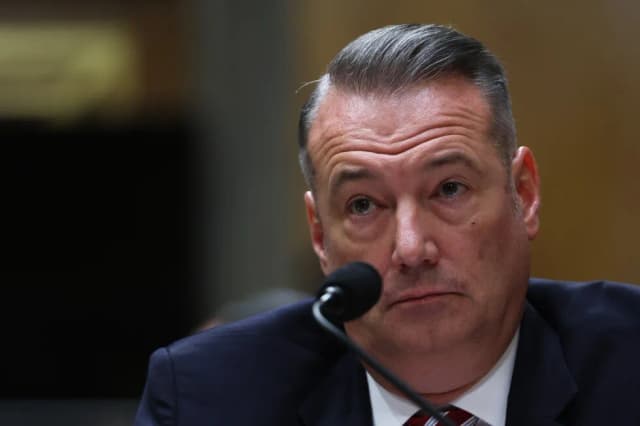
Eric Swider, the former Digital World chief who helped bring Trump Media public, has resigned from the company’s board without a stated dispute, putting a fresh spotlight on governance, growth and the role of Truth Social inside Donald Trump’s political orbit.[1][2]

Trump Media & Technology Group said on Friday that Eric Swider had resigned from its board, removing one of the best-known holdovers from the company’s path to the public market and reopening an old argument about what the business is becoming after its headline-grabbing debut in 2024.Eric Swider resigns from Trump Media board i-invdn-com.investing.com·Secondary
The resignation matters less because Swider was a day-to-day operating face of Truth Social and more because he represented the special-purpose acquisition company, or SPAC, structure that carried Trump Media into the Nasdaq spotlight. Swider had served as chief executive of Digital World Acquisition Corp, the blank-check company that pursued the merger and navigated it through long delays, regulatory scrutiny and intense political attention before the deal was completed.Eric Swider resigns from Trump Media board i-invdn-com.investing.com·Secondary
Trump Media said the resignation was not tied to any disagreement with management or with the board. That kind of disclosure is standard when companies want to signal continuity rather than upheaval, but it does not erase the practical significance of losing a director linked to one of the most consequential phases in the company’s short public history.Eric Swider resigns from Trump Media board i-invdn-com.investing.com·Secondary
For investors, the immediate issue is governance rather than ideology. Trump Media has always traded as more than a conventional media stock. It sits at the intersection of politics, meme-stock style retail enthusiasm, loyalty to Donald Trump and ongoing doubt about whether the business can scale like a normal digital platform. A board change at a company with that profile naturally draws more scrutiny than a similar exit at a quieter small-cap business.Eric Swider resigns from Trump Media board i-invdn-com.investing.com·Secondary
Swider’s name is closely associated with the merger vehicle that made the listing possible. Reuters noted that Digital World settled fraud charges with the U.S. securities regulator in 2023 over allegations that investors had been misled because the company did not properly disclose plans to acquire Trump Media and had pursued the transaction before its own initial public offering. That history does not make Swider’s departure an accusation by itself, but it does remind the market that Trump Media’s route to public ownership was contested from the start and never looked like a routine listing.Eric Swider resigns from Trump Media board i-invdn-com.investing.com·Secondary
That background also helps explain why even a short resignation filing can carry more weight than its wording suggests. Trump Media is not just judged on user growth or ad sales. It is judged on whether the company can persuade investors that it now has a stable long-term structure after surviving the merger saga, the legal questions around Digital World and the wider political volatility attached to its controlling public persona.Eric Swider resigns from Trump Media board i-invdn-com.investing.com·Secondary
The company’s own business position remains a central part of the story. Reuters said Trump Media has struggled to scale its media operations in the face of larger social-media rivals and uneven user growth. That is the underlying commercial problem that sits behind most governance discussions: if a platform has not yet shown broad operating momentum, every director exit can look larger because investors are still trying to determine whether the board is overseeing a durable enterprise or simply managing a politically famous brand.Eric Swider resigns from Trump Media board i-invdn-com.investing.com·Secondary
At the same time, there is a credible counterargument, and conservative-minded investors will likely make it plainly. Board turnover does not always signal weakness. Companies often refresh directors after a merger phase ends, especially when the people most associated with the listing process have already done the work they were brought in to do. From that perspective, Swider’s exit could reflect a transition from dealmaking oversight to a more settled post-merger board mix rather than any deeper fracture.Eric Swider resigns from Trump Media board i-invdn-com.investing.com·Secondary
That more favorable reading fits with Trump Media’s statement that there was no dispute. It also fits a simple corporate reality: the skills needed to complete a difficult SPAC transaction are not identical to the skills needed to run a media and technology company through its next operating phase. A director who was central during the financing and regulatory chapter may be less central once the focus shifts to product, user retention, monetization and capital allocation.Eric Swider resigns from Trump Media board i-invdn-com.investing.com·Secondary
Still, skeptics have plenty of room to question whether Trump Media is entering that next phase from a position of strength. The company remains unusually dependent on Donald Trump’s public presence and on Truth Social’s political visibility. Reuters noted that Trump regularly uses the platform for major political and personal announcements. That gives the company attention that rivals cannot easily replicate, but it also binds the business model tightly to one political figure, one news cycle and one unusually volatile form of audience engagement.Eric Swider resigns from Trump Media board i-invdn-com.investing.com·Secondary
That dependence cuts both ways. Supporters can argue that no mainstream social platform has an equivalent direct line to a sitting U.S. president and to a highly loyal political base, giving Truth Social an identity and relevance that larger but more generic competitors often lack. Critics respond that visibility is not the same as scalable economics, and that a platform centered on political prominence still has to show repeatable user growth, stronger revenue foundations and a board structure that can outlast one personality-driven era.Eric Swider resigns from Trump Media board i-invdn-com.investing.com·Secondary
In practical terms, the board change leaves three questions hanging over the company. First, will Trump Media replace Swider with someone identified mainly with finance, regulation or operations. Second, will management use the moment to reassure investors about long-term growth rather than short-term brand attention. Third, will the company’s governance story become cleaner with time, or will departures like this keep reviving the unresolved memory of the SPAC deal that brought it public in the first place.Eric Swider resigns from Trump Media board i-invdn-com.investing.com·Secondary
Those questions matter because governance stories often become proxy battles over valuation. Bulls can say the market has long understood Trump Media’s political uniqueness and will treat Swider’s exit as a limited event. Bears can say that whenever a company with uneven fundamentals loses a board figure connected to its market debut, investors are right to reprice execution risk. Neither side has a monopoly on the evidence yet, which is why the resignation may prove more important as a signal than as a standalone event.Eric Swider resigns from Trump Media board i-invdn-com.investing.com·Secondary
What happens next is likely to be quieter than the headlines suggest. Unless Trump Media discloses a replacement quickly or new filings add detail, investors will spend the next stretch reading routine governance language for clues about strategy. But the broader meaning is already clear enough: Swider’s departure does not by itself prove internal trouble, yet it puts Trump Media back under a familiar lens — one that asks whether a politically powerful platform can mature into a more stable public company after the extraordinary circumstances that created it.Eric Swider resigns from Trump Media board i-invdn-com.investing.com·Secondary
AI Transparency
Why this article was written and how editorial decisions were made.
Why This Topic
This is the strongest distinct cluster visible above the 6.0 threshold and it is meaningfully different from the most recent CT Editorial Board publishes, which have centered on protests, geopolitics, sports, aerospace and road AI rather than U.S. media-company governance. The story combines a Trump-adjacent political brand with a real corporate governance event, making it newsworthy beyond ordinary board churn.
Source Selection
The cluster sources are thin but usable for a governance-focused article. Reuters, mirrored via Channel News Asia and Yahoo Finance, provides the core verified facts: Swider resigned, he led the SPAC that took Trump Media public, Digital World settled SEC fraud charges in 2023, Trump Media says there was no dispute, and the company still faces scaling and user-growth challenges. Because evidence quality is strict, the article stays close to those facts and uses analysis only where it is clearly labeled as interpretation.
Editorial Decisions
Neutral, descriptive treatment of a Trump-linked corporate governance story. The piece avoids moralizing, gives both skeptical and favorable interpretations of the resignation, and keeps the focus on governance, scaling and investor implications rather than personality-driven outrage. All numbered citations are limited to cluster sources.
Reader Ratings
About the Author
Sources
- 1.i-invdn-com.investing.comSecondary
- 2.channelnewsasia.comSecondary
- 3.finance.yahoo.comSecondary
Editorial Reviews
1 approved · 0 rejectedPrevious Draft Feedback (1)
• depth_and_context scored 5/3 minimum: The article excels by providing extensive background on the SPAC structure, the regulatory history (Digital World fraud charges), and the core tension between political visibility and scalable economics. It thoroughly explains *why* this resignation matters beyond the surface announcement. • narrative_structure scored 4/3 minimum: The structure is strong, moving logically from the immediate news hook (the resignation) to the historical context (SPAC/fraud) and concluding with forward-looking questions for investors. It could benefit from a slightly punchier lede that immediately frames the central conflict rather than just stating the resignation. • perspective_diversity scored 5/3 minimum: The piece masterfully presents multiple viewpoints: the company's narrative (no disagreement), the 'bull' argument (transition from dealmaking), the 'bear' argument (execution risk), and the inherent tension between political relevance and scalable business models. This balance is excellent. • analytical_value scored 5/3 minimum: The article is highly analytical, consistently interpreting the significance of the event. It doesn't just report the resignation; it analyzes what the resignation *means* for the company's valuation, governance, and future trajectory. • filler_and_redundancy scored 5/2 minimum: The writing is dense with necessary analysis and context, and the repetition serves to reinforce key themes (e.g., the tension between politics and business). There is no discernible padding or unnecessary repetition. • language_and_clarity scored 4/3 minimum: The writing is sophisticated, precise, and engaging, maintaining a high journalistic tone. To reach a 5, the author should occasionally vary sentence structure to prevent the prose from becoming overly academic or dense, ensuring maximum readability for a general business audience.


Discussion (0)
No comments yet.