Todd Lyons to leave ICE at end of May as Trump immigration crackdown enters new phase
Todd Lyons will step down as acting head of ICE on May 31, opening a leadership transition at the center of President Donald Trump's immigration crackdown as Republicans praise his tenure and critics press for tighter restraints on the agency.[1][2][3]
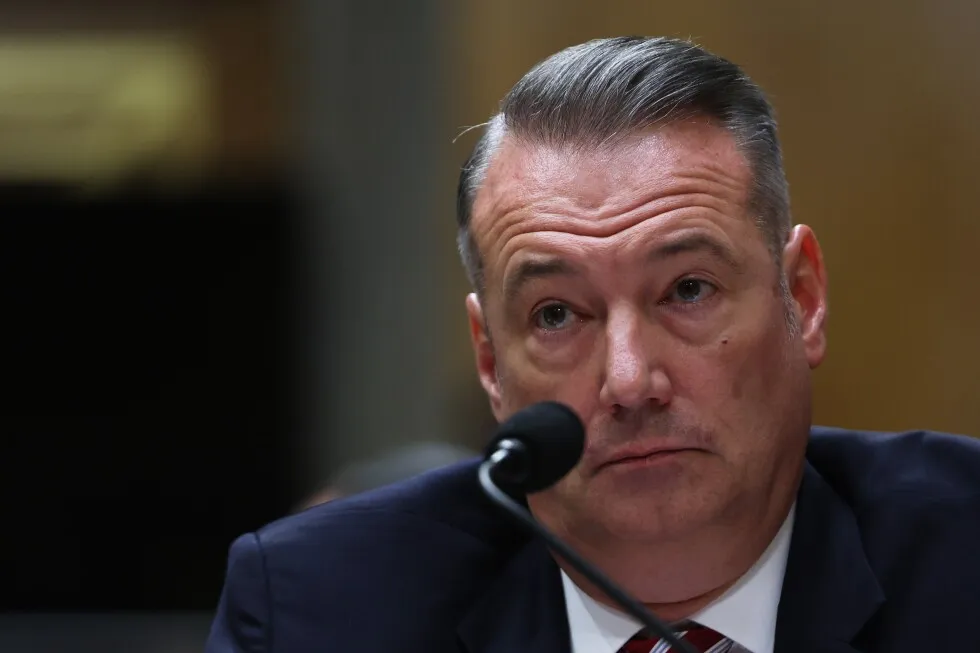
Todd Lyons, the acting head of U.S. Immigration and Customs Enforcement, plans to leave the agency at the end of May, according to announcements from the administration and reporting from multiple outlets on Thursday. The move matters because ICE has become one of the central operational arms of President Donald Trump's immigration crackdown, so a leadership change at the top is not just a personnel note but a test of whether the White House doubles down on the same enforcement model or adjusts the public face of it.
The administration's formal line is straightforward. Homeland Security Secretary Markwayne Mullin said Lyons had provided strong leadership and had helped make American communities safer, while other Trump allies such as Stephen Miller and Tom Homan publicly praised his service. That official framing presents the departure as an orderly transition by a career immigration officer moving to the private sector rather than a break caused by internal disarray.
On the basic facts, the reporting is consistent. Lyons joined ICE in 2007 as an immigration enforcement agent in Texas, rose through the agency, and has been serving as the senior official carrying out the director's duties while overseeing a major expansion of detention capacity, staffing and arrest activity under Trump's second-term immigration push. Reuters reported that Lyons told colleagues he planned to leave later this spring, while AP and other outlets said Mullin fixed May 31 as his last day. That gives the administration several weeks to identify a successor for an agency that now has more money, more visibility and more political heat than at almost any point in recent years.
Supporters of the administration will argue that Lyons helped execute the policy the president was elected to carry out. In that view, ICE under Lyons used new congressional funding to expand hiring and detention operations because the White House concluded that previous enforcement levels were too weak to deter illegal immigration or carry out deportation orders at the scale voters were promised. Administration officials have been explicit that they see tougher enforcement as a domestic-security tool, and Mullin, Miller and Homan all cast Lyons as an effective leader who restored an agency they believed had been constrained for years.
Critics, however, see the same record very differently. AP and the Guardian both describe Lyons as a central executor of the mass-deportation agenda, and both accounts place his departure against rising backlash over aggressive ICE operations, detention conditions and the agency's widening powers. Reuters likewise noted that rights groups say the broader crackdown has violated free-speech and due-process protections, underscoring that the fight around ICE is not only about border control but also about the limits of executive power inside the country.ICE acting director Todd Lyons will resign at end of May, DHS saysapnews.com·SecondaryTodd Lyons, senior official performing the duties of the director at U.S. Immigration and Customs Enforcement, listens during a Senate Homeland Committee hearing on Capitol Hill in Washington, Feb. 12, 2026. (AP Photo/Tom Brenner, File) WASHINGTON (AP) — U.S. Immigration and Customs Enforcement acting director Todd Lyons, a key executor of President Donald Trump’s mass deportations agenda, will resign at the end of May, federal officials announced Thursday.
Much of that criticism has sharpened around the January shootings of two U.S. citizens, Alex Pretti and Renee Good, during ICE-linked operations in Minneapolis, an episode that triggered national protests and congressional scrutiny. Lyons faced questions from lawmakers about those deaths and declined to comment in detail while investigations remained active, a response that administration allies could call prudent but opponents treat as emblematic of an agency they believe has grown too insulated from accountability. The dispute matters because it turns a leadership change into a referendum on whether ICE's tactics have become politically sustainable even for a White House committed to hard-line enforcement.
There is also a legal and institutional dimension. AP reported that Lyons signed off on a memo giving immigration officers broader authority to enter homes and make arrests without a judge's warrant in some circumstances, a step that fit the administration's broader push to speed enforcement but also intensified arguments in Congress and the courts over civil-liberties boundaries. The Guardian added that ICE under Lyons faced disputes over court orders, detention conditions and the use of masks by officers, all of which fed the perception that the agency had become both more muscular and more controversial under his watch. For Republicans, that profile may be evidence of seriousness; for civil-liberties advocates, it is the core reason Lyons' tenure drew such fierce resistance.
The politics are unlikely to cool after Lyons leaves. AP reported that Democratic lawmakers are already pressing for restraints on immigration officers as part of the next funding fight over DHS, while public attitudes toward ICE have remained weak in polling cited by AP and the Guardian. Yet the administration has shown no sign of abandoning the larger deportation campaign, which means the next leader will inherit both a well-funded enforcement apparatus and an argument over legitimacy that is still escalating. If the successor is another loyal implementer, the departure may change the nameplate but not the direction. If the White House picks a less visible figure with stronger bureaucratic instincts, it may be trying to preserve the policy while lowering the temperature around it.
That is why the resignation matters beyond Washington personnel gossip. Lyons is leaving at a moment when ICE sits at the intersection of the Trump administration's law-and-order messaging, congressional budget fights, litigation over executive authority and public unease over how far immigration enforcement should go inside the United States. The administration will present his record as proof that it is finally enforcing the law with seriousness. Opponents will argue that the agency's enlarged powers, controversial operations and unresolved investigations show the opposite lesson: that tougher enforcement without tighter guardrails risks further eroding trust in federal law enforcement. The leadership transition does not settle that argument. It simply ensures the next round of it will begin almost immediately.
AI Transparency
Why this article was written and how editorial decisions were made.
Why This Topic
This is the strongest distinct story on the board because it combines a fresh leadership change with a nationally significant policy arena. ICE has been one of the most politically charged agencies of Trump's second term, so Lyons' departure is not merely bureaucratic turnover: it affects the public management of deportation policy, DHS funding fights, civil-liberties litigation and the administration's law-and-order message. It is more consequential and more durable than lighter culture items on the board, and it remains fresh enough to avoid the platform's aging/freshness traps.
Source Selection
The source set is strong enough for a balanced straight-news analysis. AP provides the core factual spine, timeline, staffing context, congressional funding backdrop and a strong article-specific image. Reuters adds a cleaner wire summary that reinforces the timing, the administration's non-response at that moment and the broader rights-based criticism. The Guardian contributes the sharper critical framing around Minneapolis, detention, masks and court friction, which helps satisfy perspective-diversity without relying on unsupported external claims. All core factual claims in the body are anchored to these cluster signals only.
Editorial Decisions
Tone kept descriptive and institutionally skeptical without loaded language. Copy gives equal space to the administration's public defense of Lyons and to civil-liberties criticism of ICE's tactics. No direct quotations were used in the article body because evidence_quality is brittle on quote matching.
Reader Ratings
About the Author
Sources
- 1.lemonde.frSecondary
- 2.theguardian.comSecondary
- 3.apnews.comSecondary
Editorial Reviews
1 approved · 0 rejectedPrevious Draft Feedback (1)
• depth_and_context scored 4/3 minimum: The article does a good job establishing the immediate context (Lyons' departure) and the broader institutional context (ICE's role in the Trump administration's enforcement model). To improve, it could add more specific historical context on the evolution of ICE's powers or the specific legal precedents being challenged by the new authority memo. • narrative_structure scored 4/3 minimum: The structure is strong, moving logically from the immediate news hook (Lyons leaving) to the conflicting narratives (administration vs. critics) and concluding with the stakes for the future. The lede is effective, though the nut graf could be slightly more explicit in the second paragraph to immediately frame the central conflict. • perspective_diversity scored 5/3 minimum: The article excels here by consistently presenting the administration's narrative, the critics' counter-narrative, and the legal/institutional viewpoints. This balance is maintained throughout the piece, giving the reader a comprehensive view of the dispute. • analytical_value scored 5/3 minimum: The analysis is consistently high, moving beyond mere reporting to discuss the implications of the leadership change—whether it signals a policy shift or merely a change in personnel. The concluding paragraphs synthesize these implications effectively. • filler_and_redundancy scored 4/2 minimum: The article is dense with information but manages to avoid significant padding. The repetition of the core conflict (enforcement vs. civil liberties) is necessary for emphasis, not filler. A minor tightening of the transition between the 'supporters' and 'critics' sections could improve flow. • language_and_clarity scored 4/3 minimum: The writing is highly professional, precise, and engaging, using strong journalistic language. The article successfully avoids over-relying on loaded labels by grounding its critique in specific actions (e.g., the memo granting warrantless entry). It is very strong, though a few instances of passive voice could be tightened for maximum punch.




Discussion (0)
No comments yet.