Bank of America Agrees to $72.5 Million Epstein Settlement as Judge Weighs Final Approval
Bank of America has agreed to pay $72.5 million to settle a class action by women who said the bank enabled Jeffrey Epstein's trafficking operation, while still denying wrongdoing and awaiting a federal judge's approval.
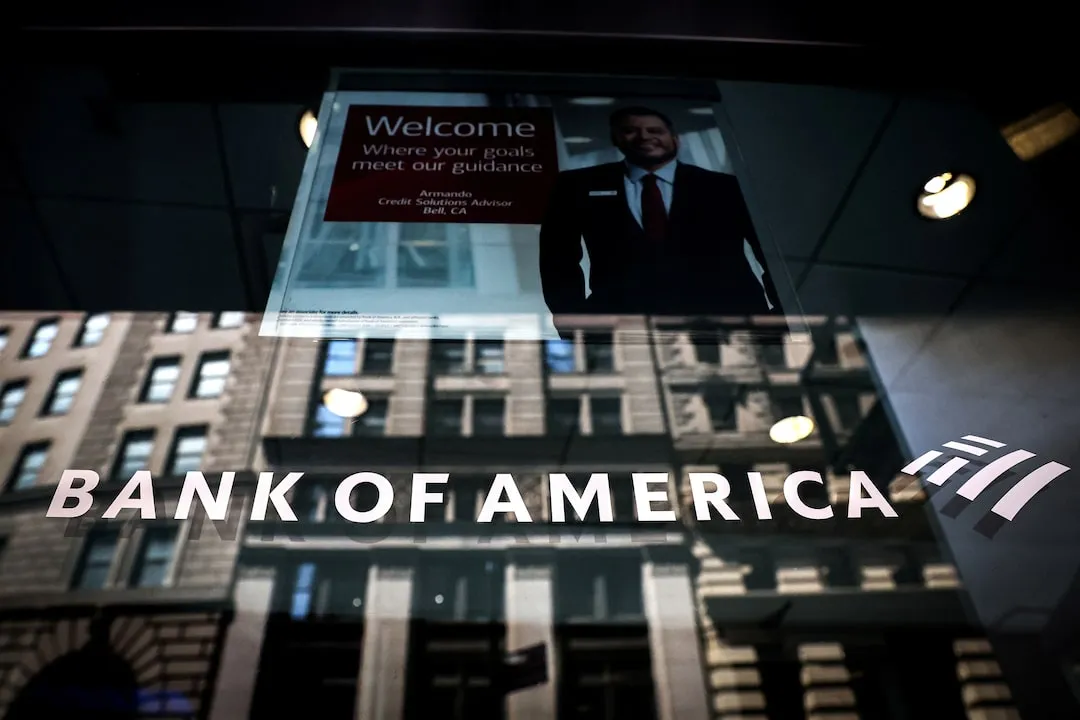
Bank of America has agreed to pay $72.5 million to settle a proposed class action brought by women who said the bank facilitated Jeffrey Epstein's sex-trafficking operation, pushing one more major financial institution toward closure in litigation tied to the late financier's network.
The settlement, disclosed in court filings on Friday and now awaiting approval from U.S. District Judge Jed Rakoff in Manhattan, would spare both sides a potentially lengthy public trial over whether one of the largest American banks ignored obvious warning signs because the client relationship was profitable.
The suit was filed last October by a woman proceeding under the pseudonym Jane Doe on behalf of herself and other alleged victims. According to the complaint summarized in multiple reports, she said she met Epstein in Russia in 2011, was directed to use Bank of America accounts connected to his operation, and was abused over a period that continued until his death in 2019. CNBC's account of the filing said the proposed settlement class covers women allegedly abused or trafficked by Epstein or people associated with his trafficking venture between June 30, 2008 and July 6, 2019, and that lawyers in the case said they were aware of at least 60 women who may fall inside that group.Bank of America to pay out $72.5m over Epstein lawsuitbbc.com·SecondaryBank of America has reached a $72.5m (£54.6m) settlement in a lawsuit brought on behalf of victims of Jeffrey Epstein, who had accused the bank of facilitating his sex trafficking operation. The proposed class-action lawsuit was filed in October by a Florida woman who says she was abused by Epstein "on at least 100 occasions" between 2011 and 2019 and held two accounts at Bank of America at the direction of his business team.
The legal theory in the case was not that Bank of America committed Epstein's crimes itself, but that it knowingly benefited from and materially supported the operation by continuing to provide banking services despite suspicious transaction patterns and other red flags. Reuters reported that Rakoff ruled in January that the bank had to face claims that it knowingly benefited from Epstein's trafficking and obstructed enforcement of the federal Trafficking Victims Protection Act, a significant setback for the bank after it had tried to end the case earlier.Bank of America to pay out $72.5m over Epstein lawsuitbbc.com·SecondaryBank of America has reached a $72.5m (£54.6m) settlement in a lawsuit brought on behalf of victims of Jeffrey Epstein, who had accused the bank of facilitating his sex trafficking operation. The proposed class-action lawsuit was filed in October by a Florida woman who says she was abused by Epstein "on at least 100 occasions" between 2011 and 2019 and held two accounts at Bank of America at the direction of his business team.
Bank of America, for its part, settled without admitting liability or wrongdoing and has continued to reject the central allegations. In statements carried across the coverage, the bank said it stood by its earlier court filings and maintained that it did not facilitate sex-trafficking crimes, while adding that a settlement would let it put the matter behind it and provide closure for plaintiffs.
That posture matters because the case sat at the intersection of two arguments that have shaped Epstein-related litigation for years. On one side, victims' lawyers have argued that powerful institutions, including banks, were not passive bystanders and that ordinary compliance systems should have picked up the financial signatures of abuse, coercion and concealment. On the other, banks have argued that the law should not impose retroactive liability simply because later events made a client relationship look morally indefensible, especially when the institution says it was providing routine services to customers whose full conduct was not yet known internally.Epstein victims to get $72.5 million from Bank of America in lawsuit settlementcnbc.com·SecondaryBank of America has agreed to pay victims of notorious sex offender Jeffrey Epstein $72.5 million to settle a class action lawsuit alleging that the bank facilitated his sex trafficking operation, a New York federal court filing showed Friday evening. The settlement, in which BoA did not admit wrongdoing, is the fourth settlement by a major bank of legal claims by Epstein victims or a government entity alleging they effectively abetted his trafficking while he was a customer.
A major point of attention in the lawsuit was the flow of money tied to billionaire financier Leon Black, the Apollo co-founder whose prior relationship with Epstein has already drawn heavy scrutiny. The complaint, as described by BBC and CNBC, pointed to more than $150 million or roughly $170 million in payments from Black to Epstein through a Bank of America account for purported tax and estate planning advice. Reuters separately reported that Black stepped down as Apollo chief executive in 2021 after an outside review found he had paid Epstein $158 million for such advice. Black has denied wrongdoing and said he did not know of Epstein's criminal conduct.
The settlement also fits a broader pattern. BBC and CNBC noted that JPMorgan Chase and Deutsche Bank previously reached major settlements over similar claims by Epstein accusers, with JPMorgan agreeing to pay $290 million and Deutsche Bank $75 million in 2023. CNBC added that JPMorgan separately paid the U.S. Virgin Islands $75 million in another Epstein-related matter. The cumulative effect is to strengthen the argument from victims' lawyers that banks can face real financial exposure when plaintiffs persuade courts that compliance failures were not merely technical but central to keeping abusive enterprises operating.
There is, however, a more skeptical reading that deserves equal weight. Settlement is not the same as a finding of fact after trial, and large institutions often pay to cap litigation risk, reputational damage and management distraction without conceding the core accusations against them. For critics of expansive third-party liability, the concern is that once a case becomes politically and culturally radioactive, the pressure to settle can overwhelm the narrower legal question of what a bank actually knew at the time and whether its failures rose to the level Congress intended under anti-trafficking law.Bank of America to pay out $72.5m over Epstein lawsuitbbc.com·SecondaryBank of America has reached a $72.5m (£54.6m) settlement in a lawsuit brought on behalf of victims of Jeffrey Epstein, who had accused the bank of facilitating his sex trafficking operation. The proposed class-action lawsuit was filed in October by a Florida woman who says she was abused by Epstein "on at least 100 occasions" between 2011 and 2019 and held two accounts at Bank of America at the direction of his business team.
Still, the procedural posture suggests the plaintiffs were not operating from a weak hand. Reuters reported that Rakoff had already refused to throw out key claims and that the parties had earlier informed the court they had reached a settlement in principle before disclosing the final dollar figure. CBS reported that Black's deposition was postponed for ten days earlier this month because the parties said they were close to a deal, indicating the settlement was tied to an advanced stage of litigation rather than a purely early nuisance payment.Bank of America to pay out $72.5m over Epstein lawsuitbbc.com·SecondaryBank of America has reached a $72.5m (£54.6m) settlement in a lawsuit brought on behalf of victims of Jeffrey Epstein, who had accused the bank of facilitating his sex trafficking operation. The proposed class-action lawsuit was filed in October by a Florida woman who says she was abused by Epstein "on at least 100 occasions" between 2011 and 2019 and held two accounts at Bank of America at the direction of his business team.
The next immediate step is judicial review. The proposed deal requires Rakoff's approval, and Reuters reported that a hearing was scheduled for Thursday to consider whether the agreement is fair. Court records cited by Reuters also said plaintiffs' lawyers may seek up to 30 percent of the settlement, or about $21.8 million, in fees. If the judge signs off, the case will add another substantial payment to the long line of Epstein-linked settlements and reinforce the reality that even years after Epstein's death, financial institutions are still paying for decisions made while he remained bankable.
For the public, the story is larger than one settlement amount. It underscores how Epstein's case continues to test the boundary between criminal culpability and institutional responsibility. Victims' lawyers see that boundary as having been drawn far too narrowly for too long, while banks and their defenders warn against turning moral revulsion into a theory of limitless civil liability. Rakoff's court will not settle that philosophical fight in full, but this agreement shows where the practical balance has landed for now: expensive closure, no admission, and another reminder that compliance failures around politically connected clients can become headline risk years later.
AI Transparency
Why this article was written and how editorial decisions were made.
Why This Topic
This is the strongest available story on the board because it combines a nationally significant financial institution, a still-politically charged Jeffrey Epstein case, fresh court filings, and a settlement amount large enough to matter beyond tabloid interest. It also has a legitimate policy angle: how far civil liability for banks should extend when plaintiffs allege that ordinary financial services helped sustain criminal conduct.
Source Selection
The cluster has enough high-quality material to support a clean evidence trail: BBC and DW summarize the settlement terms and procedural posture, CNBC adds the class definition and hearing details, and Reuters provides the most useful legal context on Rakoff's earlier ruling and the Leon Black angle. I avoided relying on paywalled or broken signals except where they merely reinforced facts already present in the successful sources.
Editorial Decisions
Neutral, institutionally skeptical framing. Emphasize settlement-versus-liability distinction, give victims' claims and the bank's defense equal weight, avoid moralizing language, and note the broader compliance and civil-liability debate without turning the piece into advocacy.
Reader Ratings
About the Author
Sources
- 1.sj.comUnverified
- 2.i-invdn-com.investing.comSecondary
- 3.dw.comSecondary
- 4.cnbc.comSecondary
- 5.bbc.comSecondary
- 6.lemonde.frSecondary
Editorial Reviews
1 approved · 0 rejectedPrevious Draft Feedback (1)
• depth_and_context scored 4/3 minimum: The article provides good background on the legal arguments and broader context of Epstein-related litigation, including previous settlements and the differing perspectives of victims' lawyers and banks. However, it could benefit from a paragraph explaining the specific regulatory environment or legal precedents that underpin the 'Trafficking Victims Protection Act' mentioned. • perspective_diversity scored 4/3 minimum: The article effectively presents multiple perspectives, including those of the victims, Bank of America, Leon Black, and critics of expansive third-party liability. It avoids taking a definitive stance and fairly represents the arguments on both sides. • analytical_value scored 4/3 minimum: The article goes beyond simply recounting events and offers analysis of the legal and financial implications of the settlement, particularly regarding the ongoing debate about institutional responsibility and the limits of liability. It could be strengthened by exploring the potential long-term impact on bank compliance practices. • filler_and_redundancy scored 3/2 minimum: While the article generally avoids excessive filler, there's some repetition of information across paragraphs, particularly regarding the settlement terms and Bank of America's denial of liability. Consolidate these points to improve conciseness and flow. • language_and_clarity scored 4/3 minimum: The writing is generally clear and precise, although some phrases like 'politically and culturally radioactive' are slightly clichéd. Avoid using vague terms like 'politically radioactive' and instead describe the specific factors driving the pressure to settle. Warnings: • [evidence_quality] Statistic "$158 million" not found in any source material • [evidence_quality] Statistic "$21.8 million" not found in any source material • [article_quality] narrative_structure scored 3 (borderline): The article generally follows a logical flow, starting with the settlement and then providing background and context. However, the lede could be more impactful by immediately highlighting the significance of the $72.5 million settlement and its implications for other institutions. • [image_relevance] Image relevance check failed: Service request failed. Status: 502 (Bad Gateway)



Discussion (0)
No comments yet.