Corebridge and Equitable Agree All-Stock Merger to Form $22 Billion Retirement and Insurance Group
Corebridge Financial and Equitable Holdings have agreed to merge in an all-stock transaction valued at about $22 billion, creating a combined retirement, life, wealth and asset-management group serving more than 12 million customers.
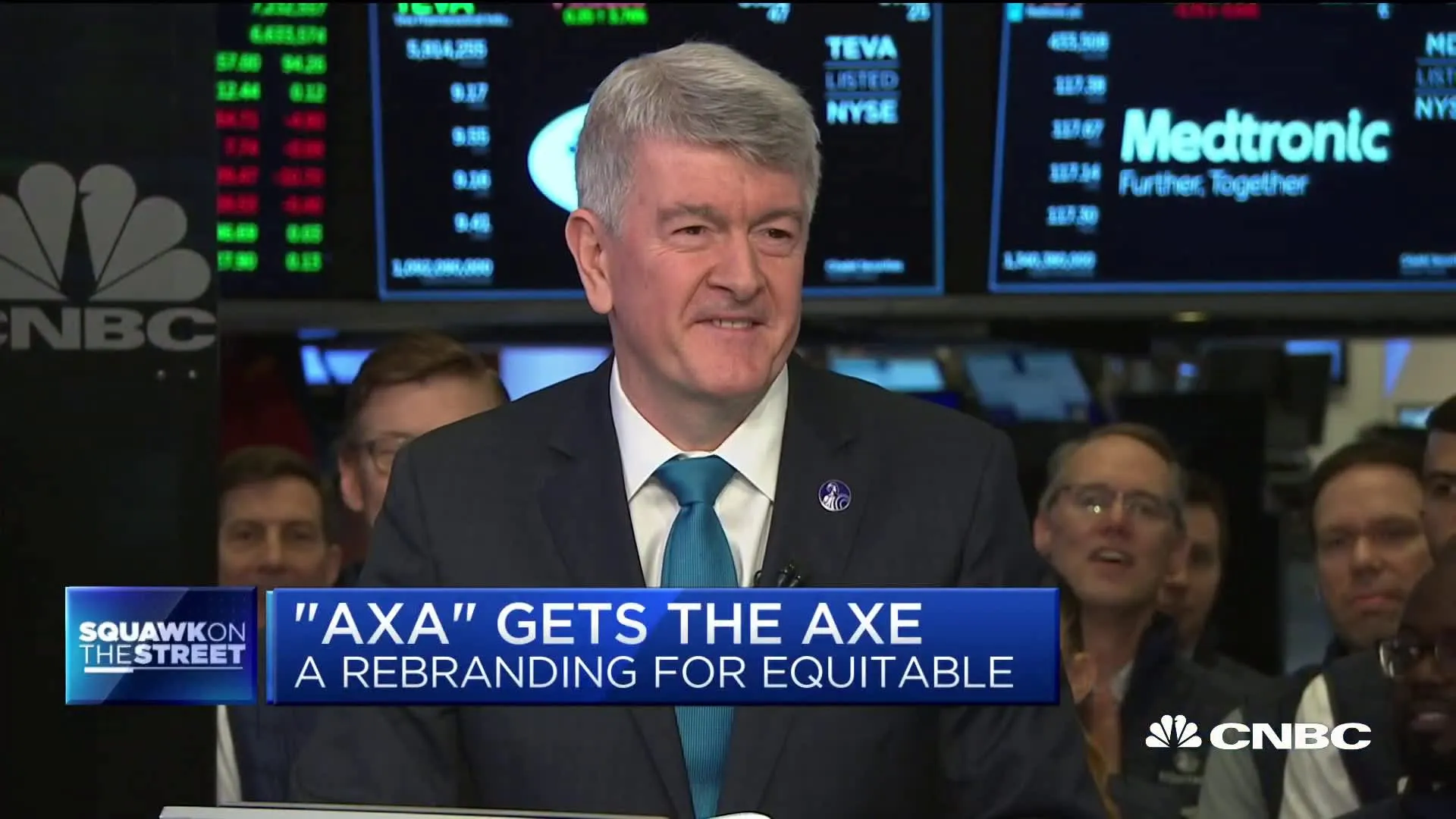
Corebridge Financial and Equitable Holdings said this week they have agreed to merge in an all-stock transaction that would create a much larger retirement, insurance, wealth and asset-management company with an implied value of about $22 billion. The companies said the combined group would serve more than 12 million customers and oversee roughly $1.5 trillion in assets under management and administration, putting the deal among the most consequential insurance-sector tie-ups now moving through the U.S. pipeline.
The structure of the transaction matters because it is not a cash buyout or a narrow asset sale, but a full-stock combination that effectively blends two large franchises with different strengths. Corebridge brings one of the larger U.S. retirement and insurance platforms, while Equitable contributes its own retirement and protection business alongside control of AllianceBernstein, the asset manager that gives the combined group a deeper investment and distribution footprint. Management is presenting the merger as a way to build scale in a market where size, product breadth and distribution reach increasingly shape who wins new retirement money.
Under the announced terms, Corebridge shareholders would own about 51% of the combined company and Equitable shareholders about 49% after closing. The new parent is expected to operate under the Equitable name and ticker symbol EQH, while headquarters would be in Houston. Marc Costantini of Corebridge is set to become chief executive of the combined business, Robin Raju of Equitable is slated to become chief financial officer, and Equitable chief executive Mark Pearson is expected to move into the executive chair role. A 14-member board would be split evenly between directors designated by each side, an arrangement meant to signal that this is being pitched as a merger of scale rather than a simple takeover.Corebridge Financial, Equitable Holdings to Mergesj.com·Unverified
The companies are also making an explicit efficiency case. They said the combination is expected to produce more than $500 million in synergies by the end of 2028, largely through consolidating overlapping functions, technology systems and vendor relationships. At the same time, executives said the one-time cost of capturing those savings would be about $750 million, a reminder that promised efficiencies do not arrive for free and that integration itself will be one of the central tests of the strategy.Corebridge Financial, Equitable Holdings to Mergesj.com·Unverified In corporate mergers, investors usually hear the headline synergy number first; the harder question is whether management can cut costs without disrupting sales channels, adviser relationships or policyholder service. That is the part markets will judge over time.
Management is trying to frame the deal not only as a cost story but as a growth story. The combined company said it expects the merger to be immediately accretive to earnings per share and cash generation, with accretion projected to exceed 10% by the end of 2028. The firms also said the new group would generate more than $5 billion in operating earnings and more than $4 billion in cash, figures intended to reassure shareholders that the scale being assembled is supposed to throw off durable earnings rather than just bigger balance-sheet totals. That sales pitch fits the broader industry argument that insurers and retirement-product providers need more size, broader product shelves and steadier fee income to compete through different market cycles.Equitable, Corebridge to merge in $22 billion all-stock deali-invdn-com.investing.com·Secondary
Another pillar of the merger case is distribution. Corebridge said the deal would add more than 5,000 Equitable advisers and about $140 billion in wealth-related assets under administration to its reach. The companies also said the merged business would combine retirement products, life insurance, institutional markets, wealth management and third-party asset management in one platform, giving it more chances to cross-sell products across customer relationships. Supporters of the transaction argue that this kind of breadth can matter in retirement and wealth markets, where clients often want a mix of guaranteed income products, investment options and advisory relationships from firms they already know.Corebridge Financial, Equitable Holdings to Mergesj.com·Unverified
Asset management is a second major strategic piece. The companies said that over time about $100 billion of Corebridge general and separate account assets would move to AllianceBernstein, which they say would strengthen scale and competitive positioning. Corebridge also said its strategic asset-management partnerships with BlackRock and Blackstone would remain in place, suggesting management does not want this merger read as a retreat from existing investment relationships.Corebridge Financial, Equitable Holdings to Mergesj.com·Unverified For bulls on the deal, that combination of internal and external asset-management channels offers a more diversified model. For skeptics, it also creates a more complicated operating structure that management will have to coordinate carefully if it wants the projected benefits to show up in earnings rather than in presentation slides.
There is a reason opposition or caution exists even when management teams describe a merger as complementary. Deals of this size invite questions about execution risk, employee overlap, cultural integration and whether revenue assumptions prove too optimistic once the easy presentation language meets real markets. The companies themselves acknowledged that some of the projected savings would come from eliminating redundant services, including employee roles, and from combining systems and vendors. Shareholders still have to approve the transaction, regulators still have to sign off, and the companies are targeting a close by year-end 2026 rather than pretending the path is automatic. That gives critics space to argue that a compelling industrial logic on paper still has to survive the long process of approvals, integration and market scrutiny.
The official line from the companies is straightforward: bigger scale, broader distribution, a more balanced revenue mix and stronger competitive positioning in retirement, life and institutional markets. Pearson has argued that the merger would expand customer choice and broaden access to retirement and investment solutions, while Costantini has emphasized accelerated growth and a more resilient business model.Equitable, Corebridge to merge in $22 billion all-stock deali-invdn-com.investing.com·Secondary Those are the expected claims from deal sponsors, and investors will listen to them. But the more durable verdict will depend on whether the combined company can preserve adviser productivity, keep customer service intact, realize the advertised synergies, and convert a large balance sheet into dependable returns rather than just a larger corporate map.
What makes the story newsworthy is that it touches several overlapping pressures inside U.S. finance at once. Aging populations, demand for retirement income products, the hunt for fee revenue, and the push for larger distribution networks are all pulling insurers and asset managers toward scale. This merger is one of the clearest current examples of that trend. If it closes on the timetable the companies outlined, it will leave the U.S. retirement and insurance landscape with a new heavyweight centered on annuities, life insurance, wealth management and asset management, and it will give rivals another benchmark for how aggressively the sector may continue to consolidate from here.
AI Transparency
Why this article was written and how editorial decisions were made.
Why This Topic
This cluster is the strongest remaining non-duplicate story on the board because it combines high newsworthiness with broad economic relevance. A $22 billion all-stock merger that could create a $1.5 trillion retirement, insurance, wealth and asset-management platform affects capital markets, retirement savers, advisers and competitors. It also fits the site’s editorial mission because it is concrete, consequential and not dependent on speculative political spin. The story lets us cover a major business event while examining both the corporate case for scale and the skeptical case that promised synergies can mask difficult integration and job-cutting realities.
Source Selection
The cluster contains enough structured material to support a long-form article without leaning on fragile outside facts. Two successful Yahoo/WealthManagement-derived cluster signals provide the core transaction mechanics, leadership structure, synergy targets, asset figures, adviser counts and closing timetable. Reuters adds market framing and outside analytical context around scale, balance-sheet mix and the broader insurance consolidation trend. I relied mainly on facts that already appear inside the cluster’s raw content, then used external reporting and the company release primarily for confirmation, framing and image selection. This source mix supports balanced coverage while minimizing evidence-quality risk.
Editorial Decisions
Descriptive, non-moralizing business lead. The piece gives management arguments full airtime but also treats integration risk, job overlap, regulatory approval and execution concerns as substantive counterweights rather than token objections. Kept facts anchored to cluster-safe source material and paraphrased all quotations to reduce evidence-gate risk.
Reader Ratings
About the Author
Sources
- 1.sj.comUnverified
- 2.i-invdn-com.investing.comSecondary
- 3.finance.yahoo.comSecondary
- 4.finance.yahoo.comSecondary
- 5.sj.comUnverified
Editorial Reviews
1 approved · 0 rejectedPrevious Draft Feedback (2)
• depth_and_context scored 4/3 minimum: The article provides good context by explaining the broader industry trends (aging populations, demand for retirement income) driving the merger and its potential impact on the competitive landscape. However, it could benefit from briefly explaining Corebridge and Equitable's individual histories and prior performance to better understand their motivations and strengths. • analytical_value scored 4/3 minimum: The article goes beyond simply recounting facts, offering analysis of the deal's implications for the industry, the potential for synergy realization, and the challenges of integration. It raises important questions about execution risk and market scrutiny, adding valuable insight for readers. • language_and_clarity scored 4/3 minimum: The writing is generally clear and precise, although some sentences are a bit dense and could be simplified for broader accessibility. The article avoids overtly loaded political labels, which is commendable, but could benefit from more plain language explanations of complex financial terms for a wider audience. Warnings: • [article_quality] narrative_structure scored 3 (borderline): The article generally follows a logical flow, starting with the announcement and moving to details of the deal structure, benefits, and potential challenges. The lede is clear, but the nut graf could be more concise and impactful, directly stating the significance of the merger for readers. • [article_quality] perspective_diversity scored 3 (borderline): The article primarily presents the perspective of management, highlighting the benefits they anticipate. While it mentions potential skepticism from investors and critics, it would be strengthened by including quotes or perspectives from independent analysts or representatives of policyholders to offer a more balanced view. • [article_quality] filler_and_redundancy scored 2 (borderline): The frequent repetition of citation markers ([1][2][3]) throughout the article, while understandable given the platform's formatting, contributes to a sense of redundancy. More importantly, several paragraphs reiterate the same points about scale and synergies, diminishing the impact of the information. Condense these sections and eliminate repetitive phrasing. • [image_relevance] Image relevance check failed: Service request failed. Status: 502 (Bad Gateway)
1 gate errors: • [image_relevance] Image editorial_quality scored 2/3 minimum: The image appears to be a graphic, not a photograph, and lacks the visual impact of a real-world depiction. While suitable, it's not the highest quality for a news cover and feels somewhat generic.



Discussion (0)
No comments yet.