German court says Milka’s 90-gram bar misled consumers in shrinkflation ruling
A court in Bremen ruled that Mondelez misled consumers by reducing some Milka bars from 100 grams to 90 grams while keeping nearly identical packaging, giving Hamburg consumer advocates a high-profile win in Germany’s broader fight over shrinkflation.[1][2]
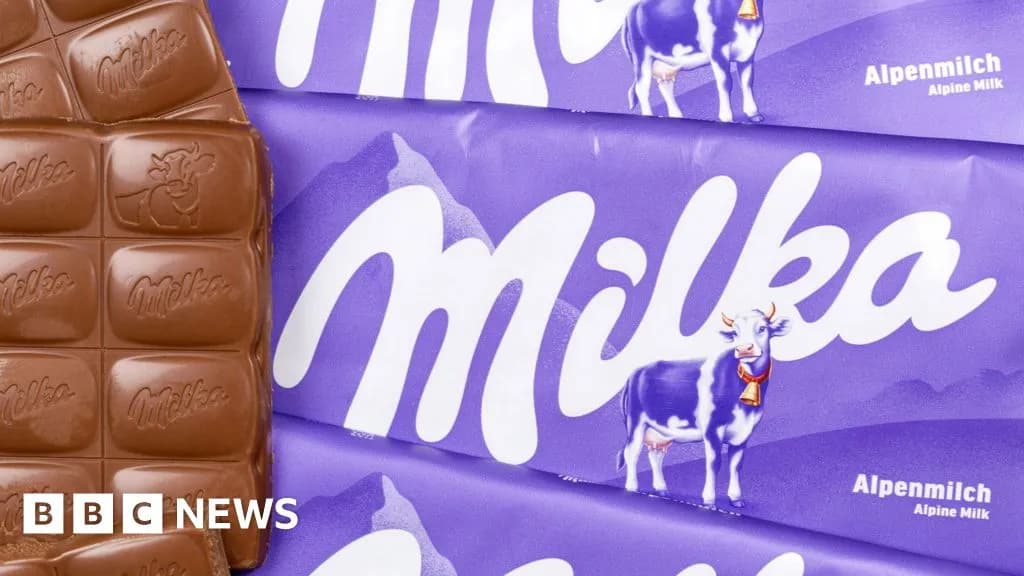
A court in Bremen has handed down one of Germany’s clearest rulings yet on so-called shrinkflation, finding that Mondelez misled shoppers when it reduced the weight of some Milka bars from 100 grams to 90 grams while keeping the familiar wrapper largely unchanged. The decision matters not because one chocolate bar will remake the economy, but because it tests how far companies can lean on brand recognition, packaging continuity and rising input-cost arguments before courts decide that ordinary buyers are being asked to notice too much on their own.Shrinking Milka chocolate bar tricked consumers, says German courtbbc.com·SecondaryIn a landmark German case targeting chocolate "shrinkflation", a court has found that the manufacturer of Milka's classic Alpine Milk bar cheated consumers and broke competition law. Cutting back on the amount of chocolate while having the same kind of wrapper meant that customers were being misled, Bremen regional court ruled.
The case was brought by Hamburg’s consumer protection office, the Verbraucherzentrale Hamburg, after it argued that customers buying the classic Alpenmilch bar were being steered by habit and visual expectation toward a product that no longer contained what they had long associated with that wrapper. The Bremen court agreed that the deception did not primarily lie in the color purple, the logo or the general design in isolation, but in the gap between the long-established expectation created by the old product and the reduced contents offered in a nearly unchanged presentation.Shrinking Milka chocolate bar tricked consumers, says German courtbbc.com·SecondaryIn a landmark German case targeting chocolate "shrinkflation", a court has found that the manufacturer of Milka's classic Alpine Milk bar cheated consumers and broke competition law. Cutting back on the amount of chocolate while having the same kind of wrapper meant that customers were being misled, Bremen regional court ruled.
According to the reporting and the consumer group’s account, Mondelez cut the weight of many Milka varieties from 100 grams to 90 grams, made the bar about one millimeter thinner, and still sold the product in packaging that looked almost the same at a glance. BBC reporting said the shelf price for the Alpenmilch bar rose from €1.49 to €1.99 at the start of 2025, which helped turn a packaging dispute into a broader public argument about hidden price increases, cocoa costs and how transparent manufacturers really are when they preserve the visual identity of a mass-market product.Shrinking Milka chocolate bar tricked consumers, says German courtbbc.com·SecondaryIn a landmark German case targeting chocolate "shrinkflation", a court has found that the manufacturer of Milka's classic Alpine Milk bar cheated consumers and broke competition law. Cutting back on the amount of chocolate while having the same kind of wrapper meant that customers were being misled, Bremen regional court ruled.
The court’s ruling was specific. Mondelez may not market the 90-gram package in that form if the 100-gram version had been on offer in the previous four months, and judges said a clear, understandable and easily perceptible notice on the wrapper would have been needed to dispel the misleading impression. German reporting described the court’s view as a case of a relative Mogelpackung, or a comparatively deceptive package, with the expected contents conveyed by the old product overpowering the fine-print reality of the new one.Geschrumpfte Schoggitafeln: Gleiche Verpackung mit weniger Inhalt: Deutsches Gericht pfeift Milka zurücktagesanzeiger.ch·SecondaryDie 450-Milliliter-Flasche von Coca-Cola ist bekannt – nun reduziert auch ein Schoggihersteller die Füllmenge. Zu Unrecht. Neue Milka-Tafeln mit weniger Inhalt verstossen nach Auffassung des Landgerichts Bremen in Norddeutschland gegen das Wettbewerbsrecht und dürfen so nicht genutzt werden. Das entschied das Gericht und gab damit einer Klage der Verbraucherzentrale Hamburg statt.
At the same time, the judgment was not a maximalist consumer victory. The verdict is not yet final and Mondelez can appeal, and German reporting said the decision has no immediate direct effect on bars already in circulation because the four-month window since the packaging change has already passed. In other words, the ruling looks less like a product recall than a precedent-setting warning shot: a message to consumer-goods companies that judges may tolerate smaller contents, but not packaging strategies that depend on shoppers failing to notice the change quickly enough.Geschrumpfte Schoggitafeln: Gleiche Verpackung mit weniger Inhalt: Deutsches Gericht pfeift Milka zurücktagesanzeiger.ch·SecondaryDie 450-Milliliter-Flasche von Coca-Cola ist bekannt – nun reduziert auch ein Schoggihersteller die Füllmenge. Zu Unrecht. Neue Milka-Tafeln mit weniger Inhalt verstossen nach Auffassung des Landgerichts Bremen in Norddeutschland gegen das Wettbewerbsrecht und dürfen so nicht genutzt werden. Das entschied das Gericht und gab damit einer Klage der Verbraucherzentrale Hamburg statt.
Mondelez has not accepted the consumer groups’ framing. The company said it was taking the decision seriously and would study the court’s reasoning in detail, while continuing to argue that it had tried to communicate clearly and responsibly with buyers. It also tied the weight reductions to a more unstable supply-chain environment and said its goal had been to preserve the familiar Milka experience and product quality rather than compromise on ingredients or manufacturing standards.Shrinking Milka chocolate bar tricked consumers, says German courtbbc.com·SecondaryIn a landmark German case targeting chocolate "shrinkflation", a court has found that the manufacturer of Milka's classic Alpine Milk bar cheated consumers and broke competition law. Cutting back on the amount of chocolate while having the same kind of wrapper meant that customers were being misled, Bremen regional court ruled. That defense will resonate with many businesses facing commodity shocks, especially after repeated jumps in cocoa prices, even if it now looks less persuasive in court than it may have looked in the finance department.Shrinking Milka chocolate bar tricked consumers, says German courtbbc.com·SecondaryIn a landmark German case targeting chocolate "shrinkflation", a court has found that the manufacturer of Milka's classic Alpine Milk bar cheated consumers and broke competition law. Cutting back on the amount of chocolate while having the same kind of wrapper meant that customers were being misled, Bremen regional court ruled.
Consumer advocates, unsurprisingly, read the ruling in the opposite direction. The Hamburg group said the judgment confirmed that shoppers should not be misled when a product contains less while the packaging stays effectively the same, and its food specialist Armin Valet called for further binding rules against deceptive package downsizing. That position fits a wider European mood in which households remain more sensitive to price optics than to abstract inflation charts, and in which suspicion of corporate pricing tactics travels faster than sympathy for manufacturers’ cost explanations.Shrinking Milka chocolate bar tricked consumers, says German courtbbc.com·SecondaryIn a landmark German case targeting chocolate "shrinkflation", a court has found that the manufacturer of Milka's classic Alpine Milk bar cheated consumers and broke competition law. Cutting back on the amount of chocolate while having the same kind of wrapper meant that customers were being misled, Bremen regional court ruled.
The Milka fight also sits inside a broader German campaign against shrinkflation rather than standing alone. BBC reporting noted that consumers had already voted the Alpenmilch bar the “rip-off packaging of the year 2025,” and that the Hamburg group added 77 products to its list of questionable packaging in 2025 alone. Other chocolate brands are now in the conversation as well: BBC said several Ritter Sport varieties moved from 100 grams to 75 grams this month, albeit with more visible packaging changes and a marketing effort that presented them as a new line rather than the old product in disguise. That comparison may prove important, because it suggests the legal problem is not simply smaller contents, but the use of continuity and familiarity as a substitute for clear disclosure.Shrinking Milka chocolate bar tricked consumers, says German courtbbc.com·SecondaryIn a landmark German case targeting chocolate "shrinkflation", a court has found that the manufacturer of Milka's classic Alpine Milk bar cheated consumers and broke competition law. Cutting back on the amount of chocolate while having the same kind of wrapper meant that customers were being misled, Bremen regional court ruled.
There is a political and regulatory subtext here that goes beyond sweets. Courts and consumer groups are effectively telling producers that formal compliance with printed weight labels may not be enough when the overall presentation still signals the old quantity to hurried shoppers. More market-friendly critics are likely to argue that this standard risks becoming vague or paternalistic, especially when the exact gram count remained on the wrapper and when companies routinely adjust pack sizes in response to volatile raw-material costs. But the court’s answer, as reflected in the reporting, is that recognizable legacy packaging can itself carry a commercial promise, and companies that benefit from that recognition may also bear the burden of making change unmistakable.Shrinking Milka chocolate bar tricked consumers, says German courtbbc.com·SecondaryIn a landmark German case targeting chocolate "shrinkflation", a court has found that the manufacturer of Milka's classic Alpine Milk bar cheated consumers and broke competition law. Cutting back on the amount of chocolate while having the same kind of wrapper meant that customers were being misled, Bremen regional court ruled.
For now, the practical takeaway is narrower than the symbolism but still significant. Mondelez still has legal options, the ruling is not yet binding, and consumers will not suddenly see every existing Milka bar pulled from shelves tomorrow. Yet the Bremen judgment has given Germany’s anti-shrinkflation campaign a clean test case, a quotable legal theory and a fresh reason for retailers, brand managers and food manufacturers to rethink how far they can push silent downsizing before courts decide the wrapper itself has become part of the misdirection.Shrinking Milka chocolate bar tricked consumers, says German courtbbc.com·SecondaryIn a landmark German case targeting chocolate "shrinkflation", a court has found that the manufacturer of Milka's classic Alpine Milk bar cheated consumers and broke competition law. Cutting back on the amount of chocolate while having the same kind of wrapper meant that customers were being misled, Bremen regional court ruled.
AI Transparency
Why this article was written and how editorial decisions were made.
Why This Topic
This was the strongest fresh non-duplicate cluster on the board above the 6.0 threshold, and unlike several market explainer items it offered a concrete legal development with broad consumer relevance, clear institutional stakes and enough source depth for a long bilingual article. It also supports balanced treatment of both consumer protection and business cost pressures.
Source Selection
I anchored the article in the cluster’s built-in reporting from BBC and German dpa-based coverage, then cross-checked the main legal points against the Verbraucherzentrale Hamburg statement, Spiegel and t-online. That source mix is strong enough to support the ruling details, Mondelez’s defense, the consumer group’s interpretation and the broader shrinkflation context without leaning on a single partisan or commercial outlet.
Editorial Decisions
Kept the piece descriptive and institutional rather than moralizing. Gave meaningful space to the consumer-protection case, the court’s legal theory, and Mondelez’s cost-and-transparency defense so the article does not read like activist copy. Framed the issue as a test of packaging disclosure, brand recognition and market trust rather than as a simple corporate villain story.
Reader Ratings
About the Author
Sources
- 1.bbc.comSecondary
- 2.tagesanzeiger.chSecondary
Editorial Reviews
1 approved · 0 rejectedPrevious Draft Feedback (3)
Second explicit approval after passed gates to overcome queue/publish lag.
3 gate errors: • [citations] Inline citation [3] references a source that doesn't exist (article has 2 sources). • [citations] Inline citation [4] references a source that doesn't exist (article has 2 sources). • [citations] Inline citation [5] references a source that doesn't exist (article has 2 sources).
3 gate errors: • [citations] Inline citation [3] references a source that doesn't exist (article has 2 sources). • [citations] Inline citation [4] references a source that doesn't exist (article has 2 sources). • [citations] Inline citation [5] references a source that doesn't exist (article has 2 sources).


Discussion (0)
No comments yet.