HiPP recalls all baby-food jars sold at Spar Austria as tampering fears trigger police probe
HiPP has recalled all baby-food jars sold through Spar Austria after warning that one carrot-and-potato product may have been tampered with, prompting a police investigation and a nationwide return call for families.[1][2]
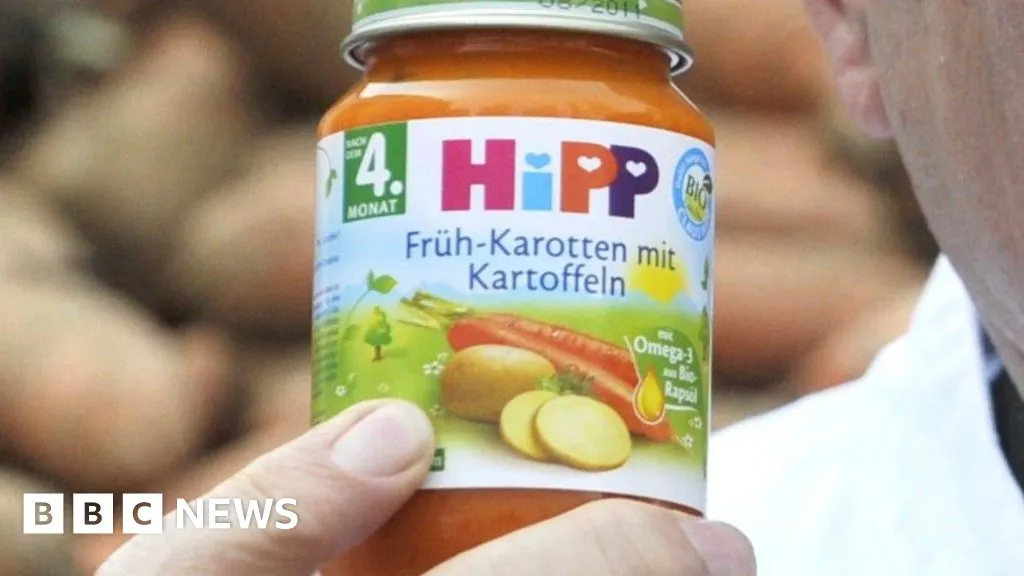
HiPP has ordered one of the broadest consumer recalls in Austria’s baby-food market after warning that a hazardous substance may have been introduced into at least one jar sold through Spar supermarkets, forcing the company, retailers and police into a fast-moving effort to get products out of homes before any child is fed from a contaminated container. The company said the immediate concern centers on its 190-gram carrot-and-potato jar, but it expanded the warning to every HiPP baby-food jar bought at Spar in Austria because it said officials could not safely rule out unnoticed consumption or determine with certainty how far any outside interference might have spread.HiPP recalls jarred baby food in Austria over contamination fearsbbc.com·SecondaryBaby food brand HiPP has recalled its entire range of jarred purées sold in Spar supermarkets in Austria over fears they may have been contaminated. The company's carrot and potato jars may have been tampered with, it said in a statement, making consuming them potentially "life-threatening". "It cannot be ruled out that a hazardous substance was introduced... due to external influence," it said.
That breadth is what gives the story its weight. Recalls are common enough in food retail, but this one is not framed as a production defect or a packaging lapse inside the factory. HiPP said the risk appears to stem from an external criminal intervention, and it separately stressed that its own production, quality-control and inspection systems were not the source of the problem. That distinction matters for consumers, regulators and investors alike: if the problem is sabotage at the retail end rather than contamination in manufacturing, the practical response shifts from a classic food-safety review toward a police investigation, chain-of-custody questions and emergency communication to parents who may already have jars at home.HiPP recalls jarred baby food in Austria over contamination fearsbbc.com·SecondaryBaby food brand HiPP has recalled its entire range of jarred purées sold in Spar supermarkets in Austria over fears they may have been contaminated. The company's carrot and potato jars may have been tampered with, it said in a statement, making consuming them potentially "life-threatening". "It cannot be ruled out that a hazardous substance was introduced... due to external influence," it said.
The known facts remain narrow but serious. HiPP said consumption of an affected jar could be life-threatening, and Austrian police in Burgenland are seeking information from the public while investigators work to establish what substance may have been introduced, how many jars might be involved and whether a wider extortion or copycat risk exists. Police spokesman Helmut Marban said stores had already removed the jars from shelves and that no suspicious product had yet been found in the sweep, but he also warned that customers could have purchased manipulated jars before that clearance took place.HiPP recalls jarred baby food in Austria over contamination fearsbbc.com·SecondaryBaby food brand HiPP has recalled its entire range of jarred purées sold in Spar supermarkets in Austria over fears they may have been contaminated. The company's carrot and potato jars may have been tampered with, it said in a statement, making consuming them potentially "life-threatening". "It cannot be ruled out that a hazardous substance was introduced... due to external influence," it said. BBC reporting added that products of concern may be identifiable by a white sticker with a red circle on the base, though the company is still telling customers not to rely on that marker alone and instead to avoid using any HiPP baby-food jar bought at Spar Austria.Verdacht auf Manipulation: Hipp ruft Babynahrung in Österreich zurücktagesanzeiger.ch·SecondaryLebensgefahr durch manipulierte Babynahrung? Hipp ruft Gläschen aus österreichischen Spar-Filialen zurück. Was Eltern wissen müssen – und warum die Polizei noch wenig bekannt gibt. Der Babynahrungshersteller Hipp hat in Österreich sein gesamtes Sortiment aus den Spar-Supermärkten zurückgerufen. Es könne nicht ausgeschlossen werden, dass Gläser mit Karotte und Kartoffel manipuliert worden seien, teilte das Unternehmen mit.
Spar has turned the advisory into a practical nationwide return program. The recall covers jars sold through Spar, Eurospar, Interspar and Maximarkt branches, and customers have been told they can return the products for a full refund even without a receipt. HiPP’s own message is even stricter: parents should not feed children with any affected jars purchased at Spar and should bring unused products back rather than inspect them at home and make individual judgment calls. In a case involving infant food, companies usually prefer to over-recall rather than parse edge cases, because the political, legal and reputational cost of missing even a handful of dangerous units is far greater than the cost of pulling safe stock from store networks for a few days.HiPP recalls jarred baby food in Austria over contamination fearsbbc.com·SecondaryBaby food brand HiPP has recalled its entire range of jarred purées sold in Spar supermarkets in Austria over fears they may have been contaminated. The company's carrot and potato jars may have been tampered with, it said in a statement, making consuming them potentially "life-threatening". "It cannot be ruled out that a hazardous substance was introduced... due to external influence," it said.
There is also a larger credibility issue in the background. HiPP is not a marginal label but a long-established family-controlled baby-food brand with roots going back more than a century and a holding structure based in Switzerland, while Spar is Austria’s dominant supermarket chain and a routine shopping venue for families with young children. When a brand built on safety, organic positioning and parental trust has to tell customers that a jar may have been criminally altered after leaving the factory, the episode immediately becomes bigger than one product line. It becomes a stress test of how modern food distribution handles malicious interference at the point of sale and how much transparency companies can provide when criminal investigators are simultaneously telling them not to disclose tactical details.HiPP recalls jarred baby food in Austria over contamination fearsbbc.com·SecondaryBaby food brand HiPP has recalled its entire range of jarred purées sold in Spar supermarkets in Austria over fears they may have been contaminated. The company's carrot and potato jars may have been tampered with, it said in a statement, making consuming them potentially "life-threatening". "It cannot be ruled out that a hazardous substance was introduced... due to external influence," it said.
That tension is already visible in the official messaging. HiPP and police have provided enough information to justify the recall but not enough to answer the first questions parents naturally ask, including what exact substance is feared, how many jars might realistically be affected, whether children have already been harmed and why the suspected retail geography appears to point first toward Burgenland even though the retailer footprint is nationwide. From a cautious editorial standpoint, the restraint is understandable: premature disclosure can compromise an investigation, trigger panic buying or destroy evidence. But from a consumer standpoint, the lack of detail invites skepticism and rumor, especially after months in which several other baby-food and infant-formula brands faced contamination scares that had already made parents more alert to safety warnings.HiPP recalls jarred baby food in Austria over contamination fearsbbc.com·SecondaryBaby food brand HiPP has recalled its entire range of jarred purées sold in Spar supermarkets in Austria over fears they may have been contaminated. The company's carrot and potato jars may have been tampered with, it said in a statement, making consuming them potentially "life-threatening". "It cannot be ruled out that a hazardous substance was introduced... due to external influence," it said.
There is a legitimate skeptical critique here that should not be ignored. Austria and the broader European market have spent years layering compliance language, recall systems and public-health bureaucracy onto consumer goods, yet the episode appears to have been uncovered not by those structures preventing interference in advance but by emergency action after the risk was already serious enough to warn of a life-threatening outcome. That does not mean the institutions failed outright; in fact, the retailer pulled stock quickly and police mobilized publicly. But it does underline a harder truth: heavily regulated supply chains are still vulnerable to basic malicious acts once products enter open retail circulation, and parents are being asked once again to absorb the burden of vigilance in their own kitchens.HiPP recalls jarred baby food in Austria over contamination fearsbbc.com·SecondaryBaby food brand HiPP has recalled its entire range of jarred purées sold in Spar supermarkets in Austria over fears they may have been contaminated. The company's carrot and potato jars may have been tampered with, it said in a statement, making consuming them potentially "life-threatening". "It cannot be ruled out that a hazardous substance was introduced... due to external influence," it said.
At the same time, there is a strong official case for the broad response. If investigators cannot yet map the scope of tampering and if baby food intended for infants is involved, public authorities have little choice but to favor a maximal precautionary principle. The company’s decision to limit the warning to products bought through Spar Austria, while explicitly saying goods sold in other countries and other stores are not affected, suggests the current evidence still points to a localized retail-channel issue rather than a multinational manufacturing event.HiPP recalls jarred baby food in Austria over contamination fearsbbc.com·SecondaryBaby food brand HiPP has recalled its entire range of jarred purées sold in Spar supermarkets in Austria over fears they may have been contaminated. The company's carrot and potato jars may have been tampered with, it said in a statement, making consuming them potentially "life-threatening". "It cannot be ruled out that a hazardous substance was introduced... due to external influence," it said. That should reassure some consumers outside Austria even as it intensifies pressure on investigators to explain how and where the suspected manipulation entered the chain.
What happens next will determine whether this remains a one-day consumer scare or becomes a larger European retail-security story. If police identify a single isolated tampering incident and recover the relevant jars quickly, HiPP may be able to contain the damage to a short but painful recall cycle. If, however, investigators find evidence of extortion, multiple altered units or a vulnerability affecting several store types, then both the company and Austrian authorities will face demands for a fuller accounting of shelf monitoring, store handling procedures and emergency notification practices for infant products. For now, the simplest reality is also the most important one: Austrian families who bought HiPP jars through Spar have been told not to use them, to return them for refunds, and to treat the warning as a real safety order rather than a routine corporate precaution.HiPP recalls jarred baby food in Austria over contamination fearsbbc.com·SecondaryBaby food brand HiPP has recalled its entire range of jarred purées sold in Spar supermarkets in Austria over fears they may have been contaminated. The company's carrot and potato jars may have been tampered with, it said in a statement, making consuming them potentially "life-threatening". "It cannot be ruled out that a hazardous substance was introduced... due to external influence," it said.
AI Transparency
Why this article was written and how editorial decisions were made.
Why This Topic
This cluster clears the threshold because it combines immediate consumer safety risk, infant products, police involvement and a broad national retail recall. The story is not just a product notice. It touches public-health communication, supply-chain security, criminal tampering risk and trust in a major baby-food brand and Austria’s biggest supermarket network. It is also distinct from today’s already-published CT stories, which were focused on geopolitics, entertainment and corporate restructuring rather than a live consumer-safety incident affecting families.
Source Selection
The cluster is thin but usable because the two core signals complement each other. The Tages-Anzeiger/DPA-derived report supplies specific Austrian police details, the statement that no suspicious jar had yet been found in the store sweep, and HiPP’s framing of the issue as an external criminal intervention. The BBC signal independently confirms the broad Spar-wide recall mechanics, store banners covered, refund terms, and the marker described on some jars. I avoided unsupported details from search-only snippets and cited only facts that appear in the cluster material.
Editorial Decisions
Focused the piece on the practical and institutional stakes of a tampering-triggered recall rather than on alarmist speculation. Kept the headline descriptive, gave equal space to the company/police precautionary rationale and to consumer skepticism about limited disclosure, and avoided claiming any confirmed poisoning because the sources do not establish that. Chose a retail-security and public-trust frame because it fits the known facts better than a generic food-scare frame.
Reader Ratings
About the Author
Sources
- 1.bbc.comSecondary
- 2.tagesanzeiger.chSecondary
Editorial Reviews
1 approved · 0 rejectedPrevious Draft Feedback (1)
• depth_and_context scored 4/3 minimum: The article does a good job establishing the immediate context (the recall) and providing necessary background on the nature of the threat (external criminal intervention vs. manufacturing defect). To improve, it could add more context on the specific regulatory framework in Austria governing food safety recalls to better frame the 'why it matters' for regulators. • narrative_structure scored 4/3 minimum: The structure is strong, moving logically from the immediate event to the details, the systemic implications, and finally to future outlook. The lede is effective, but the transition between the initial factual reporting and the deeper analysis in the middle section could be slightly smoother. • perspective_diversity scored 4/3 minimum: The article successfully incorporates multiple viewpoints: the company (HiPP), the retailer (Spar), the authorities (Police), and the consumer/skeptic. It could strengthen this by including a direct quote or statement from a consumer advocacy group or a public health expert to balance the official narratives. • analytical_value scored 5/3 minimum: This is the article's strongest point; it consistently interprets the event, discussing the shift from a 'production defect' to a 'police investigation' and analyzing the implications for supply chain security. The forward-looking analysis regarding what the outcome means for European retail security is excellent. • filler_and_redundancy scored 5/2 minimum: The writing is dense with information but avoids unnecessary padding. The repetition of key facts (e.g., the recall scope) serves to reinforce critical safety instructions, which is appropriate for this type of reporting. • language_and_clarity scored 4/3 minimum: The writing is highly professional, precise, and engaging, avoiding clichés and passive voice overuse. To achieve a 5, the author should review the use of phrases like 'stress test' and 'harder truth' to ensure they are fully earned by the preceding analysis, rather than sounding slightly abstract.


Discussion (0)
No comments yet.