Austria Moves Toward Social Media Ban for Children Under 14
Austria's three-party coalition says it will draft a law by the end of June to bar children under 14 from social media, part of a wider European push that is already drawing criticism over free speech, privacy and enforcement.
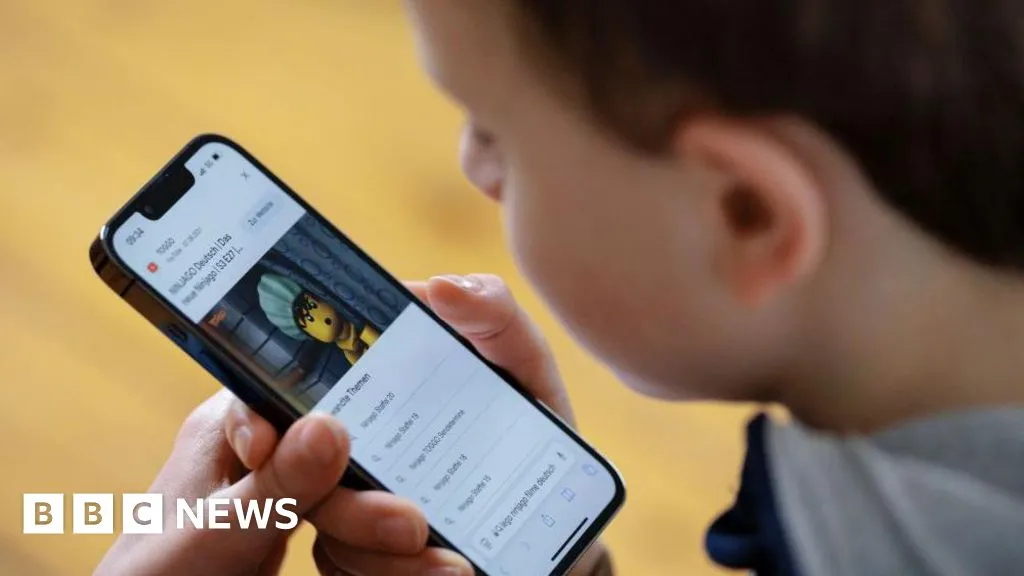
Austria’s coalition government has opened a new front in Europe’s fight over children and the internet, announcing on Friday that it wants to bar under-14s from social media and to move from broad political intent to draft legislation by the end of June. The plan does not yet answer every practical question, but it puts Austria firmly into the camp of governments that now argue the old model of platform self-policing has failed and that age limits, algorithm scrutiny and school-based media literacy should be treated as mainstream public policy rather than niche parental advice.
The immediate decision came out of Austria’s conservative-led three-party coalition, which said the purpose is to protect children from addictive platform design and from material officials describe as harmful, manipulative or developmentally inappropriate. Vice Chancellor Andreas Babler argued that parents have too little control over how children encounter social platforms and said the state can no longer ignore systems built to maximise engagement among minors. Ministers linked the proposed age floor not only to concerns about excessive screen time but also to worries about misinformation, idealised beauty imagery, violent material and forms of influence they say children are poorly equipped to process alone.
Even so, the Austrian announcement is still a framework rather than a finished law. Alexander Pröll, the official responsible for digitisation in the chancellor’s office, said draft legislation is to be prepared by the end of June and described the intended verification approach as using modern technical methods that aim to confirm age while preserving privacy. Babler said the coalition had not yet settled on a final verification model and suggested Vienna could use an EU-level system if one is ready, while pursuing a national route if Brussels moves too slowly. That unresolved enforcement question matters because many governments have discovered that announcing an age limit is politically easier than building a system that can survive court challenges, privacy objections and the practical reality that children often move quickly from one platform or device to another.
Austria’s ministers are trying to show that the proposal is not only punitive. Alongside the ban, they said schools should expand instruction on media use, democracy and artificial intelligence so that children are taught how to distinguish reliable information from manipulation and how to use digital tools more responsibly. Education Minister Christoph Wiederkehr tied the proposal to a three-week no-mobile-phone experiment involving 72,000 pupils and their families, saying the feedback indicated many students became more aware of how heavy usage had affected them. That educational component is politically useful for the coalition because it lets ministers argue they are not merely restricting access but trying to build a broader culture of digital judgment.Austria to ban social media for under-14spolitico.eu·SecondaryThe Austrian government has agreed to ban social media for children under the age of 14, it announced Friday. It expects to have a proposal drafted by the end of June. The government is seeking to move forward with a solution quickly “because we are aware that it will still take some time at EU level,” Vice Chancellor Andreas Babler said.
Austria is not acting in isolation. Australia already passed a ban for under-16s in 2024, a step widely described as the first national move of its kind, while France’s lower house approved an under-15 restriction in January and Spain, Denmark, Greece, Ireland and the United Kingdom have all been discussing or developing versions of age-based limits. Austrian officials explicitly framed their decision as part of that broader European trend, with Babler arguing that waiting for a perfect EU-wide answer could take too long. That is an important political signal: national governments increasingly appear willing to move first and leave harmonisation for later when the subject is child safety and platform power.
Supporters of the Austrian line say that is exactly what responsible government should do. Their case is straightforward: the platforms are large, profitable and highly sophisticated, while families are fragmented, overextended and often unable to monitor what their children see or how recommendation systems shape behavior. Babler’s argument, echoed in multiple reports, is that if governments regulate alcohol, tobacco and other products around age and risk, it is no longer tenable to treat algorithm-driven digital products as somehow outside the same protective logic. The recent U.S. court rulings cited in coverage of Austria’s move, including findings against Meta and Google in cases involving harm to young users, have strengthened the political confidence of European governments that want to argue the danger is not only cultural panic but a matter now being tested in courtrooms as well.Austria to ban social media for under-14spolitico.eu·SecondaryThe Austrian government has agreed to ban social media for children under the age of 14, it announced Friday. It expects to have a proposal drafted by the end of June. The government is seeking to move forward with a solution quickly “because we are aware that it will still take some time at EU level,” Vice Chancellor Andreas Babler said.
But the opposition case is not trivial, and it is not confined to Silicon Valley talking points. Austria’s right-wing FPÖ called the proposal a direct attack on freedom of expression and argued the real effect could be to curb the reach of dissenting, alternative and patriotic voices that have grown on social networks. Politico also cited Council of Europe human rights commissioner Michael O’Flaherty saying blanket bans are neither proportionate nor necessary, reflecting a wider civil-liberties concern that age gates can expand identity checks, create new data-collection pressures and hand governments a precedent for broader speech controls. Critics also note that if lawmakers refuse to specify exactly which services count as social media, companies, parents and courts may be left arguing over whether the law targets certain business models, certain recommendation systems or nearly every popular youth platform at once.
That tension between child protection and civil liberty is what makes Austria’s decision more consequential than a routine domestic policy announcement. The country has a population of about 9.2 million, so it is not a regulatory superpower on its own, but it is large enough to add momentum to a European direction of travel in which more governments are concluding that parental controls and platform promises are not enough. If Austria succeeds in producing a technically workable, politically durable and legally defensible law, it could give cover to governments that want similar rules but have hesitated over implementation. If it stumbles on verification, enforcement or rights-based objections, the episode will instead strengthen the case of those who say bans sound decisive but solve less than advertised.Austria plans to ban social media use for under-14s, joining a string of other countriesapnews.com·SecondaryChancellor Christian Stocker, left, Vice Chancellor Andreas Babler, centre, and Foreign minister Beate Meinl-Reisinger attend the swearing-in ceremony of the Federal Government in the presidential office at the Hofburg Palace, in Vienna, Austria, Monday, March 3, 2025. (AP Photo/Denes Erdos, File) Young people use their phones to view social media in Sydney, Nov. 8, 2024. (AP Photo/Rick Rycroft, File) Zoe Kent edits a social media video on the TikTok app, Jan.
For now, what Austria has done is announce a principle, claim urgency and accept the fight that follows. The next phase will decide whether the proposal matures into a narrow, workable measure or expands into a more ambitious attempt to redraw the boundary between childhood, parenthood and the modern attention economy. Either way, Vienna has made clear that it no longer views the issue as a question for families and technology companies alone; it sees it as a question of state responsibility, one that is likely to be argued across Europe for the rest of the year.
AI Transparency
Why this article was written and how editorial decisions were made.
Why This Topic
This cluster is the strongest remaining non-duplicate story on the board because it combines immediate policy action, cross-border relevance and a live ideological split over child protection, censorship and privacy. Austria is not merely debating the issue abstractly; ministers announced a legislative timetable, connected the move to education policy and aligned it with a broader European push. That gives the story both freshness and wider significance beyond Austria. It also fits CT’s editorial lens because the core question is not just whether protecting children is desirable, but how far the state should go, what rights trade-offs are involved and whether governments are using broad safety arguments to justify harder controls over digital speech and access.
Source Selection
The cluster has enough high-quality, recent source material to support a balanced, evidence-based article without stretching beyond verified facts. AP, Reuters-derived coverage via CNA and BBC establish the core facts: coalition agreement, under-14 threshold, end-of-June drafting timeline, unresolved verification details and the education-policy package. Politico and BBC add the privacy and proportionality critique, while Reuters/CNA and Le Monde surface the FPÖ attack from the right. This mix supports equal treatment of official and opposition views and reduces dependence on any single ideological outlet. I avoided importing extra statistics or novel claims from outside the cluster because the platform’s evidence gate is strict about matching raw signal content.
Editorial Decisions
Tone should be measured and descriptive, not crusading. Lead with the policy move, then explain the enforcement gap, the European trend and the civil-liberties critique. Give the FPÖ and rights-based objections real space without overstating them. Keep the framing neutral-to-slightly skeptical of institutional claims: officials say the policy protects children, but the proof will depend on how privacy-preserving age checks and legal definitions are handled. Avoid direct quotes in the article body; paraphrase instead.
Reader Ratings
About the Author
Sources
- 1.politico.euSecondary
- 2.apnews.comSecondary
- 3.aljazeera.comSecondary
- 4.bbc.comSecondary
- 5.lemonde.frSecondary
- 6.channelnewsasia.comSecondary
Editorial Reviews
1 approved · 0 rejectedPrevious Draft Feedback (1)
• depth_and_context scored 4/3 minimum: The article provides good background on the issue, referencing Australia, France, and other European countries, and explaining the broader trend of governments taking action. However, it could benefit from exploring the specific cultural or societal factors in Austria that prompted this move, beyond just the general concerns about child safety. • narrative_structure scored 5/3 minimum: The article has a clear and logical flow, starting with the announcement and then expanding on the context, opposition, and potential implications. The nut graf effectively summarizes the significance of the move, and the closing provides a strong sense of what's to come. • perspective_diversity scored 4/3 minimum: The article presents multiple viewpoints, including those of the Austrian government, supporters, critics (FPÖ), and civil liberties advocates (Michael O’Flaherty). While it leans towards explaining the government's position, it does acknowledge and fairly represents opposing arguments. • filler_and_redundancy scored 3/2 minimum: While the article generally avoids excessive filler, there are instances where information is repeated across paragraphs (e.g., the ongoing debate about verification methods). Streamlining these repetitions would improve the overall readability and impact. • language_and_clarity scored 4/3 minimum: The writing is generally clear and precise, although phrases like 'politically useful for the coalition' could be rephrased for greater neutrality. The article avoids overly loaded language and provides context when discussing potentially contentious terms like 'patriotic voices,' which is commendable. Warnings: • [article_quality] analytical_value scored 3 (borderline): The article does more than just recount events; it analyzes the potential consequences of Austria's decision, both positive (setting a precedent) and negative (legal challenges). However, it could delve deeper into the potential long-term impact on platform design and user behavior, rather than just stating the possibilities. • [image_relevance] Image editorial_quality scored 3 (borderline): The image appears to be a stock photo, which lowers its editorial quality. While suitable, it lacks the impact of a photograph of a child directly affected by the policy.