Supreme Court Puts Colorado Conversion-Therapy Ban for Minors on a Harder Constitutional Path
The U.S. Supreme Court ruled 8-1 against Colorado’s ban on conversion therapy for minors when applied to talk therapy, a decision likely to complicate similar laws across much of the country and deepen the clash between free-speech claims and state health regulation.[1][4][6]
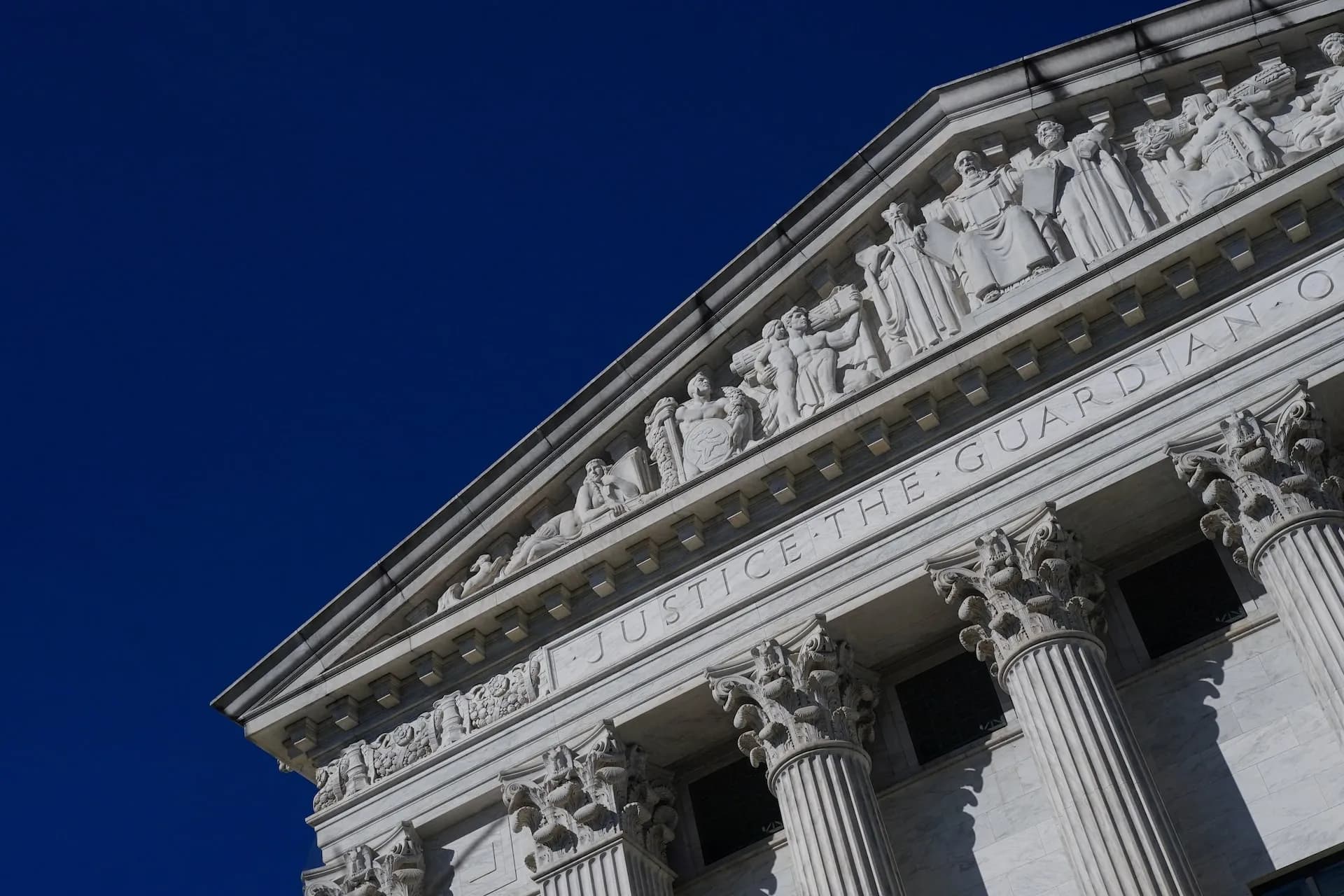
The Supreme Court’s latest intervention in the culture-war battles over sex, identity and the boundaries of professional speech is likely to reverberate far beyond Colorado. On Tuesday, an 8-1 majority ruled against that state’s ban on conversion therapy for minors when the practice takes the form of talk therapy, siding with Christian counselor Kaley Chiles and sending the case back to lower courts for a tougher constitutional review.
The immediate dispute centered on a 2019 Colorado law that bars licensed mental-health providers from trying to change a minor’s sexual orientation or gender identity toward a predetermined outcome. Colorado defended the measure as a health-care regulation aimed at protecting children from a practice the state and major medical bodies consider harmful or ineffective. The court’s majority instead treated the challenged application as a speech restriction, not merely a neutral rule for licensed conduct.
Justice Neil Gorsuch wrote for the court that Colorado could not suppress one side of a contested therapeutic conversation while permitting the other. Two liberal justices, Elena Kagan and Sonia Sotomayor, joined the majority, giving the ruling a broader coalition than many recent social-issue decisions. Justice Ketanji Brown Jackson dissented alone, warning that the reasoning could weaken the ability of states to regulate medical treatment delivered through words rather than instruments or drugs.
That split matters because the case was not framed only as a moral dispute over conversion therapy. It also became a test of how far states may regulate licensed counseling once therapy is characterized as speech. Colorado argued that counseling is part of professional care and therefore subject to ordinary health regulation. Chiles and her backers argued that the state was effectively compelling one approved message on sex and gender while forbidding another. The court accepted much of that argument, at least at this stage, and ordered lower courts to apply a more exacting First Amendment standard.
The facts that produced the lawsuit were politically combustible from the start. Chiles, a Christian counselor, argued that the law prevented her from offering voluntary, faith-informed conversations to young clients who wished to align their feelings or behavior with religious convictions or with their biological sex. Colorado answered that its law did not ban broad discussions of sexuality, religion or identity, and that it exempted religious ministries; it said the statute targeted only therapeutic efforts to convert minors away from LGBT identities or toward traditional gender expectations.
That clash helps explain why the case drew support from the Trump administration and from Alliance Defending Freedom, the conservative legal group representing Chiles. For the American right, the ruling will be read as another sign that the court is skeptical of state efforts to regulate speech around gender identity and sexual orientation. For progressive activists and many professional associations, it will be viewed as a judicial opening for a practice they argue has been discredited for years and linked to severe psychological harm.
Colorado’s law carried fines of up to $5,000 per violation and possible professional discipline, though reports in the cluster indicate nobody had been sanctioned under it. That detail may shape the next legal phase. Supporters of the state can argue the law was a narrow professional standard rather than a broad crackdown. Opponents will answer that a licensing threat, even if rarely used, is enough to chill therapists who hold dissenting views on sex and gender questions.US Supreme Court rejects Colorado ban on LGBTQ child ‘conversion therapy’aljazeera.com·SecondaryThe United States Supreme Court has ruled against a law in the state of Colorado that bans the controversial practice of “conversion therapy” for LGBTQ children, a discredited practice that has been linked to serious harm for participants. Tuesday’s ruling was an eight-to-one decision, with two of the court’s three liberal justices joining its six conservatives in opposing the ban.
The broader map is also important. According to the reporting in this cluster, twenty-three states have laws barring providers from offering conversion therapy to minors, while another four impose some restrictions; another source describes Colorado as one of more than two dozen states and the District of Columbia to have limits or bans. That means the ruling is not a niche Colorado story. It has the potential to unsettle or at least complicate enforcement in a significant portion of the country, particularly where statutes focus on conversation-based therapy rather than physical interventions.
The majority left one door partly open for regulators by indicating that non-speech or aversive physical interventions could still be treated differently. But that caveat may prove to be cold comfort for officials who built their policies mainly around counseling sessions and licensing rules. In practice, many of these state laws were aimed precisely at what therapists say and encourage in the consulting room. That makes the Supreme Court’s distinction less technical than it first appears: if therapy is protected speech in contested identity cases, much of the current regulatory structure may face renewed constitutional challenge.US Supreme Court rejects Colorado ban on LGBTQ child ‘conversion therapy’aljazeera.com·SecondaryThe United States Supreme Court has ruled against a law in the state of Colorado that bans the controversial practice of “conversion therapy” for LGBTQ children, a discredited practice that has been linked to serious harm for participants. Tuesday’s ruling was an eight-to-one decision, with two of the court’s three liberal justices joining its six conservatives in opposing the ban.
This is where the political interpretations diverge sharply. Critics of the Colorado ban say the state was not merely stopping abuse; it was drawing ideological lines in a live debate over minors, transition, parental authority and religious freedom. They note that the court highlighted a viewpoint problem: counseling that affirms gender transition or same-sex identity could proceed, while counseling oriented the other way could trigger discipline. From that perspective, the ruling is less about endorsing conversion therapy than about preventing government from deciding which psychological and moral conclusions professionals may express.
Opponents of the ruling reject that framing. They argue the state was not policing opinions but regulating a licensed practice with documented risks, much as it can regulate unsafe medical advice in other contexts. Justice Jackson’s dissent captured that concern by arguing that states have long been entrusted to supervise professional care for the sake of public health. LGBTQ advocacy groups likewise stressed that the decision does not change the clinical consensus they cite against conversion therapy, and they warned that vulnerable minors could be exposed to harmful treatment under a newly fortified free-speech rationale.US Supreme Court rejects Colorado ban on LGBTQ child ‘conversion therapy’aljazeera.com·SecondaryThe United States Supreme Court has ruled against a law in the state of Colorado that bans the controversial practice of “conversion therapy” for LGBTQ children, a discredited practice that has been linked to serious harm for participants. Tuesday’s ruling was an eight-to-one decision, with two of the court’s three liberal justices joining its six conservatives in opposing the ban.
The fact that Justices Kagan and Sotomayor joined Gorsuch complicates easy partisan storytelling. Their votes suggest that at least some liberal members of the court were persuaded by the viewpoint-discrimination problem even if they would differ sharply from conservatives on the social merits of the issue. That cross-ideological alignment may give the ruling more staying power in lower courts, because it signals that the constitutional concern is not confined to the conservative legal movement.
Still, the ruling lands in a larger context the court did not fully resolve. Conversion therapy remains one of the most emotionally charged terms in American politics, covering everything from notorious historical coercive practices to more contemporary disputes over voluntary, talk-based counseling. Chiles argued that her approach is distinct from older and more abusive methods such as shock therapy, and her supporters emphasized that minors and families may seek help for reasons grounded in religion or discomfort with transition pathways. Colorado and LGBT advocates, by contrast, argued that attempts to redirect a young person’s orientation or gender identity are inherently suspect and carry serious risk even when framed gently.US Supreme Court rejects Colorado ban on LGBTQ child ‘conversion therapy’aljazeera.com·SecondaryThe United States Supreme Court has ruled against a law in the state of Colorado that bans the controversial practice of “conversion therapy” for LGBTQ children, a discredited practice that has been linked to serious harm for participants. Tuesday’s ruling was an eight-to-one decision, with two of the court’s three liberal justices joining its six conservatives in opposing the ban.
That unresolved definitional fight means the legal victory for Chiles may not settle the policy dispute. Instead, it moves the battleground. States now must decide whether to narrow their laws, defend them under stricter scrutiny, or shift toward regulating conduct they can describe more concretely as non-expressive medical practice. Activists on both sides are likely to test the boundaries quickly. Conservative litigators will see openings in jurisdictions where bans are written broadly. Progressive lawmakers may try to draft more tailored statutes that distinguish between coercive treatment and protected discussion.US Supreme Court rejects Colorado ban on LGBTQ child ‘conversion therapy’aljazeera.com·SecondaryThe United States Supreme Court has ruled against a law in the state of Colorado that bans the controversial practice of “conversion therapy” for LGBTQ children, a discredited practice that has been linked to serious harm for participants. Tuesday’s ruling was an eight-to-one decision, with two of the court’s three liberal justices joining its six conservatives in opposing the ban.
Colorado Governor Jared Polis responded by saying the state was evaluating the ruling while seeking ways to protect both LGBT youth and free speech. That formulation captures the political bind for Democratic officials after this decision. Few on the left want to sound indifferent to constitutional liberties, but retreating from these laws would be read by their base as a concession on child protection and LGBT rights. Republicans, meanwhile, are likely to turn the case into evidence that expert bureaucracies and blue-state governments overreached by trying to settle a disputed moral and medical question through licensing boards.US Supreme Court rejects Colorado ban on LGBTQ child ‘conversion therapy’aljazeera.com·SecondaryThe United States Supreme Court has ruled against a law in the state of Colorado that bans the controversial practice of “conversion therapy” for LGBTQ children, a discredited practice that has been linked to serious harm for participants. Tuesday’s ruling was an eight-to-one decision, with two of the court’s three liberal justices joining its six conservatives in opposing the ban.
For parents, counselors and regulators, the next phase may be less dramatic than the headlines but more consequential. Lower courts must now decide whether Colorado’s law can survive the more demanding review the Supreme Court has instructed them to apply. If similar laws begin falling elsewhere, states may lose one of their main tools for policing what counselors tell minors on questions of sex and identity. If some statutes survive because they are drafted more narrowly, the country could end up with a patchwork in which the line between forbidden treatment and protected conversation becomes even harder to draw.
What is certain is that Tuesday’s ruling was not just another one-day flare-up in the online culture wars. It goes to the relationship between free speech, medical licensing, religion, parental authority and the state’s role in protecting children. Those questions are not going away, and neither side is likely to retreat quietly. The court has not ended the argument over conversion therapy; it has moved that argument onto firmer constitutional terrain, where every future state restriction will face more suspicion than it did before this week.
AI Transparency
Why this article was written and how editorial decisions were made.
Why This Topic
This is the strongest item on the board because it combines a Supreme Court ruling, a volatile national culture-war subject, and immediate legal implications for more than twenty states. The case cuts across health policy, free speech, parental authority, religion and LGBT rights, which gives it broad audience relevance beyond a niche legal readership. It also has clear next-step consequences: lower-court review, likely challenges to similar bans, and new legislative responses in multiple jurisdictions.
Source Selection
The cluster is strong enough for a high-confidence draft because it includes multiple fresh tier-one reports with overlapping core facts and complementary angles. AP provides the most detailed account of the ruling, parties and expected effects; DW adds the regulatory details and penalties in Colorado; Al Jazeera supplies the broader political framing and dissent concerns. I used citations only for facts grounded in those cluster signals and treated outside research as background for angle selection and image sourcing rather than as cited evidence.
Editorial Decisions
Balanced framing: lead with the constitutional holding and nationwide legal effect rather than activist language. Give equal space to Colorado and LGBT advocates who call the practice harmful, and to Chiles and conservatives who say the state cannot police viewpoint in counseling. Avoid moralizing phrasing and avoid endorsing either side’s terminology beyond necessary attribution. Paraphrase quotations from the cluster instead of reproducing them verbatim to reduce evidence-quality risk.
Reader Ratings
About the Author
Sources
- 1.aljazeera.comSecondary
- 2.dw.comSecondary
- 3.france24.comSecondary
- 4.france24.comSecondary
- 5.apnews.comSecondary
- 6.npr.orgSecondary
Editorial Reviews
1 approved · 0 rejectedPrevious Draft Feedback (1)
• depth_and_context scored 4/3 minimum: The article provides good background on the legal dispute and the broader context of the culture war surrounding conversion therapy, explaining the differing viewpoints and the implications for state regulations. However, it could benefit from exploring the history of conversion therapy practices and the scientific consensus against them in more detail to provide a more complete picture. • narrative_structure scored 5/3 minimum: The article has a clear and logical structure, with a strong lede, a well-defined nut graf explaining the core issue, and a compelling narrative arc that follows the case's progression and its potential ramifications. The closing effectively summarizes the ongoing nature of the debate. • perspective_diversity scored 4/3 minimum: The article presents multiple perspectives, including those of Kaley Chiles, Colorado, Justices Kagan and Jackson, LGBTQ advocacy groups, and conservative legal organizations. While comprehensive, it could benefit from including the perspective of minors who have undergone or sought conversion therapy, directly. • analytical_value scored 4/3 minimum: The article goes beyond simply recounting events, offering analysis of the court's reasoning, the potential impact on state laws, and the political implications of the ruling. It could be strengthened by a deeper dive into the legal arguments surrounding the First Amendment and the regulation of professional speech. • filler_and_redundancy scored 3/2 minimum: While generally well-written, there are instances of slight redundancy, particularly in reiterating the core arguments of each side. For example, the descriptions of Chiles' and Colorado's positions are repeated throughout the article; condense these sections to improve flow and conciseness. • language_and_clarity scored 4/3 minimum: The writing is generally clear and precise, although the article occasionally uses politically charged terms like 'culture war' and 'progressive activists.' While these terms are common, the article should strive for more neutral language and focus on describing specific policies and actions rather than relying on labels. For example, instead of 'progressive activists,' describe their specific actions and policy positions. Warnings: • [image_relevance] Image relevance scored 3 (borderline): The image depicts the Supreme Court building, which is relevant to the article's subject matter. However, a photo of people involved or a visual representation of the therapy itself would have been more impactful.

Discussion (0)
No comments yet.