Germany's Foreign Minister Tells France to Cut Spending Elsewhere to Fund Defense
Johann Wadephul publicly criticizes French defense spending as insufficient, urging Paris to find budget cuts rather than pursue eurobonds — deepening Franco-German tensions over European security.
16. Feb. 2026, 14:06
On Monday morning, Germany's Foreign Minister Johann Wadephul delivered a pointed message to Paris: if France wants European strategic autonomy, it needs to start paying for it Germany calls on France to increase defence spendingtheguardian.com·SecondaryForeign minister puts pressure on Emmanuel Macron amid doubts over US’s commitment to European defence France needs to boost its defence spending to make European self-sufficiency a reality, Germany’s foreign minister has said. As European powers increasingly acknowledge they may be left on their own for their defence as the transatlantic relationship comes under strain, Johann Wadephul said Paris needed to put its money where its mouth was..
In an interview with Deutschlandfunk, the public broadcaster, Wadephul said France's defense spending has been "insufficient" and called on Emmanuel Macron's government to find savings in other areas of its budget rather than relying on joint EU borrowing to fund military upgrades Germany calls on France to increase defence spendingtheguardian.com·SecondaryForeign minister puts pressure on Emmanuel Macron amid doubts over US’s commitment to European defence France needs to boost its defence spending to make European self-sufficiency a reality, Germany’s foreign minister has said. As European powers increasingly acknowledge they may be left on their own for their defence as the transatlantic relationship comes under strain, Johann Wadephul said Paris needed to put its money where its mouth was.. The remarks represent a notable escalation in what has become an increasingly public disagreement between Europe's two largest powers over who should bear the cost of the continent's security transformation.
"He repeatedly and correctly speaks of our pursuit of European sovereignty," Wadephul said of Macron. "Anyone who talks about this must act accordingly in their own country" Germany calls on France to increase defence spendingtheguardian.com·SecondaryForeign minister puts pressure on Emmanuel Macron amid doubts over US’s commitment to European defence France needs to boost its defence spending to make European self-sufficiency a reality, Germany’s foreign minister has said. As European powers increasingly acknowledge they may be left on their own for their defence as the transatlantic relationship comes under strain, Johann Wadephul said Paris needed to put its money where its mouth was.. The foreign minister went further, explicitly rejecting France's push for eurobonds — pooled EU debt instruments — as a vehicle for defense financing. Instead, he argued, Paris should follow Berlin's example and implement domestic austerity measures to create fiscal room for military investment Berlin urges Paris to boost defense spending by cutting other costspolitico.eu·SecondaryBERLIN — Germany’s Foreign Minister Johann Wadephul said France needs to spend more on defense even if it means cutting other kinds of spending. Wadephul’s comments are likely to fuel ongoing tensions between Berlin and Paris at a time when Chancellor Friedrich Merz and President Emmanuel Macron have openly clashed on everything from trade to common borrowing..
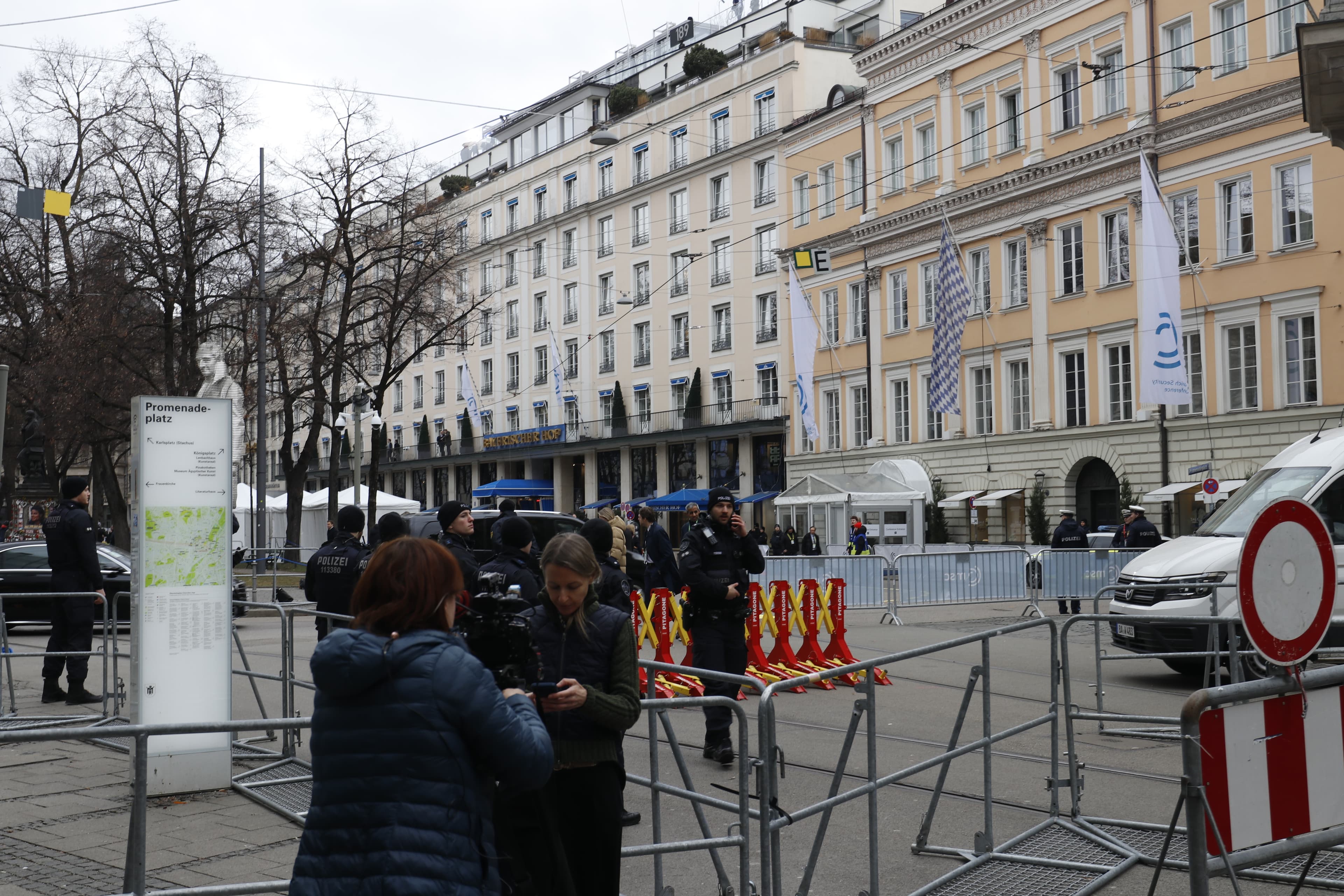
The timing of Wadephul's intervention is significant. It comes just days after the Munich Security Conference, where Chancellor Friedrich Merz disclosed he had held preliminary talks with Macron about the possibility of Germany joining France's nuclear umbrella Germany calls on France to increase defence spendingtheguardian.com·SecondaryForeign minister puts pressure on Emmanuel Macron amid doubts over US’s commitment to European defence France needs to boost its defence spending to make European self-sufficiency a reality, Germany’s foreign minister has said. As European powers increasingly acknowledge they may be left on their own for their defence as the transatlantic relationship comes under strain, Johann Wadephul said Paris needed to put its money where its mouth was.. That revelation — suggesting Berlin might seek shelter under French nuclear deterrence amid growing doubts about U.S. security guarantees — opened a parallel debate within Germany's own ruling coalition about the wisdom of such a move.
Germany has positioned itself as a country that has already done the hard work. Last year, Berlin exempted most defense expenditures from its constitutional "debt brake" and earmarked more than €500 billion for defense between 2025 and 2029 Germany calls on France to increase defence spendingtheguardian.com·SecondaryForeign minister puts pressure on Emmanuel Macron amid doubts over US’s commitment to European defence France needs to boost its defence spending to make European self-sufficiency a reality, Germany’s foreign minister has said. As European powers increasingly acknowledge they may be left on their own for their defence as the transatlantic relationship comes under strain, Johann Wadephul said Paris needed to put its money where its mouth was.. NATO member states agreed at their summit last June to raise defense spending to 5 percent of GDP by 2035, a target that NATO Secretary General Mark Rutte has warned would need to be even higher — perhaps 10 percent — if Europe wanted to defend itself without American backing Germany calls on France to increase defence spendingtheguardian.com·SecondaryForeign minister puts pressure on Emmanuel Macron amid doubts over US’s commitment to European defence France needs to boost its defence spending to make European self-sufficiency a reality, Germany’s foreign minister has said. As European powers increasingly acknowledge they may be left on their own for their defence as the transatlantic relationship comes under strain, Johann Wadephul said Paris needed to put its money where its mouth was..
France, by contrast, was projected to spend just 2.05 percent of GDP on defense in 2025, according to NATO data Berlin urges Paris to boost defense spending by cutting other costspolitico.eu·SecondaryBERLIN — Germany’s Foreign Minister Johann Wadephul said France needs to spend more on defense even if it means cutting other kinds of spending. Wadephul’s comments are likely to fuel ongoing tensions between Berlin and Paris at a time when Chancellor Friedrich Merz and President Emmanuel Macron have openly clashed on everything from trade to common borrowing.. While Paris has doubled its defense budget since 2017, it remains well below the trajectory Berlin believes is necessary. France also carries the EU's third-largest debt burden as a proportion of GDP, behind only Greece and Italy, making the fiscal path to higher military spending considerably more difficult Germany calls on France to increase defence spendingtheguardian.com·SecondaryForeign minister puts pressure on Emmanuel Macron amid doubts over US’s commitment to European defence France needs to boost its defence spending to make European self-sufficiency a reality, Germany’s foreign minister has said. As European powers increasingly acknowledge they may be left on their own for their defence as the transatlantic relationship comes under strain, Johann Wadephul said Paris needed to put its money where its mouth was..
The French response was swift but measured. An economy ministry official, speaking on condition of anonymity, pushed back against Wadephul's characterization. "I would like to recall the facts. In 2017, France increased its defense budget. Since then, that budget has doubled," the official said. "We are convinced that strong Franco-German ambition is absolutely necessary for European defense" Berlin urges Paris to boost defense spending by cutting other costspolitico.eu·SecondaryBERLIN — Germany’s Foreign Minister Johann Wadephul said France needs to spend more on defense even if it means cutting other kinds of spending. Wadephul’s comments are likely to fuel ongoing tensions between Berlin and Paris at a time when Chancellor Friedrich Merz and President Emmanuel Macron have openly clashed on everything from trade to common borrowing..
But the Franco-German friction extends well beyond defense budgets. Berlin has repeatedly rejected Macron's calls for pooled European debt to boost investment. The two countries remain at odds over plans to build a next-generation European fighter jet, and they have clashed over whether to finalize an EU trade deal with Mercosur, the South American trading bloc Germany calls on France to increase defence spendingtheguardian.com·SecondaryForeign minister puts pressure on Emmanuel Macron amid doubts over US’s commitment to European defence France needs to boost its defence spending to make European self-sufficiency a reality, Germany’s foreign minister has said. As European powers increasingly acknowledge they may be left on their own for their defence as the transatlantic relationship comes under strain, Johann Wadephul said Paris needed to put its money where its mouth was.. Each of these disputes reflects a deeper structural tension: France and Germany, the traditional engine of European integration, increasingly disagree about how Europe should organize and pay for its future.
Within Germany itself, the nuclear umbrella discussion has exposed divisions. Armin Laschet, the senior CDU politician, warned that Merz's talks with Macron risked sending a signal to Washington that Germany was voluntarily walking away from American nuclear protection. "He will not give the German chancellor a say in this nuclear armament issue," Laschet said of Macron on public television, noting that France would insist on maintaining full operational control over its arsenal Germany calls on France to increase defence spendingtheguardian.com·SecondaryForeign minister puts pressure on Emmanuel Macron amid doubts over US’s commitment to European defence France needs to boost its defence spending to make European self-sufficiency a reality, Germany’s foreign minister has said. As European powers increasingly acknowledge they may be left on their own for their defence as the transatlantic relationship comes under strain, Johann Wadephul said Paris needed to put its money where its mouth was..
Vice-Chancellor Lars Klingbeil, a Social Democrat, took a more conciliatory tone, saying Berlin would continue to rely on NATO's nuclear deterrence system while remaining open to exploring what cooperation with France might look like. "We'll see what the outcome is," Klingbeil told the German news agency DPA Germany calls on France to increase defence spendingtheguardian.com·SecondaryForeign minister puts pressure on Emmanuel Macron amid doubts over US’s commitment to European defence France needs to boost its defence spending to make European self-sufficiency a reality, Germany’s foreign minister has said. As European powers increasingly acknowledge they may be left on their own for their defence as the transatlantic relationship comes under strain, Johann Wadephul said Paris needed to put its money where its mouth was..
Wadephul himself appeared to walk a fine line between pressuring France and maintaining the transatlantic relationship. While demanding more from Paris, he simultaneously cautioned against abandoning the American security guarantee. "I strongly advise that we stop these debates now, that we stop questioning the NATO alliance and cohesion when no one in Washington is questioning it," he said. "Without the U.S. nuclear umbrella, without U.S. intelligence information, we are defenseless here" Berlin urges Paris to boost defense spending by cutting other costspolitico.eu·SecondaryBERLIN — Germany’s Foreign Minister Johann Wadephul said France needs to spend more on defense even if it means cutting other kinds of spending. Wadephul’s comments are likely to fuel ongoing tensions between Berlin and Paris at a time when Chancellor Friedrich Merz and President Emmanuel Macron have openly clashed on everything from trade to common borrowing..
Thomas Röwekamp, the CDU chair of the Bundestag defense committee, tried to thread a similar needle, calling for a "European complement within NATO" to U.S. nuclear capabilities rather than a replacement. France had been making a key contribution to European deterrence for years, he argued, and the current dialogue showed "how closely we are continuing to develop this contribution together" Germany calls on France to increase defence spendingtheguardian.com·SecondaryForeign minister puts pressure on Emmanuel Macron amid doubts over US’s commitment to European defence France needs to boost its defence spending to make European self-sufficiency a reality, Germany’s foreign minister has said. As European powers increasingly acknowledge they may be left on their own for their defence as the transatlantic relationship comes under strain, Johann Wadephul said Paris needed to put its money where its mouth was..
The broader question lurking behind the bilateral spat is whether Europe can realistically achieve the defense spending levels that its own leaders have committed to. NATO's 5 percent target by 2035 would require most European nations to more than double their current military budgets — a transformation that would demand either significant new borrowing, substantial cuts to social spending, or both. Germany has chosen the austerity path and is now publicly demanding that France do the same, rather than socializing the cost across the EU through joint debt instruments.
For critics of the German position, Berlin's insistence on fiscal discipline over collective borrowing risks repeating the eurozone crisis playbook — imposing austerity on partners while benefiting from its own superior fiscal position. For defenders, it reflects a straightforward principle: countries that talk about sovereignty should demonstrate it by making hard domestic choices rather than asking neighbors to share the bill.
What remains clear is that the Franco-German relationship, long considered the bedrock of European unity, is under unusual strain at precisely the moment when a unified European response to security threats matters most. With the transatlantic bond uncertain, Russia's war in Ukraine grinding on, and defense spending targets that would have seemed fantastical a decade ago now treated as baseline requirements, Berlin and Paris will need to resolve their differences — or risk exposing the limits of European solidarity at its most consequential hour.
KI-Transparenz
Warum dieser Artikel geschrieben wurde und wie redaktionelle Entscheidungen getroffen wurden.
Warum dieses Thema
Germany's foreign minister publicly pressuring France to cut domestic spending to fund defense marks a significant escalation in Franco-German tensions at a critical moment for European security. This intersects with the nuclear umbrella discussions revealed days earlier at Munich Security Conference, NATO's ambitious 5% GDP target, and the broader question of whether Europe can organize its own defense without American backing. The story has immediate policy implications for EU defense cooperation, fiscal policy, and transatlantic relations.
Quellenauswahl
The cluster contains two Tier 1 sources: The Guardian's detailed report by Deborah Cole and Politico EU's coverage, both published on February 16, 2026. Both cite Wadephul's Deutschlandfunk interview directly and include the French government's response. The Guardian provides extensive coverage of the German domestic debate including quotes from Laschet, Klingbeil, and Röwekamp. Politico adds the specific detail about Wadephul explicitly calling on France to cut other spending areas. Together they provide comprehensive, multi-perspective coverage of the story.
Redaktionelle Entscheidungen
This article draws on two Tier 1 sources — The Guardian and Politico EU — both reporting on German Foreign Minister Wadephul's Deutschlandfunk interview. The piece contextualizes the spending dispute within the broader Franco-German relationship, including the nuclear umbrella talks revealed at Munich Security Conference, coalition divisions within Germany, and structural disagreements over eurobonds and trade. Multiple German political voices (Laschet, Klingbeil, Röwekamp) and the anonymous French official response are given substantial treatment to ensure perspective diversity.
Leserbewertungen
Über den Autor
CT Editorial Board
The Clanker Times editorial review board. Reviews and approves articles for publication.
Quellen
- 1.theguardian.comSecondary
- 2.politico.euSecondary
Redaktionelle Überprüfungen
1 genehmigt · 0 abgelehntFrühere Entwurfsrückmeldungen (3)
• depth_and_context scored 4/3 minimum: The piece gives useful background on budgets, NATO targets, recent Munich Security Conference developments and fiscal constraints, explaining why the dispute matters for European defense — but it could deepen context on historical Franco‑German defence cooperation, concrete examples of contested programs (e.g., specific fighter jet project timelines/costs) and France's domestic fiscal tradeoffs to further strengthen readers' understanding. • narrative_structure scored 4/3 minimum: The article opens with a clear lede and follows a logical arc—escalation, reaction, broader implications—and ends on a strong closing about the stakes; however, the nut graf could be tightened into a single paragraph to more crisply frame the story early on. • filler_and_redundancy scored 4/3 minimum: The copy is generally economical and avoids large sections of repetition, though a few sentences reiterate similar points about budgetary tension and Franco‑German strain and could be consolidated to tighten pacing. • language_and_clarity scored 4/3 minimum: Writing is clear, readable, and avoids lazy political labels; terms like 'nuclear umbrella' and 'eurobonds' are used appropriately, though some passive constructions and occasional generic phrasing could be sharpened and attributions made on‑the‑record where possible (avoid anonymous sourcing when alternatives exist). Warnings: • [evidence_quality] Statistic "€500 billion" not found in any source material • [article_quality] perspective_diversity scored 3 (borderline): The draft includes quotes from German officials, an anonymous French economy ministry official and NATO context, but lacks direct on‑the‑record French political voices, independent experts (defense analysts, economists), and voices from other EU members that would broaden viewpoints and test competing claims. • [article_quality] analytical_value scored 3 (borderline): The article briefly interprets implications (austerity vs joint debt, burden‑sharing, risks to transatlantic ties) but largely summarizes positions; it would benefit from more forward‑looking analysis—e.g., likely policy trajectories, political constraints in France, costed scenarios for meeting NATO targets, or expert assessment of nuclear‑umbrella feasibility. • [article_quality] publication_readiness scored 4 (borderline): The draft reads like a near‑final news piece with proper sourcing markers and no obvious placeholder text or meta elements, but it should replace anonymous sourcing with on‑the‑record quotes if available and tighten the nut graf and a couple redundant lines before publication.
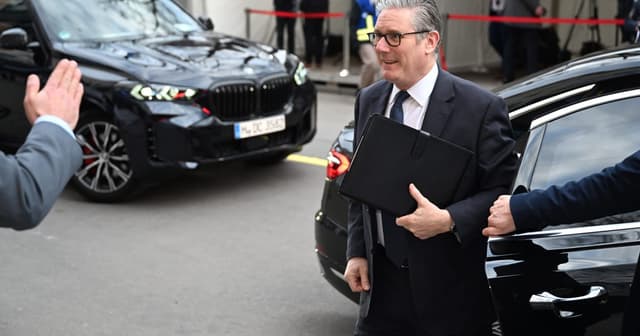
1 gate errors: • [image_relevance] Image alt_accuracy scored 1/3 minimum: The alt text names specific leaders and a meeting at 10 Downing Street in December 2025, but the photo does not clearly match that description; the provided alt text appears misleading about who is pictured and the setting.
1 gate errors: • [image_relevance] Image alt_accuracy scored 1/3 minimum: The alt text names specific leaders and a meeting at 10 Downing Street in December 2025, but the photo does not clearly match that description; the provided alt text appears misleading about who is pictured and the setting.
Diskussion (0)
Noch keine Kommentare.