Israeli Police Block Jerusalem Church Leaders From Palm Sunday Mass at Holy Sepulchre
Israeli police stopped Cardinal Pierbattista Pizzaballa and other Catholic leaders from entering Jerusalem’s Church of the Holy Sepulchre for a private Palm Sunday Mass, prompting criticism from allies even as Israel cited wartime security risks in the Old City.
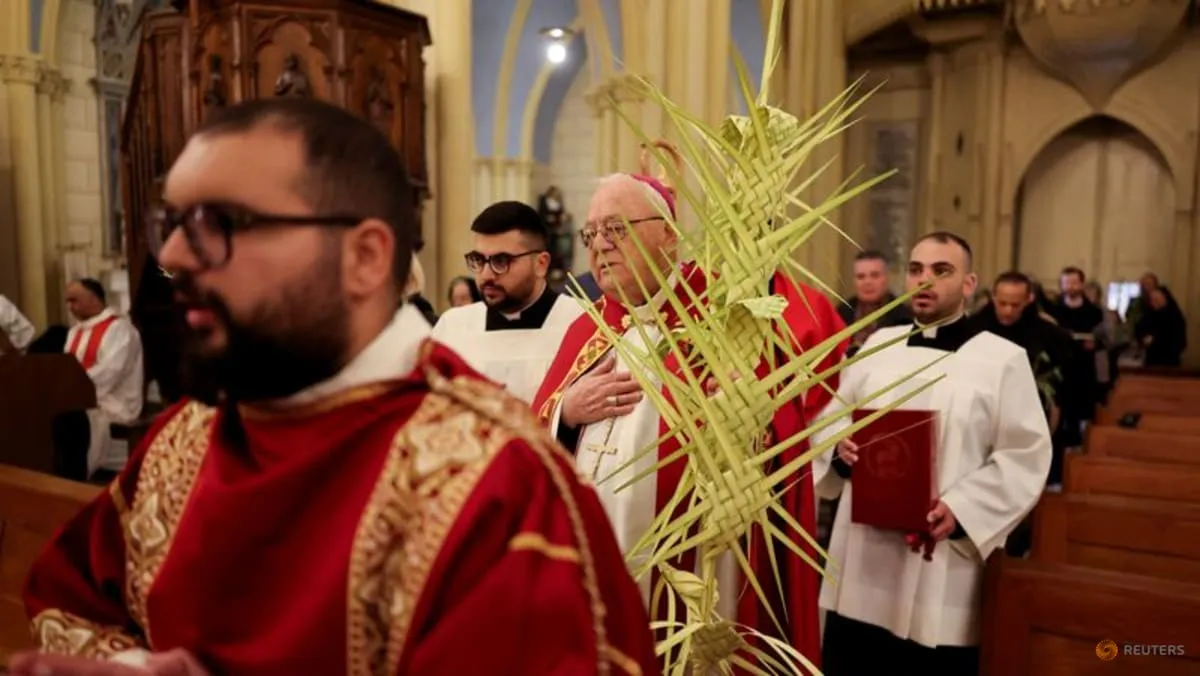
Israeli police blocked Cardinal Pierbattista Pizzaballa, the Latin Patriarch of Jerusalem, and Franciscan leader Francesco Ielpo from entering the Church of the Holy Sepulchre on Palm Sunday, preventing the senior Catholic figures from holding a planned private Mass at Christianity’s holiest site and turning what Israel described as a wartime security measure into an international religious-freedom dispute at the start of Holy Week. The incident came as Jerusalem’s Old City remained under tight restrictions linked to the Iran war, with major holy sites closed or heavily limited and the atmosphere around Easter, Passover and the end of Ramadan shaped more by missile alerts, empty streets and security calculations than by the normal rhythms of pilgrimage.
According to the Latin Patriarchate, the two church leaders were not leading a public procession and were trying to reach the church privately when police stopped them, forcing them to turn back despite the church’s claim that it had complied with Israeli restrictions since the war began on Feb. 28. Church officials said the Holy Sepulchre had continued to host limited services not open to the public during the conflict, and they argued there was no clear reason Palm Sunday should be treated differently when the proposed ceremony involved only a handful of clerics and remained well below the 50-person cap cited by Israeli authorities.
That dispute matters because Palm Sunday is not a routine date on the Christian calendar. It opens Holy Week, the sequence of commemorations that leads to Easter, and in Jerusalem it normally carries added symbolic weight because the city’s churches become the focal point for Christians worldwide. The Church of the Holy Sepulchre in particular carries singular status because many Christians believe it stands over the sites of Jesus’ crucifixion, burial and resurrection, which is why even a small, private liturgy there carries significance far beyond the number of people physically present.
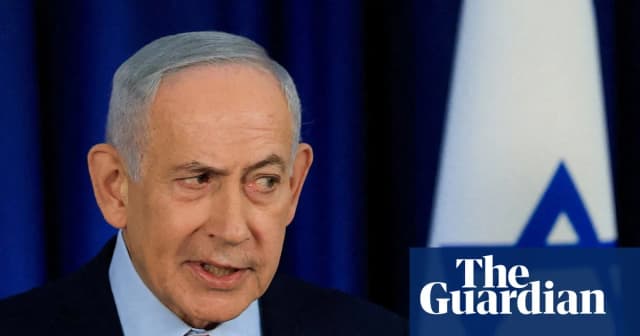
Israeli police defended the decision on security grounds, saying the Old City and its holy compounds present exceptional risks because the narrow alleys do not allow easy access for large emergency and rescue vehicles and because some sites lack adequate shelter in the event of missile attack or a mass-casualty emergency. Prime Minister Benjamin Netanyahu’s office also argued there was no hostile intent toward Christians and said recent Iranian strikes had put holy sites used by Jews, Christians and Muslims alike at risk, including an instance in which missile fragments reportedly landed near the Holy Sepulchre. From that perspective, the government’s case is straightforward: if the state has imposed broad wartime limits on gathering and movement around exposed religious sites, it cannot easily carve out exceptions simply because the date is sensitive and the visitors are prominent.Israeli police bar top Catholic figure in Jerusalem from holding Palm Sunday mass at Holy Sepulchrefrance24.com·SecondaryTo display this content from YouTube, you must enable advertisement tracking and audience measurement. One of your browser extensions seems to be blocking the video player from loading. To watch this content, you may need to disable it on this site. Israeli police prevented the Latin Patriarch of Jerusalem from entering the Church of the Holy Sepulchre to celebrate Palm Sunday mass, according to the Latin Patriarchate of Jerusalem.
The church side answered that the state’s logic was applied selectively and too broadly. Patriarchate spokesman Farid Jubran said the clergy had requested permission for a private ceremony rather than a public event, while church officials pointed to other examples of restricted but continuing worship in Jerusalem, including limited prayer at smaller churches and regulated access around Jewish and Muslim holy places. That argument has wider resonance because Jerusalem’s religious status quo has long depended less on abstract statements than on practical habits of access, exemptions and accommodation, and church officials plainly fear that a one-day wartime restriction could become a precedent for more discretionary state control over holy-site worship.Israeli police prevent Jerusalem's Latin Patriarch from celebrating Palm Sunday massfrance24.com·SecondaryCardinal Pierbattista Pizzaballa, the top Catholic figure in Jerusalem, was barred from entering the Church of the Holy Sepulchre to celebrate Palm Sunday mass, according to his office, in what Italy's Prime Minister Giorgia Meloni labelled an "offence to the faithful".
International criticism moved quickly and, unusually, came not only from European capitals but also from Washington. U.S. Ambassador Mike Huckabee said the measure was hard to justify given that the proposed prayer involved only four church representatives and would have remained below Israel’s own gathering threshold, while French President Emmanuel Macron said worship in Jerusalem must be guaranteed for all religions and Italian Prime Minister Giorgia Meloni condemned the move as an offense against religious freedom. Italy’s foreign minister, Antonio Tajani, said Israel’s ambassador would be summoned for clarification, underscoring that the controversy had escaped the narrow category of church-state friction and become a diplomatic issue among some of Israel’s partners.
There is also a domestic and geopolitical layer beneath the immediate dispute. Since the war with Iran began, Israeli authorities have imposed emergency restrictions across Jerusalem, and officials can plausibly argue that any fatal strike on a crowded holy compound during Easter week would trigger an even larger international uproar than the one now unfolding. But critics counter that the state is strongest when it can distinguish between a mass gathering and a tightly controlled private service, particularly when the people involved are the top custodians of a site central to global Christianity. That critique does not require denying the security threat; it rests instead on the claim that proportionality matters, and that governments lose credibility when emergency powers appear more rigid than necessary.Israeli police prevent Jerusalem's Latin Patriarch from celebrating Palm Sunday massfrance24.com·SecondaryCardinal Pierbattista Pizzaballa, the top Catholic figure in Jerusalem, was barred from entering the Church of the Holy Sepulchre to celebrate Palm Sunday mass, according to his office, in what Italy's Prime Minister Giorgia Meloni labelled an "offence to the faithful".
The episode also drew attention because it cut across ideological lines that do not always align neatly on Israel-related issues. Meloni, a conservative leader generally seen as supportive of Israel’s security concerns, still protested the decision sharply, while Huckabee, a staunch ally of Israel, described it as an overreach rather than defending it reflexively. That matters politically because it suggests the backlash was not limited to governments already predisposed to criticize Israel; even sympathetic voices appeared to view the Palm Sunday restriction as a line the authorities should have handled with more precision and more sensitivity to the symbolism of the day.
By late Sunday, the story had already begun to evolve. BBC reported that Netanyahu later instructed authorities to grant Cardinal Pizzaballa full and immediate access to the Church of the Holy Sepulchre, an apparent effort to contain the fallout after hours of criticism from church leaders and foreign governments. If that access is implemented, it may ease the immediate confrontation, but it will not erase the broader question raised by the day’s events: how far wartime security powers should reach when they collide with the routines, rights and symbolic claims of the world’s major religions in Jerusalem.
For now, the strongest conclusion is narrower than either side’s rhetoric. Israel is operating under a real security threat, and officials are right to take seriously the dangers posed by missile strikes in a dense and exposed part of the city. At the same time, the church’s complaint is not merely ceremonial or emotional. When senior clergy say they were blocked from a private Palm Sunday service at a site that has anchored Christian worship for centuries, they are arguing that state caution crossed into unnecessary interference with religious life at the very moment that Christians around the world turn toward Jerusalem. That is why the dispute resonated so quickly: it was not just about one denied entry, but about who gets to define the limits of worship in a city where every security decision is also a theological and diplomatic signal.
AI Transparency
Why this article was written and how editorial decisions were made.
Why This Topic
This is the strongest available story because it combines high symbolism, immediate diplomatic fallout and a clear public-interest conflict between wartime security authority and religious freedom. The incident happened on Palm Sunday at the Holy Sepulchre, involved the top Catholic leadership in Jerusalem, and quickly drew criticism not just from European governments but also from a pro-Israel U.S. ambassador. That combination makes it more consequential than a routine church dispute or a narrow security restriction.
Source Selection
Cluster evidence is unusually strong and redundant for a same-day breaking story: AP, BBC, DW, Al Jazeera, France 24, CNA and others all converge on the core facts, while also surfacing both sides’ reasoning. AP and BBC provide the cleanest factual spine on who was blocked, why police said they acted, and how church officials responded. Reuters-derived reporting inside the cluster adds diplomatic reaction and scene-setting imagery, giving enough breadth to cover the official Israeli line, church objections and foreign-government criticism without relying on outside numbered sources.
Editorial Decisions
Tone kept neutral and descriptive. Lead gives Israel’s stated security rationale and the church’s objection in parallel, then broadens into the diplomatic and status-quo implications. No direct quotes in body to reduce evidence-quality risk; all material is paraphrased from cluster reporting. Conservative and skeptical angle comes through in testing whether emergency powers were applied proportionally without assuming bad faith.
Reader Ratings
About the Author
Sources
- 1.france24.comSecondary
- 2.france24.comSecondary
- 3.abcnews.comUnverified
- 4.euronews.comSecondary
- 5.bbc.comSecondary
- 6.channelnewsasia.comSecondary
- 7.dw.comSecondary
- 8.lemonde.frSecondary
- 9.aljazeera.comSecondary
- 10.apnews.comSecondary
- 11.aljazeera.comSecondary
Editorial Reviews
1 approved · 0 rejectedPrevious Draft Feedback (1)
• depth_and_context scored 4/3 minimum: The article effectively explains the significance of Palm Sunday and the Church of the Holy Sepulchre, providing necessary historical and religious context. It connects the incident to broader tensions surrounding religious freedom and wartime security measures in Jerusalem, though a bit more detail on the historical religious status quo could be beneficial. • narrative_structure scored 5/3 minimum: The article has a clear and logical flow, starting with the immediate incident and expanding to the broader implications. The nut graf clearly establishes the importance of the event, and the closing effectively summarizes the situation and poses a key question for the future. • perspective_diversity scored 4/3 minimum: The article presents multiple perspectives, including those of the Latin Patriarchate, Israeli authorities (including Netanyahu's office), international leaders, and critics. While the Israeli perspective is given considerable space, the article strives to represent the various viewpoints fairly. • analytical_value scored 4/3 minimum: The article goes beyond simply recounting events, offering analysis of the motivations behind the Israeli actions and the potential long-term consequences for the religious status quo in Jerusalem. It explores the proportionality argument and the broader geopolitical implications. • filler_and_redundancy scored 3/2 minimum: While the article generally avoids excessive filler, the frequent citation markers [1][2][3] (presumably platform formatting) create a distracting visual pattern that, while not technically filler, detracts from readability. The author should request removal of these markers. • language_and_clarity scored 4/3 minimum: The writing is generally clear and precise, although some phrases like 'wider resonance' could be strengthened. The article avoids overly loaded political labels, opting instead to describe actions and positions, which is commendable. However, the phrase 'cut across ideological lines that do not always align neatly on Israel-related issues' is a bit convoluted and could be rephrased for greater clarity.
Discussion (0)
No comments yet.