Kenyan court jails Chinese national for ant-smuggling case as wildlife trafficking shifts toward small, high-value species
A Nairobi court sentenced Chinese national Zhang Kequn to one year in prison and fined him 1 million Kenyan shillings after authorities said he tried to take more than 2,000 live ants out of Kenya, underscoring a growing wildlife-trafficking trade in small but valuable species.[1][2]
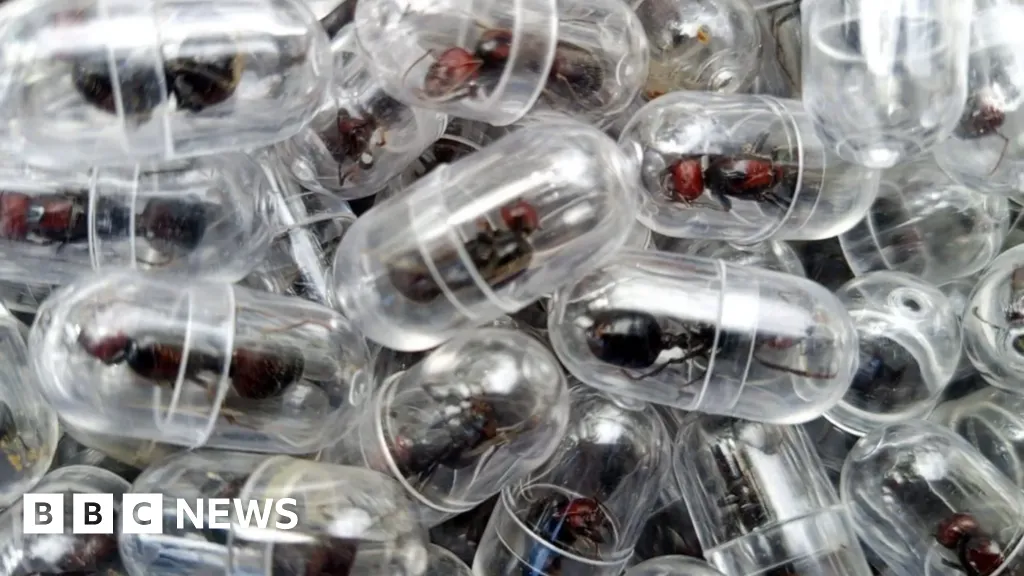
A Nairobi court on Wednesday sentenced Chinese national Zhang Kequn to one year in prison and imposed a fine of 1 million Kenyan shillings after finding that he had tried to smuggle more than 2,000 live ants out of Kenya, a case that at first sounds eccentric but has turned into a broader warning about how wildlife trafficking is changing. Kenyan authorities say the insects were headed for collectors abroad and argue that the trade now reaches well beyond elephants, rhinos and ivory to include small species that can be moved quietly, sold individually and scaled through online hobbyist demand.Chinese national given one year in prison for smuggling ants out of Kenyabbc.com·SecondaryA Chinese national has been sentenced to a year in prison for attempting to smuggle thousands of live queen garden ants out of Kenya. The court in Nairobi on Wednesday also fined Zhang Kequn 1m Kenyan shillings (£5,713; $7,737). Judge Irene Gichobi described Zhang as not "entirely honest" and lacking in remorse.
According to the BBC and the Guardian, Zhang was arrested after authorities found thousands of live queen ants in his luggage at Nairobi's main airport in March, and the court heard that he had pleaded guilty after initially denying the charges. The sentencing judge ordered both prison time and the substantial fine, and the BBC reported that Zhang would be referred to his home country after serving the sentence. The case therefore did not end as a minor customs violation. Kenyan courts treated it as wildlife crime serious enough to merit deterrence rather than a warning or simple confiscation.Chinese national given one year in prison for smuggling ants out of Kenyabbc.com·SecondaryA Chinese national has been sentenced to a year in prison for attempting to smuggle thousands of live queen garden ants out of Kenya. The court in Nairobi on Wednesday also fined Zhang Kequn 1m Kenyan shillings (£5,713; $7,737). Judge Irene Gichobi described Zhang as not "entirely honest" and lacking in remorse.
The numbers help explain why the case drew official attention. BBC reported that Zhang was caught with more than 2,000 ants and that Kenyan authorities warned the insects could fetch around $220 each in Europe and Asia. The Guardian said more than 2,200 ants were found in his luggage, including 1,948 prized Messor cephalotes specimens, and described a lucrative east African trade in insects that are marketed as exotic pets in China, the United States and Europe. When a shipment is made up of small living creatures with high resale values, the economics can look far more serious than the subject matter first suggests.Chinese national given one year in prison for smuggling ants out of Kenyabbc.com·SecondaryA Chinese national has been sentenced to a year in prison for attempting to smuggle thousands of live queen garden ants out of Kenya. The court in Nairobi on Wednesday also fined Zhang Kequn 1m Kenyan shillings (£5,713; $7,737). Judge Irene Gichobi described Zhang as not "entirely honest" and lacking in remorse.
The Kenyan side of the story is not limited to one traveler. BBC said Zhang told the court he had bought the ants from Kenyan national Charles Mwangi for 10,000 Kenyan shillings per hundred, and that Mwangi has also been charged and is out on bail. The Guardian linked Zhang to another case and noted that ant smuggling had already made headlines in Kenya last year, when two Belgian teenagers, a Vietnamese national and a Kenyan were punished in a separate case involving thousands of queen ants. That pattern supports the authorities' argument that the problem is not a one-off curiosity but a repeatable export trade with local sourcing, foreign demand and enough money in the chain to attract intermediaries.Chinese national given one year in prison for smuggling ants out of Kenyabbc.com·SecondaryA Chinese national has been sentenced to a year in prison for attempting to smuggle thousands of live queen garden ants out of Kenya. The court in Nairobi on Wednesday also fined Zhang Kequn 1m Kenyan shillings (£5,713; $7,737). Judge Irene Gichobi described Zhang as not "entirely honest" and lacking in remorse.
Kenyan officials have used the case to make a larger conservation argument. The BBC reported that the sentencing judge pointed to rising cases involving large quantities of garden ants and warned about ecological side effects, while Kenyan authorities have said demand is growing in Europe and Asia among collectors who prize rare queens. The Guardian similarly framed the case as part of a lucrative wildlife pipeline that treats ants not as pests but as collectible organisms that can be bred, displayed and sold onward. From the government's point of view, the issue is not just that one passenger broke export rules. It is that removing species from local ecosystems and commercializing them abroad creates incentives for repeated harvesting and a harder-to-police black market in organisms that fit inside ordinary luggage.Chinese national given one year in prison for smuggling ants out of Kenyabbc.com·SecondaryA Chinese national has been sentenced to a year in prison for attempting to smuggle thousands of live queen garden ants out of Kenya. The court in Nairobi on Wednesday also fined Zhang Kequn 1m Kenyan shillings (£5,713; $7,737). Judge Irene Gichobi described Zhang as not "entirely honest" and lacking in remorse.
There is, however, another side that deserves to be stated fairly. To some readers, a prison sentence over ants will sound heavy-handed, especially when many countries still struggle to punish more visibly destructive forms of wildlife crime. Hobbyist collectors may argue that insects occupy a gray area in public perception, that captive breeding can reduce pressure on wild populations, and that a trade in ants is not morally equivalent to trafficking in ivory or live primates. That instinct is understandable. Small species do not trigger the same public alarm as iconic mammals, and many legal insect trades do exist in various markets. But the Kenyan court's message was that this was not a transparent, regulated exchange. It was an illicit removal of wildlife species from the country and part of a pattern officials want to stop early.Chinese national given one year in prison for smuggling ants out of Kenyabbc.com·SecondaryA Chinese national has been sentenced to a year in prison for attempting to smuggle thousands of live queen garden ants out of Kenya. The court in Nairobi on Wednesday also fined Zhang Kequn 1m Kenyan shillings (£5,713; $7,737). Judge Irene Gichobi described Zhang as not "entirely honest" and lacking in remorse.
The case also speaks to a more practical law-enforcement problem. Traditional anti-trafficking systems were built around conspicuous goods such as tusks, skins, horns or live birds, not around thousands of living insects packed into tubes and containers. That makes detection harder, valuation more variable and prosecution more dependent on whether courts are willing to treat small creatures as economically and ecologically important enough to justify meaningful penalties. By imposing both jail time and a large fine, the Nairobi court signaled that Kenyan authorities do not intend to leave that ambiguity in place. In deterrence terms, that matters as much as the sentence itself. Traffickers watch not only for loopholes in borders but also for uncertainty in how judges react when the species involved do not fit older stereotypes of wildlife crime.Chinese national given one year in prison for smuggling ants out of Kenyabbc.com·SecondaryA Chinese national has been sentenced to a year in prison for attempting to smuggle thousands of live queen garden ants out of Kenya. The court in Nairobi on Wednesday also fined Zhang Kequn 1m Kenyan shillings (£5,713; $7,737). Judge Irene Gichobi described Zhang as not "entirely honest" and lacking in remorse.
The international dimension is difficult to ignore. BBC and the Guardian both pointed to demand in Asia and Europe, and the Guardian added the United States to the destination picture for collectors and pet buyers. That means the policy burden does not fall only on Kenya. If destination markets allow online trading communities to normalize the ownership of rare ants with weak proof of origin, then source countries will continue to face incentives for poaching and smuggling regardless of what happens at one airport checkpoint.Chinese national given one year in prison for smuggling ants out of Kenyabbc.com·SecondaryA Chinese national has been sentenced to a year in prison for attempting to smuggle thousands of live queen garden ants out of Kenya. The court in Nairobi on Wednesday also fined Zhang Kequn 1m Kenyan shillings (£5,713; $7,737). Judge Irene Gichobi described Zhang as not "entirely honest" and lacking in remorse. Officials in importer countries may not rank ant trafficking high on their public agenda, but the economics described in the case suggest that niche biological markets can still become serious channels for illegal trade.
What happens next will likely turn on two things: whether Zhang appeals successfully within the 14-day period reported by the BBC, and whether Kenyan prosecutors can keep building cases against the local and international networks that supply and buy the insects. The larger significance of the judgment is that Kenya is trying to establish a principle before the trade becomes normalized: wildlife trafficking does not cease to be trafficking simply because the species are small, unfamiliar or easy to trivialize. That is a sensible line for a source country to draw. If courts wait until a niche trade has scaled, enforcement usually gets more expensive and less effective.Chinese national given one year in prison for smuggling ants out of Kenyabbc.com·SecondaryA Chinese national has been sentenced to a year in prison for attempting to smuggle thousands of live queen garden ants out of Kenya. The court in Nairobi on Wednesday also fined Zhang Kequn 1m Kenyan shillings (£5,713; $7,737). Judge Irene Gichobi described Zhang as not "entirely honest" and lacking in remorse.
AI Transparency
Why this article was written and how editorial decisions were made.
Why This Topic
After the Sweden cyber cluster turned into a duplicate during drafting, this became the highest-scoring distinct visible cluster above the publication threshold. Despite its odd surface, it is clearly new, internationally legible, and has stronger narrative legs than the entertainment trailer cluster because it touches wildlife crime, cross-border demand, court deterrence and conservation enforcement. It is also safely distinct from the most recent published CT feed.
Source Selection
The cluster has two fresh, reputable signals from BBC and the Guardian that align on the core facts and provide enough detail for a balanced write-up: sentence, fine, arrest timing, shipment size, destination demand and prior comparable cases. BBC gives the strongest court and procedural details, while the Guardian adds species detail, destination-market framing and the trade context. That is sufficient for a grounded bilingual article without stretching beyond the source record.
Editorial Decisions
Straight news treatment with a mildly skeptical but sympathetic view of Kenya's deterrence logic. Gave real space to the counterargument that prison over ants can sound disproportionate, while still explaining why Kenyan authorities view small-species trafficking as a serious conservation and law-enforcement issue. No loaded environmental moralizing.
Reader Ratings
About the Author
Sources
- 1.bbc.comSecondary
- 2.theguardian.comSecondary
Editorial Reviews
1 approved · 0 rejectedPrevious Draft Feedback (1)
• depth_and_context scored 4/3 minimum: The article does a good job of establishing the immediate context (the sentencing) and expanding it to the broader issue of changing wildlife trafficking patterns. To improve, it could add a brief paragraph detailing the specific ecological role of the *Messor cephalotes* ants or the general economic structure of the exotic pet trade in East Africa to deepen the 'why it matters' aspect. • narrative_structure scored 4/3 minimum: The structure is strong, moving logically from the specific incident (the arrest/sentence) to the broader implications (the systemic problem). The lede is effective, and the conclusion summarizes the core takeaway well. It maintains a clear, investigative flow throughout the piece. • perspective_diversity scored 4/3 minimum: The article successfully incorporates multiple viewpoints: the Kenyan authorities (enforcement), the accused/hobbyists (defense/gray area), and the international market (demand). It handles the counterargument fairly, which elevates the piece beyond simple reporting. • analytical_value scored 5/3 minimum: This is the article's strongest point. It consistently interprets the event, discussing the legal implications (deterrence vs. warning), the systemic challenges (traditional vs. modern crime), and the geopolitical dimension (source vs. destination markets). It moves far beyond mere recounting. • filler_and_redundancy scored 5/2 minimum: The writing is highly efficient. While it cites multiple sources, the repetition serves to build a comprehensive picture from different angles (e.g., BBC vs. Guardian reports) rather than padding the length. The density of information is high without feeling repetitive. • language_and_clarity scored 4/3 minimum: The writing is crisp, professional, and highly engaging. It avoids overly dramatic or loaded political labels, instead focusing on describing the economic and legal mechanisms at play. To achieve a 5, the author could slightly temper the reliance on source attribution markers ([1][2]) in the final draft, as they are editorial artifacts, not part of the narrative flow.




Discussion (0)
No comments yet.