Nestlé says truck carrying 413,793 KitKat bars disappeared on route from Italy to Poland
Nestlé says a truck carrying 413,793 KitKat bars from central Italy toward Poland disappeared last week, opening a cross-border theft investigation and raising broader questions about cargo security in European consumer supply chains.
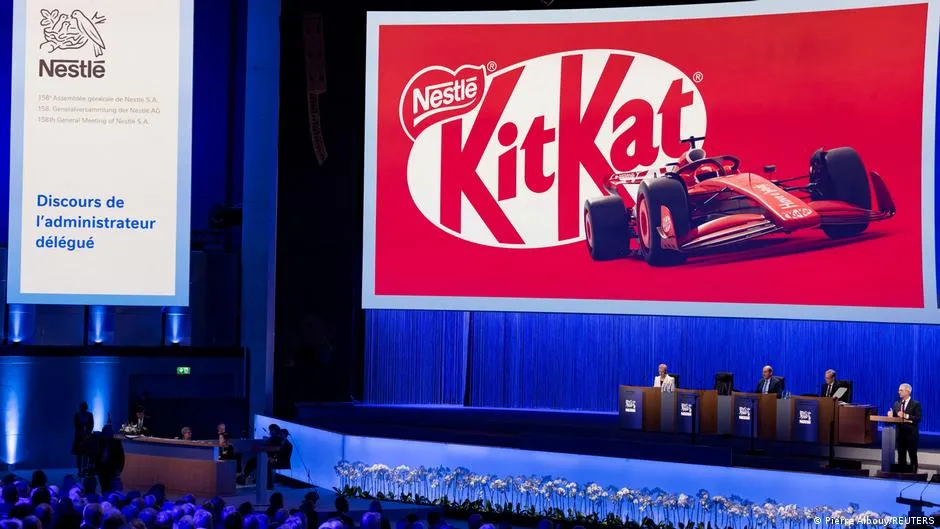
Nestlé says a truck carrying 413,793 bars from its new KitKat range disappeared last week after leaving central Italy on a route that was meant to end in Poland, turning what would normally be a routine consumer-goods shipment into a cross-border criminal investigation with obvious commercial implications. The company says the vehicle and its load were still unaccounted for as of Saturday, and that it is working with local authorities and supply-chain partners while warning that the missing products could surface in unofficial sales channels across Europe.
At one level, the story is simple: a truck loaded with about 12 tonnes of chocolate bars vanished somewhere between production and distribution points on a route of more than 1,000 kilometers. At another level, it is a reminder that even low-margin, high-volume consumer brands now operate in logistics networks that can be disrupted not only by war, tariffs or labor shortages, but also by old-fashioned theft aimed at goods that are easy to move and easy to resell. Nestlé has not publicly identified the exact place where the truck was lost, which suggests investigators are still trying to establish when the cargo left normal tracking patterns and where responsibility may ultimately sit.
The core verified details are narrow but significant. The company says the shipment left a production site in central Italy and was scheduled to move through Europe before reaching its final destination in Poland. The missing load consisted of 413,793 units from a new KitKat chocolate line, and the company says the products were intended for wider European distribution rather than a single local market. That matters because it means the case is not just about one truck or one warehouse; it touches the reliability of a wider retail network at a time when brands are already under pressure to keep shelves stocked and promotions on schedule ahead of seasonal buying periods.12 tons of KitKat stolen in chocolaty heist in Europe, Nestle sayscbsnews.com·SecondaryA massive 12-ton shipment of Nestle's crunch KitKat bars was stolen in a chocolaty heist that risks causing a shortage in stores right before Easter. KitKat, owned by Swiss food giant Nestle, told AFP on Saturday that "a truck transporting 413,793 units of its new chocolate range has been stolen during transit in Europe." The shipment disappeared last week while heading between production and distribution locations, the company said.
Nestlé’s public position has been careful and operational rather than theatrical. The company says it is cooperating with authorities and supply-chain partners, and it has emphasized that the bars can be traced through unique batch codes printed on the packaging. The practical purpose of that message is clear: if stolen goods do begin appearing in gray-market channels, retailers, wholesalers and even consumers have a way to identify whether a product belongs to the missing shipment. In other words, the company is trying to reduce the resale value of the cargo while also signaling to investigators that this is not a theft that can be monetized without some risk of detection.Nestle says 12 tonnes of KitKat chocolate stolen in Europelemonde.fr·SecondaryA huge shipment of Nestle's crunchy KitKat chocolate bars was stolen in Europe, the brand said, warning that the heist risked causing shortages in stores right before Easter. KitKat, owned by Swiss food giant Nestle, confirmed in a statement sent to AFP on Saturday, March 28 that "a truck transporting 413,793 units of its new chocolate range has been stolen during transit in Europe.
There is also a brand-management dimension here that goes beyond the obvious novelty of a chocolate heist. KitKat is one of Nestlé’s best-known consumer products, and stories involving familiar household brands tend to travel far beyond the trade press because the facts are easy for readers to grasp. A stolen semiconductor shipment or a missing chemicals container may matter more economically, but a truckload of branded candy speaks directly to consumers, retailers and investors in a way that many logistics stories do not. That partly explains why Nestlé chose to go public rather than handle the case quietly through insurers, police and distributors. The company plainly wants the market watching for the goods.Nestle says 12 tonnes of KitKat chocolate stolen in Europelemonde.fr·SecondaryA huge shipment of Nestle's crunchy KitKat chocolate bars was stolen in Europe, the brand said, warning that the heist risked causing shortages in stores right before Easter. KitKat, owned by Swiss food giant Nestle, confirmed in a statement sent to AFP on Saturday, March 28 that "a truck transporting 413,793 units of its new chocolate range has been stolen during transit in Europe.
The company has also used the episode to frame a larger warning about cargo theft as a rising business problem rather than an isolated embarrassment. That framing is worth taking seriously even if companies naturally use public statements to manage reputational fallout. Consumer packaged goods are attractive targets because the products are standardized, widely recognized and often easier to fence than specialized industrial equipment. A shipment like this can be broken up, relabeled, moved across borders and offered into informal channels with relative speed unless batch tracking, retailer vigilance and police coordination work as intended. For large brands, the threat is not only the immediate loss of inventory; it is the possibility that stolen goods distort pricing, damage trust or expose consumers to uncertain storage conditions once products leave authorized distribution chains.Nestle says 12 tonnes of KitKat chocolate stolen in Europelemonde.fr·SecondaryA huge shipment of Nestle's crunchy KitKat chocolate bars was stolen in Europe, the brand said, warning that the heist risked causing shortages in stores right before Easter. KitKat, owned by Swiss food giant Nestle, confirmed in a statement sent to AFP on Saturday, March 28 that "a truck transporting 413,793 units of its new chocolate range has been stolen during transit in Europe.
A more skeptical reading is that companies sometimes use the language of systemic criminal trends to shift attention away from their own supply-chain controls. That is a fair caution in any corporate incident. Nestlé has not yet said whether the theft involved hijacking, impersonation, document fraud, insider information or a breakdown in handoff procedures, and until investigators say more, outside observers should resist pretending to know the method. Still, the limited facts already disclosed point to a real vulnerability: criminals were apparently able to separate a large branded shipment from its intended route without immediate public recovery. Whatever the mechanism, that is not a trivial failure in a modern European freight corridor.12 tons of KitKat stolen in chocolaty heist in Europe, Nestle sayscbsnews.com·SecondaryA massive 12-ton shipment of Nestle's crunch KitKat bars was stolen in a chocolaty heist that risks causing a shortage in stores right before Easter. KitKat, owned by Swiss food giant Nestle, told AFP on Saturday that "a truck transporting 413,793 units of its new chocolate range has been stolen during transit in Europe." The shipment disappeared last week while heading between production and distribution locations, the company said.
There is also a retail and enforcement question about what happens next. If the shipment remains missing, the most likely near-term battleground is not a dramatic roadside discovery but the quieter policing of resale networks, wholesalers and discount channels where branded goods can surface without much explanation. Nestlé has effectively asked the market to help with that effort by highlighting the batch-code trail. That does not guarantee recovery, but it may narrow the set of outlets willing to handle suspicious stock, especially if the case keeps attracting publicity. For authorities, the challenge will be whether cross-border coordination moves quickly enough to matter before the shipment is fragmented into smaller lots.12 tons of KitKat stolen in chocolaty heist in Europe, Nestle sayscbsnews.com·SecondaryA massive 12-ton shipment of Nestle's crunch KitKat bars was stolen in a chocolaty heist that risks causing a shortage in stores right before Easter. KitKat, owned by Swiss food giant Nestle, told AFP on Saturday that "a truck transporting 413,793 units of its new chocolate range has been stolen during transit in Europe." The shipment disappeared last week while heading between production and distribution locations, the company said.
For consumers, the immediate practical effect is less about scarcity than about authenticity and channel trust. Anyone encountering unusually cheap or informal offers of KitKat stock in coming days or weeks now has a reason to ask where that product came from. For businesses, the larger lesson is that supply-chain resilience is not only about macro shocks and headline geopolitics. Sometimes it is about whether a truck carrying an everyday product can travel from Italy to Poland without disappearing somewhere in between. That is a mundane standard, but it is also one of the foundations on which modern European commerce rests.
What happens next will depend on facts that are still missing: where the truck was last confirmed, whether the cargo was taken intact or broken up quickly, and whether law enforcement can translate packaging-level traceability into actual recovery. Until those answers arrive, the case stands as a useful illustration of how a seemingly small consumer story can reveal broader pressure points in logistics, enforcement and corporate risk management. The products involved may be familiar and the headlines may invite jokes, but the underlying issue is serious enough: a major multinational says a full truckload of branded goods disappeared in transit across Europe and remains missing.
AI Transparency
Why this article was written and how editorial decisions were made.
Why This Topic
This cluster is the strongest remaining non-duplicate story on the board by score and distinct topic. It is not a repeat of recently published CT coverage and has broad cross-border relevance because it combines a recognizable global consumer brand, a live criminal investigation, and wider questions about European logistics resilience. The story is accessible to general readers but still supports serious reporting on supply chains, gray-market risk, and enforcement.
Source Selection
The source base is sufficiently strong for a fast-turn piece because the central facts are consistent across multiple independent reports built around Nestlé's own statement. I anchored the article to the cluster's strongest factual signals from Reuters/AP-style reporting contained in the cluster and avoided unsupported numerical expansion from outside research. External search was used mainly to confirm there were no materially newer developments and to identify a valid image option, not to introduce fragile new claims.
Editorial Decisions
Neutral, descriptive treatment. Balanced emphasis on confirmed facts, Nestlé's stated position, and a skeptical counterpoint that companies can frame incidents to downplay their own control failures. No direct quotes; all source material paraphrased. Kept analysis focused on cargo security, resale channels, and enforcement implications rather than playful crime framing.
Reader Ratings
About the Author
Sources
- 1.cbsnews.comSecondary
- 2.lemonde.frSecondary
- 3.i-invdn-com.investing.comSecondary
- 4.atson.chUnverified
- 5.apnews.comSecondary
- 6.theguardian.comSecondary
- 7.dw.comSecondary
Editorial Reviews
1 approved · 0 rejectedPrevious Draft Feedback (1)
Warnings: • [article_quality] Gate check failed: Service request failed. Status: 502 (Bad Gateway) • [image_relevance] Image relevance scored 3 (borderline): The image depicts KitKat bars, which is relevant to the article's subject. However, it's a generic image and doesn't directly show the theft or the truck, reducing its impact. • [image_relevance] Image editorial_quality scored 3 (borderline): The image appears to be a stock photo, which lowers its editorial quality. While it's a clean image, a photograph of the missing truck or a related scene would be more impactful.


Discussion (0)
No comments yet.