New Zealand and Cook Islands sign security declaration after dispute over China ties
New Zealand and the Cook Islands have signed a new security declaration that restores frozen aid, reaffirms Wellington as Avarua’s preferred defence partner and tries to draw firmer lines around how the islands handle outside powers including China.[1][2][3]
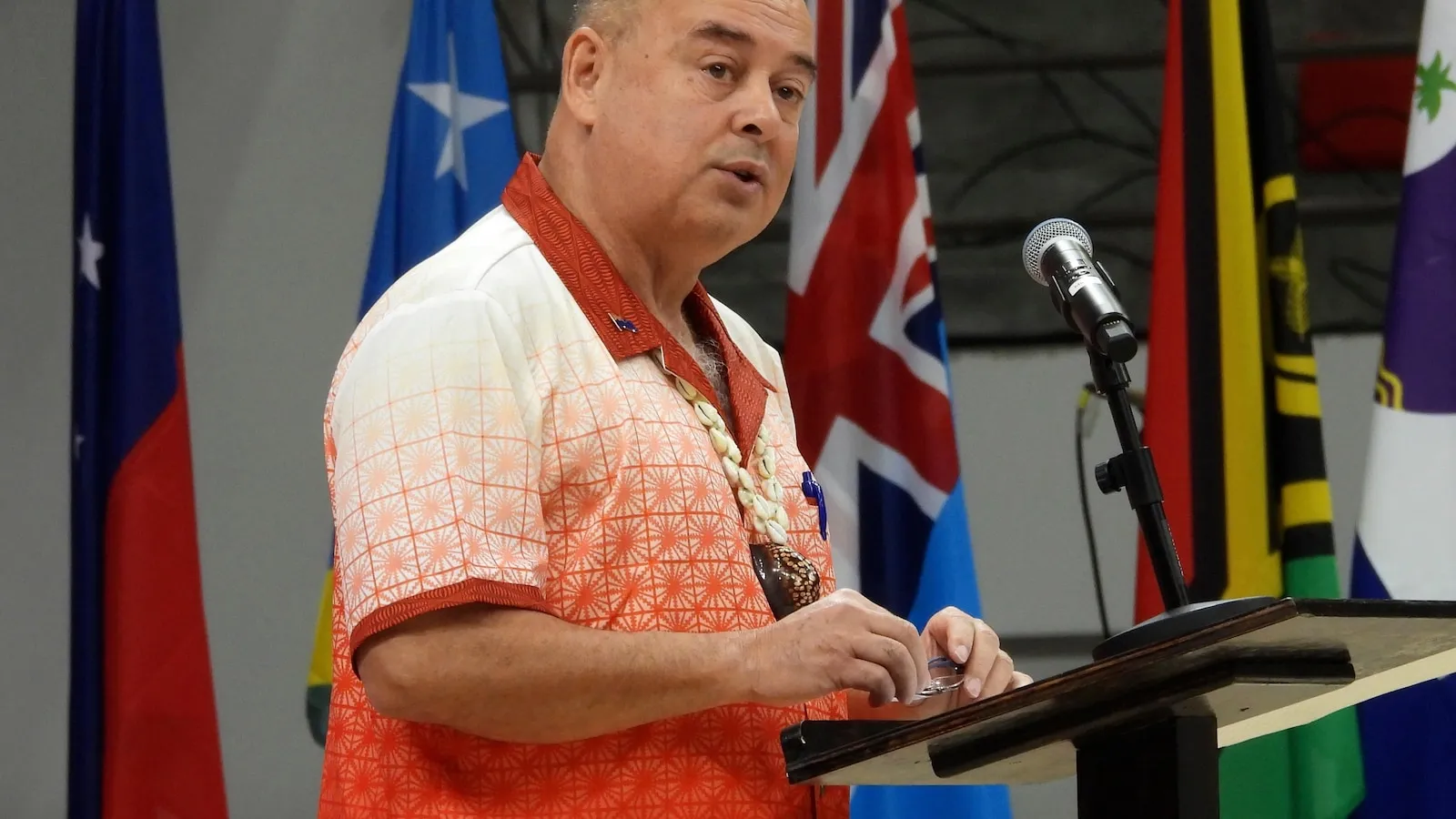
New Zealand and the Cook Islands have signed a new defence and security declaration, closing a tense chapter in a relationship that had been under strain since the Cook Islands deepened its ties with China last year. The agreement, signed on Thursday in Rarotonga by New Zealand Foreign Minister Winston Peters and Cook Islands Prime Minister Mark Brown, restores a clearer framework to a constitutional relationship that both sides now say had been operating with too much ambiguity on security questions.
The immediate significance is practical as well as political. Wellington said it will resume roughly NZ$29.8 million in annual funding support after having frozen millions in aid during the dispute, while the declaration states that New Zealand is the Cook Islands’ “partner of choice” on defence and security matters. For a small Pacific state of about 15,000 to 17,000 people whose citizens also hold New Zealand citizenship, that language is not symbolic filler but a restatement of who gets the first call when security risks or outside pressure start to rise.
The row that led to this agreement began to harden in February 2025, when Mark Brown’s government signed a comprehensive strategic partnership with China covering areas such as deep-sea mining, economic cooperation, infrastructure and regional engagement. New Zealand objected less to the fact of external engagement itself than to the way the deal was handled, saying the Cook Islands had failed to consult properly despite the obligations that come with the countries’ free-association relationship. Brown argued at the time that the China arrangements did not require Wellington’s approval under existing accords, a position that sharpened the clash over where autonomy ends and shared security obligations begin.New Zealand signs defence pact with Cook Islands after quarrel over China dealtheguardian.com·SecondaryAgreement comes after Wellington halted millions in aid to its former colony after Cook Islands formed strategic partnership with Beijing New Zealand and the Cook Islands have signed a defence and security declaration, ending a year-long diplomatic row that erupted after the Cook Islands struck strategic agreements with China. The Cook Islands was a dependent New Zealand colony from 1901-65 but has since operated as a self-governing nation in “free association” with New Zealand.
That is the core issue this week’s declaration tries to settle. Peters said the new text removes earlier ambiguity about the nature of the relationship, especially on defence and security, and gives both governments a common understanding of what consultation requires. In practice, the declaration commits the Cook Islands to early and comprehensive notification on security issues and places New Zealand first in line for requests for support in areas including critical infrastructure, ports and telecommunications, according to ABC’s reporting on the agreement’s effect. That matters because the Pacific is no longer treated by regional governments as a quiet backwater; it is increasingly described as a contested strategic space where telecom links, seabed resources and port access carry wider geopolitical weight.
Supporters of Wellington’s harder line will see the agreement as a corrective after a year in which New Zealand looked reactive and, at moments, unsure how firmly to enforce the understandings built into free association. Peters has made little effort to hide the fact that he believes the old arrangement left too much room for misreading, saying the strategic environment is more complex and contested than at any point since the relationship was formalised in 1965. From that view, insisting on clear consultation rules is not neo-colonial nostalgia but basic risk management in a region where China has offered aid, loans and political attention to island states looking for leverage against their traditional partners.New Zealand signs defence pact with Cook Islands after quarrel over China dealtheguardian.com·SecondaryAgreement comes after Wellington halted millions in aid to its former colony after Cook Islands formed strategic partnership with Beijing New Zealand and the Cook Islands have signed a defence and security declaration, ending a year-long diplomatic row that erupted after the Cook Islands struck strategic agreements with China. The Cook Islands was a dependent New Zealand colony from 1901-65 but has since operated as a self-governing nation in “free association” with New Zealand.
But Brown has not accepted the idea that the Cook Islands should be treated simply as an adjunct to New Zealand policy. He described the restored pact with Wellington as a way to move forward and said it addresses past concerns, while also maintaining that the earlier China deal remains intact and is not displaced by the new declaration. That position matters politically inside the Cook Islands and across the Pacific, where many smaller states are trying to show they can deal with Beijing, Canberra, Wellington and Washington on their own terms rather than as clients of one bloc. Even some observers sympathetic to New Zealand’s security concerns will note that heavy-handed pressure can easily strengthen the local argument that traditional partners speak of equality while acting as supervisors. New Zealand and Cook Islands sign a defense pact, easing tensions over a China dealabcnews.com·UnverifiedNew Zealand and Cook Islands have signed a defense and security pact, easing over a year of tension between them WELLINGTON, New Zealand -- New Zealand and Cook Islands signed a defense and security pact Thursday, easing more than a year of tension between the Pacific nations over Cook Islands’ deepening ties with China.
China, for its part, responded in predictable but still relevant terms. Foreign Ministry spokesperson Mao Ning said Beijing’s relationship with the Cook Islands is not directed at any third party and should not be constrained by interference from outside powers, while repeating the standard line that China and the Cook Islands deal with each other on the basis of mutual respect and common development. That statement does not change the legal force of the New Zealand-Cook Islands declaration, but it does underline the larger contest now shaping Pacific diplomacy: China wants room to deepen practical ties with island states, while Australia and New Zealand want that opening managed in ways that do not erode their own security position.
The bigger story, then, is not merely that one diplomatic quarrel has cooled. It is that the Pacific’s small states are being pushed to define how far strategic diversification can go before it collides with older constitutional, military and financial arrangements. The Cook Islands occupies a particularly sensitive version of that problem because its free-association structure gives New Zealand an unusually direct role in defence and citizenship questions. Brown’s flirtation last year with the idea of a separate Cook Islands passport, which he later dropped after sharp New Zealand resistance, showed that the disagreement was never only about one China memorandum; it was about political identity as well.New Zealand signs defence pact with Cook Islands after quarrel over China dealtheguardian.com·SecondaryAgreement comes after Wellington halted millions in aid to its former colony after Cook Islands formed strategic partnership with Beijing New Zealand and the Cook Islands have signed a defence and security declaration, ending a year-long diplomatic row that erupted after the Cook Islands struck strategic agreements with China. The Cook Islands was a dependent New Zealand colony from 1901-65 but has since operated as a self-governing nation in “free association” with New Zealand.
There is also a more skeptical reading of the deal that deserves airing. New Zealand can argue that it has simply secured clarity that should have existed all along, but critics could say Wellington used aid leverage to force a smaller partner back into line after being embarrassed by Brown’s independent diplomacy. The aid freeze was not enormous in absolute terms relative to New Zealand’s broader support, according to AP, yet it carried symbolic force because it signaled that constitutional family language still comes with material consequences. In that sense, the declaration may ease tensions while also reminding every Pacific capital that the space for hedging between China and traditional Western partners remains narrower than some leaders had hoped.New Zealand signs defence pact with Cook Islands after quarrel over China dealtheguardian.com·SecondaryAgreement comes after Wellington halted millions in aid to its former colony after Cook Islands formed strategic partnership with Beijing New Zealand and the Cook Islands have signed a defence and security declaration, ending a year-long diplomatic row that erupted after the Cook Islands struck strategic agreements with China. The Cook Islands was a dependent New Zealand colony from 1901-65 but has since operated as a self-governing nation in “free association” with New Zealand.
For now, both governments are presenting the document as a reset rather than a surrender. Peters says it sets a course for the future and gives certainty to both sides, while Brown says it creates a foundation for moving ahead in a more constructive spirit. Those formulations leave room for each leader to claim success at home: New Zealand can say it defended the security architecture of free association, and the Cook Islands can say it preserved its China relationship while stabilising ties with its main security and funding partner. Whether that balance lasts will depend less on Thursday’s ceremony than on the next real test—some future infrastructure, mining or telecom proposal from an outside power that forces both governments to decide how much consultation is enough and how much autonomy is still real.
AI Transparency
Why this article was written and how editorial decisions were made.
Why This Topic
This cluster is a strong publish candidate because it combines geopolitical competition, Pacific regional security, constitutional ambiguity and China’s expanding influence into a single concrete development with immediate consequences. The signing of the declaration is new, materially changes the bilateral relationship by restoring aid and defining New Zealand as the Cook Islands’ preferred security partner, and offers multiple legitimate frames: official reconciliation, strategic containment of China, and a sovereignty dispute within a free-association arrangement.
Source Selection
The cluster has three sufficiently rich, recent and mutually reinforcing signals from The Guardian, ABC/AP and AP. Together they provide the core factual spine needed for a balanced article: timeline of the dispute, exact practical consequences of the new declaration, New Zealand’s official reasoning, Mark Brown’s defense of Cook Islands autonomy, and China’s formal response through Mao Ning. Because the signals overlap but add detail in different places, they support reliable paraphrase without forcing unsupported speculation or off-cluster citations.
Editorial Decisions
Descriptive headline and restrained framing. Piece gives New Zealand, Cook Islands and China positions meaningful space while avoiding moralizing language. Emphasis is on constitutional ambiguity, strategic competition in the Pacific, aid leverage, and the tension between small-state autonomy and inherited security obligations. All numbered citations are limited to the three cluster signals.
Reader Ratings
About the Author
Sources
- 1.abcnews.comUnverified
- 2.theguardian.comSecondary
- 3.apnews.comSecondary
Editorial Reviews
1 approved · 0 rejectedPrevious Draft Feedback (1)
Warnings: • [article_quality] Gate check failed: Service request failed. Status: 502 (Bad Gateway) • [image_relevance] Image relevance check failed: Service request failed. Status: 502 (Bad Gateway)


Discussion (0)
No comments yet.