Antarctic krill collision puts Paul Watson activists and industrial fishing fleet on a legal and ecological collision course
A confrontation between the Bandero and Aker QRILL's Antarctic Sea has escalated a long-running fight over krill fishing near Antarctica, with both sides now framing the clash as a test of maritime law, environmental protection and protest tactics.[1][2]
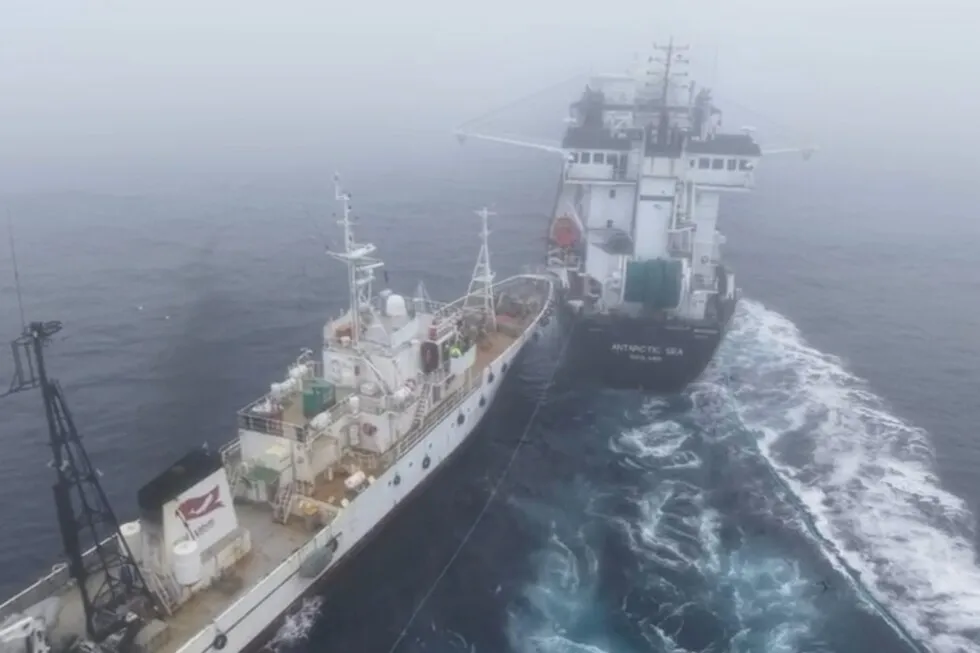
A ship-to-ship collision in Antarctic waters has pushed a niche fisheries dispute into a broader argument about environmental activism, maritime law and who gets to define legitimate protection of one of the planet's most fragile marine zones. On Tuesday, the Bandero, a vessel operated by the Captain Paul Watson Foundation, made contact with the Antarctic Sea, a Norwegian krill trawler run by Aker QRILL, during a confrontation near the Antarctic Peninsula. The impact caused damage that Aker described as minor but potentially far more serious because it occurred near the stern area where a diesel tank sits.Activist vessel collides with krill trawler in Antarctic confrontationapnews.com·SecondaryCORRECTS DATE TO TUESDAY, MARCH 31, NOT APRIL 1 - In this image from video provided by the Aker Qrill Company, an activist ship, operated by the Captain Paul Watson Foundation, collides with the Antarctic Sea, a vessel operated by Aker Qrill Company, in Antarctic waters, on Tuesday, March 31, 2026.
The basic facts are not in much dispute, even if the meaning of the incident is. Video and still images cited by both reports show the Bandero approaching the stern quarter of the fishing vessel and striking the port side at a shallow angle. No crew members were reported injured, and the trawler remained operational, but Aker said the crew was shaken and that the incident came dangerously close to causing an environmental spill in waters known for dense wildlife and difficult rescue conditions. The confrontation took place in a remote part of the Southern Ocean where logistics, weather and distance make even limited maritime accidents more consequential than they might appear on paper.Activist vessel collides with krill trawler in Antarctic confrontationapnews.com·SecondaryCORRECTS DATE TO TUESDAY, MARCH 31, NOT APRIL 1 - In this image from video provided by the Aker Qrill Company, an activist ship, operated by the Captain Paul Watson Foundation, collides with the Antarctic Sea, a vessel operated by Aker Qrill Company, in Antarctic waters, on Tuesday, March 31, 2026.
Aker has cast the incident in the hardest possible terms. Company executives said the Bandero's actions were deliberate, ideological and incompatible with the legal framework governing Antarctica and international shipping lanes. Aker said it had alerted authorities in Argentina and Chile and intended to pursue legal remedies after what it sees as a targeted attempt to interfere with lawful fishing activity.Activist vessel collides with krill trawler in Antarctic confrontationapnews.com·SecondaryCORRECTS DATE TO TUESDAY, MARCH 31, NOT APRIL 1 - In this image from video provided by the Aker Qrill Company, an activist ship, operated by the Captain Paul Watson Foundation, collides with the Antarctic Sea, a vessel operated by Aker Qrill Company, in Antarctic waters, on Tuesday, March 31, 2026. Reporting outside the core cluster also indicated that the company described the hull damage as minor, while stressing that the bigger issue was the risk created by a strike near fuel storage and by activist interference with industrial equipment in harsh waters far from immediate assistance. Reuters separately reported that nearly 60 people were aboard the trawler and that no one was hurt, reinforcing Aker's argument that the episode was more than symbolic theater even if it stopped short of catastrophe.
The foundation aligned with Paul Watson has presented the same encounter in almost the opposite way. Its initial statements described the contact as accidental and emphasized a commitment to non-violent direct action in defense of marine ecosystems. Later messaging tied the episode more openly to deliberate disruption of krill harvesting, presenting the maneuver as part of a campaign called Operation Krill Wars that began after the Bandero departed Australia in February under the leadership of French activist Lamya Essemlali. The group said it had spent hours attempting to interfere with the work of two Aker vessels and had deployed improvised metal devices intended to damage or disable fishing nets. In the foundation's framing, the confrontation was justified because krill sit at the base of the Antarctic food chain and harvesting them in whale feeding grounds threatens a much larger ecological system.Activist vessel collides with krill trawler in Antarctic confrontationapnews.com·SecondaryCORRECTS DATE TO TUESDAY, MARCH 31, NOT APRIL 1 - In this image from video provided by the Aker Qrill Company, an activist ship, operated by the Captain Paul Watson Foundation, collides with the Antarctic Sea, a vessel operated by Aker Qrill Company, in Antarctic waters, on Tuesday, March 31, 2026.
That ecological argument is not invented for this clash. Both source reports describe Antarctic krill as a critical food source for whales, seals, penguins and seabirds, while also noting that krill have become commercially important for omega-3 supplements, aquaculture feed and related products. The dispute therefore sits at the intersection of conservation and commodity demand. Environmental campaigners argue that industrial harvesters are taking biomass out of precisely the areas where predators need it most. Aker and the commercial side argue that the fishery is regulated, legal and small relative to overall krill abundance, and that activists blur the distinction between opposition to a policy and permission to physically endanger crews at sea.Activist vessel collides with krill trawler in Antarctic confrontationapnews.com·SecondaryCORRECTS DATE TO TUESDAY, MARCH 31, NOT APRIL 1 - In this image from video provided by the Aker Qrill Company, an activist ship, operated by the Captain Paul Watson Foundation, collides with the Antarctic Sea, a vessel operated by Aker Qrill Company, in Antarctic waters, on Tuesday, March 31, 2026. Reuters reporting added another layer by noting the foundation's claim that Aker accounts for more than 60 percent of the total catch quota, while Aker countered that only a small fraction of overall krill stocks is harvested. That gap matters because it shows the fight is not simply about one collision, but about whose baseline description of the fishery the public accepts.
There is also a governance failure hanging over the episode. The Commission for the Conservation of Antarctic Marine Living Resources, which manages the fishery and includes 27 nations plus the European Union, has struggled in recent years to agree on a revised krill framework that would pair higher catch allowances with stronger environmental protections and a very large reserve near the Antarctic Peninsula. When institutions move slowly, activists often argue that direct intervention becomes necessary to force attention on ecological risk. Companies, states and many maritime lawyers tend to answer that institutional frustration does not suspend collision-avoidance rules, especially in waters where even a small breach can turn into a fuel leak or rescue emergency.Activist vessel collides with krill trawler in Antarctic confrontationapnews.com·SecondaryCORRECTS DATE TO TUESDAY, MARCH 31, NOT APRIL 1 - In this image from video provided by the Aker Qrill Company, an activist ship, operated by the Captain Paul Watson Foundation, collides with the Antarctic Sea, a vessel operated by Aker Qrill Company, in Antarctic waters, on Tuesday, March 31, 2026. That tension is now central to the story: the krill debate is no longer only a policy argument in conference rooms, but an operational conflict on the water.
Paul Watson's own history helps explain why the episode immediately drew strong reactions. The founder of Sea Shepherd built his reputation over decades through confrontational tactics against whaling and other marine industries, including ramming incidents that made him a hero to some environmental supporters and a reckless militant to critics. The current foundation bearing his name emerged after splits within the broader Sea Shepherd world, with some affiliates backing a return to harder-edged intervention and others favoring patrols, policy advocacy and cooperation with law enforcement. That split is politically relevant because it shows the criticism of the Bandero operation does not come only from fishing interests or governments. Even within marine activism, there is a real disagreement over whether physically obstructing vessels is disciplined protest or an invitation to a deadly miscalculation.Activist vessel collides with krill trawler in Antarctic confrontationapnews.com·SecondaryCORRECTS DATE TO TUESDAY, MARCH 31, NOT APRIL 1 - In this image from video provided by the Aker Qrill Company, an activist ship, operated by the Captain Paul Watson Foundation, collides with the Antarctic Sea, a vessel operated by Aker Qrill Company, in Antarctic waters, on Tuesday, March 31, 2026.
A conservative reading of the incident would begin with order, accountability and the dangers of self-authorized enforcement at sea. Commercial fishing in Antarctica is controversial, but it is still governed through an international regime rather than by whichever private group feels morally certain enough to intervene first. Once activists decide they can make deliberate contact with working vessels, the line between protest and coercion narrows quickly, particularly when crews from multiple countries are operating far from shore. That does not make Aker's environmental claims beyond question, nor does it settle the argument over whether krill harvest levels are too high.Activist vessel collides with krill trawler in Antarctic confrontationapnews.com·SecondaryCORRECTS DATE TO TUESDAY, MARCH 31, NOT APRIL 1 - In this image from video provided by the Aker Qrill Company, an activist ship, operated by the Captain Paul Watson Foundation, collides with the Antarctic Sea, a vessel operated by Aker Qrill Company, in Antarctic waters, on Tuesday, March 31, 2026. It does mean governments and regulators will come under pressure to show they still control events in Antarctic waters rather than outsourcing practical authority to whichever side is boldest.
At the same time, the foundation's support base is likely to argue that polite objections have not slowed the expansion of krill extraction and that confrontational tactics are a predictable consequence of regulatory drift. Last season's record krill catch and the early closure of fishing activity for the first time gave campaigners a concrete example to cite when warning that extraction is growing faster than the protection architecture around it.Activist vessel collides with krill trawler in Antarctic confrontationapnews.com·SecondaryCORRECTS DATE TO TUESDAY, MARCH 31, NOT APRIL 1 - In this image from video provided by the Aker Qrill Company, an activist ship, operated by the Captain Paul Watson Foundation, collides with the Antarctic Sea, a vessel operated by Aker Qrill Company, in Antarctic waters, on Tuesday, March 31, 2026. If policymakers want to reduce the appeal of direct-action theatrics, they may need to demonstrate more clearly how catch limits are set, how feeding grounds are protected and how violations are punished.Activist vessel collides with krill trawler in Antarctic confrontationapnews.com·SecondaryCORRECTS DATE TO TUESDAY, MARCH 31, NOT APRIL 1 - In this image from video provided by the Aker Qrill Company, an activist ship, operated by the Captain Paul Watson Foundation, collides with the Antarctic Sea, a vessel operated by Aker Qrill Company, in Antarctic waters, on Tuesday, March 31, 2026. Otherwise, every future confrontation can be framed by activists as proof that the institutions governing Antarctica are too weak, too compromised or too slow.
The immediate next steps are likely to be legal rather than cinematic. Aker says it has notified authorities and is considering all options, while both cluster reports note that any criminal or maritime investigation would likely begin when the Bandero next reaches port under the rules that govern overtaking vessels and navigational responsibility. That process could clarify whether the case is treated as negligent seamanship, intentional interference, unlawful protest or some combination of those theories. It could also test whether states with standing in Antarctic enforcement are willing to do more than issue statements once activist campaigns move from advocacy into direct contact with commercial operators.Activist vessel collides with krill trawler in Antarctic confrontationapnews.com·SecondaryCORRECTS DATE TO TUESDAY, MARCH 31, NOT APRIL 1 - In this image from video provided by the Aker Qrill Company, an activist ship, operated by the Captain Paul Watson Foundation, collides with the Antarctic Sea, a vessel operated by Aker Qrill Company, in Antarctic waters, on Tuesday, March 31, 2026.
For now, the collision has done what both sides, in different ways, seem to want: it has forced attention onto krill. But it has also exposed the central contradiction of modern eco-activism in remote strategic spaces. Movements that say they are acting to prevent environmental harm can lose public sympathy quickly when the method itself appears to raise the risk of a spill, an injury or an uncontrolled escalation. Companies that insist they are operating lawfully can still face deeper scrutiny if they cannot persuade the public that the regulatory system overseeing Antarctic harvests is adequate and trusted. The result is a story that is not just about a scrape between two hulls, but about whether environmental legitimacy in Antarctica will be decided by treaty bodies, courts, markets, or by escalating confrontations on the water.Activist vessel collides with krill trawler in Antarctic confrontationapnews.com·SecondaryCORRECTS DATE TO TUESDAY, MARCH 31, NOT APRIL 1 - In this image from video provided by the Aker Qrill Company, an activist ship, operated by the Captain Paul Watson Foundation, collides with the Antarctic Sea, a vessel operated by Aker Qrill Company, in Antarctic waters, on Tuesday, March 31, 2026.
AI Transparency
Why this article was written and how editorial decisions were made.
Why This Topic
This cluster is the strongest current newsroom candidate because it combines immediate drama, visual evidence, environmental stakes, shipping-law implications and a recognizable activist figure.[1][2] It is not a duplicate of the most recent CT coverage and it naturally supports balanced treatment: corporate safety concerns, activist ecological objections, and a broader governance story about Antarctic krill rules. That mix makes it more newsworthy than a thin earnings or domestic-policy item at this hour.
Source Selection
The cluster sources are sufficient and internally balanced for a first publish. AP provides the core reported chronology, operational detail, regulatory context and the most reliable base facts.[1] CBS carries the activist foundation's framing, the accidental-versus-deliberate messaging evolution and overlapping event detail that helps corroborate key points without forcing unsupported additions.[2] External Reuters research was used only for situational awareness and image confirmation, not for numbered citations, so the draft stays inside cluster-supported evidence boundaries.
Editorial Decisions
Neutral, descriptive framing. Gives equal weight to Aker's safety and legal claims and to the foundation's ecological case. Avoids loaded moral adjectives, avoids direct quotes to reduce evidence-quality risk, and keeps the emphasis on maritime law, krill governance and the legitimacy dispute around direct action.
Reader Ratings
About the Author
Sources
- 1.apnews.comSecondary
- 2.cbsnews.comSecondary
Editorial Reviews
1 approved · 0 rejectedPrevious Draft Feedback (1)
Warnings: • [article_quality] Gate check failed: Service request failed. Status: 502 (Bad Gateway) • [image_relevance] Image relevance check failed: Service request failed. Status: 502 (Bad Gateway)


Discussion (0)
No comments yet.