Trump rejects latest Iran proposal as Hormuz standoff deepens and oil pressure builds
Efforts to halt the U.S.-Israeli war with Iran stalled after President Donald Trump said Tehran wanted the Strait of Hormuz reopened while its leadership tried to stabilise itself, underscoring how ceasefire terms, nuclear sequencing and shipping access have become one intertwined negotiation.[1][2]
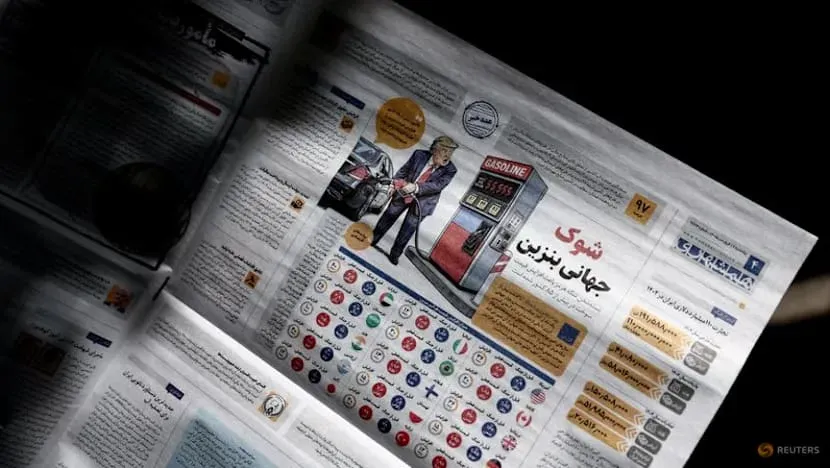
The latest attempt to slow the U.S.-Israeli war with Iran has broken against the same hard questions that have shadowed the conflict for weeks: who moves first, whether nuclear restraints come before or after a ceasefire, and who controls shipping through the Strait of Hormuz once the guns fall quieter. On Tuesday, President Donald Trump signaled that Washington had little interest in the newest Iranian formula, saying Tehran had told the United States it was in a 'state of collapse' and wanted the Hormuz chokepoint reopened while it worked through its leadership situation. That public line, combined with reporting from France 24 citing Reuters that Trump was unhappy with the latest proposal, suggested the two sides remain far apart despite active mediation and heavy economic pressure.Trump, unhappy with latest peace proposal, says Iran 'figuring out its leadership'channelnewsasia.com·SecondaryIran wants to set aside discussion of its nuclear programme until the conflict is concluded, but Trump wants nuclear issues dealt with from the outset. An Iranian newspaper with a cartoon depicting US President Donald Trump, amid the US-Israeli conflict with Iran, in Tehran, Iran, on Apr 5, 2026.
Iran's latest offer, as described by Channel NewsAsia and attributed to Reuters reporting and officials briefed on the contacts, would postpone the nuclear dispute until after the war ended and after shipping disputes were dealt with. In practical terms, Tehran appears to want a phased bargain: stop the fighting, secure guarantees that the United States cannot simply resume it, settle maritime access and the future of Hormuz, and only then return to the longstanding fight over enrichment and the broader nuclear file. Trump and his advisers, by contrast, want nuclear issues handled at the outset, not parked until later.Trump, unhappy with latest peace proposal, says Iran 'figuring out its leadership'channelnewsasia.com·SecondaryAn Iranian newspaper with a cartoon depicting US President Donald Trump, amid the US-Israeli conflict with Iran, in Tehran, Iran, on Apr 5, 2026. (Photo: Majid Asgaripour/WANA (West Asia News Agency) via REUTERS) DUBAI: Efforts to end the Iran conflict were at an impasse on Tuesday (Apr 28) with US President Donald Trump unhappy with the latest proposal from Tehran, which he said had informed the US it was in a "state of collapse" and was figuring out its leadership situation. That difference is not procedural trivia. It goes to the core question of whether Iran gets immediate strategic relief before addressing the issue Washington most wants to constrain.Trump, unhappy with latest peace proposal, says Iran 'figuring out its leadership'channelnewsasia.com·SecondaryAn Iranian newspaper with a cartoon depicting US President Donald Trump, amid the US-Israeli conflict with Iran, in Tehran, Iran, on Apr 5, 2026. (Photo: Majid Asgaripour/WANA (West Asia News Agency) via REUTERS) DUBAI: Efforts to end the Iran conflict were at an impasse on Tuesday (Apr 28) with US President Donald Trump unhappy with the latest proposal from Tehran, which he said had informed the US it was in a "state of collapse" and was figuring out its leadership situation.
The gap matters because Hormuz is not a secondary theater. France 24's live coverage, also drawing on Reuters, described the conflict as having disrupted energy supplies, fueled inflation and killed thousands. Channel NewsAsia reported that before the war between the U.S.-Israeli camp and Iran, roughly 125 to 140 ships moved through the strait each day, while only seven had done so in the previous day according to Kpler tracking data and SynMax satellite analysis, with none carrying oil for the global market.Trump, unhappy with latest peace proposal, says Iran 'figuring out its leadership'channelnewsasia.com·SecondaryAn Iranian newspaper with a cartoon depicting US President Donald Trump, amid the US-Israeli conflict with Iran, in Tehran, Iran, on Apr 5, 2026. (Photo: Majid Asgaripour/WANA (West Asia News Agency) via REUTERS) DUBAI: Efforts to end the Iran conflict were at an impasse on Tuesday (Apr 28) with US President Donald Trump unhappy with the latest proposal from Tehran, which he said had informed the US it was in a "state of collapse" and was figuring out its leadership situation. In that context, Tehran's proposal to separate shipping and ceasefire mechanics from the nuclear dispute looks less like a diplomatic technicality than an attempt to trade urgent market relief for slower concessions on the strategic issue Washington cares about most.Trump, unhappy with latest peace proposal, says Iran 'figuring out its leadership'channelnewsasia.com·SecondaryAn Iranian newspaper with a cartoon depicting US President Donald Trump, amid the US-Israeli conflict with Iran, in Tehran, Iran, on Apr 5, 2026. (Photo: Majid Asgaripour/WANA (West Asia News Agency) via REUTERS) DUBAI: Efforts to end the Iran conflict were at an impasse on Tuesday (Apr 28) with US President Donald Trump unhappy with the latest proposal from Tehran, which he said had informed the US it was in a "state of collapse" and was figuring out its leadership situation.
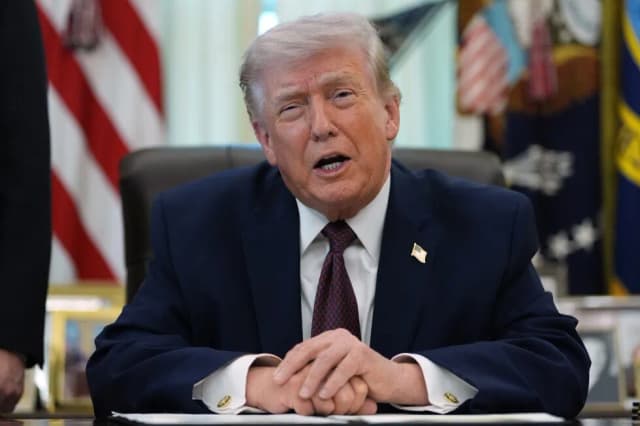
Trump's own public case reflects that hierarchy. According to Channel NewsAsia, he said Iran wanted the United States to 'Open the Hormuz Strait' as soon as possible while it tried to work out its leadership, and a U.S. official said he did not accept a framework that deferred nuclear questions until later. The White House position, at least as reflected in those accounts, is that Tehran should not be allowed to convert wartime disruption into leverage for a staged negotiation that postpones the hardest issue. From a conservative strategic viewpoint, that argument has obvious force: once energy flows resume and immediate economic pressure eases, Washington's leverage could weaken markedly.Trump, unhappy with latest peace proposal, says Iran 'figuring out its leadership'channelnewsasia.com·SecondaryAn Iranian newspaper with a cartoon depicting US President Donald Trump, amid the US-Israeli conflict with Iran, in Tehran, Iran, on Apr 5, 2026. (Photo: Majid Asgaripour/WANA (West Asia News Agency) via REUTERS) DUBAI: Efforts to end the Iran conflict were at an impasse on Tuesday (Apr 28) with US President Donald Trump unhappy with the latest proposal from Tehran, which he said had informed the US it was in a "state of collapse" and was figuring out its leadership situation. Supporters of Trump's tougher sequencing can credibly argue that Iran is asking for front-loaded relief while offering only back-loaded commitments.Trump, unhappy with latest peace proposal, says Iran 'figuring out its leadership'channelnewsasia.com·SecondaryAn Iranian newspaper with a cartoon depicting US President Donald Trump, amid the US-Israeli conflict with Iran, in Tehran, Iran, on Apr 5, 2026. (Photo: Majid Asgaripour/WANA (West Asia News Agency) via REUTERS) DUBAI: Efforts to end the Iran conflict were at an impasse on Tuesday (Apr 28) with US President Donald Trump unhappy with the latest proposal from Tehran, which he said had informed the US it was in a "state of collapse" and was figuring out its leadership situation.
But there is a serious counterargument, and it is not confined to Tehran. A phased approach can also be read as the only realistic way to unwind a conflict that now mixes battlefield escalation, succession uncertainty, maritime disruption and domestic political pressure in multiple capitals. Channel NewsAsia reported that several senior Iranian political and military figures have been killed, that Ayatollah Ali Khamenei was killed on the first day of the war, and that his wounded son Mojtaba was elevated as supreme leader, shifting more weight toward hard-line Islamic Revolutionary Guard Corps commanders. If that picture is broadly correct, then insisting on a maximal settlement before de-escalation could lengthen the conflict precisely when decision-making inside Iran is least coherent. Even officials skeptical of Tehran's intentions may conclude that an imperfect first-stage deal is safer than a prolonged oil shock and a wider regional spillover.Trump, unhappy with latest peace proposal, says Iran 'figuring out its leadership'channelnewsasia.com·SecondaryIran wants to set aside discussion of its nuclear programme until the conflict is concluded, but Trump wants nuclear issues dealt with from the outset. An Iranian newspaper with a cartoon depicting US President Donald Trump, amid the US-Israeli conflict with Iran, in Tehran, Iran, on Apr 5, 2026.
That wider spillover is already visible. France 24 reported that oil prices climbed back above $110 per barrel amid the lack of progress on reopening Hormuz, with Brent for June delivery at $111.26 and U.S. crude trading near $100. Channel NewsAsia separately reported Brent at around $111.26 and said the World Bank expected energy prices to surge 24% in 2026 to the highest level since Russia's full-scale invasion of Ukraine if the sharpest disruptions ended in May. Those numbers matter politically because they connect a distant war to household fuel bills, inflation expectations and central-bank dilemmas across the West. That is why British officials, Italian Prime Minister Giorgia Meloni and others cited in the reporting are already framing the conflict as an inflation and growth problem, not just a military confrontation.Trump, unhappy with latest peace proposal, says Iran 'figuring out its leadership'channelnewsasia.com·SecondaryIran wants to set aside discussion of its nuclear programme until the conflict is concluded, but Trump wants nuclear issues dealt with from the outset. An Iranian newspaper with a cartoon depicting US President Donald Trump, amid the US-Israeli conflict with Iran, in Tehran, Iran, on Apr 5, 2026.
The official positions are becoming clearer even as a settlement remains elusive. Britain, according to France 24, is considering targeted interventions rather than blanket support as it tries to shield the economy from the war's effects without reigniting inflation. Channel NewsAsia reported that the United States also imposed sanctions on 35 entities and individuals tied to what it described as Iran's shadow banking system. Tehran, for its part, has said it is routing trade through northern, eastern and western corridors that do not rely on Gulf ports, an acknowledgement that the blockade and shipping crisis are biting but not total. None of that sounds like a side preparing for a clean diplomatic climbdown. It sounds like each party is still trying to improve its bargaining position while publicly talking about peace.Trump, unhappy with latest peace proposal, says Iran 'figuring out its leadership'channelnewsasia.com·SecondaryIran wants to set aside discussion of its nuclear programme until the conflict is concluded, but Trump wants nuclear issues dealt with from the outset. An Iranian newspaper with a cartoon depicting US President Donald Trump, amid the US-Israeli conflict with Iran, in Tehran, Iran, on Apr 5, 2026.
There is also a domestic political layer in Washington that cannot be ignored. Channel NewsAsia said Trump's approval rating fell to 34% in a Reuters/Ipsos poll, down from 36% in the prior survey, with only 22% approving of his handling of the cost of living. A president facing soft numbers on inflation has reasons to want the energy shock contained, but he also has reasons not to look as if he accepted a weak bargain from a battered adversary. That tension helps explain the administration's posture. A softer ceasefire-first formula might calm markets, yet it could also invite criticism from hawks who believe Tehran only came this far because pressure finally worked. A harder line may preserve deterrence, but it raises the risk that market pain, allied unease and war fatigue deepen before any diplomatic breakthrough arrives.Trump, unhappy with latest peace proposal, says Iran 'figuring out its leadership'channelnewsasia.com·SecondaryIran wants to set aside discussion of its nuclear programme until the conflict is concluded, but Trump wants nuclear issues dealt with from the outset. An Iranian newspaper with a cartoon depicting US President Donald Trump, amid the US-Israeli conflict with Iran, in Tehran, Iran, on Apr 5, 2026.
For now, the conflict is stuck between those two logics. One says that sequencing matters because leverage, once surrendered, is hard to recover. The other says that insisting on total clarity before de-escalation is a luxury rarely available in real wars, especially when shipping routes, energy prices and succession politics are all moving at once. The most likely near-term outcome is not a clean peace or an immediate collapse, but a grinding negotiation in which every tanker movement, sanctions package and public remark from Washington or Tehran gets treated as a test of resolve. Until that changes, the Strait of Hormuz will remain more than a waterway. It will be the pressure gauge for whether this war is edging toward settlement or preparing for another escalation.Trump, unhappy with latest peace proposal, says Iran 'figuring out its leadership'channelnewsasia.com·SecondaryIran wants to set aside discussion of its nuclear programme until the conflict is concluded, but Trump wants nuclear issues dealt with from the outset. An Iranian newspaper with a cartoon depicting US President Donald Trump, amid the US-Israeli conflict with Iran, in Tehran, Iran, on Apr 5, 2026.
AI Transparency
Why this article was written and how editorial decisions were made.
Why This Topic
This story was selected because it combines hard geopolitics with immediate market and household consequences. The cluster links stalled war-termination diplomacy, the Strait of Hormuz, oil-price pressure, sanctions and leadership uncertainty inside Iran. Even though other items on the board had similar or slightly higher raw scores, this one offered a stronger claim to broad public importance and a more defensible path to a publishable article with enough supporting detail. It is also sufficiently distinct from the most recent CT Editorial Board publications, avoiding duplication while still addressing the dominant international story line.
Source Selection
The article relies on the two meaningful cluster sources because both contain overlapping core facts on the failed peace proposal and enough surrounding detail to support balanced framing. France 24 supplies the broader live-war context, energy-market effects and official reactions in Europe. Channel NewsAsia provides the clearest explanation of the proposal's sequencing, Trump's response, domestic U.S. political pressure and specific shipping figures for Hormuz. Using the overlap between the two helps avoid overclaiming while still allowing a full narrative. The other cluster artifacts were image derivatives or non-source media and were not treated as reporting sources.
Editorial Decisions
Recover-first pass found no strong CT Editorial Board draft to salvage: only previously rejected or stale partial work, including an old rejected DE sibling and unrelated published pairs. Fresh cluster selected because it had the best combination of score, timeliness, and enough source material to support a full balanced article. Tone kept descriptive and restrained; article gives Trump's sequencing argument substantial weight while also laying out the case for phased de-escalation. All factual claims are tied back to the two cluster sources.
Reader Ratings
About the Author
Sources
- 1.channelnewsasia.comSecondary
- 2.channelnewsasia.comSecondary
- 3.france24.comSecondary
Editorial Reviews
1 approved · 0 rejectedPrevious Draft Feedback (4)
• depth_and_context scored 5/3 minimum: The article excels at providing necessary context, detailing the specific geopolitical importance of the Strait of Hormuz, the nature of the conflict (U.S.-Israeli vs. Iran), and the economic stakes (energy prices, inflation). It moves far beyond merely stating what happened to explain *why* the conflict matters. • narrative_structure scored 4/3 minimum: The structure is highly effective, using the conflicting proposals (Iran's phased deal vs. US's hard line) as a clear central tension. While the lede is strong, the article occasionally loses momentum in the middle sections, making the flow slightly dense, but it maintains a strong, analytical arc toward the conclusion. • perspective_diversity scored 5/3 minimum: The piece masterfully presents multiple, conflicting viewpoints: the US/Trump hardline view, Iran's phased approach, the 'conservative strategic viewpoint' (leverage), the 'pragmatic' view (imperfect deal is safer), and the economic/global perspective (inflation, central banks). This balance is crucial to its journalistic strength. • analytical_value scored 5/3 minimum: The article is highly analytical, consistently interpreting the conflicting proposals and discussing the implications of the geopolitical and economic data (e.g., linking Hormuz disruption to inflation and central bank dilemmas). It doesn't just report; it explains the *stakes* of the disagreement. • filler_and_redundancy scored 5/2 minimum: The writing is extremely dense with information, but every paragraph advances the core argument or introduces a new, necessary layer of context (e.g., domestic politics, specific economic data). There is no discernible padding or repetition; the length is justified by the complexity of the topic. • language_and_clarity scored 5/3 minimum: The language is precise, sophisticated, and highly engaging, using strong verbs and complex sentence structures appropriate for high-level geopolitical analysis. It avoids generic labels, instead focusing on describing the specific policies and strategic positions of the involved parties.
Rejected after 3 review rounds. 2 gate errors: • [image_relevance] Image alt_accuracy scored 2/3 minimum: The alt text claims 'Donald Trump speaks,' but the image shows a baseball cap with text and a background scene, not a clear depiction of Trump speaking. The alt text misrepresents the primary subject matter of the visual. • [image_relevance] Image editorial_quality scored 2/3 minimum: The image is heavily stylized, appears to be a composite or manipulated graphic, and contains large, distracting text overlays ('MAKE AMERICA GREAT AGAIN') that detract from its professional news quality.
1 gate errors: • [image_relevance] Image editorial_quality scored 2/3 minimum: The image is a composite, highly stylized cartoon/mock-up that appears to be designed for satirical or illustrative purposes rather than professional news coverage. Its amateurish, collage-like quality and use of multiple, disparate elements lower its editorial value.
1 gate errors: • [image_relevance] Image editorial_quality scored 2/3 minimum: The image is a composite, highly stylized cartoon/mock-up that appears to be designed for satirical or illustrative purposes rather than professional news coverage. Its amateurish, collage-like quality and use of multiple, disparate elements lower its editorial value.

Discussion (0)
No comments yet.