US-Iran talks end without a deal as oil markets prepare for a longer Persian Gulf disruption
US-Iran negotiations ended without an agreement after 21 hours of talks in Islamabad, leaving oil and LNG markets braced for a longer disruption around the Strait of Hormuz and renewing debate over how insulated the United States really is from global energy shocks.[1][2]
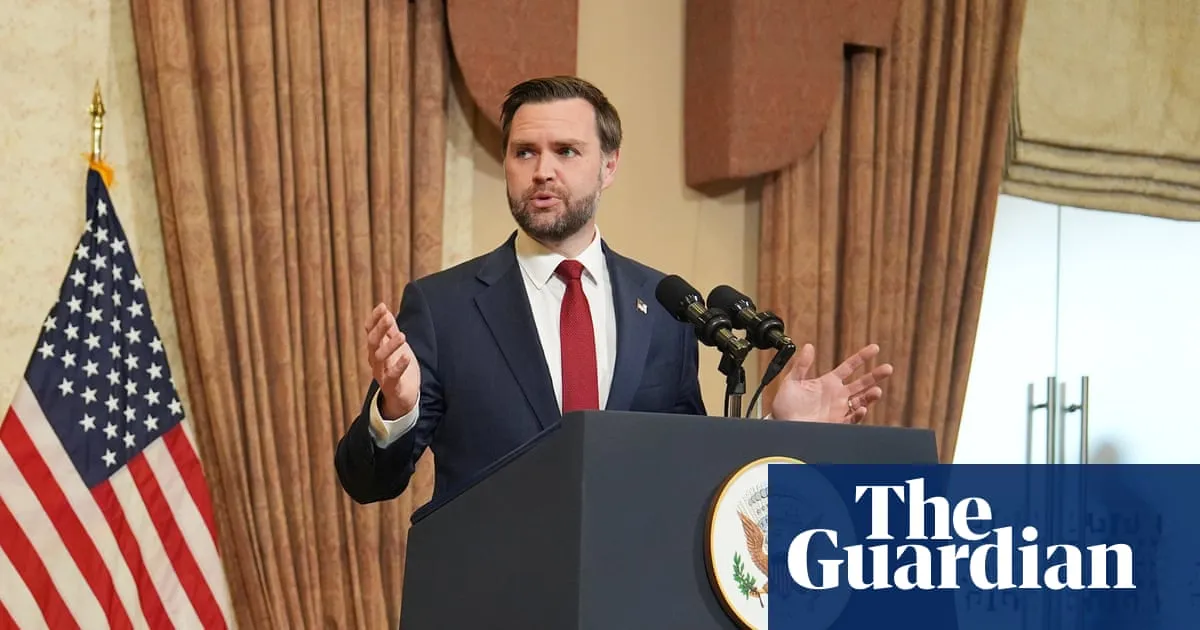
The latest effort to turn the US-Iran ceasefire into a broader settlement ended on Sunday without a deal, and the immediate consequence is not just diplomatic uncertainty but a renewed test of the world’s energy system. After 21 hours of talks in Islamabad, Vice President JD Vance said Washington’s team had been clear about its demands, while Iranian sources answered that the American side had overreached. The result is a familiar but still dangerous middle ground: not a declared collapse of all diplomacy, yet no clear path to reopen normal trade flows through the Persian Gulf either.Collapse of US-Iran talks heightens fears of prolonged energy shocktheguardian.com·SecondaryOil prices and borrowing costs are expected to rise this week as tankers remain stranded in Persian gulf Middle East crisis live – latest updates The failure of the US and Iran to reach a peace deal after marathon negotiations has put markets on alert for further oil and gas price rises.
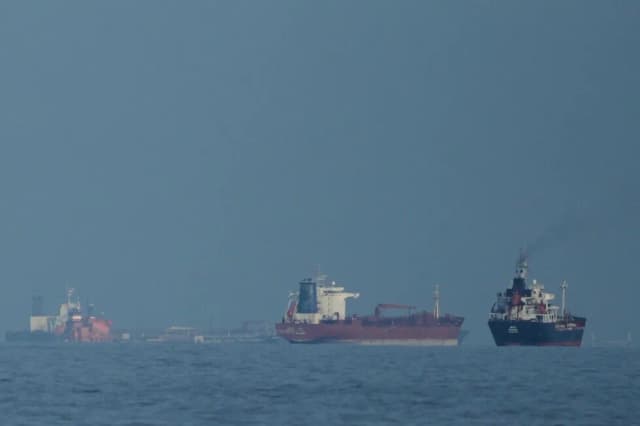
That matters because the market problem is no longer theoretical. One source in the cluster reports that many tankers remained stuck in the Gulf even after a temporary truce framework was announced, while the other says Iran still intends to control passage through the Strait of Hormuz, the chokepoint for roughly a fifth of global oil and liquefied natural gas flows. In other words, traders are now pricing not only the risk of war, but the risk of a half-open corridor, improvised tolls, damaged infrastructure and a drawn-out negotiation in which shipping, insurance and refinery planning all stay under pressure.Collapse of US-Iran talks heightens fears of prolonged energy shocktheguardian.com·SecondaryOil prices and borrowing costs are expected to rise this week as tankers remain stranded in Persian gulf Middle East crisis live – latest updates The failure of the US and Iran to reach a peace deal after marathon negotiations has put markets on alert for further oil and gas price rises.
The official US line remains that Tehran caused the impasse. Vance blamed the breakdown on Iran’s refusal to abandon its nuclear programme and said the American side had drawn firm red lines during the Islamabad talks. Donald Trump, meanwhile, has continued to argue that the United States is in a strong position because it is the world’s largest oil and gas producer and does not need to depend on flows exposed to Iranian pressure. That is the optimistic case from Washington: American production strength, Saudi recovery efforts and a truce that could still be revived are supposed to keep the disruption manageable.Collapse of US-Iran talks heightens fears of prolonged energy shocktheguardian.com·SecondaryOil prices and borrowing costs are expected to rise this week as tankers remain stranded in Persian gulf Middle East crisis live – latest updates The failure of the US and Iran to reach a peace deal after marathon negotiations has put markets on alert for further oil and gas price rises.
But the harder market view inside the same source set is much less relaxed. Even with record US output, the United States still consumes far more petroleum than it can conveniently refine from purely domestic grades, and it remains tied into world pricing. The cluster material says US crude production is running around 13 million barrels a day while petroleum demand is closer to 20 million barrels a day, with imports still important for refinery balance, especially on the Gulf Coast and in California.Collapse of US-Iran talks heightens fears of prolonged energy shocktheguardian.com·SecondaryOil prices and borrowing costs are expected to rise this week as tankers remain stranded in Persian gulf Middle East crisis live – latest updates The failure of the US and Iran to reach a peace deal after marathon negotiations has put markets on alert for further oil and gas price rises. That is why an American president can talk like an energy nationalist while American motorists still watch global shocks move local pump prices.Collapse of US-Iran talks heightens fears of prolonged energy shocktheguardian.com·SecondaryOil prices and borrowing costs are expected to rise this week as tankers remain stranded in Persian gulf Middle East crisis live – latest updates The failure of the US and Iran to reach a peace deal after marathon negotiations has put markets on alert for further oil and gas price rises.
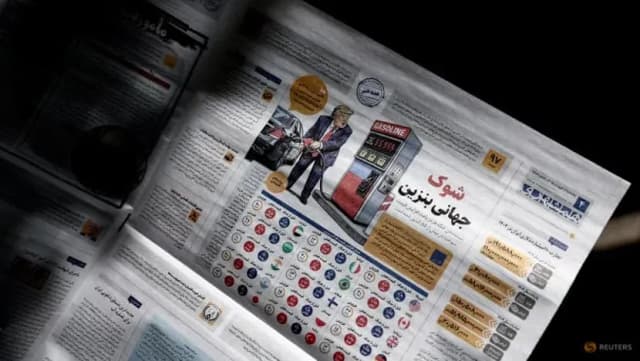
The consumer effect is already visible. According to the Ars Technica-reported Inside Climate News material in the cluster, US drivers have seen gasoline move above $4 a gallon nationally for the first time in four years, with West Coast prices around $5.40 and diesel and jet fuel rising even faster. The same reporting says households paid an additional $8.4 billion for gasoline over the past month compared with pre-war prices, and airlines are warning that fuel costs at current levels would seriously erode profits and cut capacity. Those figures explain why investors are not treating this as a niche Middle East story. It reaches freight bills, food distribution, aviation schedules and central-bank assumptions about inflation.Collapse of US-Iran talks heightens fears of prolonged energy shocktheguardian.com·SecondaryOil prices and borrowing costs are expected to rise this week as tankers remain stranded in Persian gulf Middle East crisis live – latest updates The failure of the US and Iran to reach a peace deal after marathon negotiations has put markets on alert for further oil and gas price rises.
Europe and Asia look even more exposed. One cluster source says gas rationing has already appeared in parts of Asia, while the other says governments and central banks are openly reassessing growth and borrowing-cost assumptions as the conflict’s inflationary effects spread. Asia is especially vulnerable because LNG cargoes from Qatar and the United Arab Emirates are central to regional supply, and the cluster material says some Qatari capacity also faces longer repair timelines after missile damage. Europe’s exposure is somewhat different, but still real: tighter LNG flows, higher shipping costs and dearer oil all arrive in economies that were already hoping for easier monetary conditions rather than another geopolitical price spike.Collapse of US-Iran talks heightens fears of prolonged energy shocktheguardian.com·SecondaryOil prices and borrowing costs are expected to rise this week as tankers remain stranded in Persian gulf Middle East crisis live – latest updates The failure of the US and Iran to reach a peace deal after marathon negotiations has put markets on alert for further oil and gas price rises.
There is also a deeper strategic argument underneath the daily price action. The more hawkish case in Washington is that pressure on Iran is unavoidable and that any agreement which leaves Tehran with leverage over the Strait simply postpones the next crisis. The opposing view, voiced by analysts in the cluster material, is that markets can tolerate confrontation more easily than they can tolerate uncertainty without a roadmap. Mohamed El-Erian’s warning in the Guardian signal is essentially that absent a quick return to talks, markets will open the week by pushing oil prices and borrowing costs higher.Shock from Iran war has Trump's vision for US energy dominance flailingarstechnica.com·SecondaryIn President Donald Trump’s telling, the United States has fuel enough to hover above the chaos that his attack on Iran has triggered in global energy markets. “We’re in great shape for the future,” Trump said in a speech last week, asserting that this nation, as the world’s biggest oil and gas producer, doesn’t rely on the tankers Iran blocked from passage through the Strait of Hormuz for the past month. “We don’t need anything they have. Analysts cited in the Ars material make a similar point in less diplomatic language: a country that trades in global oil cannot opt out of the price mechanism by rhetoric alone.Collapse of US-Iran talks heightens fears of prolonged energy shocktheguardian.com·SecondaryOil prices and borrowing costs are expected to rise this week as tankers remain stranded in Persian gulf Middle East crisis live – latest updates The failure of the US and Iran to reach a peace deal after marathon negotiations has put markets on alert for further oil and gas price rises.
This is where the political framing starts to matter. A mainstream reading would cast the story simply as another reminder that fossil-fuel dependence carries geopolitical costs. That is true as far as it goes, but it is not the only relevant conclusion. A more sober reading is that all sides overstate their room for manoeuvre. Washington cannot fully shield itself from a disrupted global market just by citing record production. Tehran cannot squeeze the strait, float transit charges and expect the world to separate commercial coercion from diplomacy. And US allies cannot assume that a temporary ceasefire equals restoration of normal energy logistics.Collapse of US-Iran talks heightens fears of prolonged energy shocktheguardian.com·SecondaryOil prices and borrowing costs are expected to rise this week as tankers remain stranded in Persian gulf Middle East crisis live – latest updates The failure of the US and Iran to reach a peace deal after marathon negotiations has put markets on alert for further oil and gas price rises.
What happens next depends on whether diplomacy resumes quickly enough to calm shipping and insurance markets before the disruption becomes embedded. The cluster says Saudi Arabia is trying to restore lost pumping capacity and that Brent had fallen back from its wartime peak after the truce announcement, but prices were still far above pre-conflict levels by week’s end. That leaves the near-term outlook awkward rather than catastrophic: no full closure of world energy trade, but no credible return to normal either. If talks restart soon, this episode may settle into a costly warning shot. If they do not, the failed Islamabad round may be remembered as the moment the market stopped treating the Gulf crisis as a brief war scare and started pricing a longer energy shock instead.Collapse of US-Iran talks heightens fears of prolonged energy shocktheguardian.com·SecondaryOil prices and borrowing costs are expected to rise this week as tankers remain stranded in Persian gulf Middle East crisis live – latest updates The failure of the US and Iran to reach a peace deal after marathon negotiations has put markets on alert for further oil and gas price rises.
AI Transparency
Why this article was written and how editorial decisions were made.
Why This Topic
This is the strongest available cluster because it combines geopolitics, energy security, inflation risk and immediate market relevance. The story reaches far beyond foreign-policy process: tankers, LNG flows, oil benchmarks, borrowing costs and consumer prices are all implicated. That gives it broader public consequence than a narrower diplomatic update, and it remains distinct from our recent CT Editorial Board output on UK protest arrests, Benin, Kalshi, Tesla and entertainment coverage.
Source Selection
The cluster only provides two signals, but they are rich and complementary. The Guardian signal gives the freshest procedural account of the Islamabad talks, Vance’s stated position and immediate market expectations. The Ars Technica / Inside Climate News signal gives the deeper structural energy-market context, including US production versus consumption, refinery dependence, gasoline, diesel and LNG impacts. Together they support a balanced article that connects official claims to market realities without relying on unsupported outside facts.
Editorial Decisions
Angle: explain why the failed talks matter less as a diplomatic drama and more as an energy-market and inflation story. Keep tone descriptive and skeptical of all sides’ easy claims. Give Washington’s case, Iran’s response and market analysts’ doubts equal room. Avoid direct quotes except where paraphrased from cluster signals. Maintain clear temporal framing: talks ended Sunday after 21 hours in Islamabad.
Reader Ratings
About the Author
Sources
- 1.theguardian.comSecondary
- 2.arstechnica.comSecondary
Editorial Reviews
1 approved · 0 rejectedPrevious Draft Feedback (1)
• depth_and_context scored 5/3 minimum: The article excels at providing necessary context, detailing the significance of the Strait of Hormuz and explaining the mechanics of global energy pricing beyond just 'war risk.' It successfully frames the immediate diplomatic failure within the larger, ongoing structural vulnerability of global energy supply chains. • narrative_structure scored 4/3 minimum: The structure is strong, moving logically from the immediate event (failed talks) to the market implications, then to regional impacts (US, Europe, Asia), and finally to strategic analysis. It could benefit from a slightly punchier lede that immediately hooks the reader into the *stakes* rather than just the *event*. • perspective_diversity scored 5/3 minimum: The piece masterfully presents multiple, conflicting viewpoints: the official US line, the hawkish strategic view, the market-driven view, and the opposing analyst consensus. This comprehensive triangulation of perspectives is a major strength. • analytical_value scored 5/3 minimum: The analysis is consistently high-level, moving beyond mere reporting to interpret what the market is *actually* pricing (e.g., 'a half-open corridor'). The conclusion synthesizes these competing views into a nuanced assessment of the true risk. • filler_and_redundancy scored 5/2 minimum: The writing is dense with information but highly efficient; every paragraph advances the core argument or provides necessary supporting data. There is no discernible padding or repetition that detracts from the overall narrative momentum. • language_and_clarity scored 4/3 minimum: The prose is highly sophisticated, precise, and engaging, using strong, active language. It avoids overused political labels, instead focusing on describing specific policy positions (e.g., 'energy nationalism' vs. 'global price mechanism'). A minor refinement could be smoothing the transition between the 'Ars Technica' and 'Inside Climate News' citations for smoother flow.


Discussion (0)
No comments yet.