Oil rises above $100 after Washington orders blockade of Iranian ports following failed talks
Oil prices moved back above $100 a barrel late Sunday after the United States said it would begin blockading Iranian ports on Monday, escalating the fallout from failed ceasefire talks and sharpening pressure on shipping through Hormuz.[1][2][3]
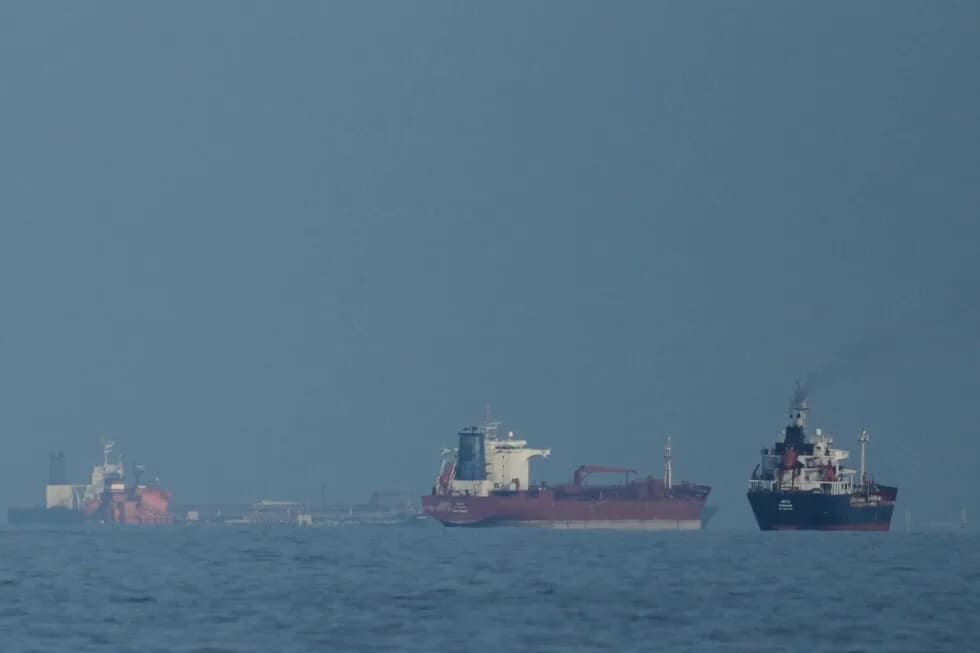
Oil traders headed into Monday with the market back in crisis mode after Washington said it would begin blockading Iranian ports, a move that signaled the weekend diplomacy with Tehran had broken down and that the United States was prepared to impose direct maritime pressure rather than settle for another temporary pause. By late Sunday in New York trading, U.S. crude for May delivery was up about 8% near $104 a barrel while Brent for June was also above $100, reversing the softer tone that had appeared before the latest round of talks.
The immediate trigger was the U.S. military order itself. CNBC reported that U.S. Central Command said the blockade would start Monday at 10 a.m. Eastern time and would cover maritime traffic entering and leaving Iranian ports, while still allowing vessels moving between non-Iranian ports to transit the Strait of Hormuz. AP described the same framework in narrower operational terms: ships tied to non-Iranian ports could still pass, but vessels going into or out of Iranian ports would face interdiction.Oil prices rise after the US says it would block Iranian ports starting Mondayapnews.com·SecondaryOil tankers and cargo ships line up in the Strait of Hormuz as seen from Khor Fakkan, United Arab Emirates, Wednesday, March 11, 2026. (AP Photo/Altaf Qadri,File) NEW YORK (AP) — Oil prices rose in early market trading on Sunday after the U.S. said it would blockade Iranian ports beginning Monday. The price of U.S. crude oil rose 8% to $104.24 a barrel and Brent crude oil, the international standard, rose 7% to $102.29.
That distinction matters because the administration appears to be trying to squeeze Iran's export position without fully sealing the wider waterway for every ship in the Gulf. President Donald Trump had earlier threatened a broader blockade of the Strait of Hormuz after the U.S. and Iran failed to reach agreement in talks held in Pakistan over the weekend. The military wording released later Sunday looked somewhat more tailored than the president's initial social-media language, which is likely to be read by energy traders as an attempt to combine escalation with at least a residual lane for non-Iran traffic.Oil prices surge above $100 as U.S. Navy to blockade Iran's ports after peace talks failcnbc.com·SecondaryCrude oil prices surged on Sunday, as the U.S. Navy prepares to impose a blockade on Iran's ports after peace talks failed over the weekend. U.S. crude oil futures for May delivery jumped nearly 8% to $104.20 per barrel by 6:13 p.m. ET. International benchmark Brent for June delivery advanced 7% to $101.86. U.S. Central Command said Sunday the military will blockade all maritime traffic entering and exiting Iranian ports on Monday at 10 a.m. ET. It added that the U.S.
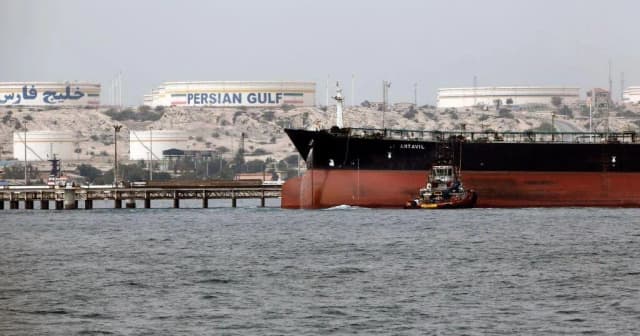
Even so, the market reaction showed how little room there is for miscalculation around Hormuz. AP noted that roughly one fifth of the world's traded oil normally moves through the strait each day and that major Gulf exporters including Saudi Arabia, Iraq, the United Arab Emirates, Kuwait and Iran all depend on the route. CNBC similarly said about 20% of global oil supplies passed through the chokepoint before the war expanded in late February, and it described the resulting disruption as the largest oil supply shock on record for the market. When that much physical flow sits under military threat, traders do not need an actual full closure to reprice risk aggressively.
The blockade order also lands after shipping had only partly recovered from earlier fighting. CNBC reported that tanker traffic through the strait had already plunged because of the threat of Iranian attacks and that only three supertankers made the journey on Saturday, far below the prewar norm of more than 100 vessels a day. AP used somewhat broader tracking data, saying marine trackers had counted more than 40 commercial vessels crossing since the ceasefire began, but it likewise stressed that traffic remained constrained in the days after the truce. Those two snapshots point in the same direction: shipping had stabilized only marginally, and the latest U.S. move risks freezing that recovery before it could become durable.
Washington's public case is that the talks failed because Iran would not give credible assurances on its nuclear program. CNBC reported that Vice President JD Vance, who led the U.S. delegation in Islamabad, said the Iranian side did not provide the affirmative commitment Washington wanted on foregoing a nuclear weapon. From the administration's perspective, the maritime squeeze is therefore being presented as coercive leverage after diplomacy hit a wall rather than as a detached energy policy choice. Supporters of the move will argue that if the White House believes Iran used the ceasefire window without making meaningful concessions, tightening maritime access is a harder-edged but still more controlled tool than immediately resuming a full air campaign.Oil prices surge above $100 as U.S. Navy to blockade Iran's ports after peace talks failcnbc.com·SecondaryCrude oil prices surged on Sunday, as the U.S. Navy prepares to impose a blockade on Iran's ports after peace talks failed over the weekend. U.S. crude oil futures for May delivery jumped nearly 8% to $104.20 per barrel by 6:13 p.m. ET. International benchmark Brent for June delivery advanced 7% to $101.86. U.S. Central Command said Sunday the military will blockade all maritime traffic entering and exiting Iranian ports on Monday at 10 a.m. ET. It added that the U.S.
Iran and its allies, unsurprisingly, are framing the situation very differently. CNBC reported that a senior adviser to Supreme Leader Mojtaba Khamenei said the key to Hormuz remained in Iran's hands, signaling that Tehran does not accept Washington's ability to dictate the terms of commercial passage. The same report said Iran's parliamentary speaker, Mohammad-Bagher Ghalibaf, argued that the United States had failed to win the trust of the Iranian delegation during the latest round.Oil prices surge above $100 as U.S. Navy to blockade Iran's ports after peace talks failcnbc.com·SecondaryCrude oil prices surged on Sunday, as the U.S. Navy prepares to impose a blockade on Iran's ports after peace talks failed over the weekend. U.S. crude oil futures for May delivery jumped nearly 8% to $104.20 per barrel by 6:13 p.m. ET. International benchmark Brent for June delivery advanced 7% to $101.86. U.S. Central Command said Sunday the military will blockade all maritime traffic entering and exiting Iranian ports on Monday at 10 a.m. ET. It added that the U.S. That is the core diplomatic divide now confronting markets: Washington says Iran would not make a serious nuclear commitment, while Tehran says the Americans arrived without enough credibility to secure a deal.Oil prices surge above $100 as U.S. Navy to blockade Iran's ports after peace talks failcnbc.com·SecondaryCrude oil prices surged on Sunday, as the U.S. Navy prepares to impose a blockade on Iran's ports after peace talks failed over the weekend. U.S. crude oil futures for May delivery jumped nearly 8% to $104.20 per barrel by 6:13 p.m. ET. International benchmark Brent for June delivery advanced 7% to $101.86. U.S. Central Command said Sunday the military will blockade all maritime traffic entering and exiting Iranian ports on Monday at 10 a.m. ET. It added that the U.S.
There is also a harder economic critique of the blockade, including from analysts who are not defending Tehran. AP's syndicated report carried two cautionary views from energy specialists. Rystad Energy chief economist Claudio Galimberti said the blockade would tighten the oil market further but could still be a negotiating tactic that eventually ends in a reopening of Hormuz.Oil prices rise after the US says it would block Iranian ports starting Mondayfinance.yahoo.com·SecondaryNEW YORK (AP) — Oil prices rose in early market trading Sunday after the U.S. said it would blockade Iranian ports beginning Monday. The price of U.S. crude oil rose 8% to $104.24 a barrel and Brent crude oil, the international standard, rose 7% to $102.29. Brent crude has swung dramatically during the Iran war, rising from roughly $70 per barrel before the war in late February to more than $119 at times. On Friday, ahead of the peace talks, Brent for June delivery fell 0.8% to $95. Rice University fellow Jim Krane, by contrast, argued that even if the strategy could inflict longer-term pain on Iran, it was a poor short-term negotiating tactic when the market was already under strain and would push costs onto consumers globally.Oil prices rise after the US says it would block Iranian ports starting Mondayfinance.yahoo.com·SecondaryNEW YORK (AP) — Oil prices rose in early market trading Sunday after the U.S. said it would blockade Iranian ports beginning Monday. The price of U.S. crude oil rose 8% to $104.24 a barrel and Brent crude oil, the international standard, rose 7% to $102.29. Brent crude has swung dramatically during the Iran war, rising from roughly $70 per barrel before the war in late February to more than $119 at times. On Friday, ahead of the peace talks, Brent for June delivery fell 0.8% to $95. That criticism is likely to resonate well beyond the anti-war camp, because it treats the measure not mainly as a moral question but as a risk transfer from policymakers to households and industry.
Another uncertainty is whether the maritime step is a pressure tactic with a built-in offramp or the prelude to a wider military escalation. CNBC reported that Trump was considering limited strikes on Iran after the talks collapsed, and it also noted that it remained unclear whether the president would resume airstrikes now that the ceasefire arrangement around safe passage had effectively unraveled. If traders come to believe the blockade is only phase one of a broader campaign, then the oil move seen Sunday may prove to be a reset rather than a spike. If, on the other hand, Washington uses the threat of interdiction to force Tehran back toward terms, the market could retrace some of the move just as quickly.Oil prices surge above $100 as U.S. Navy to blockade Iran's ports after peace talks failcnbc.com·SecondaryCrude oil prices surged on Sunday, as the U.S. Navy prepares to impose a blockade on Iran's ports after peace talks failed over the weekend. U.S. crude oil futures for May delivery jumped nearly 8% to $104.20 per barrel by 6:13 p.m. ET. International benchmark Brent for June delivery advanced 7% to $101.86. U.S. Central Command said Sunday the military will blockade all maritime traffic entering and exiting Iranian ports on Monday at 10 a.m. ET. It added that the U.S.
What happens next will depend less on rhetoric than on enforcement. If the United States actually intercepts ships linked to Iranian ports and insurers respond by repricing voyages across the region, physical supply chains will tighten further even without a formal closure of the whole strait. If enforcement proves selective or symbolic, some of Sunday's surge could unwind. Either way, the weekend ended with a clearer message than it began: the failed talks did not merely preserve an uneasy stalemate, they pushed the conflict back into the energy arteries of the global economy.
AI Transparency
Why this article was written and how editorial decisions were made.
Why This Topic
This is the clearest top-story candidate on the board because it combines immediate market impact, military escalation, and geopolitical consequences in a single development. The blockade announcement moves the Iran story from diplomatic deadlock back into the core infrastructure of global trade, which makes it materially more consequential than a routine negotiation update. It also has obvious follow-through risk for oil, shipping, inflation, and allied policy.
Source Selection
The cluster provides a usable core source set: CNBC supplies the operational U.S. timeline, the White House and CENTCOM framing, and the negotiation breakdown; AP and its syndicated copy provide market pricing, shipping-route context, and outside analyst criticism. Those signals are sufficient for a balanced straight-news piece because they include official U.S. positions, Iranian counter-positioning, and market/economic downside analysis without requiring speculative sourcing.
Editorial Decisions
Lead with the market move but keep the real news peg on the blockade order and the failed talks. Tone is descriptive and skeptical rather than moralizing. Give the administration's coercive-leverage case fair weight, but also foreground the practical criticism that a maritime squeeze can impose global consumer costs without guaranteeing a diplomatic breakthrough. Avoid loaded war language beyond what sources substantiate.
Reader Ratings
About the Author
Sources
- 1.cnbc.comSecondary
- 2.apnews.comSecondary
- 3.finance.yahoo.comSecondary
Editorial Reviews
1 approved · 0 rejectedPrevious Draft Feedback (1)
• depth_and_context scored 4/3 minimum: The article does a good job of establishing the immediate context (the blockade announcement) and providing necessary background on the Strait of Hormuz's importance. To improve, it could add more specific historical context on previous, failed diplomatic efforts or the specific economic mechanisms through which the blockade would impact non-Iranian Gulf states. • narrative_structure scored 4/3 minimum: The structure is strong, following a clear inverted pyramid: what happened (blockade announcement) $ ightarrow$ details of the action $ ightarrow$ market reaction $ ightarrow$ differing viewpoints $ ightarrow$ future outlook. The lede is effective, though the nut graf could be slightly sharpened to explicitly state the central conflict (diplomacy failure leading to economic coercion). • perspective_diversity scored 5/3 minimum: The article excels here by presenting multiple, distinct viewpoints: the US administration's rationale, Iran's counter-narrative, and independent economic critiques from analysts (Rystad, Rice University). This balance is crucial for a complex geopolitical piece. • analytical_value scored 4/3 minimum: The piece moves beyond mere reporting by analyzing the *implications* of the blockade's specific wording (squeezing Iran without sealing the whole strait). It could strengthen this by dedicating a section to modeling the potential economic fallout for a specific, non-aligned third-party nation that relies heavily on the Strait. • filler_and_redundancy scored 5/2 minimum: The article is dense with necessary details and expert quotes, and the repetition of key facts (like the importance of the Strait) serves to reinforce the gravity of the situation rather than padding the length. It reads efficiently. • language_and_clarity scored 4/3 minimum: The writing is highly professional, precise, and engaging, using strong verbs and clear sourcing. To achieve a 5, the author should review the use of acronyms and initialisms (e.g.,


Discussion (0)
No comments yet.