Iran threatens broader strikes after Trump signals a harder phase in the war
Iran said on Thursday it would intensify attacks on the United States and Israel after Donald Trump threatened heavier strikes, deepening a confrontation that is already spilling into regional security, shipping and inflation politics.[1][2][3]
The confrontation between Washington, Tehran and Israel moved into a sharper and more openly escalatory phase on Thursday, with Iran warning of broader attacks after President Donald Trump signaled that the United States was prepared to intensify strikes rather than wind the conflict down. The immediate picture, according to the cluster signals, was not one of de-escalation diplomacy quietly taking shape, but of all sides trying to show resolve in public while military, economic and political costs kept widening across the region.
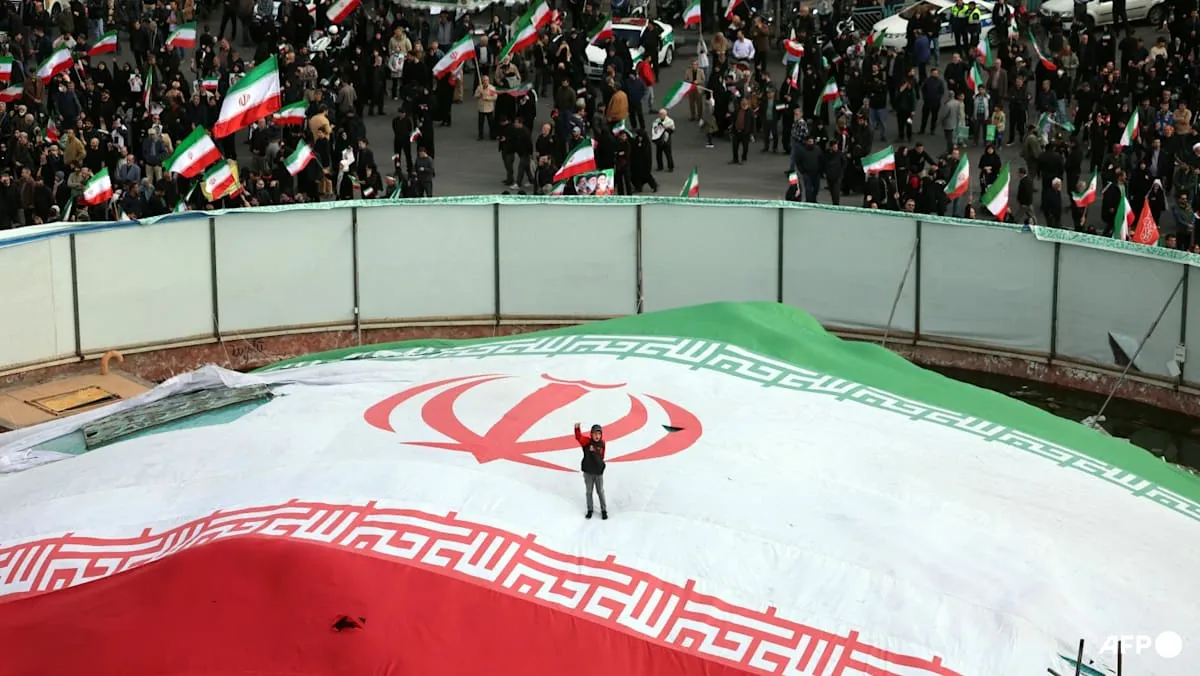
Iranian officials and military-linked voices framed the next step in explicit retaliatory terms. The strongest line carried across the signal set was Tehran’s warning that the United States and Israel should expect broader and more destructive action if pressure continued, language that came after Trump publicly threatened to hit Iran much harder in the coming weeks unless a negotiated outcome emerged on terms acceptable to Washington. That exchange matters because it suggests each side now believes public intimidation still has value, even after more than a month of fighting failed to produce a clean strategic breakthrough.Iran vows 'crushing' attacks on US after Trump threatschannelnewsasia.com·SecondaryIran told the US and Israel to expect "more crushing, broader and more destructive actions" following Trump's threats to intensify attacks on the Islamic Republic. A boy raises his fist while standing on a giant Iranian flag during the funeral of Alireza Tangsiri, commander of the Iranian Revolutionary Guards' navy alongside others killed in US-Israeli strikes on Iran at Enghelab Square in Tehran on Apr 1, 2026.
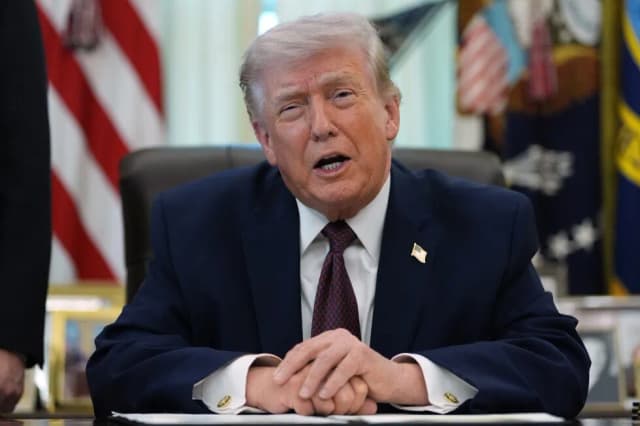
Trump’s own position, as reflected in the cluster reporting, mixed confidence with coercion. He said the United States was close to achieving its objectives, but paired that claim with threats to push Iran back into a far weaker condition if Tehran refused to bend. Supporters of the administration argue that this is precisely how pressure campaigns are supposed to work: apply military force, squeeze the enemy’s room to maneuver, and then force a settlement from a position of dominance. Critics, however, see a familiar problem in that logic, namely that public threats can corner an adversary into escalation rather than compromise, especially when regime survival is at stake.
The battlefield signals point in that harder direction. Iran’s response was described as immediate, with Israeli air defenses activated against missile fire and reports of injuries in the Tel Aviv area. The same reporting also described explosions in Tehran and said additional strikes had hit infrastructure west of the capital, including a bridge in Karaj, with civilian casualties reported after one attack. Even where details remain incomplete, the pattern is clear enough: each exchange is producing another exchange, and neither side appears ready to absorb a blow without replying in a way that is meant to preserve deterrence.Iran vows 'crushing' attacks on US after Trump threatschannelnewsasia.com·SecondaryIran told the US and Israel to expect "more crushing, broader and more destructive actions" following Trump's threats to intensify attacks on the Islamic Republic. A boy raises his fist while standing on a giant Iranian flag during the funeral of Alireza Tangsiri, commander of the Iranian Revolutionary Guards' navy alongside others killed in US-Israeli strikes on Iran at Enghelab Square in Tehran on Apr 1, 2026.
What broadens the story beyond a familiar regional flare-up is the way the war is now touching countries that had hoped to remain buffers rather than battlegrounds. One signal said air defenses in the United Arab Emirates were responding to missile and drone threats, while other reporting highlighted attacks on economic targets tied to American interests in Abu Dhabi and Bahrain. That does not merely raise the military temperature; it raises the price of neutrality for Gulf states that have spent years trying to balance commercial pragmatism, security dependence on Washington and cautious coexistence with Tehran.Iran warns of 'crushing' attacks on US after Trump threatslemonde.fr·SecondaryA required part of this site couldn’t load. This may be due to a browser extension, network issues, or browser settings. Please check your connection, disable any ad blockers, or try using a different browser.
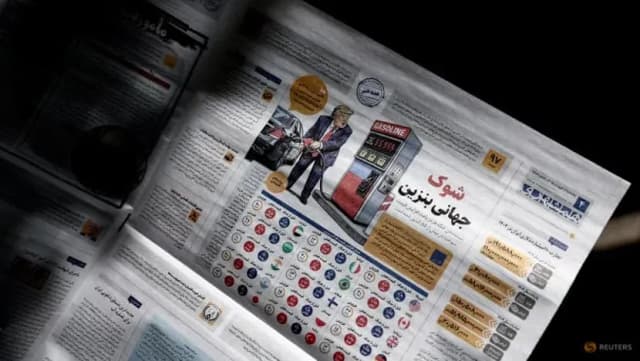
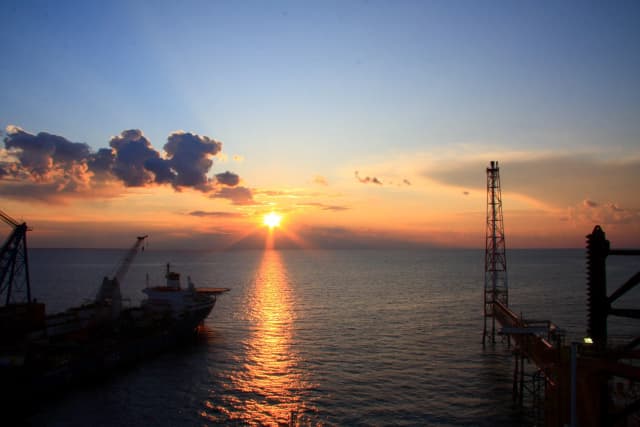
The economic dimension is no longer a side note. The cluster signals say the conflict has roiled the global economy, pushed oil and shipping concerns back to the center of policymaking, and sharpened attention on the Strait of Hormuz, through which about one-fifth of the world’s oil normally passes. British and French officials, according to the reporting, were already discussing the urgency of reopening the waterway, though they differed on whether a military operation to force that outcome was realistic.Iran vows 'more destructive' attacks after Trump threatsfrance24.com·SecondaryTo display this content from YouTube, you must enable advertisement tracking and audience measurement. One of your browser extensions seems to be blocking the video player from loading. To watch this content, you may need to disable it on this site. Iran on Thursday threatened "crushing" attacks on the US and Israel, firing missiles at Tel Aviv after US President Donald Trump vowed to bomb the Islamic republic "back to the Stone Ages". That split captures a broader Western dilemma: governments want restored trade flows and lower energy anxiety, but many are less sure than Washington that maximal military pressure can deliver them quickly.Iran vows 'more destructive' attacks after Trump threatsfrance24.com·SecondaryTo display this content from YouTube, you must enable advertisement tracking and audience measurement. One of your browser extensions seems to be blocking the video player from loading. To watch this content, you may need to disable it on this site. Iran on Thursday threatened "crushing" attacks on the US and Israel, firing missiles at Tel Aviv after US President Donald Trump vowed to bomb the Islamic republic "back to the Stone Ages".
There is also a domestic political split inside the United States, and it should not be reduced to simple hawk-versus-dove theater. Trump’s allies argue that decisive pressure is overdue and that anything short of sustained force would leave Iran’s missile and nuclear capabilities intact. Opponents counter that the administration has not fully explained the end state, the legal and strategic risks, or the long tail of higher fuel, transport and industrial costs already rippling outward. That criticism is politically meaningful because wars sold as short, sharp and manageable often become harder to defend once inflation, market volatility and casualty counts begin competing with the original national-security rationale.Iran vows 'crushing' attacks on US after Trump threatschannelnewsasia.com·SecondaryIran told the US and Israel to expect "more crushing, broader and more destructive actions" following Trump's threats to intensify attacks on the Islamic Republic. A boy raises his fist while standing on a giant Iranian flag during the funeral of Alireza Tangsiri, commander of the Iranian Revolutionary Guards' navy alongside others killed in US-Israeli strikes on Iran at Enghelab Square in Tehran on Apr 1, 2026.
Iran, for its part, is also playing to multiple audiences at once. Externally, it is trying to show that it can still impose costs on the United States, Israel and their partners despite sustained bombardment. Internally, the visible security posture in Tehran and the public messaging around resistance appear designed to signal regime durability at a moment when outside observers might otherwise assume that repeated strikes are degrading state control. That does not mean Tehran is in a stronger strategic position overall, but it does mean that predictions of quick capitulation still look premature.Iran vows 'crushing' attacks on US after Trump threatschannelnewsasia.com·SecondaryIran told the US and Israel to expect "more crushing, broader and more destructive actions" following Trump's threats to intensify attacks on the Islamic Republic. A boy raises his fist while standing on a giant Iranian flag during the funeral of Alireza Tangsiri, commander of the Iranian Revolutionary Guards' navy alongside others killed in US-Israeli strikes on Iran at Enghelab Square in Tehran on Apr 1, 2026.
Conservative and nationalist readers in the United States are likely to view the current moment through a different lens than much of the European commentariat. From that perspective, Trump’s threats are not rhetorical excess but an attempt to restore deterrence after years in which Iran and its network of partners tested Western red lines without paying enough of a price. There is a serious argument there, especially if one believes partial measures only lengthen wars. But the counterargument deserves equal weight: coercion without a credible political off-ramp can trap even stronger powers in a cycle where each demonstration of strength invites another test.Iran vows 'crushing' attacks on US after Trump threatschannelnewsasia.com·SecondaryIran told the US and Israel to expect "more crushing, broader and more destructive actions" following Trump's threats to intensify attacks on the Islamic Republic. A boy raises his fist while standing on a giant Iranian flag during the funeral of Alireza Tangsiri, commander of the Iranian Revolutionary Guards' navy alongside others killed in US-Israeli strikes on Iran at Enghelab Square in Tehran on Apr 1, 2026.
For now, the safest conclusion is not that a decisive end is near, but that the conflict has entered a more dangerous bargaining phase. Tehran is signaling that more pressure will bring more retaliation. Trump is signaling that retaliation will bring heavier strikes, not restraint. Regional governments are watching the costs spread into shipping lanes, infrastructure and public confidence. And global markets are reacting to the possibility that a war sold as containable may yet prove broader, more expensive and more politically destabilizing than any side wants to admit in public.Iran vows 'crushing' attacks on US after Trump threatschannelnewsasia.com·SecondaryIran told the US and Israel to expect "more crushing, broader and more destructive actions" following Trump's threats to intensify attacks on the Islamic Republic. A boy raises his fist while standing on a giant Iranian flag during the funeral of Alireza Tangsiri, commander of the Iranian Revolutionary Guards' navy alongside others killed in US-Israeli strikes on Iran at Enghelab Square in Tehran on Apr 1, 2026.
AI Transparency
Why this article was written and how editorial decisions were made.
Why This Topic
This cluster is the strongest available non-duplicate story because it combines war escalation, U.S. presidential rhetoric, direct Iranian retaliation threats, spillover risk for Gulf states, and global economic implications through oil and shipping. It is materially more consequential than the business-summary items currently on the board and clearly distinct from the recently published mpox, CoreWeave, Mercado Libre and New Zealand/Cook Islands stories.
Source Selection
The usable cluster signals come mainly from CNA, France 24 and Euronews. CNA and Euronews carry the most detailed factual material on the immediate escalation, regional spillover and market implications; France 24 reinforces the central conflict framing. I excluded the Le Monde signal from substantive citation use because its crawled raw content is effectively empty. Web research was used only for context and image checking, not for numbered factual citations.
Editorial Decisions
Neutral, descriptive framing. Gave equal weight to Trump administration coercive rationale, Iranian deterrence messaging, Gulf-state security concerns, and U.S./Western criticism about escalation and economic costs. Avoided moralizing language and direct quotes beyond signal-backed paraphrase because evidence_quality is brittle.
Reader Ratings
About the Author
Sources
- 1.lemonde.frSecondary
- 2.channelnewsasia.comSecondary
- 3.france24.comSecondary
- 4.euronews.comSecondary
Editorial Reviews
1 approved · 0 rejectedPrevious Draft Feedback (1)
Warnings: • [article_quality] Gate check failed: Service request failed. Status: 502 (Bad Gateway) • [image_relevance] Image relevance check failed: Service request failed. Status: 502 (Bad Gateway)
Discussion (0)
No comments yet.