Pentagon Staff Resist Hegseth Order to Drop Anthropic Claude as Replacement Challenges Mount
Military users and defense contractors are pushing back against Defense Secretary Hegseth's order to phase out Anthropic's Claude AI tools, citing months of recertification delays, capability gaps, and billions in contract disruptions.
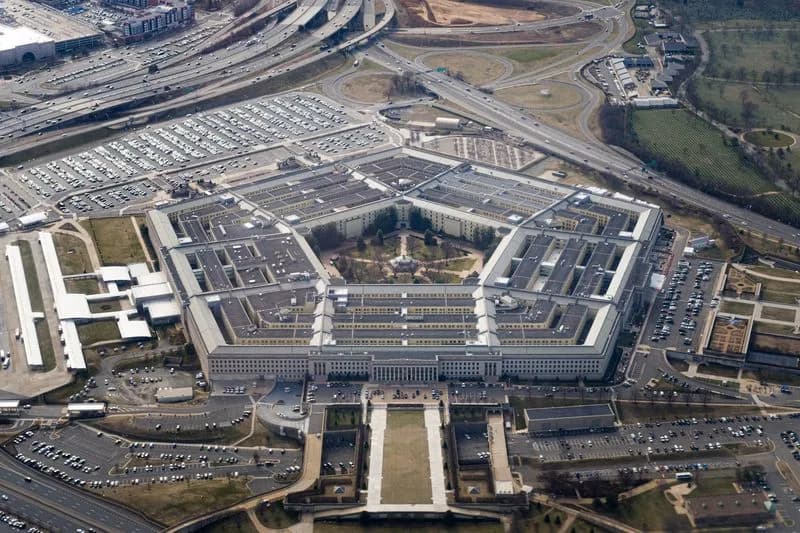
The Pentagon's order to strip Anthropic's artificial intelligence tools from its networks is running headlong into a wall of practical resistance — from the career technologists who built their workflows around the technology to the defense contractors facing months of costly recertification if they switch.
Defense Secretary Pete Hegseth designated Anthropic a supply-chain risk on March 3, barring the company's products from use by the Pentagon and its contractors and setting a six-month phase-out deadline Hegseth wants Pentagon to dump Anthropic’s Claude, but military users say it’s not so easyi-invdn-com.investing.com·Secondary. The move followed a dispute over guardrails: Anthropic refused to accept contract language that would have allowed the military unrestricted use of its Claude chatbot, insisting on limitations against mass surveillance and autonomous weapons applications beyond those currently written into law Hegseth wants Pentagon to dump Anthropic’s Claude, but military users say it’s not so easyi-invdn-com.investing.com·Secondary.
But more than two weeks into the ban, the reaction inside the Department of Defense suggests that unwinding Anthropic will be far more difficult than issuing a directive.
A Tool That Became Infrastructure
Anthropic secured a $200 million defense contract in July 2025 and moved quickly to embed itself in the military's daily operations Hegseth wants Pentagon to dump Anthropic’s Claude, but military users say it’s not so easyi-invdn-com.investing.com·Secondary. Claude became the first AI model approved to operate on classified military networks, and adoption across the Pentagon was described as strong by officials familiar with its rollout Hegseth wants Pentagon to dump Anthropic’s Claude, but military users say it’s not so easyi-invdn-com.investing.com·Secondary. Within the broader federal government, Anthropic's models were widely regarded as more capable than offerings from rivals including OpenAI, Google, and Elon Musk's xAI.
The technology was not a novelty. Pentagon personnel used Claude for tasks spanning weapons targeting, operational planning, classified document handling, and large-scale data analysis Hegseth wants Pentagon to dump Anthropic’s Claude, but military users say it’s not so easyi-invdn-com.investing.com·Secondary. Reuters has reported that Claude tools supported U.S. military operations during the ongoing conflict with Iran — and that the technology remains in use in some capacities despite the blacklisting Hegseth wants Pentagon to dump Anthropic’s Claude, but military users say it’s not so easyi-invdn-com.investing.com·Secondary. One expert characterized that continued usage as the clearest signal of how highly the Pentagon values the platform.
Anthropic's Claude Code, a software development tool, was also widely adopted by Pentagon developers writing military code Hegseth wants Pentagon to dump Anthropic’s Claude, but military users say it’s not so easyi-invdn-com.investing.com·Secondary. Its removal has left development teams scrambling, with some tasks previously handled by AI now being performed manually using spreadsheet software Hegseth wants Pentagon to dump Anthropic’s Claude, but military users say it’s not so easyi-invdn-com.investing.com·Secondary.
Contractors Calculate the Cost
The financial and operational implications extend well beyond the Pentagon's own staff. Joe Saunders, CEO of government contractor RunSafe Security, who helped the military incorporate AI chatbots, said replacing Anthropic's models with alternatives would be substantially costly Hegseth wants Pentagon to dump Anthropic’s Claude, but military users say it’s not so easyi-invdn-com.investing.com·Secondary. New systems would need to go through an extensive process to earn certification for use on classified and military networks — a timeline Saunders estimated at 12 to 18 months for a full system replacement Hegseth wants Pentagon to dump Anthropic’s Claude, but military users say it’s not so easyi-invdn-com.investing.com·Secondary.
The disruption touches some of the Pentagon's most sensitive programs. Palantir's Maven Smart Systems, a platform providing intelligence analysis and weapons targeting to the military, was built using multiple prompts and workflows developed with Anthropic's Claude Code Hegseth wants Pentagon to dump Anthropic’s Claude, but military users say it’s not so easyi-invdn-com.investing.com·Secondary. Palantir holds Maven-related contracts with the Defense Department and other national security agencies with a potential value exceeding $1 billion, and will need to rebuild portions of its software with a replacement AI model Hegseth wants Pentagon to dump Anthropic’s Claude, but military users say it’s not so easyi-invdn-com.investing.com·Secondary.
Defense contractors across the sector have been ordered to assess and report their reliance on Anthropic products and to begin winding them down Hegseth wants Pentagon to dump Anthropic’s Claude, but military users say it’s not so easyi-invdn-com.investing.com·Secondary. But the directive has created a strategic dilemma: whether to pivot immediately to alternatives from OpenAI, Google, or xAI, or to slow-walk the transition in hopes that the Pentagon and Anthropic reach a resolution before the September deadline.
Inside the Resistance
Multiple Pentagon officials, staffers, and contractors described a climate of quiet defiance. One IT contractor said career technology professionals at the Defense Department viewed the move as counterproductive, noting that they had spent considerable effort getting operational personnel comfortable with AI tools Hegseth wants Pentagon to dump Anthropic’s Claude, but military users say it’s not so easyi-invdn-com.investing.com·Secondary. The contractor added that Claude was considered the best available model, while xAI's Grok produced inconsistent results to the same queries Hegseth wants Pentagon to dump Anthropic’s Claude, but military users say it’s not so easyi-invdn-com.investing.com·Secondary.
Some staff are deliberately slow-rolling the replacement process, continuing to use Claude to build automated workflows even as the phase-out clock ticks Hegseth wants Pentagon to dump Anthropic’s Claude, but military users say it’s not so easyi-invdn-com.investing.com·Secondary. Developers expressed frustration at the prospect of losing custom AI agents they had created to process vast datasets Hegseth wants Pentagon to dump Anthropic’s Claude, but military users say it’s not so easyi-invdn-com.investing.com·Secondary.
Others are complying but doing so under protest. One official said Pentagon staff were following the order because nobody wanted to end their career over the issue, while characterizing the transition as wasteful Hegseth wants Pentagon to dump Anthropic’s Claude, but military users say it’s not so easyi-invdn-com.investing.com·Secondary. A senior official acknowledged the frustration but cautioned against over-reliance on any single vendor's tools.
At least one chief information officer at a federal agency said their organization planned to drag out the phase-out timeline, betting that Anthropic and the government would reach an agreement before the six-month window closed Hegseth wants Pentagon to dump Anthropic’s Claude, but military users say it’s not so easyi-invdn-com.investing.com·Secondary.
The Broader Standoff
The dispute sits at the intersection of two forces that have defined the early months of the second Trump administration's defense policy: an assertive push to bring Silicon Valley's most powerful tools under tighter government control, and the tech industry's attempts to maintain guardrails on how its products are deployed in military contexts.
Anthropic CEO Dario Amodei has said the actual supply-chain risk designation was narrower than Hegseth initially threatened, affecting only the use of Claude in direct Defense Department contracts rather than all commercial activity by companies that do business with the Pentagon. Microsoft, which integrates Claude into parts of its software suite, said its lawyers concluded that Anthropic products could remain available to non-defense customers through platforms such as Microsoft 365 and GitHub.
Amodei has signaled he intends to challenge the designation in court while simultaneously expressing a willingness to negotiate. Pentagon Chief Technology Officer Emil Michael, however, publicly denied that any active negotiations were underway, and has described Anthropic's insistence on use restrictions beyond existing law as undemocratic.
Legal experts have expressed skepticism that the supply-chain risk designation will survive judicial review. The underlying statute was written to protect against foreign supply-chain threats, not to punish domestic companies for declining contract terms. Paul Scharre, a former Army ranger and executive vice president at the Center for a New American Security, has said the designation does not align with the law's intent. Jack Shanahan, a former Pentagon AI leader who ran Project Maven and the Joint AI Center, has called the episode a technology low point for the current administration and warned it risks undoing a decade of bridge-building between the military and Silicon Valley.
What Comes Next
The six-month phase-out window runs until early September, giving both sides time to either harden their positions or find a compromise. Roger Zakheim, director of the Ronald Reagan Presidential Foundation and Institute, described the situation as a manifestation of the tension between technology adoption inside the Pentagon and the political dynamics surrounding it Hegseth wants Pentagon to dump Anthropic’s Claude, but military users say it’s not so easyi-invdn-com.investing.com·Secondary.
For the military personnel and contractors who built critical systems on Anthropic's platform, the immediate concern is practical rather than political. Recertifying replacement AI systems for classified networks takes time the Pentagon may not have — particularly as the U.S. military remains engaged in active operations in the Middle East where these very tools have been deployed.
The outcome will likely set a precedent for how the government handles disputes with AI companies over use restrictions, a question that extends well beyond Anthropic and the Pentagon to the broader relationship between democratic oversight, corporate ethics policies, and national security imperatives.
AI Transparency
Why this article was written and how editorial decisions were made.
Why This Topic
The Pentagon's attempt to ban Anthropic's Claude AI from military networks represents a significant intersection of defense policy, technology dependence, and executive authority. With the U.S. military actively engaged in operations in the Middle East and relying on these very AI tools, the story has immediate operational implications. The resistance from career military technologists and major defense contractors like Palantir underscores how deeply AI has become embedded in national security infrastructure — and how politically driven technology decisions can create real capability gaps. The legal challenge adds a constitutional dimension that will shape government-tech relations for years.
Source Selection
The primary source is a comprehensive Reuters investigation published on March 19, 2026, accessed via Channel News Asia, featuring multiple named and anonymous Pentagon officials, IT contractors, and defense industry executives. This was supplemented by Breaking Defense reporting from earlier in March that provided legal analysis from defense policy experts including Paul Scharre (CNAS) and Jack Shanahan (former Pentagon AI leader). The combination of on-the-ground operational reporting with legal and policy analysis provides a multi-dimensional view of the story.
Editorial Decisions
This story is based primarily on a Reuters investigation published March 19, 2026, supplemented by reporting from Breaking Defense on the legal dimensions of the supply-chain risk designation. The article presents both the Pentagon's position (Hegseth, Michael) and the practical concerns of military users and contractors without editorial judgment on the underlying policy dispute. All statistics cited are sourced from the cluster signal.
Reader Ratings
About the Author
Sources
- 1.i-invdn-com.investing.comSecondary
- 2.channelnewsasia.comSecondary
Editorial Reviews
1 approved · 0 rejectedPrevious Draft Feedback (1)
Warnings: • [article_quality] Gate check failed: Service request failed. Status: 502 (Bad Gateway) • [image_relevance] Image relevance check failed: Service request failed. Status: 502 (Bad Gateway)



Discussion (0)
No comments yet.