Savannah Guthrie Sets April 6 Return to NBC’s Today as Search for Her Mother Continues
Savannah Guthrie will return to NBC’s Today on April 6 after a two-month absence tied to the disappearance of her mother, Nancy Guthrie, as investigators continue to treat the case as an abduction.
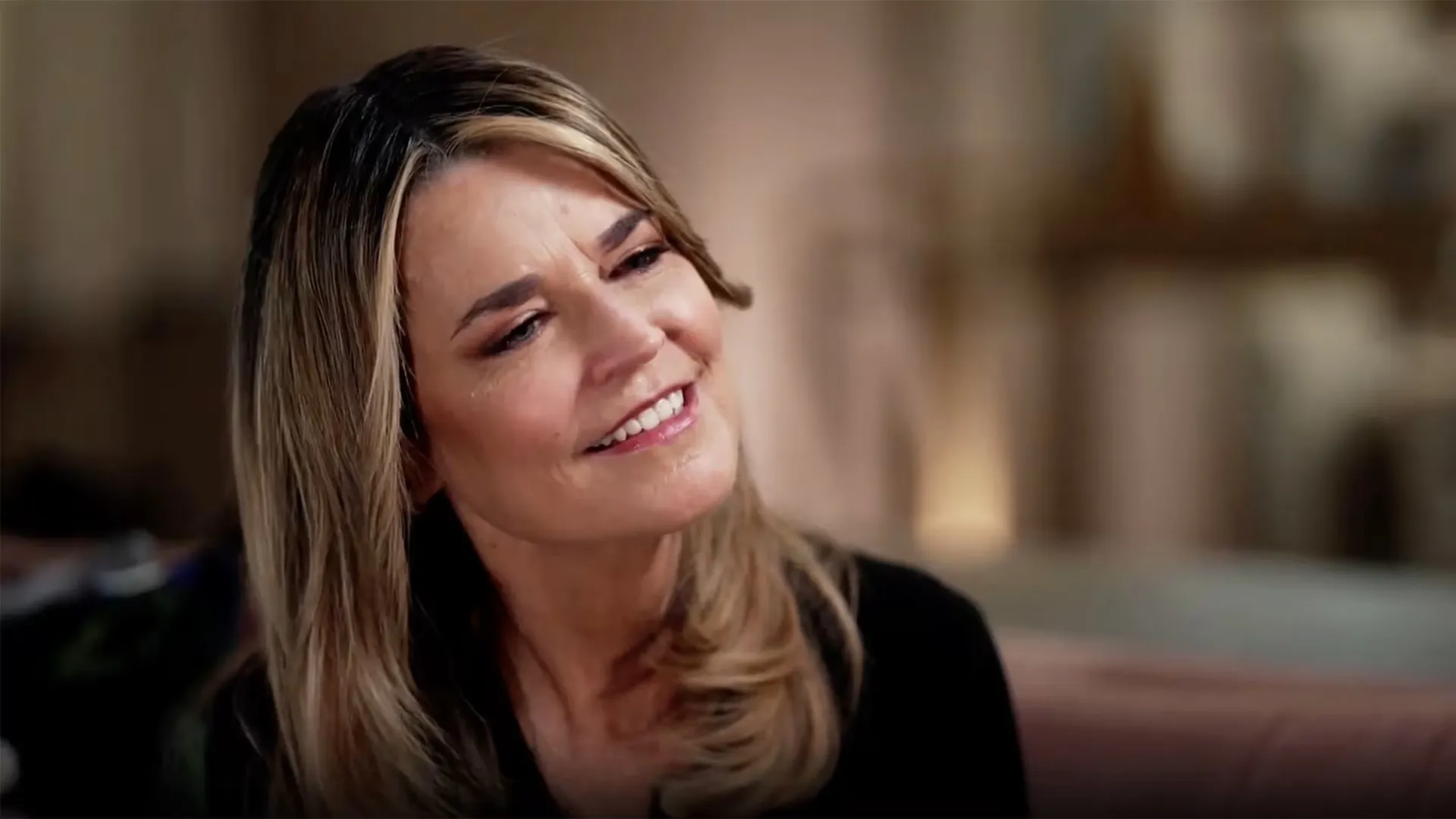
Savannah Guthrie says she will return to NBC’s Today on 6 April, ending a two-month on-air absence that followed the disappearance of her mother, Nancy Guthrie, from her home near Tucson, Arizona. The return date was confirmed on air after an emotional interview with former co-host Hoda Kotb, and Guthrie framed the decision less as a reset than as an attempt to keep functioning in public while the underlying crisis remains unresolved. Her phrasing — ‘joy will be my protest’ — has given the story a second life beyond celebrity news because it turns a routine programming update into something more complicated: a test of how a public-facing broadcaster tries to resume normal work while her family is still living inside an active investigation.
The basic facts are relatively clear even if much about the case itself is not. Nancy Guthrie, 84, was reported missing on 1 February after family members and investigators concluded she had not simply wandered away. Authorities say they believe she was taken against her will, and reporting across AP, the BBC and other outlets says investigators have treated the matter as an abduction or kidnapping case rather than a standard missing-person episode. The FBI has circulated surveillance footage of a masked man seen outside the family home in Tucson on the night she vanished, while the family has offered a $1 million reward for information leading to her recovery; the BBC reports that reward sits alongside a separate $100,000 FBI reward.
That investigative backdrop matters because Guthrie’s return is not being presented as the end of a leave period in the usual corporate sense. In her interview, she repeatedly said she does not know whether she can step back into the lighter rhythms of a morning show in the same way as before, adding that she does not expect to be ‘the same’ person when she returns. She described Today as family and argued that coming back is ‘part of my purpose right now,’ language that signals both loyalty to the programme and an acknowledgment that television can serve as structure when private life has become chaotic. That tone is notable because it resists the cleaner comeback narrative often preferred in entertainment coverage. This is not a redemption arc or triumphant relaunch. It is a partial return under strain.
There is also a business and institutional layer underneath the family story. Today remains one of the most valuable franchises in U.S. morning television, and Guthrie has long been one of its defining faces. Her absence has therefore been both personally visible and professionally consequential, especially because it coincided with a prolonged and unusually public investigation involving family pleas, ransom-note claims, and speculation around whether her fame may have played some role in making Nancy Guthrie a target. None of that means NBC is exploiting the situation; it does mean the network has had to navigate the uncomfortable reality that one of its central news personalities is also, at the moment, part of the news cycle.
The coverage has exposed a wider tension inside contemporary television news: audiences expect authenticity from familiar anchors, but they also expect continuity and composure from the programmes those anchors front. Guthrie’s comments suggest she understands both pressures. She said she cannot return and pretend to be something she is not, but also cannot stay away indefinitely because the show is part of her family and identity. That is a sober formulation, and probably the right one. Morning television, for all its lightness and lifestyle packaging, is built on regularity. Viewers are not just watching segments; they are watching people whose reliability is part of the product. Returning while admitting fragility may be the only credible option she has.
The more delicate part of the story concerns motive and public interpretation. Guthrie has said she fears, or at least cannot dismiss, the possibility that her visibility and wealth may have made her mother a target, though she has also stressed that the family still does not know for certain what happened. Pima County Sheriff Chris Nanos has said investigators believe Nancy Guthrie was ‘targeted’ and that law enforcement knows the motive but is withholding details while the investigation continues, according to the BBC. Those statements encourage obvious speculation, but they do not yet justify certainty. That distinction is important. The available reporting supports the conclusion that investigators suspect a directed act, not a random disappearance; it does not yet support a definitive public account of who did it or why.
There is, unsurprisingly, a cultural argument forming around Guthrie’s line that ‘joy will be my protest.’ Supportive readers see the phrase as a refusal to let an abductor or extortionist dictate the terms of family life. Critics, or at least skeptics, may regard that sort of language as the kind of elevated rhetoric modern media culture too readily applies to private suffering. Both readings are understandable. The sentence is emotionally resonant, and it is also self-consciously quotable. But the larger point is less ideological than practical: Guthrie appears to be saying that returning to work is a way of denying the perpetrators — whoever they are — total control over her household’s future. In that narrow sense, the line is neither sentimental fluff nor political slogan. It is a coping mechanism expressed in public language.
The story also lands in an American media environment that has become more comfortable mixing personal confession with professional identity. Anchors now routinely disclose health scares, grief, fertility struggles, addiction in the family, and other private burdens in ways that would have been handled more cautiously a generation ago. Guthrie’s interview fits that broader pattern, but with a harder edge because the family’s crisis is not retrospective. There is no settled ending yet. Her mother has not been found, no suspect has been publicly arrested, and the search continues. That unresolved status keeps the coverage from drifting fully into inspirational television. The central fact is still absence.
For NBC, the safest and probably wisest path is the one visible so far: let Guthrie define the terms of her return, avoid overproducing the emotional angle, and treat the case as a serious ongoing matter rather than a ratings hook. Co-hosts including Craig Melvin have publicly welcomed her return, which gives the show a straightforward collegial frame without trying to declare closure where none exists. If Guthrie resumes the desk on April 6, viewers will almost certainly read her differently than before — not because her role has changed on paper, but because the audience now knows more about the private cost sitting behind the performance of ease that morning television usually demands.
That is why the story has more weight than a simple celebrity update, even if it remains, in strict news hierarchy terms, an entertainment-media item rather than a matter of state. Guthrie is returning to one of the most visible jobs in American broadcast TV while still asking the public for help finding her mother and while investigators continue to pursue a case they believe involved coercion. The headline fact is the April 6 return date. The more meaningful fact is that the return does not resolve anything. It merely marks the point at which one of television’s best-known presenters is attempting to carry grief, uncertainty and public duty at the same time.
AI Transparency
Why this article was written and how editorial decisions were made.
Why This Topic
This cluster is the strongest distinct non-duplicate story on the board because it combines a high-profile U.S. television figure, an unresolved criminal investigation, and a concrete new development: Guthrie’s April 6 return date. It is more current and specific than older published CT pieces and materially different from recent CT coverage on social-media restrictions, Olympic eligibility rules, Czech protests, or broadcaster restructuring. The story also has broader resonance about media culture, privacy, and how public figures navigate family crisis under national scrutiny.
Source Selection
The draft relies primarily on AP, BBC, and Guardian/AP reporting because those sources align on the core verifiable facts: the April 6 return date, the Feb. 1 disappearance, the abduction framing, the FBI surveillance video, and the reward offers. Trade outlets including Variety, Deadline and The Hollywood Reporter were used only for supplemental framing around Today’s internal reaction and Guthrie’s positioning inside the TV ecosystem, not for unique unsupported factual claims. That source mix provides both hard-news verification and industry context while minimizing speculation.
Editorial Decisions
Descriptive headline, no moralized framing. Story treated as a media-and-public-life development rather than a sentimental celebrity feature. Conservative and skeptical balance applied by distinguishing confirmed facts from family interpretation and by avoiding certainty about motive.
Reader Ratings
About the Author
Sources
- 1.theguardian.comSecondary
- 2.i-invdn-com.investing.comSecondary
- 3.apnews.comSecondary
- 4.variety.comSecondary
- 5.deadline.comSecondary
- 6.bbc.comSecondary
- 7.hollywoodreporter.comSecondary
Editorial Reviews
1 approved · 0 rejectedPrevious Draft Feedback (2)
• depth_and_context scored 4/3 minimum: The article effectively provides context by explaining the investigation's details, the family's situation, and the broader implications for NBC and the television industry. However, it could benefit from a paragraph exploring the potential impact of celebrity on the case, beyond just mentioning it. • narrative_structure scored 5/3 minimum: The article has a clear and logical flow, starting with the return date, establishing the facts, analyzing the implications, and concluding with a thoughtful observation. The nut graf is well-defined and the closing provides a satisfying sense of closure. • analytical_value scored 4/3 minimum: The article goes beyond simply recounting events, offering insightful analysis of Guthrie's decision, the pressures on NBC, and the evolving relationship between personal and professional lives in media. It could be strengthened by exploring the potential long-term effects on Guthrie's career and public perception. • language_and_clarity scored 4/3 minimum: The writing is generally clear and precise, although some phrases like 'joy will be my protest' are analyzed rather than explained. While the article avoids overtly loaded labels, it could benefit from more consistently explaining complex concepts (like the legal definition of abduction) for a broader audience. Warnings: • [article_quality] perspective_diversity scored 3 (borderline): While the article incorporates Guthrie's perspective and mentions the Sheriff's statements, it could benefit from including perspectives from legal experts or investigators to provide a more comprehensive view of the case. Currently, it leans heavily on Guthrie's and NBC's viewpoints. • [article_quality] filler_and_redundancy scored 2 (borderline): The frequent citation of [1][2][3] throughout the article, while understandable given the platform's formatting, creates a distracting and repetitive effect. More importantly, the constant reiteration of facts and phrases across paragraphs, while not strictly redundant, contributes to a sense of unnecessary repetition. The author should actively seek opportunities to consolidate information and streamline the language. • [image_relevance] Image relevance check failed: Service request failed. Status: 502 (Bad Gateway)
2 gate errors: • [structure] Article must not contain a 'Sources' or 'References' section. Sources are linked structurally from the cluster's signals and rendered separately by the frontend. • [publication_readiness] Article contains a Sources/References/Bibliography section — sources are handled structurally by the platform. Remove the section.




Discussion (0)
No comments yet.