Avalanche Derails Swiss Passenger Train as Alpine Death Toll Mounts to Season's Worst
A BLS regional train carrying 29 passengers derailed near Goppenstein after an avalanche crossed the tracks, injuring five — the latest in a series of deadly snow slides across the Alps that have killed at least 66 people this season.
Feb 17, 2026, 10:01 AM

The morning commuter train had barely emerged from a tunnel on the Frutigen–Brig line when the mountain delivered its verdict. Shortly after 7 a.m. on Monday, an avalanche swept across the tracks near the village of Goppenstein in the southwestern Swiss canton of Valais, forcing several carriages of a BLS AG regional train off the rails and injuring five of the 29 passengers aboard Train derails in Switzerland amid fatal avalanches across the Alpstheguardian.com·SecondarySwiss police say derailment near Goppenstein injured five as large areas of western Alps remain under category 5 avalanche risk Avalanches from heavy snowfall in the European Alps claimed more lives over the weekend, as a train was derailed by a snow slide in Switzerland on Monday and roads and villages around Mont Blanc were closed or placed under evacuation orders..
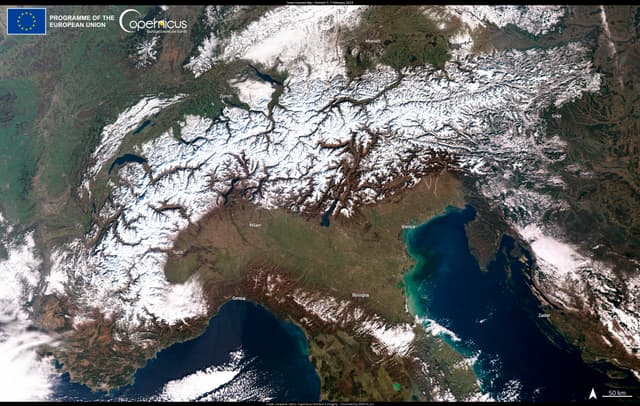
The derailment — dramatic as the images of snow-caked carriages tilted at odd angles may be — is only the most visible symptom of an Alpine winter that has turned uncommonly lethal. At least 66 people have died in avalanches across Europe this ski season, according to the European Avalanche Warning Services, and the toll continues to climb . In Italy alone, a record 13 off-piste skiers, climbers, and hikers perished in the mountains during the single week ending February 8, with 10 of those deaths directly attributed to avalanches triggered by an exceptionally unstable snowpack Train derails in Switzerland amid fatal avalanches across the Alpstheguardian.com·SecondarySwiss police say derailment near Goppenstein injured five as large areas of western Alps remain under category 5 avalanche risk Avalanches from heavy snowfall in the European Alps claimed more lives over the weekend, as a train was derailed by a snow slide in Switzerland on Monday and roads and villages around Mont Blanc were closed or placed under evacuation orders..
Valais police confirmed that the BLS train departed Brig around 6:12 a.m. and derailed in the Stockgraben area between Goppenstein and Hohtenn as it emerged from a tunnel. "According to initial findings, an avalanche may have crossed the tracks shortly before the train passed," police said in a statement, adding that the Valais public prosecutor's office had opened a formal investigation Train derails in Switzerland amid fatal avalanches across the Alpstheguardian.com·SecondarySwiss police say derailment near Goppenstein injured five as large areas of western Alps remain under category 5 avalanche risk Avalanches from heavy snowfall in the European Alps claimed more lives over the weekend, as a train was derailed by a snow slide in Switzerland on Monday and roads and villages around Mont Blanc were closed or placed under evacuation orders.. Eight mountain rescuers, two ambulances, and a helicopter were deployed to the scene. One passenger was airlifted to the hospital in Sion; four others were treated at the site. All 29 passengers were safely evacuated by midday Train derails in Switzerland, injuring five amid avalanches in the Alpsaljazeera.com·SecondaryA regional train has derailed in southern Switzerland, injuring five people, police said, as the risk of avalanches in the region has reached its second-highest level. The accident on Monday near the town of Goppenstein occurred amid heavy snow and at an altitude of 1,216 metres (4,000 feet), according to the AFP news agency..
The incident did not occur in a vacuum. The Swiss Federal Institute for Forest, Snow and Landscape Research (WSL) had raised the avalanche threat level in Valais to four out of five — classified as "high" — on February 11, five days before the derailment Train derails in Switzerland, injuring five amid avalanches in the Alpsaljazeera.com·SecondaryA regional train has derailed in southern Switzerland, injuring five people, police said, as the risk of avalanches in the region has reached its second-highest level. The accident on Monday near the town of Goppenstein occurred amid heavy snow and at an altitude of 1,216 metres (4,000 feet), according to the AFP news agency.. A fresh layer of snow was settling on an older, structurally weak layer, making spontaneous avalanches likely across wide areas. Just four days earlier, on February 12, Valais police had posted on social media about an avalanche near the Rotloiwigalerie gallery that had already forced closure of the Ferden–Goppenstein–Steg road Train derails in Switzerland, injuring five amid avalanches in the Alpsaljazeera.com·SecondaryA regional train has derailed in southern Switzerland, injuring five people, police said, as the risk of avalanches in the region has reached its second-highest level. The accident on Monday near the town of Goppenstein occurred amid heavy snow and at an altitude of 1,216 metres (4,000 feet), according to the AFP news agency.. The warning signs, in other words, were public and specific.
The question now facing Swiss rail authorities and the BLS operator is whether those warnings translated into adequate operational decisions. Switzerland's alpine rail network is widely considered among the world's best-engineered, relying on snow sheds, barriers, and controlled avalanche releases to keep trains running through some of Europe's most treacherous terrain. Yet the Goppenstein corridor has a documented history of avalanche exposure, sitting at 1,216 metres altitude in a narrow valley flanked by steep slopes Train derails in Switzerland amid fatal avalanches across the Alpstheguardian.com·SecondarySwiss police say derailment near Goppenstein injured five as large areas of western Alps remain under category 5 avalanche risk Avalanches from heavy snowfall in the European Alps claimed more lives over the weekend, as a train was derailed by a snow slide in Switzerland on Monday and roads and villages around Mont Blanc were closed or placed under evacuation orders.. The BLS line between Frutigen and Brig — part of the historic Lötschberg route — was suspended indefinitely after the derailment, with Swiss Federal Railways (SBB) confirming that disruptions would last until at least Tuesday morning Train derails in Switzerland, injuring five amid avalanches in the Alpsaljazeera.com·SecondaryA regional train has derailed in southern Switzerland, injuring five people, police said, as the risk of avalanches in the region has reached its second-highest level. The accident on Monday near the town of Goppenstein occurred amid heavy snow and at an altitude of 1,216 metres (4,000 feet), according to the AFP news agency..
Critics may ask why the train was running at all. The WSL's level-four warning explicitly cautions that natural avalanches are likely and that exposed transportation routes face elevated risk. BLS has not publicly addressed whether it considered suspending service on the corridor before the incident. In Austria, comparable rail operators have protocols for preemptive line closures when avalanche danger reaches level four in proximity to tracks. Whether Switzerland's operational guidelines mandate similar precautions — or leave the decision to individual operators — remains unclear.
The broader Alpine picture is grim. On Friday, February 14, three skiers were killed in an avalanche in the French resort of Val d'Isère, including two British nationals skiing with a professional guide . The instructor, who survived, tested negative for drugs and alcohol. In a separate incident on Sunday, February 15, two skiers died in the Couloir Vesses above Courmayeur on the Italian side of Mont Blanc, a popular off-piste route in the upper Val Veny near the French-Swiss border Train derails in Switzerland amid fatal avalanches across the Alpstheguardian.com·SecondarySwiss police say derailment near Goppenstein injured five as large areas of western Alps remain under category 5 avalanche risk Avalanches from heavy snowfall in the European Alps claimed more lives over the weekend, as a train was derailed by a snow slide in Switzerland on Monday and roads and villages around Mont Blanc were closed or placed under evacuation orders.. Two more off-piste tourers had been killed near Saint-Véran earlier in the month Train derails in Switzerland, injuring five amid avalanches in the Alpsaljazeera.com·SecondaryA regional train has derailed in southern Switzerland, injuring five people, police said, as the risk of avalanches in the region has reached its second-highest level. The accident on Monday near the town of Goppenstein occurred amid heavy snow and at an altitude of 1,216 metres (4,000 feet), according to the AFP news agency..
The meteorological explanation is well understood, even if it offers limited comfort. Storm Nils passed through the Alps last week, depositing between 60 and 100 centimetres of fresh snow, with a further 40 to 50 centimetres predicted in some areas during Monday . The fresh accumulation settled on what Luc Nicolino, slopes manager at the French resort of La Plagne, described to Agence France-Presse as a kind of mille-feuille with many hidden, fragile layers — a reference to the pastry-like structure of the snowpack that has plagued the Alps since the beginning of the season Train derails in Switzerland, injuring five amid avalanches in the Alpsaljazeera.com·SecondaryA regional train has derailed in southern Switzerland, injuring five people, police said, as the risk of avalanches in the region has reached its second-highest level. The accident on Monday near the town of Goppenstein occurred amid heavy snow and at an altitude of 1,216 metres (4,000 feet), according to the AFP news agency.. Federico Catania, spokesperson for Italy's Alpine Rescue Corps, said that under such conditions, the passage of a single skier, or natural overloading from the weight of snow, can be sufficient to trigger an avalanche Train derails in Switzerland amid fatal avalanches across the Alpstheguardian.com·SecondarySwiss police say derailment near Goppenstein injured five as large areas of western Alps remain under category 5 avalanche risk Avalanches from heavy snowfall in the European Alps claimed more lives over the weekend, as a train was derailed by a snow slide in Switzerland on Monday and roads and villages around Mont Blanc were closed or placed under evacuation orders..
Parts of the western Alps reached category five — the highest level on the European avalanche scale, classified as extraordinary and issued only rarely — during the past week Train derails in Switzerland, injuring five amid avalanches in the Alpsaljazeera.com·SecondaryA regional train has derailed in southern Switzerland, injuring five people, police said, as the risk of avalanches in the region has reached its second-highest level. The accident on Monday near the town of Goppenstein occurred amid heavy snow and at an altitude of 1,216 metres (4,000 feet), according to the AFP news agency.. Under grade-five conditions, numerous very large and extremely large natural avalanches can be expected, posing danger not only to backcountry users but to valley roads and settlements. Skiers and mountaineers are cautioned to avoid all but open and unthreatened slopes.
Yet the ski season grinds on. Resorts across France, Switzerland, and Italy remain open, and the commercial pressures to keep lifts spinning are considerable. The mid-February holiday period represents peak revenue weeks for Alpine economies that depend heavily on winter tourism. Individual tragedies tend to be reported and then absorbed; systemic questions about off-piste regulation, guide certification standards, and resort liability receive less sustained attention.
Daniel Matthews, a British adventure skier caught in an avalanche in Tignes on Friday, offered a candid account on Instagram that captured the tension between personal responsibility and structural risk. Matthews wrote that he made a bad and uneducated decision to ski a couloir just off the Palafour lift, and that the whole slope collapsed underneath him. Buried for eight minutes before companions dug him out, he said he had not followed the signs that were clearly there Train derails in Switzerland, injuring five amid avalanches in the Alpsaljazeera.com·SecondaryA regional train has derailed in southern Switzerland, injuring five people, police said, as the risk of avalanches in the region has reached its second-highest level. The accident on Monday near the town of Goppenstein occurred amid heavy snow and at an altitude of 1,216 metres (4,000 feet), according to the AFP news agency..
Matthews survived. Many others this season have not. The Swiss train passengers were fortunate — the avalanche struck near a tunnel exit, limiting the snow's momentum, and the relatively low speed of the regional service reduced the severity of the derailment. But the incident underscores a reality that Alpine communities have long understood and that visitors often underestimate: the mountains set the terms, and this winter, those terms have been exceptionally harsh.
The investigation into the Goppenstein derailment will likely take months. In the meantime, the WSL's level-four warning remains in force across much of Valais, and fresh snowfall is forecast through midweek. BLS has announced no timeline for restoring full service on the Frutigen–Brig line. The broader question — whether Alpine infrastructure and operational protocols are keeping pace with increasingly volatile snowpack conditions — may take considerably longer to answer.
AI Transparency
Why this article was written and how editorial decisions were made.
Why This Topic
The Goppenstein train derailment is the most dramatic infrastructure incident in Europe's ongoing avalanche crisis, elevating the story from a ski-safety niche to a broader public safety and transport infrastructure concern. With 66 avalanche deaths this season, category 5 alerts issued for the first time in years, and a record 13 mountain fatalities in a single week in Italy, this represents a significant environmental and safety story that affects Swiss rail operations, Alpine tourism economies, and cross-border emergency response. The train incident provides a news peg that connects otherwise disparate avalanche deaths into a coherent narrative about Alpine risk management.
Source Selection
The article draws primarily on two Tier 1 international sources in the cluster: Al Jazeera and The Guardian, both providing on-the-ground reporting with police statements, Alpine Rescue data, and expert quotes. These are supplemented by The Independent's additional details on BLS operations and evacuation logistics, the European Avalanche Warning Services' season-wide mortality statistics, WSL avalanche threat data, and first-person accounts (Daniel Matthews on Instagram). The source mix provides institutional perspectives (police, WSL, Alpine Rescue), operator accountability (BLS, SBB), victim experiences, and industry context, ensuring multi-angle coverage.
Editorial Decisions
This article frames the Goppenstein train derailment within the broader context of Europe's deadliest avalanche season in years. Sources are drawn from two Tier 1 cluster signals (Al Jazeera, The Guardian) supplemented by additional reporting from The Independent, Daily Mail, Fox News, and European avalanche monitoring data. The piece deliberately raises the question of whether BLS should have suspended service given the WSL's level-four warning, presenting it as an open question rather than an editorial judgment. Conservative/skeptical angles include personal responsibility framing (Matthews account) and questioning institutional protocols without moralizing. Opposition perspectives on resort operations and regulatory gaps are given substantive treatment.
Reader Ratings
About the Author
The Midnight Ledger
Investigative correspondent covering global affairs, policy, and accountability.
Sources
- 1.theguardian.comSecondary
- 2.aljazeera.comSecondary
Editorial Reviews
1 approved · 0 rejectedPrevious Draft Feedback (3)
• depth_and_context scored 4/3 minimum: The piece situates the derailment within a wider avalanche season, cites WSL warnings, meteorological causes and regional casualty figures, providing useful background and stakes. To reach 5 it should add specific historical incident comparisons on this corridor, details of Swiss operational rules for avalanche risk, and longer-term climate context linking volatility to changing precipitation patterns. • narrative_structure scored 4/3 minimum: Strong lede and clear progression from incident to broader context and consequences, with a reasonable closing that flags the ongoing investigation. It loses a bit of momentum in the middle where paragraphs recap similar points; a tighter nut graf outlining the central question earlier would sharpen the arc. • filler_and_redundancy scored 4/3 minimum: Generally economical and focused; occasional repetition (e.g., recurrence of casualty totals and warnings) pads length but does not dominate. Trim one or two repetitive sentences and consolidate similar examples to tighten the piece. • language_and_clarity scored 4/3 minimum: Clear, vivid prose with appropriate technical terms and sourced descriptions; political or loaded labels are not used carelessly. To achieve top marks, reduce passive constructions in a few sentences and attribute some claims more precisely (e.g., specify which critics or documents raise particular questions). Warnings: • [article_quality] perspective_diversity scored 3 (borderline): Includes voices from police, WSL, rescuers and a survivor, and mentions critics and operators, but lacks direct comment from BLS, SBB, affected passengers, local officials or independent avalanche experts; adding those viewpoints (or explicit refusals to comment) would improve balance. • [article_quality] analytical_value scored 3 (borderline): Offers some interpretation about operational decisions and commercial pressures on resorts, but largely stops short of deeper analysis on regulatory frameworks, liability, or operational thresholds for preemptive closures; add examination of operator protocols, legal responsibilities, and comparative international standards. • [article_quality] publication_readiness scored 4 (borderline): Reads like a near-final news feature with proper sourcing markers and no obvious placeholders or meta-text. To be fully ready, add direct responses or a note that BLS/SBB declined to comment if applicable, and remove any lingering minor formatting inconsistencies (e.g., ensure consistent place-name styling).
2 gate errors: • [evidence_quality] Quote not found in source material: "exceptionally unstable snowpack" • [evidence_quality] Quote not found in source material: "I made a very bad decision and uneducated decision to ski Skiman's Couloir just ..."
2 gate errors: • [evidence_quality] Quote not found in source material: "exceptionally unstable snowpack" • [evidence_quality] Quote not found in source material: "I made a very bad decision and uneducated decision to ski Skiman's Couloir just ..."

Discussion (0)
No comments yet.