Carney heads into Canada byelections one seat short of a majority as Liberals test a broader coalition
Mark Carney entered three Canadian byelections on Monday needing one seat to turn his Liberal minority into a majority, a shift that would strengthen his hand on trade and legislation while sharpening arguments over defectors and party identity.[1][2]
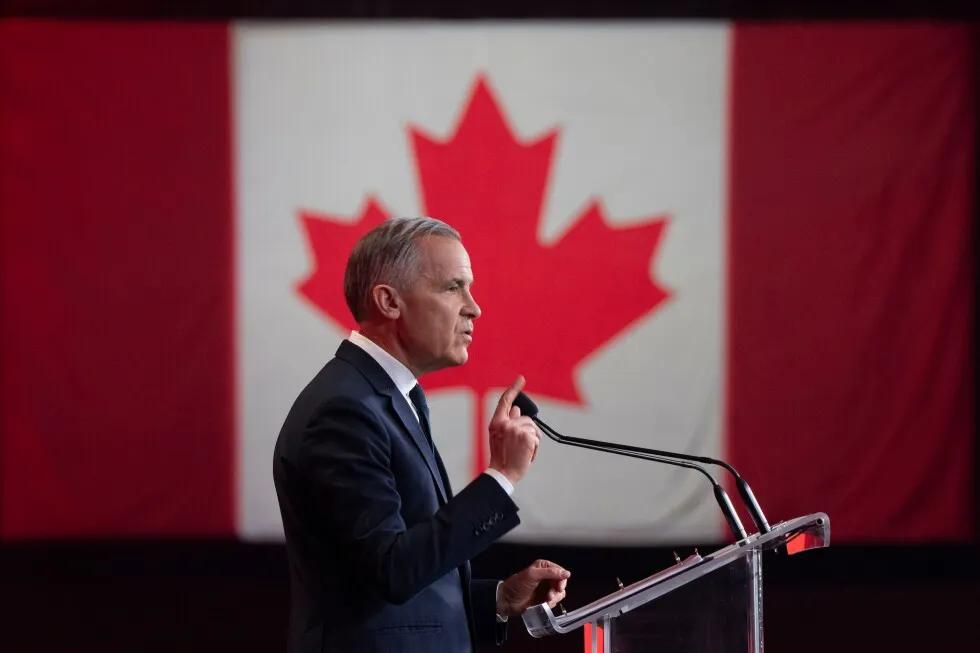
Prime Minister Mark Carney went into Monday's three federal byelections needing only one more seat to move his Liberal government from a minority to a parliamentary majority, a narrow arithmetic step with larger consequences for how Canada will be governed through the next phase of its confrontation with Washington. The races in Scarborough Southwest, University-Rosedale and Terrebonne were not being treated merely as local contests, because the Liberals already held 171 seats in the 343-seat House of Commons and needed 172 to govern with a formal majority. Both AP and Reuters described the two Toronto-area districts as Liberal-friendly terrain, while Terrebonne in the Montreal area was presented as the competitive seat that could decide whether Carney's margin ends up comfortable or merely technical. That combination made Monday less a referendum on whether Carney can survive and more a measure of how much room Ottawa may soon have to act without bargaining vote by vote.Canadian PM Carney is on the verge of a majority government in a special electionapnews.com·SecondaryCanada’s Prime Minister Mark Carney speaks at the Liberal national convention in Montreal, Saturday, April 11, 2026. (Christinne Muschi/The Canadian Press via AP) TORONTO (AP) — Canadian Prime Minister Mark Carney is on the verge of securing a majority government as special elections are held in three districts on Monday.
The immediate practical advantage of a majority is straightforward: Carney would be able to pass legislation without first negotiating support from opposition parties, and he would have more control over timing than minority governments usually enjoy. Reuters noted that minority governments in Canada are vulnerable to collapse on confidence votes and often do not last two years, whereas a majority would likely leave Carney in office until 2029 unless he chose another course himself. AP made the same point in simpler terms, saying that once the Liberals gain the extra seat they could stay in power until 2029 without needing a new general election.Canadian PM Carney is on the verge of a majority government in a special electionapnews.com·SecondaryCanada’s Prime Minister Mark Carney speaks at the Liberal national convention in Montreal, Saturday, April 11, 2026. (Christinne Muschi/The Canadian Press via AP) TORONTO (AP) — Canadian Prime Minister Mark Carney is on the verge of securing a majority government as special elections are held in three districts on Monday. In a period when Ottawa is trying to answer tariffs, trade pressure and continued political friction with the United States, that procedural stability is not a small detail but part of the story itself.‘The perception is Carney is a wartime leader’: why Canada’s PM could secure a majoritytheguardian.com·SecondaryAs Trump’s actions spark a desire for stability, analysts say Carney is in effect assembling a union government Canada’s prime minister, Mark Carney, is on the brink of securing a majority government, with his Liberal party poised to win at least two closely watched byelections and courting an “almost unprecedented” string of defections from rival parties.
Carney's path to this position has not come only through the ballot box. Both source sets describe a stream of defections from opposition benches into the Liberal caucus, with five lawmakers crossing over in recent months and four of them coming from the Conservative Party. Reuters said only John A. Macdonald and Jean Chretien led governing parties that drew more defectors, underscoring how unusual the current moment is in Canadian federal politics. AP likewise highlighted that five defections have pushed the Liberals to the edge of a majority and credited one defector with citing Carney's World Economic Forum speech in Davos as part of the reason for joining him. That matters because it suggests Carney's appeal is being built not only on partisan loyalty but on a broader claim to competence during external pressure.Canadian PM Carney is on the verge of a majority government in a special electionapnews.com·SecondaryCanada’s Prime Minister Mark Carney speaks at the Liberal national convention in Montreal, Saturday, April 11, 2026. (Christinne Muschi/The Canadian Press via AP) TORONTO (AP) — Canadian Prime Minister Mark Carney is on the verge of securing a majority government as special elections are held in three districts on Monday.
Supporters of the prime minister argue that this broader coalition reflects Canadian voters' desire for steadier leadership while relations with the United States remain strained. AP cited McGill political scientist Daniel Beland as saying the deterioration in Canada-U.S. relations under Donald Trump's second presidency has persuaded many Canadians, including some who do not identify as Liberals, to rally behind Carney. Reuters quoted University of Toronto political scientist Andrew McDougall saying Carney has persuaded many Canadians that he can handle Trump and manage the economy, while alternatives have not impressed them to the same degree. In that reading, the majority bid is less a sudden power grab than a continuation of a realignment in which nationalist caution and managerial competence are being rewarded.Canadian PM Carney is on the verge of a majority government in a special electionapnews.com·SecondaryCanada’s Prime Minister Mark Carney speaks at the Liberal national convention in Montreal, Saturday, April 11, 2026. (Christinne Muschi/The Canadian Press via AP) TORONTO (AP) — Canadian Prime Minister Mark Carney is on the verge of securing a majority government as special elections are held in three districts on Monday.
Carney's own political positioning is central to that argument. AP described him as a former head of both the Bank of England and Canada's central bank who moved the Liberals toward the center-right after replacing Justin Trudeau as prime minister in 2025. Reuters similarly contrasted Carney with Trudeau and quoted Western University political scientist Laura Stephenson saying Trudeau had emphasized reconciliation, minority rights and immigration while Carney is more focused on helping Canada endure economic turmoil rather than remaking society. That is one reason the byelections matter beyond seat counts: they are also a test of whether a more centrist Liberal formula can hold together in office while attracting voters and defectors from beyond the party's recent left-leaning identity.Canadian PM Carney is on the verge of a majority government in a special electionapnews.com·SecondaryCanada’s Prime Minister Mark Carney speaks at the Liberal national convention in Montreal, Saturday, April 11, 2026. (Christinne Muschi/The Canadian Press via AP) TORONTO (AP) — Canadian Prime Minister Mark Carney is on the verge of securing a majority government as special elections are held in three districts on Monday.
Critics, especially on the Conservative side, see the same maneuvering in harsher terms. The Guardian account included Conservative leader Pierre Poilievre's complaint that Carney was trying to secure a costly Liberal majority through backroom deals after voters had denied one, and Reuters reported Bloc Quebecois leader Yves-Francois Blanchet saying the ideological differences between Liberals and Conservatives were growing thinner by the minute. Those objections go to legitimacy as much as ideology. If a majority is assembled through a mix of safe-seat byelections and floor crossings, opponents can argue that parliamentary math is outrunning the spirit of what voters last authorized, even if the process remains legal and common within Westminster systems.‘The perception is Carney is a wartime leader’: why Canada’s PM could secure a majoritytheguardian.com·SecondaryAs Trump’s actions spark a desire for stability, analysts say Carney is in effect assembling a union government Canada’s prime minister, Mark Carney, is on the brink of securing a majority government, with his Liberal party poised to win at least two closely watched byelections and courting an “almost unprecedented” string of defections from rival parties. That critique deserves weight because it is likely to define how the opposition frames every major Carney bill if the government crosses the line tonight.‘The perception is Carney is a wartime leader’: why Canada’s PM could secure a majoritytheguardian.com·SecondaryAs Trump’s actions spark a desire for stability, analysts say Carney is in effect assembling a union government Canada’s prime minister, Mark Carney, is on the brink of securing a majority government, with his Liberal party poised to win at least two closely watched byelections and courting an “almost unprecedented” string of defections from rival parties.
The internal Liberal argument is more delicate. Reuters noted that longtime Conservative Marilyn Gladu joined Carney's side saying Canada needed serious leadership in the face of American tariffs, but the same report also recalled criticism she has faced for promoting unproven COVID-era treatments, opposing a ban on conversion therapy and suggesting the military be used against Indigenous-led pipeline protests. The Guardian reported that her move touched off complaints from Liberal loyalists and former Trudeau advisers who questioned whether Carney was bending party values in pursuit of power. Carney answered that the Liberal Party's core values had not changed and said incoming lawmakers would support those principles.‘The perception is Carney is a wartime leader’: why Canada’s PM could secure a majoritytheguardian.com·SecondaryAs Trump’s actions spark a desire for stability, analysts say Carney is in effect assembling a union government Canada’s prime minister, Mark Carney, is on the brink of securing a majority government, with his Liberal party poised to win at least two closely watched byelections and courting an “almost unprecedented” string of defections from rival parties. That exchange captures the trade-off: the bigger the tent, the easier it is to govern, but the harder it can be to persuade core supporters that nothing essential has been diluted.‘The perception is Carney is a wartime leader’: why Canada’s PM could secure a majoritytheguardian.com·SecondaryAs Trump’s actions spark a desire for stability, analysts say Carney is in effect assembling a union government Canada’s prime minister, Mark Carney, is on the brink of securing a majority government, with his Liberal party poised to win at least two closely watched byelections and courting an “almost unprecedented” string of defections from rival parties.
The three ridings themselves show why the story is still about politics rather than inevitability. AP said Scarborough Southwest and University-Rosedale are considered safe Liberal seats, while Terrebonne is a toss-up. Reuters added that the Terrebonne contest is exceptionally tight and carries extra sensitivity because the Liberals won it by a single vote in the last federal election before Canada's Supreme Court overturned the result over a misprint on a voter's envelope. So while one Toronto win could hand Carney the number he needs, the scale of the victory will influence the narrative that follows. A clean sweep would reinforce the impression of gathering momentum; a narrow technical majority assembled through only the safest seat would leave more room for critics to say the government is stronger on paper than in public enthusiasm.Canadian PM Carney is on the verge of a majority government in a special electionapnews.com·SecondaryCanada’s Prime Minister Mark Carney speaks at the Liberal national convention in Montreal, Saturday, April 11, 2026. (Christinne Muschi/The Canadian Press via AP) TORONTO (AP) — Canadian Prime Minister Mark Carney is on the verge of securing a majority government as special elections are held in three districts on Monday.
There is also a strategic clock embedded in Monday's results. With a majority, Carney would not merely gain legislative convenience; he would gain the option to decide when Canadians next return to the polls, instead of living under the constant minority-government threat of a snap election. In a climate of trade stress and geopolitical uncertainty, that flexibility could be used to push industrial, fiscal and border measures faster than a fragile parliament normally would. At the same time, the more power Carney consolidates without a fresh nationwide campaign, the more carefully he will have to manage the charge that he is governing by parliamentary engineering rather than renewed public consent. For a leader whose brand rests heavily on competence and restraint, that balance could matter almost as much as the head count itself.Canadian PM Carney is on the verge of a majority government in a special electionapnews.com·SecondaryCanada’s Prime Minister Mark Carney speaks at the Liberal national convention in Montreal, Saturday, April 11, 2026. (Christinne Muschi/The Canadian Press via AP) TORONTO (AP) — Canadian Prime Minister Mark Carney is on the verge of securing a majority government as special elections are held in three districts on Monday.
By Monday night, Canada may still have the same prime minister and the same broad governing party, but not the same type of government. If the Liberals add the needed seat, Carney will move from managing a minority with selective outside help to commanding a House majority shaped by by-election gains and a remarkable run of defections. That would give him a freer hand on legislation, a longer time horizon and a stronger platform in disputes with the United States. It would also sharpen questions about ideological elasticity, opposition weakness and whether a centrist, crisis-framed Liberal coalition can endure once the immediate pressure from Washington eases. Monday's contests therefore matter not because they change everything overnight, but because they may settle what kind of mandate Carney is actually building in the first place.Canadian PM Carney is on the verge of a majority government in a special electionapnews.com·SecondaryCanada’s Prime Minister Mark Carney speaks at the Liberal national convention in Montreal, Saturday, April 11, 2026. (Christinne Muschi/The Canadian Press via AP) TORONTO (AP) — Canadian Prime Minister Mark Carney is on the verge of securing a majority government as special elections are held in three districts on Monday.
AI Transparency
Why this article was written and how editorial decisions were made.
Why This Topic
This cluster is the strongest fresh, non-duplicative story on the board because it combines immediate parliamentary stakes with broader geopolitical consequences. A one-seat shift can materially change how Canada legislates, manages trade conflict with the United States and times future elections. It also offers real ideological tension: supporters see stability and competence, while critics see backroom majority-building and blurred party principles.
Source Selection
The cluster has only two main signals, but together they provide enough balance for a publishable piece. AP supplies the core parliamentary math, the districts, the majority threshold and outside academic assessment of Carney's rise. Reuters adds the legislative consequences of majority status, the scale of defections, the trade-war frame, the Terrebonne procedural wrinkle and criticism from Bloc and Liberal-value skeptics. I kept factual claims inside those verified source lanes and used no unsupported external statistics.
Editorial Decisions
Descriptive headline and neutral framing. The piece treats a possible Liberal majority as an institutional and strategic shift, not a moral drama. Conservative objections, Bloc criticism, internal Liberal unease and Carney's own justification are all given meaningful space. I avoided loaded language and kept the focus on parliamentary arithmetic, trade pressure and ideological tension.
Reader Ratings
About the Author
Sources
- 1.apnews.comSecondary
- 2.theguardian.comSecondary
Editorial Reviews
1 approved · 0 rejectedPrevious Draft Feedback (1)
• depth_and_context scored 5/3 minimum: The article excels at providing necessary context, detailing not just the byelections but also the implications of a majority (legislative control, election timing) and the historical context of defections. It successfully frames the local races within the larger geopolitical struggle with the US. • narrative_structure scored 4/3 minimum: The structure is strong, moving logically from the immediate stakes (the seats) to the implications (governance stability), the underlying political dynamics (defections, centrist shift), and concluding with a strong synthesis of what the outcome *means*. It could benefit from a slightly punchier lede that immediately hooks the reader into the central tension rather than just stating the arithmetic need. • perspective_diversity scored 4/3 minimum: The article does a commendable job presenting multiple viewpoints, including supporters (Beland, McDougall), internal critics (Liberal loyalists), and external opposition (Poilievre, Blanchet). To reach a 5, it could dedicate slightly more space to detailing the specific policy platforms of the opposition parties, rather than just quoting their complaints about the process. • analytical_value scored 5/3 minimum: This is the article's greatest strength; it consistently interprets the 'so what' of the events. It moves beyond reporting the seat count to analyze the implications for Carney's mandate, the nature of the coalition, and the future political trajectory. The analysis is sophisticated and well-supported. • filler_and_redundancy scored 5/2 minimum: The writing is dense with information but highly efficient. The repetition serves to reinforce critical points (e.g., the difference between minority and majority governance) rather than padding, adhering to standard journalistic practice for complex political analysis. • language_and_clarity scored 4/3 minimum: The prose is highly sophisticated, precise, and engaging, avoiding clichés and passive voice effectively. The only minor area for improvement is ensuring that when discussing political labels (like 'centrist'), the article always grounds the description in specific policy examples rather than relying on the label itself.


Discussion (0)
No comments yet.