Japan lifts lethal arms export ban as Takaichi widens postwar defense policy
Japan on Tuesday removed its long-standing ban on lethal arms exports, allowing case-by-case overseas sales of warships, missiles and other weapons while keeping formal screening rules and a nominal ban on transfers to countries at war.[1][2][3][4]
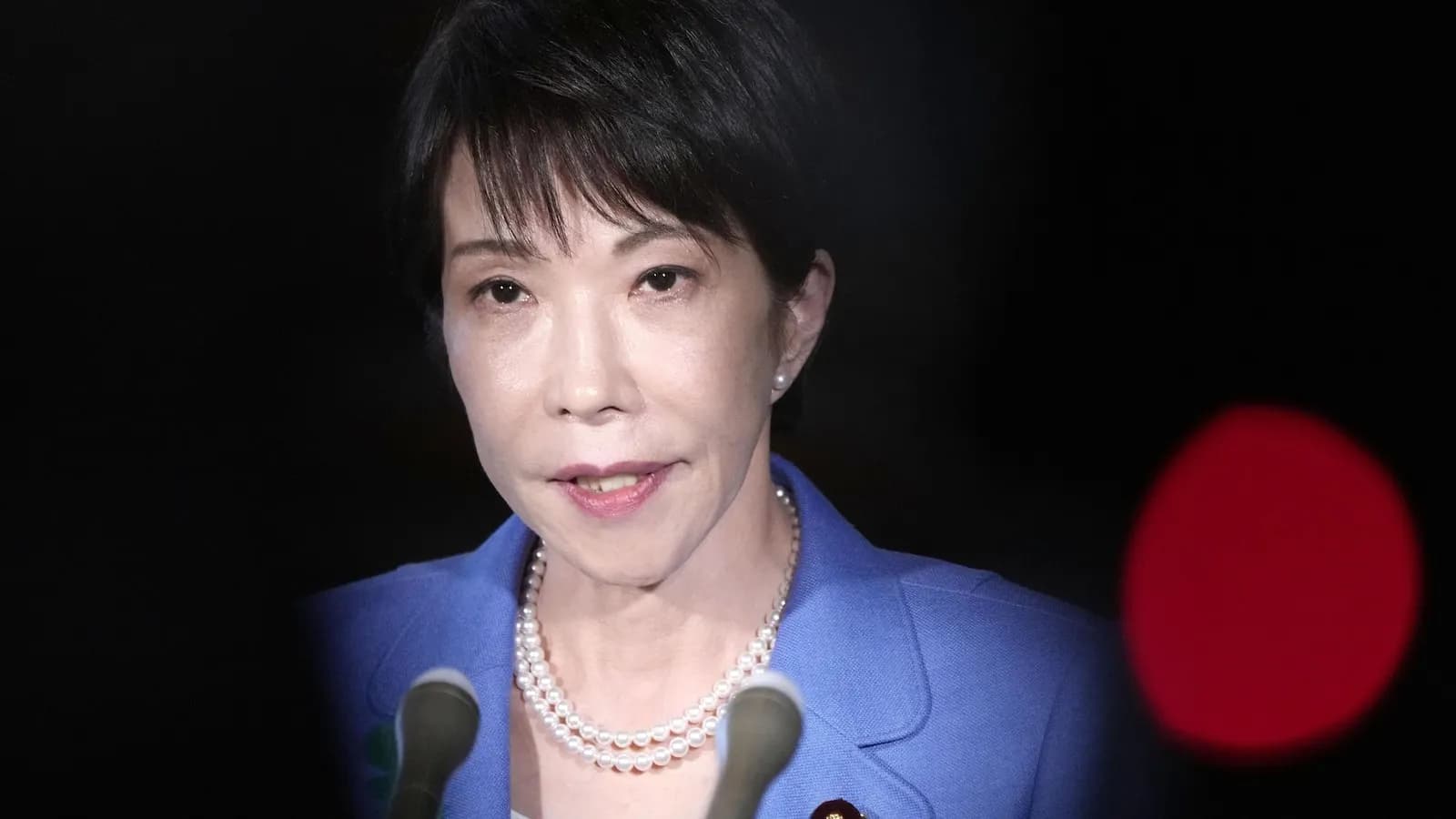
Japan on Tuesday scrapped the core limits that had kept most of its military exports confined to rescue, transport, warning, surveillance and minesweeping equipment, replacing that framework with case-by-case government review for broader overseas sales of defense equipment. The decision by Prime Minister Sanae Takaichi’s cabinet opens the way for exports of warships, missiles, fighter-related systems and other lethal hardware that would previously have been blocked under Japan’s postwar rules.
The move is not a technical tweak around the edges of procurement policy; it is a strategic rewrite of how Tokyo wants to use its defense industry. For decades, Japan’s manufacturers built advanced platforms but mostly served a single domestic customer, the Self-Defense Forces, under a political culture that treated overseas weapons sales as incompatible with the country’s pacifist identity after World War II. Tuesday’s decision keeps the language of restraint, but in practical terms it gives ministers room to approve exports that earlier governments had structurally fenced off.
Officials say the logic is both geopolitical and industrial. Chief Cabinet Secretary Minoru Kihara said the new policy is intended to improve Japan’s security environment and reinforce a domestic industrial base that could support national resilience in a crisis. Takaichi argued separately that no country can protect its own peace and security alone and that equipment cooperation with partner countries has become necessary. Reuters and other outlets reported that wars in Ukraine and the Middle East have strained U.S. and allied weapons production, creating space for Japanese manufacturers just as American allies in Europe and Asia are looking to diversify supply chains. Japan approves scrapping a ban on lethal weapons exports in a change of its postwar pacifist policyabcnews.com·UnverifiedJapan has endorsed scrapping a ban on lethal weapons exports, a major change of its postwar pacifist policy as the country seeks to build up its arms industry and deepen cooperation with defense partners TOKYO -- Japan on Tuesday endorsed scrapping a ban on lethal weapons exports, a major change of its postwar pacifist policy as the country seeks to build up its arms industry and deepen cooperation with defense partners.
The immediate commercial significance lies in who might buy first and what Tokyo is now allowed to offer. Reuters reported that officials and diplomats say countries from Poland to the Philippines have been exploring Japanese procurement options, with used warships for Manila among the earliest possible deals. ABC’s account of the new guideline says exports will, for now, be limited to 17 countries that have defense equipment and technology transfer agreements with Japan and still require approval by the National Security Council, followed by government monitoring of how the weapons are handled. That means Tokyo is loosening the gate, not abolishing it outright.Japan ends decades-old ban on lethal arms exports in major policy shiftdw.com·SecondaryJapan on Tuesday approved a major overhaul of defense export rules, ending long-standing restrictions on lethal weapons sales overseas and paving the way for exports of fighter jets, missiles and warships. "No single country can now protect its own peace and security alone, and partner countries that support each other in terms of defense equipment are necessary," Japanese Prime Minister Sanae Takaichi said in a post on X.
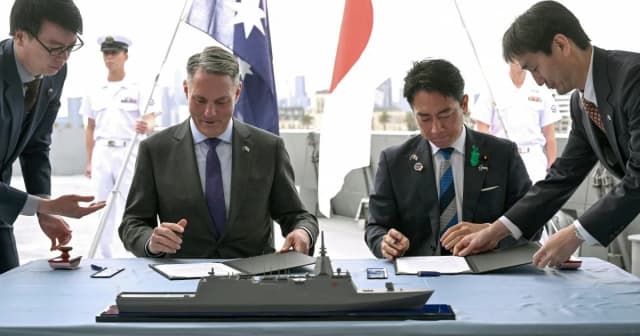
Supporters inside and outside government argue that the change reflects realities Japan has postponed confronting for years. Tokyo has already been raising defense spending, aiming around 2% of GDP in recent years according to Deutsche Welle, while buying missiles, drones and stealth aircraft to deter threats centered on China and the waters near Taiwan. The same government has also been pushing international defense projects, including a next-generation fighter with Britain and Italy and, according to ABC, a recently formalized $6.5 billion frigate package linked to Australia. From that perspective, keeping Japanese firms locked out of broader export markets while asking them to scale production and innovate never made much strategic sense.
Critics, however, see a more consequential break with the postwar settlement than the government is willing to admit. AP reported that opponents say scrapping the ban conflicts with the spirit of Japan’s pacifist constitution and risks raising tensions rather than stabilizing the region. China has already criticized the policy shift, while supportive governments such as Australia and interested buyers in Southeast Asia and Europe are reading it as a sign that Japan is becoming a more normal military supplier. The argument is not only legal or symbolic; it is about whether a country that long defined security through restraint is now normalizing an export logic that will be difficult to narrow later.
That tension is visible in the details of the rulebook itself. Japan says it is keeping three export principles, including screening, controls on third-country transfers and a ban on sales to states involved in conflict. Yet Reuters reported that a government presentation also allowed for exceptions when national security requires them. In other words, Tokyo is preserving the language of red lines while simultaneously giving itself a political mechanism to move around those lines when strategic interests press hard enough. For supporters that is prudent statecraft; for skeptics it is evidence that the restraint on paper may prove thinner in practice.
The domestic economic case is straightforward and likely to resonate across Japan’s industrial establishment. Mitsubishi Heavy Industries and other contractors can already build submarines, missiles and advanced aircraft, but decades of low-volume orders from one buyer limited profitability, production scale and incentives for younger firms to enter the sector. ABC reported that the Takaichi government now includes defense among 17 strategic growth areas and is increasing support for startups, research and dual-use technologies. If exports rise, officials expect larger production runs, lower unit costs and more manufacturing capacity that could be redirected in a military emergency.
The foreign-policy implications will unfold more slowly than the headline suggests. Tuesday’s cabinet decision does not automatically put Japanese missiles on ships bound for Europe or the South China Sea tomorrow, and every controversial sale will still carry domestic political risk. But it does mark a clear shift in baseline assumptions: Japan is no longer treating lethal arms exports as an exceptional taboo, but as a tool that can be justified when it strengthens alliances, supports industry and serves national strategy. That is a large change in one day, and the real test will come when Tokyo must approve its first genuinely contentious sale and explain where commercial opportunity ends and security necessity begins.
AI Transparency
Why this article was written and how editorial decisions were made.
Why This Topic
This cluster warrants publication because it marks a rare structural change in a G7 country’s postwar security doctrine, not a routine procurement update. Japan is moving lethal arms exports from near-taboo status to a managed policy instrument, with consequences for Asian security, allied supply chains, the defense industry and Tokyo’s constitutional debate. It is distinct from our recent Hungary, Apple and Rivian coverage and clearly exceeds the 6.0 threshold on both geopolitical importance and immediate policy consequence.
Source Selection
The cluster is strong enough to carry a balanced piece without outside numbered citations. Reuters provides the broad policy frame, likely first buyers and industrial logic; AP supplies the constitutional and opposition critique; ABC adds operational detail on the 17-country limit and approval process; DW captures Takaichi’s strategic framing and the 2% defense-spending context. Source diversity is materially better than the top-scoring Swiss deepfake cluster, which was built on two same-domain paywalled items and offered weaker evidence for a long bilingual article.
Editorial Decisions
Lead with the policy change and its practical effect, then balance Tokyo’s security rationale against constitutional and regional critics. Keep the tone descriptive and unsentimental. Avoid treating the move as automatically good or bad; emphasize that the real test is the first contentious export approval. Use only cluster-backed numbered citations and paraphrase rather than quote unless the wording is essential.
Reader Ratings
About the Author
Sources
- 1.abcnews.comUnverified
- 2.apnews.comSecondary
- 3.dw.comSecondary
- 4.channelnewsasia.comSecondary
Editorial Reviews
1 approved · 0 rejectedPrevious Draft Feedback (1)
• depth_and_context scored 5/3 minimum: The article excels by providing extensive background on Japan's historical pacifist constraints and the specific nature of the policy shift, moving far beyond mere reporting of the announcement. • narrative_structure scored 4/3 minimum: The structure is strong, moving logically from the immediate news hook to the implications, and concluding with a forward-looking assessment of the real test. It could benefit from a slightly punchier nut graf to synthesize the core tension immediately after the lede. • perspective_diversity scored 5/3 minimum: The piece masterfully incorporates multiple viewpoints, including government supporters, critics citing the pacifist constitution, and external observers like China, providing a comprehensive view of the debate. • analytical_value scored 5/3 minimum: The analysis is consistently high, interpreting the policy shift not just as a change in rules, but as a strategic pivot away from decades of restraint, discussing both geopolitical and industrial implications. • filler_and_redundancy scored 5/2 minimum: The writing is dense with necessary detail and analysis; there is no discernible padding or repetition that inflates the word count without adding substance. • language_and_clarity scored 4/3 minimum: The writing is highly professional and precise. To achieve a 5, the author should occasionally vary sentence structure in the middle sections to prevent the tone from becoming overly academic, but the language is otherwise excellent.
Discussion (0)
No comments yet.