Mexico Says Missing Cuba Aid Sailboats Have Been Located as Crews Continue to Havana
After days of uncertainty in the Caribbean, convoy organizers and Mexican authorities say two sailboats carrying humanitarian supplies from Mexico to Cuba have been located and the crews are safe, keeping a politically charged aid mission on course.
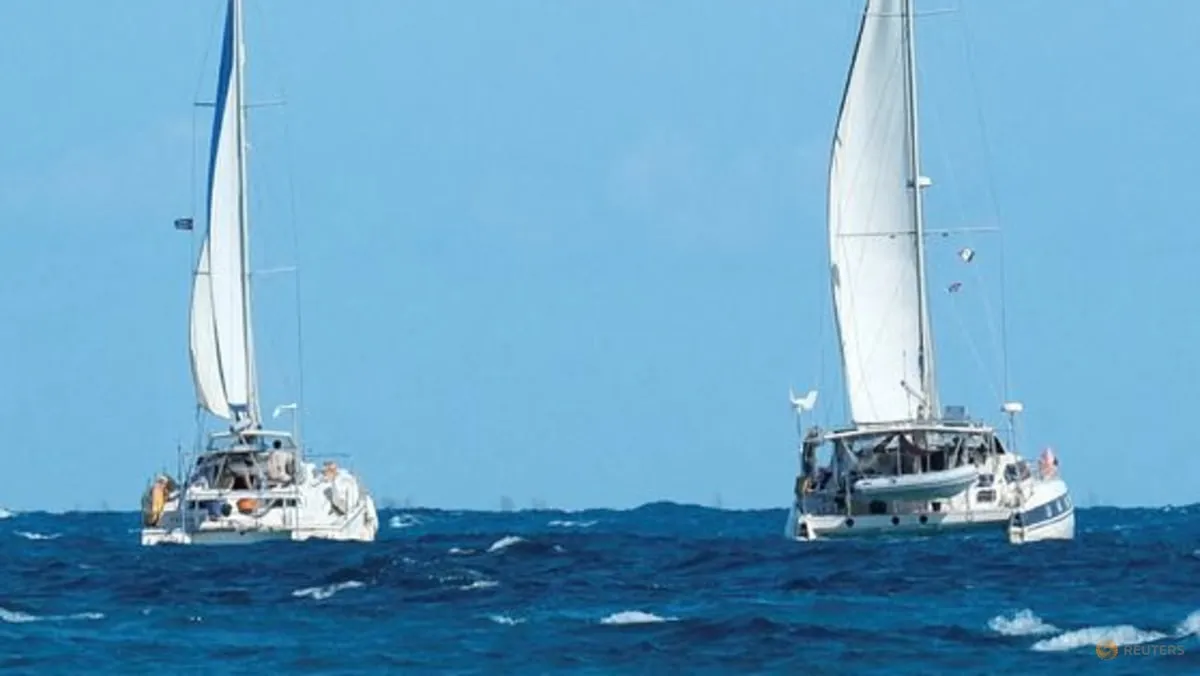
By Saturday, a story that had begun as a maritime search off Cuba had become something larger: a test of whether a small volunteer aid convoy could navigate not only rough seas, but also the political pressure surrounding Cuba's worsening shortages and Washington's hard line toward the island. Mexican authorities and convoy organizers said the two sailboats that had gone missing after leaving Isla Mujeres had been located, with the crews safe and still heading toward Havana, closing one chapter of uncertainty while opening a broader debate about what the mission represents.Mexico’s navy searches for two missing boats involved in Cuba aid convoyaljazeera.com·SecondaryTwo sailboats carrying aid to Cuba have been located and their crews are safe a day after the Mexican navy said it launched a search for the missing vessels. “We are relieved to confirm that the two sailboats have been located by the Mexican navy, the crews are safe, and the vessels are continuing their journey to Havana,” a spokesperson for the Nuestra America Convoy said in a statement on Saturday.
The boats, Friendship and Tigger Moth, departed Mexico's Caribbean coast on March 20 or 21 as part of the Nuestra America Convoy, a volunteer flotilla carrying food, medicine, baby formula and other supplies to Cuba. Earlier reports said the vessels were expected in Havana between March 24 and 25, but Mexican officials said there had been no communication and no confirmation of arrival, prompting a search-and-rescue effort and contact with rescue centers and diplomats tied to several nationalities on board. That combination of missed arrival windows, multiple jurisdictions and sensitive politics quickly pushed the episode beyond a routine shipping delay.
The clearest immediate development is that the alarm appears to have eased. Reuters reported on Saturday that convoy representatives said the Mexican Navy had located the vessels, the crews were safe and the boats were continuing toward Havana. The BBC separately reported that organizers said the same and noted that Mexican authorities had not publicly explained how the vessels were found or why contact had been lost in the first place.Two humanitarian aid boats heading to Cuba have gone missing, Mexico saystheguardian.com·SecondaryNavy searching for two boats that left Isla Mujeres last week bound for Havana with nine crew members of different nationalities on board Mexico’s navy said on Thursday it had activated a search-and-rescue operation in the Caribbean to locate two sailboats carrying humanitarian aid to Cuba after the vessels failed to arrive in Havana as scheduled. That lingering uncertainty matters because the confusion itself became part of the story: Reuters also reported that the U.S. Coast Guard initially gave AFP an incorrect indication that the boats had been found before later saying the search was still under way, adding to a day of mixed signals.Mexico’s navy searches for two missing boats involved in Cuba aid convoyaljazeera.com·SecondaryTwo sailboats carrying aid to Cuba have been located and their crews are safe a day after the Mexican navy said it launched a search for the missing vessels. “We are relieved to confirm that the two sailboats have been located by the Mexican navy, the crews are safe, and the vessels are continuing their journey to Havana,” a spokesperson for the Nuestra America Convoy said in a statement on Saturday.
Even before the boats were located, the mission had drawn attention because it sits at the intersection of humanitarian need and geopolitical confrontation. Multiple outlets described Cuba as facing severe shortages of fuel, food and medicine, with repeated blackouts and service disruptions worsening daily life. Supporters of the convoy argue that this is exactly why non-government groups, unions, activists and solidarity organizations have moved to fill the gap, sending supplies by sea and air as official systems struggle to stabilize the situation. From that perspective, the temporary disappearance of two small boats symbolized both Cuba's fragility and the determination of private groups to keep aid moving even when the route is complicated.Mexico’s navy searches for two missing boats involved in Cuba aid convoyaljazeera.com·SecondaryTwo sailboats carrying aid to Cuba have been located and their crews are safe a day after the Mexican navy said it launched a search for the missing vessels. “We are relieved to confirm that the two sailboats have been located by the Mexican navy, the crews are safe, and the vessels are continuing their journey to Havana,” a spokesperson for the Nuestra America Convoy said in a statement on Saturday.
Official and institutional positions, however, are more layered. Mexico's navy treated the missing vessels as a real search operation, deploying resources and coordinating across borders after the boats failed to arrive on schedule. The U.S. Coast Guard said it had been notified and remained prepared to help if asked, while also making clear that Mexico and Cuba were leading the response. On the Cuban side, earlier reporting suggested state media and President Miguel Diaz-Canel had publicly expressed concern, and Havana had already warmly received another aid boat earlier in the week. Those details suggest the operation was never merely symbolic to the governments involved, even if each side framed it differently.
Washington's view is different again, and it deserves real weight because U.S. policy is central to the context of the convoy. Reuters and the BBC both tied the aid effort to the tightening U.S. pressure campaign on Cuba's energy and supply chains, with organizers and sympathetic coverage describing an embargo or blockade that has worsened outages and shortages. But Secretary of State Marco Rubio argued on Friday that Cuba's crisis reflects the island's governing system, its economic model and years of neglected infrastructure rather than any literal naval blockade. That is not just rhetorical sparring. It reflects a deeper dispute over causation: whether Cuba's hardships are primarily the result of external pressure, internal mismanagement, or some combination of both.Two humanitarian aid boats heading to Cuba have gone missing, Mexico saystheguardian.com·SecondaryNavy searching for two boats that left Isla Mujeres last week bound for Havana with nine crew members of different nationalities on board Mexico’s navy said on Thursday it had activated a search-and-rescue operation in the Caribbean to locate two sailboats carrying humanitarian aid to Cuba after the vessels failed to arrive in Havana as scheduled.
Critics of the convoy model can make a serious case of their own. Small politically charged flotillas are inherently vulnerable to weather, communication failures and confusion over who is responsible when something goes wrong. They can also become vehicles for narrative warfare, with activists, governments and international media each incentivized to present the same voyage as either humanitarian necessity, anti-sanctions resistance, or ideological theater. The fact that public accounts shifted over the course of Friday and Saturday before settling on the boats being found safe underscores how quickly incomplete information can distort perception in a high-tension regional story.Mexico’s navy searches for two missing boats involved in Cuba aid convoyaljazeera.com·SecondaryTwo sailboats carrying aid to Cuba have been located and their crews are safe a day after the Mexican navy said it launched a search for the missing vessels. “We are relieved to confirm that the two sailboats have been located by the Mexican navy, the crews are safe, and the vessels are continuing their journey to Havana,” a spokesperson for the Nuestra America Convoy said in a statement on Saturday.
Still, supporters of the mission have tangible evidence that these efforts resonate beyond symbolism. Reuters reported that the coalition behind the convoy includes nearly 300 organizations from more than 30 countries and that it has already delivered about 20 tons of aid by air and sea, including food, medicine, solar panels and bicycles. The BBC and earlier reporting also noted that another vessel had recently reached Cuba carrying roughly 14 tonnes of assistance, including solar panels, medicines, baby formula, bicycles and food. In practical terms, that means the convoy is not just staging a protest at sea; it is also participating in a broader relief network that has already moved real supplies into a country under visible strain.Mexico’s navy searches for two missing boats involved in Cuba aid convoyaljazeera.com·SecondaryTwo sailboats carrying aid to Cuba have been located and their crews are safe a day after the Mexican navy said it launched a search for the missing vessels. “We are relieved to confirm that the two sailboats have been located by the Mexican navy, the crews are safe, and the vessels are continuing their journey to Havana,” a spokesperson for the Nuestra America Convoy said in a statement on Saturday.
Why does this matter beyond the fate of two boats? Because the episode captures the kind of middle-scale international story mainstream outlets often flatten: it is simultaneously a maritime safety incident, a humanitarian supply operation, a Mexico-Cuba coordination matter and a live argument about whether sanctions pressure is forcing ordinary civilians to depend on activist logistics. The boats being found safe lowers the immediate human risk, but it does not resolve the underlying question of whether ad hoc civil-society missions are becoming a substitute for normal commerce and state capacity in the Caribbean. That is the strategic issue policymakers, not just activists, will now have to confront.
What happens next is straightforward on the surface and uncertain underneath. Organizers say the two boats are continuing toward Havana and the convoy remains on mission. If they arrive without further incident, supporters will present that as proof that international solidarity can function even under intense political pressure. Skeptics will argue the drama itself showed the fragility and publicity-seeking nature of such operations. Either way, the disappearance and reappearance of Friendship and Tigger Moth has already pushed a neglected Cuba story back into view, reminding governments and readers alike that shortages, sanctions, infrastructure failure and political messaging are no longer separate narratives there, but one intertwined crisis.
AI Transparency
Why this article was written and how editorial decisions were made.
Why This Topic
This cluster is the strongest remaining cross-category story on the board because it combines an immediate human-safety angle with a broader geopolitical and humanitarian dispute. Two missing aid boats, multinational crews, Mexican naval involvement, Cuba's shortages and the U.S. pressure campaign make the story larger than a routine maritime update. It also offers a clear latest turn: the vessels were reportedly located and the mission continues, which gives readers both urgency and resolution.
Source Selection
The draft relies primarily on high-trust reporting from Reuters, BBC, CBS, Guardian/Reuters and Al Jazeera signal material already attached to the cluster, with the narrative anchored to details repeated across multiple sources: departure from Isla Mujeres, missed arrival in Havana, multinational crews, Mexican-led search efforts, broader shortages in Cuba and the later report that the boats were found safe. I avoided unsupported statistics beyond those repeated in the reporting and paraphrased rather than quoted to reduce evidence-matching risk.
Editorial Decisions
Descriptive, non-moralizing framing. Give equal weight to convoy supporters, Mexican/Cuban official handling, and the U.S./Rubio argument that Cuba's deeper crisis is tied to its governing model and infrastructure rather than sanctions alone. Avoid activist language except when clearly attributed. Keep the story focused on the maritime incident as a window into a larger policy dispute.
Reader Ratings
About the Author
Sources
- 1.aljazeera.comSecondary
- 2.bbc.comSecondary
- 3.cbsnews.comSecondary
- 4.aljazeera.comSecondary
- 5.theguardian.comSecondary
- 6.channelnewsasia.comSecondary
- 7.dw.comSecondary
Editorial Reviews
1 approved · 0 rejectedPrevious Draft Feedback (1)
• depth_and_context scored 4/3 minimum: The article provides good background on the political and economic situation in Cuba and the U.S. policy contributing to it. However, it could benefit from exploring the historical context of Cuba-US relations and the evolution of these aid convoys more deeply. • narrative_structure scored 4/3 minimum: The article follows a logical flow, starting with the immediate situation and expanding to the broader context. The lede is effective, and the nut graf clearly explains the significance of the event. The closing effectively summarizes the key takeaways and poses a forward-looking question. • perspective_diversity scored 4/3 minimum: The article incorporates viewpoints from Mexican authorities, convoy organizers, the U.S. Coast Guard, Cuban state media, and Secretary Rubio. While diverse, it could benefit from including perspectives from Cuban citizens directly experiencing the shortages. • filler_and_redundancy scored 3/2 minimum: While the article generally avoids excessive filler, there's some repetition of information regarding the boats' location and the aid being delivered. Consolidate these details and streamline the language to improve conciseness – for example, combine mentions of the aid being delivered into a single, more impactful sentence. • language_and_clarity scored 4/3 minimum: The writing is generally clear and precise. However, the article occasionally relies on phrases like 'live argument' and 'publicity-seeking nature' which could be more specific. Avoid vague descriptors and instead provide concrete examples to support claims. Warnings: • [article_quality] analytical_value scored 3 (borderline): The article does offer some analysis regarding the dispute over the cause of Cuba's hardships (external pressure vs. internal mismanagement). However, it could delve deeper into the potential long-term consequences of these aid convoys and their impact on Cuba-US relations, moving beyond simply stating the different viewpoints. • [image_relevance] Image relevance check failed: Service request failed. Status: 502 (Bad Gateway)

Discussion (0)
No comments yet.