Mexican miner rescued after 14 days in flooded Sinaloa mine as safety questions return
A rescue team brought Francisco Zapata Nájera out of a flooded Sinaloa gold mine on Wednesday after nearly 14 days underground, but the operation also revived long-running questions about mine oversight, emergency response and labor protections in Mexico.[1][2][3]
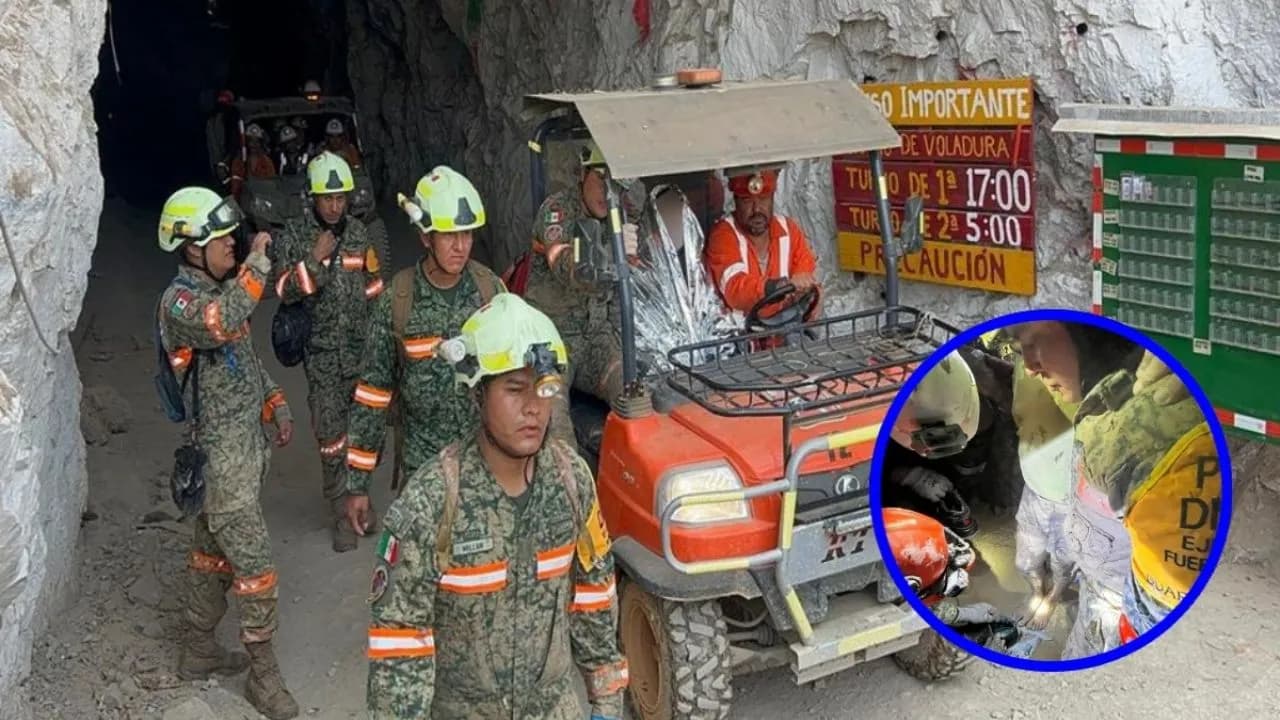
Rescuers in northwestern Mexico brought Francisco Zapata Nájera to the surface on Wednesday after he had spent nearly 14 days trapped inside a flooded gold mine in Sinaloa, closing one of the country’s most dramatic emergency operations of the spring while leaving the broader argument over mining safety far from settled.
The immediate facts are stark enough on their own. Authorities said a structural failure caused a dam breach at the El Rosario mine on March 25, flooding the shaft and trapping four workers. Of the 25 miners present at the time, 21 escaped immediately. One survivor was pulled out five days later from roughly 300 meters below ground, one miner was later found dead, and one remained missing even after Zapata Nájera was rescued alive. By Wednesday morning, rescue crews had stabilized him, moved him by helicopter to a hospital in Mazatlán, and described his condition as serious enough to require specialist care but stable enough for transfer.Trapped miner rescued from flooded Mexican tunnel after 14 daysbbc.com·SecondaryMexican army divers have rescued a miner from a flooded underground tunnel two weeks after he was first trapped. Francisco Zapata Nájera, 42, was stuck 300m (985ft) below ground after an embankment collapsed at the gold mine in the northern Mexican state of Sinaloa. Video of the rescue shows him standing in waist-deep water, telling his rescuers that he never lost faith during his ordeal. The search continues for another miner who is still missing.
What gave the rescue its emotional force was not only the length of time underground, but the sequence that preceded the final extraction. Officials said divers located Zapata Nájera on Tuesday, yet the waterlogged passages and debris meant teams could not reach him for another 21 hours. During that interval, military rescuers continued underwater reconnaissance and delivered food, water and oxygen before pulling him toward the mine entrance and then into the airlift to Mazatlán. That timeline matters because it explains both the official celebration around the rescue and the criticism that followed: the operation was plainly difficult, but it also underscored how dangerous the site had become before the first rescue diver even entered the shaft.Trapped miner rescued from flooded Mexican tunnel after 14 daysbbc.com·SecondaryMexican army divers have rescued a miner from a flooded underground tunnel two weeks after he was first trapped. Francisco Zapata Nájera, 42, was stuck 300m (985ft) below ground after an embankment collapsed at the gold mine in the northern Mexican state of Sinaloa. Video of the rescue shows him standing in waist-deep water, telling his rescuers that he never lost faith during his ordeal. The search continues for another miner who is still missing.
President Claudia Sheinbaum publicly confirmed the rescue while also acknowledging the grimmer balance of the accident: one miner dead, one still missing, and a national audience once again confronted with the risks of a sector that has repeatedly exposed gaps between formal regulation and conditions on the ground. The government’s position is straightforward. It can point to a prolonged, technically demanding operation that eventually saved a worker whom many had assumed would not come out alive. It can also argue that the military-led response, including specialist divers and helicopter evacuation, showed state capacity when the emergency reached its decisive stage. Those are real points, and it would be dishonest to brush them aside simply because critics dislike the broader politics around labor enforcement.
But the counterargument is just as real, and on this story it deserves equal weight. The same reporting that recorded the successful rescue also revived memories of earlier mining disasters in Mexico, especially the 2022 flooding at El Pinabete in Coahuila, where 10 miners died and authorities never managed to recover the bodies, and the 2006 Pasta de Conchos explosion, which killed 65 workers and still stands as the country’s deadliest mining accident. Those episodes remain central because they are not merely historical color. They define the lens through which labor advocates, opposition critics and many mining families interpret every new promise of reform. Their case is that Mexico does not mainly suffer from a lack of official statements after a collapse; it suffers from a chronic inability to guarantee that known risks are reduced before a collapse occurs.Trapped miner rescued from flooded Mexican tunnel after 14 daysbbc.com·SecondaryMexican army divers have rescued a miner from a flooded underground tunnel two weeks after he was first trapped. Francisco Zapata Nájera, 42, was stuck 300m (985ft) below ground after an embankment collapsed at the gold mine in the northern Mexican state of Sinaloa. Video of the rescue shows him standing in waist-deep water, telling his rescuers that he never lost faith during his ordeal. The search continues for another miner who is still missing.
That tension is what makes the Sinaloa rescue more than a human-interest story. On one level, it is a survival account: a man endured almost two weeks in a flooded shaft and came out alive after rescuers kept searching. On another level, it is a referendum on the credibility of the country’s safety regime. Governments often receive political credit for spectacular rescues because rescues are visible, dramatic and easy to narrate. Prevention is different. Preventive enforcement means inspections, shutdowns, engineering checks, paperwork that operators hate, and public accountability before there are television pictures of soldiers and helicopters. A skeptical reader is entitled to ask whether official Mexico is better at staging the last chapter of a disaster than at preventing the first one.
There is also an economic and regional dimension that deserves more attention than it usually gets in international coverage. Mines in states such as Sinaloa are not abstractions; they are employers, anchors of local contractor networks and, in some communities, one of the few paths to stable wages. That reality helps explain why tougher oversight is politically harder than it sounds. Local economies depend on production continuing, and national governments do not like being accused of sacrificing jobs in the name of rules written in the capital. Business-minded defenders of the sector therefore argue that the right lesson from Sinaloa is not to demonize mining, but to invest in better emergency planning, drainage controls and enforceable engineering standards so extraction can continue without turning every accident into a national scandal. That is a serious argument, not a public-relations slogan, and it should be met honestly rather than caricatured.Trapped miner rescued from flooded Mexican tunnel after 14 daysbbc.com·SecondaryMexican army divers have rescued a miner from a flooded underground tunnel two weeks after he was first trapped. Francisco Zapata Nájera, 42, was stuck 300m (985ft) below ground after an embankment collapsed at the gold mine in the northern Mexican state of Sinaloa. Video of the rescue shows him standing in waist-deep water, telling his rescuers that he never lost faith during his ordeal. The search continues for another miner who is still missing.
Still, a serious defense of mining has to reckon with the pattern visible in the reporting. When accidents recur in ways that repeatedly expose absent safeguards or weak supervision, calls for patience start sounding like another way of asking workers to absorb the risk while officials and operators debate reforms at a comfortable distance.Trapped miner rescued from flooded Mexican tunnel after 14 daysbbc.com·SecondaryMexican army divers have rescued a miner from a flooded underground tunnel two weeks after he was first trapped. Francisco Zapata Nájera, 42, was stuck 300m (985ft) below ground after an embankment collapsed at the gold mine in the northern Mexican state of Sinaloa. Video of the rescue shows him standing in waist-deep water, telling his rescuers that he never lost faith during his ordeal. The search continues for another miner who is still missing. Even the language surrounding the Sinaloa rescue points in two directions at once. The state can say, correctly, that trained personnel carried out an extraordinarily difficult extraction. Workers’ families and labor critics can respond, also correctly, that an extraordinary rescue is not proof of an ordinary system functioning well. In hard industries, conservative realism cuts both ways: people need jobs, but rules that exist largely on paper are not a substitute for competent oversight.
Another reason the story matters is that it arrives in a political era when Latin American governments routinely promise stronger protection for workers while still confronting old institutional weaknesses at the local and state levels. Sheinbaum’s administration inherits not just a policy file but a public trust problem. Each mining accident becomes a test of whether authorities can persuade citizens that the state is capable of more than reactive crisis management.Trapped miner rescued from flooded Mexican tunnel after 14 daysbbc.com·SecondaryMexican army divers have rescued a miner from a flooded underground tunnel two weeks after he was first trapped. Francisco Zapata Nájera, 42, was stuck 300m (985ft) below ground after an embankment collapsed at the gold mine in the northern Mexican state of Sinaloa. Video of the rescue shows him standing in waist-deep water, telling his rescuers that he never lost faith during his ordeal. The search continues for another miner who is still missing. The rescue of Zapata Nájera gives the government an undeniable operational success. It does not, by itself, answer the harder question of whether mine operators are being inspected rigorously enough, whether drainage and structural risks are being monitored properly, or whether lessons from prior disasters are reaching the places where the next preventable accident begins.
For now, the humane instinct is to focus first on the man who survived. That is fair. Zapata Nájera’s rescue after nearly two weeks underground is a genuine feat, and the rescuers who kept searching earned public credit for refusing to write him off. But the larger public lesson should not be sentimentalized away. Mexico now has one more rescue story to honor and one more reminder that mining policy is judged not only by courage after collapse, but by seriousness before collapse. If the result of this week’s celebration is only another round of promises, the country will have learned far less from Sinaloa than it should.Trapped miner rescued from flooded Mexican tunnel after 14 daysbbc.com·SecondaryMexican army divers have rescued a miner from a flooded underground tunnel two weeks after he was first trapped. Francisco Zapata Nájera, 42, was stuck 300m (985ft) below ground after an embankment collapsed at the gold mine in the northern Mexican state of Sinaloa. Video of the rescue shows him standing in waist-deep water, telling his rescuers that he never lost faith during his ordeal. The search continues for another miner who is still missing.
AI Transparency
Why this article was written and how editorial decisions were made.
Why This Topic
This cluster is newsworthy because it combines a dramatic human rescue with a broader public-interest policy question. A miner surviving nearly two weeks in a flooded shaft is inherently compelling, but the story matters more because it reopens scrutiny of mine regulation, emergency preparedness and labor safety in Mexico after earlier deadly disasters. It is distinct from the ceasefire-heavy global news cycle and offers a concrete, high-stakes event with clear consequences for government credibility, regional employment politics and public confidence in industrial oversight.
Source Selection
The core factual record comes from AP and ABC/Associated Press-style wire reporting inside the cluster, supported by a second brief signal from Al Jazeera. Those sources establish the chronology of the collapse, the number of miners involved, the timeline of the rescue, Sheinbaum’s public confirmation and the historical comparison points of El Pinabete and Pasta de Conchos. Additional external reading was used only to sharpen scene-setting around the rescue mechanics and transport, not to introduce new numbered factual claims beyond the cluster’s source set.
Editorial Decisions
Frame the story as both a rescue and a test of state credibility on mine safety. Keep the tone descriptive and restrained. Give the government due credit for the technically difficult rescue, but also give labor-safety criticism equal weight instead of treating it as a perfunctory add-on. Avoid romanticized rescue language and avoid activist rhetoric. The piece should question whether Mexico’s institutions are better at emergency response than prevention without making claims beyond the sourced record.
Reader Ratings
About the Author
Sources
- 1.bbc.comSecondary
- 2.apnews.comSecondary
- 3.aljazeera.comSecondary
- 4.euronews.comSecondary
- 5.abcnews.comUnverified
Editorial Reviews
1 approved · 0 rejectedPrevious Draft Feedback (1)
• depth_and_context scored 4/3 minimum: The article provides good background on past mining disasters and connects them to the current situation, explaining the broader context of mining safety in Mexico. However, it could benefit from exploring the specific geological conditions of the Sinaloa region that might contribute to mining instability and the history of gold mining in the area. • narrative_structure scored 5/3 minimum: The article has a clear and compelling narrative arc, starting with the rescue and then expanding to the broader context and implications. The lede is effective, the nut graf clearly establishes the story's significance, and the closing provides a thoughtful conclusion. • perspective_diversity scored 4/3 minimum: The article presents multiple perspectives, including those of the government, labor advocates, mining families, and business defenders. While it does a good job of representing these viewpoints, it could benefit from including direct quotes or perspectives from the rescued miner himself or his family. • analytical_value scored 4/3 minimum: The article goes beyond simply recounting events and offers analysis of the political and economic implications of the rescue. It effectively examines the tension between government claims of success and the persistent concerns about mining safety, but could delve deeper into the specific regulatory loopholes or enforcement challenges that contribute to the problem. • filler_and_redundancy scored 3/2 minimum: While the article avoids egregious filler, there's some repetition of the core argument about the contrast between rescue efforts and preventative measures. Streamline the paragraphs discussing the government's position and the counterarguments to avoid reiterating the same points. • language_and_clarity scored 4/3 minimum: The writing is generally clear and precise, although some phrases like 'a national audience once again confronted with the risks' are slightly clunky. Avoid vague phrasing and ensure all technical terms related to mining are explained for a broader audience.


Discussion (0)
No comments yet.