Mexico says dead U.S. agents lacked authorization for Chihuahua operation
Mexico says two U.S. agents killed after a Chihuahua anti-drug raid were not accredited to take part in operations on Mexican soil, turning a fatal crash into a fresh dispute over sovereignty, intelligence cooperation and the limits of U.S. security activity in Mexico.[1][2]
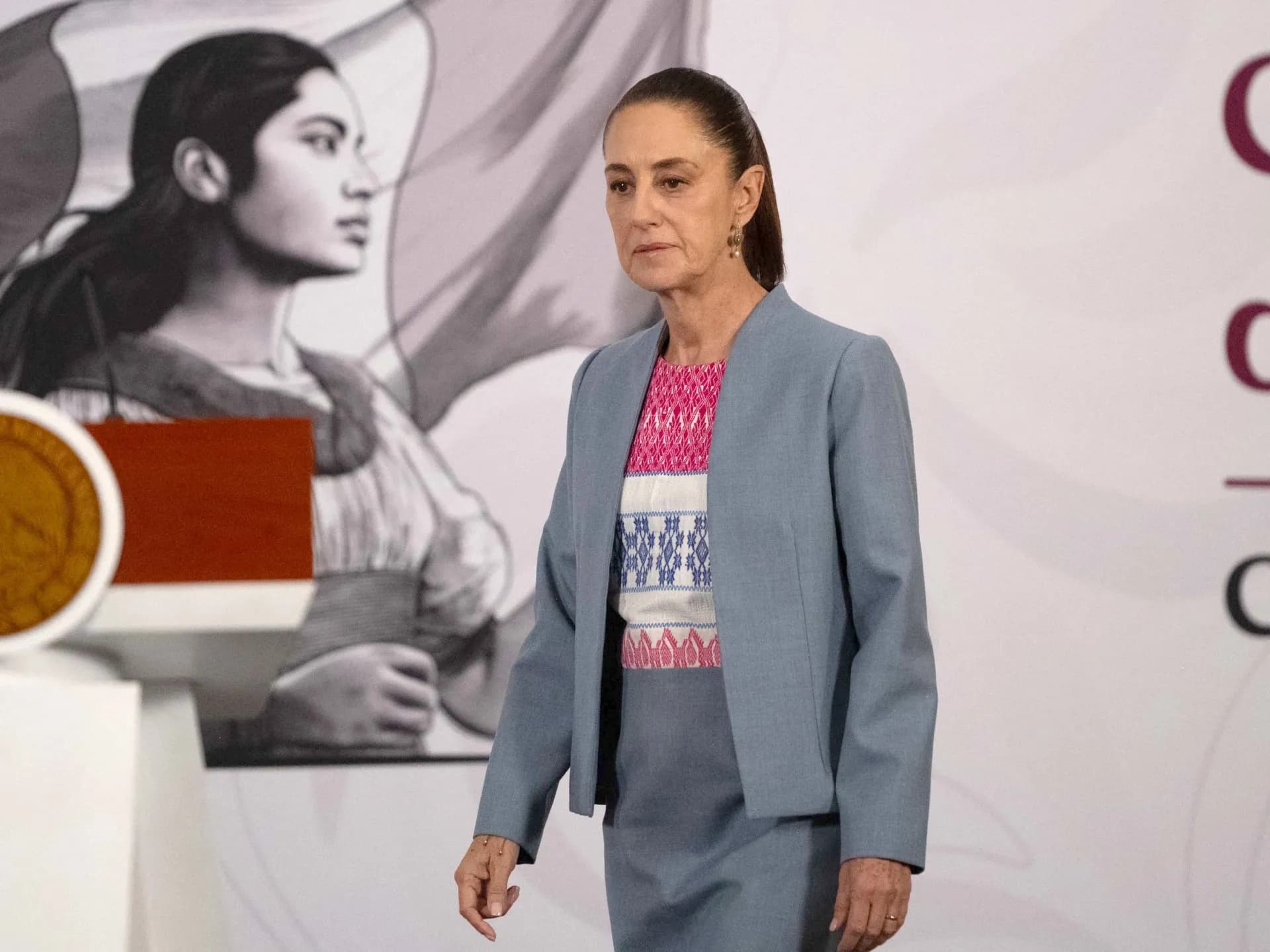
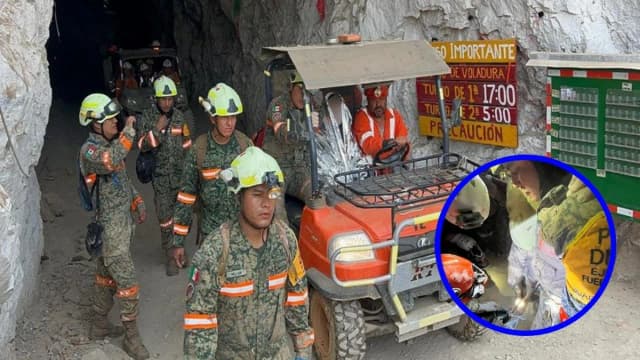
Mexico’s dispute with Washington over counter-narcotics cooperation sharpened on Saturday after Mexico’s government said two U.S. agents killed in a crash in Chihuahua had not been authorized to participate in operational work inside the country. The agents were part of a convoy returning from an operation against suspected methamphetamine laboratories in a mountainous area of Chihuahua when the vehicle left the road and plunged into a ravine, according to accounts cited by BBC and Al Jazeera. Two members of the Chihuahua State Investigation Agency also died in the crash, turning what might have remained a local security tragedy into a bilateral political issue with implications well beyond the accident scene.Presence of reported US CIA agents killed in crash not authorised: Mexicoaljazeera.com·SecondaryThe Mexican government has said two federal agents from the United States killed in a car crash in connection with an anti-narcotics raid – widely reported to be CIA officers – were not authorised to operate on Mexican territory. Mexico’s security cabinet said in a statement on Saturday that one of the US citizens had entered the country as a visitor and the other on a diplomatic passport.
Mexico’s security authorities said immigration records showed one of the Americans entered as a visitor and the other on a diplomatic passport, but that neither had formal accreditation to carry out operational activities in Mexican territory. The government said federal authorities had not been informed of their presence in the raid, and it framed the matter not as a routine paperwork dispute but as a sovereignty question governed by Mexican law.Presence of reported US CIA agents killed in crash not authorised: Mexicoaljazeera.com·SecondaryThe Mexican government has said two federal agents from the United States killed in a car crash in connection with an anti-narcotics raid – widely reported to be CIA officers – were not authorised to operate on Mexican territory. Mexico’s security cabinet said in a statement on Saturday that one of the US citizens had entered the country as a visitor and the other on a diplomatic passport. President Claudia Sheinbaum has repeatedly argued that Mexico will cooperate with foreign governments only within its own constitutional and legal framework, and in a statement published Friday she again said sovereignty and principles are not negotiable.
That official line matters because the Trump administration has been pressing Mexico to intensify action against drug trafficking while also floating tougher, more direct U.S. security measures in the region. Sheinbaum has tried to walk a narrow line: she has pursued a broader crackdown on trafficking networks and the dismantling of clandestine laboratories, while also insisting there will be no foreign operations on Mexican soil without prior approval from the federal government.Presence of reported US CIA agents killed in crash not authorised: Mexicoaljazeera.com·SecondaryThe Mexican government has said two federal agents from the United States killed in a car crash in connection with an anti-narcotics raid – widely reported to be CIA officers – were not authorised to operate on Mexican territory. Mexico’s security cabinet said in a statement on Saturday that one of the US citizens had entered the country as a visitor and the other on a diplomatic passport. Her office says Mexico coordinates with foreign governments under four rules: respect for sovereignty and territorial integrity, shared but differentiated responsibility, mutual respect and trust, and cooperation without subordination.
From Mexico City’s perspective, the issue is not whether the United States can share intelligence or support training, but whether foreign personnel crossed from support into operational involvement without the federal government’s consent. Sheinbaum said earlier in the week that her administration would examine whether Mexico’s national security law had been violated, and she warned that Mexicans should not take lightly the possibility that foreigners participated in an operation without proper authorization.Mexico says 2 CIA agents killed in crash weren't authorized to participate in local raidcbsnews.com·SecondaryMexico's government said Saturday that two U.S. federal agents recently killed in a car crash in the country's northern region were not authorized to participate in operations in Mexico. The two Americans killed in the crash were employees of the CIA, multiple people familiar with the matter told CBS News earlier this week. The CIA declined to comment. That framing gives the government room to defend cooperation in principle while pushing back hard against what it sees as unilateral or opaque U.S. activity.Mexico says 2 CIA agents killed in crash weren't authorized to participate in local raidcbsnews.com·SecondaryMexico's government said Saturday that two U.S. federal agents recently killed in a car crash in the country's northern region were not authorized to participate in operations in Mexico. The two Americans killed in the crash were employees of the CIA, multiple people familiar with the matter told CBS News earlier this week. The CIA declined to comment.
The U.S. side, at least publicly, has been more restrained and more ambiguous. U.S. authorities have not formally confirmed that the two dead Americans were CIA officers, even though multiple reports cited in the coverage say they were widely believed to be connected to the agency. After the crash, U.S. Ambassador Ronald Johnson referred to the dead men as embassy personnel and said their deaths strengthened the shared mission of security and justice, language that underscored continuing cooperation but stopped short of clarifying the exact legal status of their role in the Chihuahua operation.Mexico says 2 CIA agents killed in crash weren't authorized to participate in local raidcbsnews.com·SecondaryMexico's government said Saturday that two U.S. federal agents recently killed in a car crash in the country's northern region were not authorized to participate in operations in Mexico. The two Americans killed in the crash were employees of the CIA, multiple people familiar with the matter told CBS News earlier this week. The CIA declined to comment. At the state level, Chihuahua Attorney General César Jáuregui described the Americans as instructor officers engaged in training work and normal exchange with U.S. authorities, a description that points to a narrower role than the one implied by Mexico’s federal review.Presence of reported US CIA agents killed in crash not authorised: Mexicoaljazeera.com·SecondaryThe Mexican government has said two federal agents from the United States killed in a car crash in connection with an anti-narcotics raid – widely reported to be CIA officers – were not authorised to operate on Mexican territory. Mexico’s security cabinet said in a statement on Saturday that one of the US citizens had entered the country as a visitor and the other on a diplomatic passport.
That gap between the federal Mexican account and the embassy-state account is why the story matters beyond one operation. If the men were only trainers or liaison personnel, Washington can argue the incident reflects a confused chain of command or incomplete notification rather than a deliberate breach. If, however, Mexico concludes that they took part directly in an enforcement raid without proper accreditation, Sheinbaum will face domestic pressure to tighten legal controls on future cooperation and to show that her government, not local partners or foreign services, sets the terms for anti-cartel work.Mexico says 2 CIA agents killed in crash weren't authorized to participate in local raidcbsnews.com·SecondaryMexico's government said Saturday that two U.S. federal agents recently killed in a car crash in the country's northern region were not authorized to participate in operations in Mexico. The two Americans killed in the crash were employees of the CIA, multiple people familiar with the matter told CBS News earlier this week. The CIA declined to comment.
Critics of the Mexican government are likely to argue that the administration is using sovereignty language to limit practical cooperation just as cartel violence and synthetic-drug trafficking continue to threaten both countries. Supporters of a harder U.S. line can point to the scale of the fentanyl and methamphetamine problem and say Mexico benefits from American intelligence, equipment and training even while publicly resisting deeper joint action. But the contrary case is not trivial: Sheinbaum’s government says security cooperation is acceptable only if it is transparent, federally authorized and consistent with Mexico’s laws, and it argues that allowing undeclared foreign participation would weaken democratic accountability at home.Mexico says 2 CIA agents killed in crash weren't authorized to participate in local raidcbsnews.com·SecondaryMexico's government said Saturday that two U.S. federal agents recently killed in a car crash in the country's northern region were not authorized to participate in operations in Mexico. The two Americans killed in the crash were employees of the CIA, multiple people familiar with the matter told CBS News earlier this week. The CIA declined to comment.
There is also a longer historical shadow over the dispute. BBC cited a Reuters investigation from last year reporting that the CIA had for years conducted covert work in Mexico focused on major traffickers, while also providing selected Mexican units with training, equipment and financial support with the Mexican government’s approval. That history shows the two countries already have an extensive security relationship, but it also explains why questions about who knew what, and at what level of government, can become explosive whenever an operation goes wrong. Cooperation exists; the dispute is over consent, visibility and control.Presence of reported US CIA agents killed in crash not authorised: Mexicoaljazeera.com·SecondaryThe Mexican government has said two federal agents from the United States killed in a car crash in connection with an anti-narcotics raid – widely reported to be CIA officers – were not authorised to operate on Mexican territory. Mexico’s security cabinet said in a statement on Saturday that one of the US citizens had entered the country as a visitor and the other on a diplomatic passport.
For now, the immediate facts are narrow but politically potent: two U.S. agents are dead, two Mexican investigators are dead, and Mexico’s government says the Americans were not cleared to do what they were doing. The next stage will depend on whether Mexico publishes a fuller legal account, whether Washington offers a more explicit explanation of the men’s status, and whether the affair stays confined to a bureaucratic dispute or grows into a broader confrontation over Trump-era security policy in Latin America. Either way, the episode has revived one of the oldest tensions in the U.S.-Mexico relationship: both governments say they want cooperation against organized crime, but they remain far apart on who gets to command it, supervise it and claim the political risk when it goes wrong.Presence of reported US CIA agents killed in crash not authorised: Mexicoaljazeera.com·SecondaryThe Mexican government has said two federal agents from the United States killed in a car crash in connection with an anti-narcotics raid – widely reported to be CIA officers – were not authorised to operate on Mexican territory. Mexico’s security cabinet said in a statement on Saturday that one of the US citizens had entered the country as a visitor and the other on a diplomatic passport.
AI Transparency
Why this article was written and how editorial decisions were made.
Why This Topic
This cluster is newsworthy because it turns a fatal anti-drug operation into a live dispute over the rules of U.S.-Mexico security cooperation. The underlying event is immediate, involves deaths on both sides of the border, and sits at the intersection of cartel policy, sovereignty, intelligence work and Trump-era pressure on Mexico. It is materially different from routine crime coverage because the central question is state authority: whether foreign personnel crossed from training and liaison into operational activity without federal authorization. That makes it a consequential diplomatic and constitutional story, not just an accident brief.
Source Selection
The sourcing balances three necessary angles. BBC provides the clearest compact account of the crash, the accreditation issue and the Chihuahua prosecutor's narrower description of the Americans as instructor officers, while also carrying the Reuters background on prior CIA activity in Mexico.[1] Al Jazeera adds direct language from Mexico's security cabinet, Sheinbaum's warning that the issue should not be taken lightly, and Ambassador Ronald Johnson's public statement, which helps represent the U.S. side without inventing confirmation that Washington has not given.[2] The official gob.mx statement anchors Mexico's broader sovereignty doctrine in the government's own words and is essential for explaining why the incident has become politically explosive.
Editorial Decisions
Neutral, descriptive framing. Lead with the sovereignty dispute triggered by the crash, not with unverified espionage claims. Give Mexico's legal and political position full weight while also presenting the U.S./state-level explanation that the dead Americans were embassy-linked instructor officers. Avoid moralizing and avoid overstating facts that U.S. authorities have not formally confirmed.
Reader Ratings
About the Author
Sources
- 1.aljazeera.comSecondary
- 2.cbsnews.comSecondary
- 3.abcnews.comUnverified
- 4.apnews.comSecondary
- 5.bbc.comSecondary
Editorial Reviews
1 approved · 0 rejectedPrevious Draft Feedback (4)
• depth_and_context scored 5/3 minimum: The article excels by providing necessary historical context (CIA involvement, past cooperation) and framing the immediate incident within the broader, ongoing geopolitical tension between the two nations. It clearly explains *why* this specific accident matters beyond the immediate tragedy. • narrative_structure scored 4/3 minimum: The structure is strong, moving logically from the immediate incident (the crash) to the core dispute (sovereignty/authorization), and concluding with the broader implications. It could benefit from a slightly punchier nut graf to immediately synthesize the conflict, but the overall arc is very clear. • perspective_diversity scored 5/3 minimum: The piece masterfully balances multiple viewpoints: the Mexican federal government's sovereignty stance, the U.S. embassy's restrained language, the state-level Mexican account, and the critical perspectives from both sides (critics vs. supporters of a hard line). This creates a rich, multi-faceted picture. • analytical_value scored 5/3 minimum: The analysis is consistently high, moving beyond mere reporting to interpret the political stakes. It effectively frames the dispute as a conflict over 'consent, visibility and control,' which is a sophisticated and valuable takeaway for the reader. • filler_and_redundancy scored 5/2 minimum: The writing is dense with information but highly efficient. It uses repetition strategically to reinforce key concepts (e.g., sovereignty, authorization) without sounding redundant, maintaining a high information-to-word ratio. • language_and_clarity scored 5/3 minimum: The prose is crisp, authoritative, and precise. It avoids generic labels, instead focusing on describing the specific policies and actions (e.g., 'federally authorized,' 'constitutional framework'), which lends significant credibility to the reporting.
Rejected after 3 review rounds. 1 gate errors: • [citations] Inline citation [3] references a source that doesn't exist (article has 2 sources).
1 gate errors: • [citations] Inline citation [3] references a source that doesn't exist (article has 2 sources).
1 gate errors: • [citations] Inline citation [3] references a source that doesn't exist (article has 2 sources).
Discussion (0)
No comments yet.