Gunman kills Canadian tourist and injures 13 at Teotihuacan as Mexico weighs security response
A gunman opened fire on visitors at Mexico’s Teotihuacan pyramids, killing a Canadian tourist and injuring 13 others before taking his own life, according to Mexican authorities, in an attack that is forcing scrutiny of security at one of the country’s most visited archaeological sites.
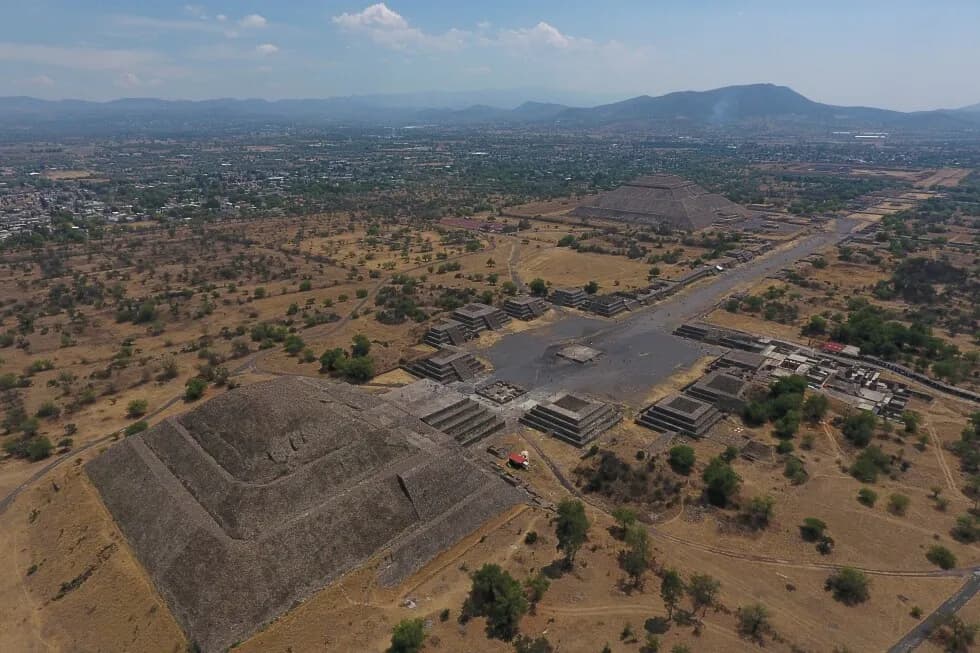
Visitors had climbed the Pyramid of the Moon on a warm Monday morning expecting the usual view over Teotihuacan’s Avenue of the Dead. Instead, according to Mexican authorities and witness accounts, gunfire broke out from the monument itself, sending tourists scrambling down steep stone steps and leaving one Canadian woman dead, 13 other people injured and one of Mexico’s most heavily visited historic sites abruptly closed.
Mexican officials said the shooter later died from a self-inflicted gunshot wound after opening fire at the archaeological complex north of Mexico City, a UNESCO World Heritage site that drew more than 1.8 million international visitors last year. Authorities said they recovered a firearm, a knife and ammunition at the scene, and the State of Mexico government said the assailant was acting alone. That point matters politically because Mexico is under constant pressure to show it can distinguish between the country’s chronic organized-crime violence and rarer attacks on civilians at symbolic tourist destinations.Gunman kills Canadian woman, injures more at Mexico’s Teotihuacan pyramidsaljazeera.com·SecondaryA man shot a Canadian woman dead and injured six others before killing himself on Monday at Mexico’s Teotihuacan pyramids, a popular tourist and archaeological site outside of Mexico City, according to authorities. Mexico’s security cabinet said the injured people were receiving medical care. Canada’s foreign ministry did not immediately reply to a request for comment from Reuters.
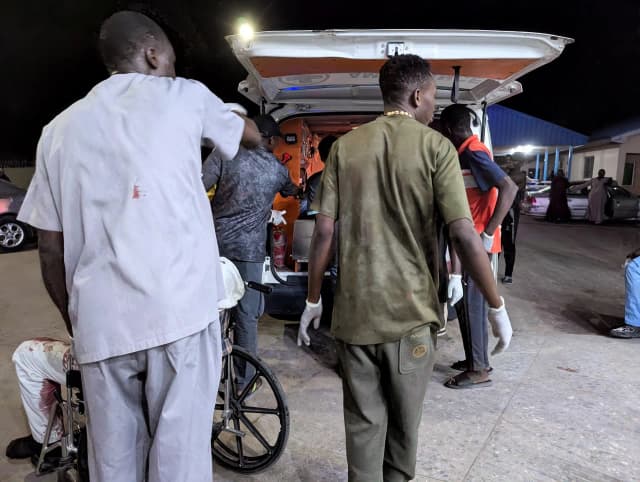
The casualty count sharpened as the day went on. AP, citing local authorities, reported that one Canadian was killed and at least 13 people were injured, including six Americans, three Colombians, two Brazilians, one Russian and one additional Canadian among those taken for treatment. CBS, citing Mexico’s Security Cabinet and Interior Ministry, reported that at least seven people suffered gunshot wounds, at least two others were hurt in falls and eight people were still hospitalized Monday night. France 24, citing local officials and AFP reporting, described six gunshot victims and seven additional injuries in the panic that followed. The variation in the injury breakdown reflects the confusion of the first hours, but all three accounts point in the same direction: this was not an isolated wound count involving one or two bystanders, but a mass-casualty event inside one of Mexico’s flagship heritage sites.
Witness descriptions underline how exposed the visitors were. AP reported that a tour guide at the scene said the shooting began shortly after 11:30 a.m. while dozens of tourists were on or near the Pyramid of the Moon, and that some visitors threw themselves face down while others rushed down the steps as shots continued. France 24 cited videos circulating on social media that appeared to show the gunman firing from partway up the pyramid while tourists tried to take cover behind stairs below. CBS said verified video showed a man with a gun pacing near the top of the monument. The picture that emerges is not of a contained perimeter incident near an entrance, but of an attack unfolding in the middle of the visitor experience, where evacuation is difficult and cover is scarce.
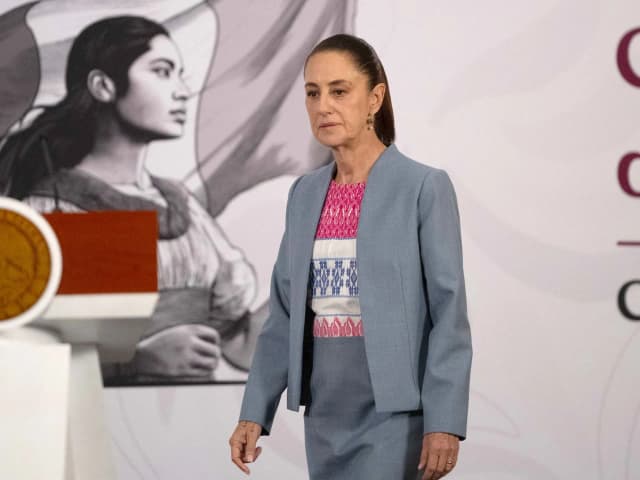
President Claudia Sheinbaum moved quickly to frame the response in official terms. She said the attack would be thoroughly investigated, expressed solidarity with the victims and their families and said Mexican authorities were in contact with the Canadian embassy. Federal and state security personnel were dispatched to the area, according to France 24, while the National Institute of Anthropology and History said the site would remain closed until further notice. That official posture is straightforward: reassure foreign governments, show visible state presence and avoid any impression that one of Mexico’s most recognizable tourist sites is being left to improvise its own security response.
There is, however, an uncomfortable question beneath the official statements. AP reported that a local guide said security scans that had been used in past years at the archaeological site had since been discontinued. If that account holds up, it is likely to intensify criticism not only from opposition voices but also from ordinary tourism-sector operators who depend on the image of predictable safety around major heritage destinations. Mexico’s government has strong incentives to argue that the attack was an exceptional act by a lone gunman rather than evidence of a broad security lapse, but critics will press the opposite case: that visible screening and hard-site controls were relaxed at exactly the kind of high-profile location where deterrence matters most.Gunman kills Canadian woman, injures more at Mexico’s Teotihuacan pyramidsaljazeera.com·SecondaryA man shot a Canadian woman dead and injured six others before killing himself on Monday at Mexico’s Teotihuacan pyramids, a popular tourist and archaeological site outside of Mexico City, according to authorities. Mexico’s security cabinet said the injured people were receiving medical care. Canada’s foreign ministry did not immediately reply to a request for comment from Reuters.
The timing gives that argument extra force. France 24 noted that the shooting came less than two months before the 2026 World Cup opens with matches in Mexico, the United States and Canada, and that Mexico expects more than 5.5 million visitors during the tournament period. Officials will say, with some justification, that an archaeological site outside the capital is not the same as a World Cup stadium or a tournament transit corridor. But political opponents and skeptical foreign observers are unlikely to keep those categories fully separate. A deadly shooting at a world-famous destination can shape perceptions far beyond the immediate location, especially when one victim is Canadian and several of the injured are Americans.
Teotihuacan’s symbolic importance also raises the stakes. The pre-Hispanic city, built between the first and seventh centuries and known for the Pyramid of the Sun, the Pyramid of the Moon and the Avenue of the Dead, is not simply another stop on the leisure map. It is one of Mexico’s best-known cultural landmarks, used repeatedly in the country’s own tourism image and recognized internationally as part of the civilizational history of Mesoamerica. Violence there lands differently from violence on a highway or in a neighborhood dispute. It is interpreted as violence intruding into a place the state has an obligation to preserve, police and present as orderly to the world.
There is also a broader comparative point that some officials and commentators are already making. France 24 observed that while Mexico continues to struggle with drug-gang violence, mass untargeted shootings remain relatively rare there, especially compared with the United States. That is an argument likely to appeal to a government eager to prevent the story from hardening into a simplistic indictment of Mexico as a tourist-risk zone. Yet it only partially answers the immediate concern. Travelers and foreign embassies are less interested in comparative sociology than in whether the state can explain how an armed assailant reached a packed monument, what warning signs were missed and what security changes will be made before the site reopens.
Canada’s Foreign Minister Anita Anand called the attack a horrific act of gun violence and said a Canadian had been killed and another wounded. U.S. Ambassador Ronald Johnson said he was deeply concerned and that the United States was ready to provide support as needed while Mexican authorities investigated. Those reactions were diplomatic and measured, but they ensure the fallout will not remain a purely domestic matter. The deaths and injuries involve citizens from multiple countries, and that means the case will be judged not only by Mexican prosecutors or local police but by how credibly the federal government communicates with foreign partners and restores confidence around one of its signature sites.
For now, the known facts are stark and still developing: one Canadian tourist is dead; 13 other people were injured; the attacker is dead; Teotihuacan is closed; and the government has promised a full investigation. What comes next will determine whether this remains a singular horror at a historic monument or becomes a lasting political and reputational problem for a country that depends heavily on cultural tourism and is approaching a summer in which international attention will only grow.
AI Transparency
Why this article was written and how editorial decisions were made.
Why This Topic
This is the strongest distinct story on the current board because it combines a deadly attack, foreign victims, a globally recognizable heritage site and immediate diplomatic as well as tourism-security implications. It is materially different from the latest CT publish set, which has recently focused on Japan arms exports, Hungary/Netanyahu, Apple leadership and Rivian storm damage. The event is fresh, concrete and likely to matter to an international audience beyond Mexico.
Source Selection
The cluster already carries multiple strong, fresh signals from AP, Al Jazeera/Reuters and France 24/AFP, and I supplemented those with CBS for hospitalization and video-verification details. The overlap is strong on the core facts: one Canadian killed, 13 injured, the shooter died by suicide, authorities recovered weapons, Sheinbaum ordered an investigation and the site was closed. Where counts vary in subcategories of injuries, the article explicitly notes that early breakdowns differ while preserving only the cross-source consensus.
Editorial Decisions
Keep framing descriptive and unsentimental. Lead with the concrete incident and casualty picture, then widen to security and tourism implications without melodrama. Give the government’s position full space, but also give equal weight to the obvious criticism around site screening and visitor protection. Avoid broader ideological claims about gun policy beyond what sources support.
Reader Ratings
About the Author
Sources
- 1.abcnews.comUnverified
- 2.aljazeera.comSecondary
- 3.france24.comSecondary
- 4.france24.comSecondary
- 5.cbsnews.comSecondary
- 6.channelnewsasia.comSecondary
- 7.theguardian.comSecondary
- 8.npr.orgSecondary
- 9.apnews.comSecondary
- 10.bbc.comSecondary
Editorial Reviews
1 approved · 0 rejectedPrevious Draft Feedback (1)
• depth_and_context scored 4/3 minimum: The article does a good job of establishing the immediate context (the shooting) and providing necessary background on Teotihuacan's significance. To improve, it could deepen the context by detailing the specific security protocols that *were* in place before the incident, allowing for a clearer contrast with the alleged lapse. • narrative_structure scored 4/3 minimum: The structure is strong, following a clear inverted pyramid: immediate event $ ightarrow$ details/conflicting reports $ ightarrow$ official response $ ightarrow$ deeper implications. The closing paragraph effectively summarizes the stakes, providing a solid conclusion. • perspective_diversity scored 4/3 minimum: The article successfully incorporates multiple viewpoints: local authorities, international media (AP, CBS, France 24), the Mexican government (Sheinbaum), and foreign diplomats (Canadian/US ambassadors). It could strengthen this by including a direct quote or perspective from a non-governmental, independent tourism expert or historian regarding the site's vulnerability. • analytical_value scored 5/3 minimum: The analysis is excellent, moving beyond mere reporting to discuss the political implications (distinguishing crime vs. tourist violence), the timing (World Cup build-up), and the symbolic weight of the location. It consistently answers the 'why it matters' question. • filler_and_redundancy scored 5/2 minimum: The article is highly efficient; every paragraph advances the narrative or the analysis. The repetition of facts across different sources is necessary for establishing the scope of the event, not padding. • language_and_clarity scored 4/3 minimum: The writing is crisp and professional, maintaining a high journalistic standard. To achieve a 5, the author should temper the use of summarizing phrases like 'The picture that emerges is not of...' and instead let the evidence speak more directly, making the prose feel slightly less mediated.
Discussion (0)
No comments yet.