Amnesty Warns 2026 World Cup Could Become a Test of Rights, Security and Access Across North America
Amnesty says the 2026 World Cup is colliding with deportation policy, protest restrictions and fan-access disputes across the United States, Mexico and Canada, while FIFA says it still intends to deliver a safe and inclusive tournament.
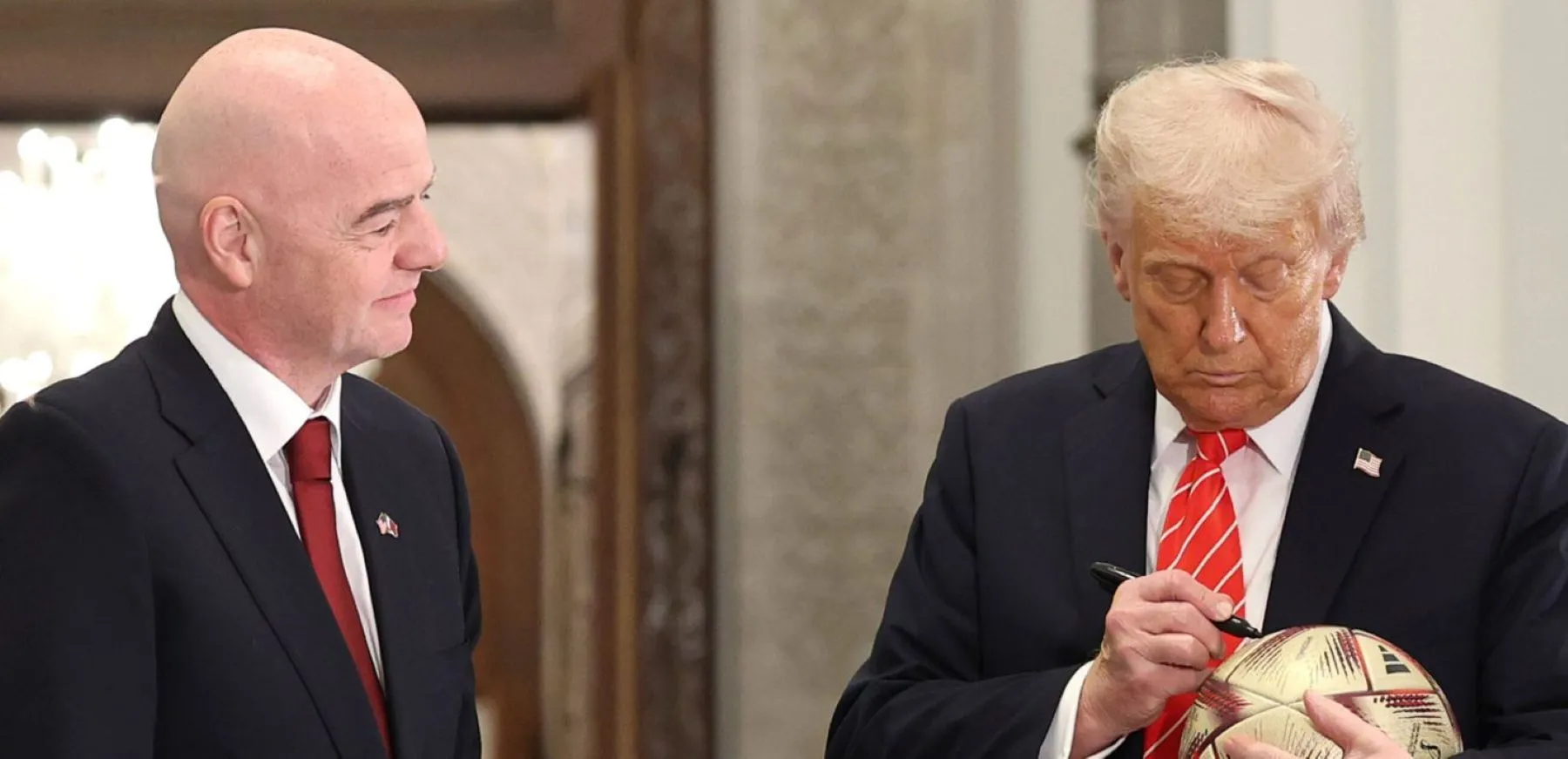
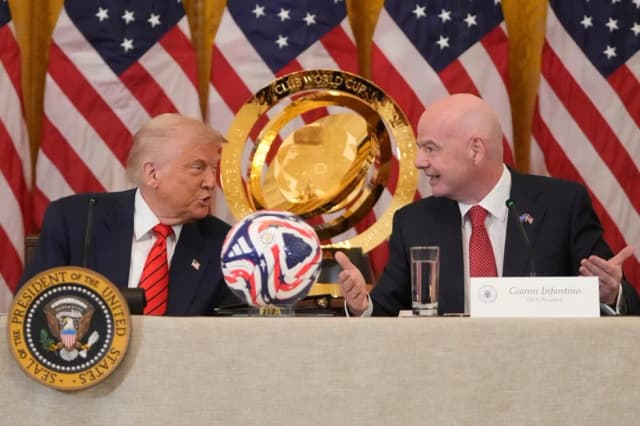
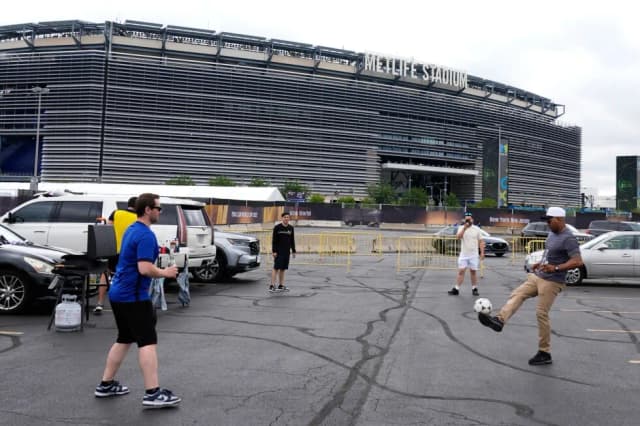
The 2026 FIFA World Cup was designed to showcase scale: 48 teams, 104 matches and a three-country hosting model spanning the United States, Canada and Mexico. But with the tournament now approaching, one of the sharpest arguments around it is no longer about ticket demand, stadium readiness or sporting favorites. It is about whether a competition sold as a unifying global event can stay politically neutral when the host environment is itself part of the story. Amnesty International’s new report argues that it cannot, and that the tournament now sits inside disputes over deportations, protest rights, travel restrictions and public-order tactics across North America.Amnesty International flags World Cup human rights risksdw.com·SecondaryA report released by human rights group Amnesty International this Monday warns that the World Cup to be hosted by the United States, Canada and Mexico this summer poses "significant risks and impacts for fans, players, journalists, workers and local communities alike.
The basic development is straightforward. Amnesty published a report on Monday warning that the World Cup could expose significant risks for fans, players, journalists, workers and local communities, with especially strong criticism directed at the United States, which is set to host 78 of the tournament’s 104 matches. The organization says the gap between FIFA’s public promise of a safe and inclusive event and current conditions on the ground has widened materially, particularly in the US, where the report points to mass deportations, arrests and the prospect of immigration enforcement being integrated into tournament security planning.Amnesty International flags World Cup human rights risksdw.com·SecondaryA report released by human rights group Amnesty International this Monday warns that the World Cup to be hosted by the United States, Canada and Mexico this summer poses "significant risks and impacts for fans, players, journalists, workers and local communities alike.
That claim matters because the World Cup is not a normal sporting week or even a typical international championship. It is a month-long movement of players, media, sponsors and supporters across borders and domestic jurisdictions, all under intense police, immigration and crowd-control oversight. When a rights organization says that environment may become more coercive rather than more open, it is making a structural argument, not only a political one. In Amnesty’s framing, the issue is not simply whether abuses might occur in isolated incidents, but whether the design of security and migration policy in host countries could shape who can attend, who can demonstrate, and who feels able to be visible in public during the event.Amnesty International flags World Cup human rights risksdw.com·SecondaryA report released by human rights group Amnesty International this Monday warns that the World Cup to be hosted by the United States, Canada and Mexico this summer poses "significant risks and impacts for fans, players, journalists, workers and local communities alike.
The United States is at the center of that concern for a simple reason: it is carrying most of the tournament load. Deutsche Welle reports that Amnesty’s study singles out the US as the main risk area because it hosts the vast majority of matches, while France 24 likewise says Amnesty views conditions in the US as the most alarming among the three host countries. The points cited are substantial rather than symbolic. The report, as described in both accounts, highlights deportations on a very large scale, aggressive ICE operations and the possibility that immigration authorities will form part of the World Cup security apparatus. That does not automatically mean ordinary tournament operations become repressive by definition. It does mean that immigration enforcement is no longer a background policy issue; it becomes part of the practical environment in which the World Cup will be staged.Amnesty International flags World Cup human rights risksdw.com·SecondaryA report released by human rights group Amnesty International this Monday warns that the World Cup to be hosted by the United States, Canada and Mexico this summer poses "significant risks and impacts for fans, players, journalists, workers and local communities alike.
Travel and access are another obvious flashpoint. Both reports say supporters from four qualifying countries face either full or partial US travel restrictions, and both note concerns from LGBTQ fan groups that visible attendance could carry added risk, especially for transgender supporters. Those concerns go directly to one of FIFA’s most repeated promises: that everyone connected to the tournament should be able to take part without fear or exclusion. If some ticket-holding supporters face legal barriers before they ever board a plane, while others decide not to travel because they do not trust the social or policing environment, then the tournament remains operational but no longer fully open in the way governing bodies prefer to advertise it.Amnesty International flags World Cup human rights risksdw.com·SecondaryA report released by human rights group Amnesty International this Monday warns that the World Cup to be hosted by the United States, Canada and Mexico this summer poses "significant risks and impacts for fans, players, journalists, workers and local communities alike.
The Mexico and Canada portions of the report are narrower in volume but still politically significant. Deutsche Welle says Amnesty criticized Mexico’s deployment of 100,000 security personnel, including military forces, in response to broader violence concerns, and also noted plans for a peaceful protest linked to the country’s large number of unresolved disappearance cases outside the opening match in Mexico City. In Canada, the same report says Amnesty warned that homeless residents could be pushed further to the margins in host cities such as Vancouver and Toronto, and argued that recent restrictions on peaceful assembly had already raised questions about how protest rights would be handled during major public events. Put together, that makes the report less a one-country indictment than a three-country warning with different emphases in each jurisdiction.Amnesty International flags World Cup human rights risksdw.com·SecondaryA report released by human rights group Amnesty International this Monday warns that the World Cup to be hosted by the United States, Canada and Mexico this summer poses "significant risks and impacts for fans, players, journalists, workers and local communities alike.
There is, however, a legitimate counterargument, and it should be taken seriously rather than waved away. Large international events do require extensive security coordination, immigration screening and crowd-management planning. Host governments are not wrong to think in terms of risk reduction when millions of visitors, heads of state, commercial partners and teams move through a live security environment over several weeks. Supporters of a tougher planning model would argue that the alternative to heavy preparation is not a more liberal tournament but a less controllable one, especially when some host cities already face organized crime pressures, terrorism concerns or high political polarization. The strongest version of that argument is not ideological. It is administrative: states are responsible for keeping order first, and rights protections must be delivered inside that reality, not outside it.Amnesty International flags World Cup human rights risksdw.com·SecondaryA report released by human rights group Amnesty International this Monday warns that the World Cup to be hosted by the United States, Canada and Mexico this summer poses "significant risks and impacts for fans, players, journalists, workers and local communities alike.
FIFA’s own position, as reflected in the cluster signals, is essentially an attempt to hold both sides of that equation. France 24 reports that the organization says it still intends to deliver a tournament where all participants feel safe, included and free to exercise their rights, while Deutsche Welle notes that FIFA’s statutes commit the governing body to respect internationally recognized human rights and to promote their protection. Those are serious commitments on paper. The challenge is that they only carry weight if translated into enforceable safeguards that survive contact with real host-country policy. Amnesty’s complaint is precisely that this translation remains too vague, and that published host-city plans have not adequately shown how fans or local communities would be protected if immigration raids, protest crackdowns or discriminatory entry barriers collide with tournament operations.Amnesty warns 2026 World Cup across North American risks becoming ‘stage for repression’france24.com·SecondaryAmnesty International warned on Monday that this summer’s World Cup in the United States, Canada and Mexico risks becoming a “stage for repression”, urging FIFA and host nations to protect rights. FIFA said it aims to ensure all participants feel safe, included and free to exercise their rights. Amnesty International warned this summer's football World Cup, spread across three North American countries, risks becoming a "stage for repression" in a report published Monday.
That tension is one reason the story has moved beyond activist advocacy and into mainstream tournament governance. FIFA has spent years trying to present human-rights due diligence as part of modern event management rather than an external moral add-on. But the closer the World Cup gets, the less room there is for broad language without operational detail. If host countries maintain current entry restrictions, if ICE plays a visible role in security, if protest zones are tightly controlled, or if visibly vulnerable groups conclude that attendance is not worth the risk, then the question will not be whether FIFA issued the right slogan. It will be whether it used its leverage early enough and specifically enough.Amnesty International flags World Cup human rights risksdw.com·SecondaryA report released by human rights group Amnesty International this Monday warns that the World Cup to be hosted by the United States, Canada and Mexico this summer poses "significant risks and impacts for fans, players, journalists, workers and local communities alike.
The report also lands in a tournament cycle already carrying unusual political strain. France 24 says FIFA earlier insisted the competition would proceed as scheduled with all teams taking part, even as uncertainty remains around Iran’s presence because of conflict in the Middle East. Deutsche Welle separately notes that Iranian and Haitian citizens face complete US entry bans, while Ivory Coast and Senegal face partial restrictions. In other words, the access issue is not hypothetical. It intersects with actual qualified or qualifying national communities and with an event structure built around cross-border travel. A World Cup can survive controversy; football has done that before. What is harder to manage is a World Cup in which access itself becomes visibly unequal from country to country and group to group.Amnesty International flags World Cup human rights risksdw.com·SecondaryA report released by human rights group Amnesty International this Monday warns that the World Cup to be hosted by the United States, Canada and Mexico this summer poses "significant risks and impacts for fans, players, journalists, workers and local communities alike.
Another reason this matters is financial credibility. France 24 reports that FIFA stands to earn roughly $11 billion from the tournament cycle. That number does not prove wrongdoing, but it does sharpen scrutiny. The larger the commercial upside, the weaker the defense that organizers are merely passive guests in host-country systems. Critics will argue that an organization expecting record revenue has both the incentive and the capacity to demand more precise protections for workers, journalists, fans and residents. Defenders will answer that FIFA is not a sovereign government and cannot rewrite immigration law or policing doctrine on its own. Both claims are true in part, which is why the real issue is leverage rather than abstract blame. The governing body does not control everything, but it controls enough that the absence of clear safeguards is now itself becoming a story.Amnesty International flags World Cup human rights risksdw.com·SecondaryA report released by human rights group Amnesty International this Monday warns that the World Cup to be hosted by the United States, Canada and Mexico this summer poses "significant risks and impacts for fans, players, journalists, workers and local communities alike.
For conservative or skeptical readers who distrust NGO framing, there is still a version of this story worth taking seriously. One need not accept every rhetorical flourish in Amnesty’s language to see that a global sports event hosted across three democracies can still run into hard questions about state power, public order and uneven access. Rights claims are often overstated in public debate, but security bureaucracies also have a habit of expanding their footprint when a major event arrives. The prudent view is neither that Amnesty must be right about every forecast nor that security planning automatically settles the matter. The prudent view is that broad powers, vague safeguards and politically charged enforcement environments create predictable friction, and friction is exactly what a World Cup organizer says it wants to minimize.Amnesty International flags World Cup human rights risksdw.com·SecondaryA report released by human rights group Amnesty International this Monday warns that the World Cup to be hosted by the United States, Canada and Mexico this summer poses "significant risks and impacts for fans, players, journalists, workers and local communities alike.
What happens next will determine whether this remains a warning story or becomes a tournament-defining one. If FIFA and the host countries publish more concrete protections for fan access, protest rights, media freedom and community impacts, the criticism may remain sharp but manageable. If instead the current pattern holds—strong inclusion language, uneven legal access and limited public detail on how conflicts will be handled—the event may begin before the first ball is kicked under a cloud of mistrust that no opening ceremony can disguise. That would not make the World Cup impossible. It would make it a referendum on whether football’s biggest stage can coexist with a security-first political climate without simply absorbing its logic.Amnesty International flags World Cup human rights risksdw.com·SecondaryA report released by human rights group Amnesty International this Monday warns that the World Cup to be hosted by the United States, Canada and Mexico this summer poses "significant risks and impacts for fans, players, journalists, workers and local communities alike.
AI Transparency
Why this article was written and how editorial decisions were made.
Why This Topic
This is the most newsworthy distinct cluster on the board because it joins a globally watched sporting event with live disputes over migration enforcement, protest rights, fan access and FIFA governance across three host countries. It is not a duplicate of the recently published Iran/market/security stories: the center of gravity here is tournament administration and civil-liberties risk around the World Cup itself. The combination of major public interest, immediate time sensitivity and clear institutional conflict makes it stronger than narrower crime or market updates.
Source Selection
The draft limits numbered factual claims to the two cluster signals so the citation map stays verifiable end-to-end. Deutsche Welle provides the broadest factual detail on host-country-specific concerns in the US, Mexico and Canada, while France 24 adds FIFA's current response, the published safety/inclusion language and the financial and geopolitical context around the tournament cycle. Together they are timely, mainstream and sufficiently overlapping to support a high-confidence synthesis without stretching beyond the evidentiary record.
Editorial Decisions
Reported in a neutral, descriptive register while giving Amnesty's critique, host-state security logic and FIFA's official posture comparable weight. The piece avoids activist phrasing in the headline, foregrounds concrete governance questions over moral grandstanding, and explicitly tests institutional promises against operational realities rather than assuming either side is wholly correct.
Reader Ratings
About the Author
Sources
- 1.dw.comSecondary
- 2.france24.comSecondary
Editorial Reviews
1 approved · 0 rejectedPrevious Draft Feedback (2)
• depth_and_context scored 4/3 minimum: The article provides good background on the World Cup's scale and the Amnesty report's concerns, explaining why this tournament is different from typical sporting events. However, it could benefit from exploring the historical context of human rights concerns at previous World Cups to further illustrate the significance of the current situation. • perspective_diversity scored 4/3 minimum: The article presents multiple perspectives, including Amnesty's concerns, the argument for robust security measures, and FIFA's position. It acknowledges the counterargument regarding security needs and attempts to fairly represent it, although further exploration of host country government perspectives would strengthen this dimension. • language_and_clarity scored 4/3 minimum: The writing is generally clear and precise, although it occasionally leans towards slightly convoluted phrasing. While the article avoids overtly loaded labels, it could benefit from more consistently explaining the specific policies and actions that justify concerns about immigration enforcement and protest restrictions, rather than relying on implications. Warnings: • [article_quality] narrative_structure scored 3 (borderline): The article has a clear structure, introducing the core issue and then delving into specifics. However, the transitions between sections could be smoother, and the nut graf could be more explicitly stated earlier to immediately convey the central argument. • [article_quality] analytical_value scored 3 (borderline): The article moves beyond simply recounting events and offers some analysis of the implications of the situation, particularly regarding FIFA's leverage and the potential impact on the tournament's image. However, it could delve deeper into the power dynamics between FIFA, host countries, and local communities to provide a more nuanced analysis. • [article_quality] filler_and_redundancy scored 2 (borderline): The article suffers from significant redundancy due to the constant citation of Deutsche Welle and France 24 reports, often repeating the same information. Remove the citation markers and rephrase sentences to avoid repetitive phrasing and streamline the narrative; focus on conveying the information directly rather than constantly referencing external sources. • [image_relevance] Image relevance check failed: Service request failed. Status: 502 (Bad Gateway)
1 gate errors: • [image_relevance] Image relevance scored 2/3 minimum: While the image features World Cup mascots, it lacks direct connection to the article's focus on human rights concerns and policy debates. A photo depicting a relevant protest or policy discussion would be more impactful.
Discussion (0)
No comments yet.