NJ Transit sets $150 World Cup rail fare as New Jersey and FIFA fight over who pays the bill
New Jersey confirmed a $150 round-trip rail fare for World Cup fans traveling to MetLife Stadium, arguing commuters should not subsidize the tournament while FIFA insists host-city agreements already settled transportation obligations.[1][2][3]
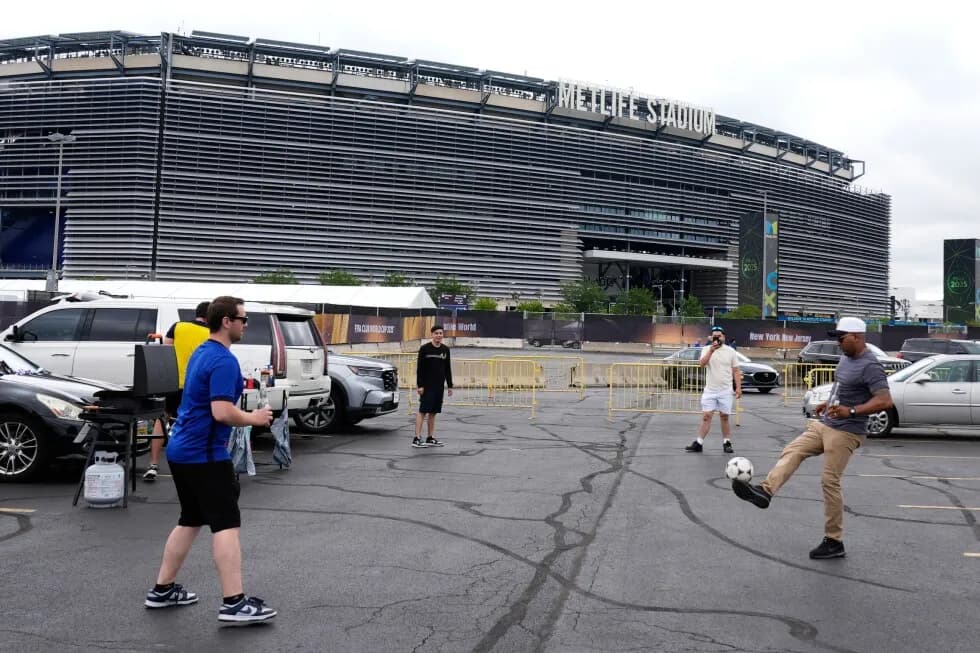
New Jersey has confirmed that fans traveling from Manhattan to MetLife Stadium for this summer’s World Cup matches will pay $150 for a round-trip rail ticket, turning what is ordinarily a short commuter hop into one of the most expensive pieces of the match-day experience. The fare applies to special train-and-shuttle service linking New York Penn Station to East Rutherford, where the stadium is scheduled to host eight matches, including the final on July 19. For a tournament that was sold as a showcase of American scale and convenience, the transport plan has quickly become a political fight over who should absorb the costs of hosting a global event.
The price jump is large enough to stand on its own as a news event. The usual round-trip fare for the roughly 15-minute, nine-mile ride is about $12.90, which means the World Cup rate is nearly twelve times higher. NJ Transit and state officials say the increase reflects exceptional operating demands rather than simple opportunism. They expect around 40,000 fans per match to use mass transit because ordinary parking at the stadium will largely disappear on match days, leaving rail, shuttle buses and managed rideshare options as the main access routes.
Officials in Trenton and at NJ Transit are framing the surcharge as a cost-recovery measure tied to a deal they say left the public sector carrying too much of the burden. Governor Mikie Sherrill has argued that New Jersey should not force daily commuters and taxpayers to underwrite a one-month tournament for visitors and premium ticket holders. NJ Transit chief Kris Kolluri has used the same line in more technocratic terms, saying the agency expects to spend about $62 million moving fans during the tournament while outside grants have covered only about $14 million, leaving a large funding gap that the state does not want to socialize across its ordinary ridership base.New Jersey announces $150 public transit tickets for travel to World Cup gameschannelnewsasia.com·SecondaryFILE PHOTO: Soccer Football - Club World Cup - Previews - MetLife Stadium, East Rutherford, New Jersey, U.S. - June 13, 2025 General view of a member of staff with a giant ball on a pitch outside the stadium ahead of the Club World Cup REUTERS/Susana Vera/File Photo NEWARK, New Jersey, April 17 : Round-trip public transit tickets to World Cup games in New Jersey will cost $150, up from less than $15 for the same route on a typical day, FIFA and NJ Transit officials said on Friday.
That argument is politically legible, especially in a state where the transit system is chronically short of money and routinely under pressure over reliability, crowding and capital needs. Sherrill has said she inherited an arrangement in which FIFA contributed nothing directly for transportation while NJ Transit was left exposed to a bill of roughly $48 million. Her public line is simple: if FIFA is positioned to collect billions from the tournament, it should cover more of the hosting bill rather than ask a cash-strapped commuter rail system to carry it. In neutral terms, the state is making a taxpayer-protection case as much as a transport-management case.
FIFA rejects that framing and says the state is rewriting a bargain that was negotiated years ago. The governing body has pointed to host-city agreements signed in 2018 that contemplated free transportation for fans to matches, and it says it spent years working with host cities on mobility plans while also pushing for federal support to improve transit service. FIFA’s answer, in effect, is that transportation was never supposed to become a late-stage billing dispute once the tournament was close enough for demand to be real. It has also noted that other major events at MetLife have not required the organizer to pay separately for fan transportation, an argument meant to cast New Jersey’s posture as unusually confrontational.New Jersey announces $150 public transit tickets for travel to World Cup gameschannelnewsasia.com·SecondaryFILE PHOTO: Soccer Football - Club World Cup - Previews - MetLife Stadium, East Rutherford, New Jersey, U.S. - June 13, 2025 General view of a member of staff with a giant ball on a pitch outside the stadium ahead of the Club World Cup REUTERS/Susana Vera/File Photo NEWARK, New Jersey, April 17 : Round-trip public transit tickets to World Cup games in New Jersey will cost $150, up from less than $15 for the same route on a typical day, FIFA and NJ Transit officials said on Friday.
Critics from outside New Jersey’s government have seized on the optics as well. New York Governor Kathy Hochul said earlier this week that charging more than $100 for such a short ride sounded excessive, a complaint that captured the basic sticker shock even before the final plan was formally confirmed. News coverage in New York has also focused on the operational restrictions attached to the pricing model: tickets will be non-transferable and non-refundable, available only to World Cup ticket holders, and tied to tightly controlled travel windows designed to funnel large crowds in and out without repeating the notorious post-Super Bowl congestion seen at the same venue in 2014. That raises a practical question beyond the politics: whether a premium price paired with a highly managed system will feel like a necessary security operation or like scarcity pricing wrapped in public-interest language.
Supporters of the surcharge counter that the alternatives are not much cheaper and that the region’s physical constraints leave no painless solution. Shuttle buses from Manhattan are set at $80 round trip, premium parking at the nearby American Dream complex is being marketed around $225, and large-scale on-site parking will not be available because significant stadium-adjacent space is being reassigned for a fan village, shuttle staging, operations and FIFA uses. From that perspective, New Jersey is pricing a scarce logistics service in line with the demands of a one-off mega-event rather than a normal commute.
Still, comparisons with other host cities undercut the idea that such prices are unavoidable. AP reported that Los Angeles, Atlanta, Houston, Philadelphia and Kansas City have either kept transit fares at ordinary levels or relied on far cheaper special-event options, aided in part by roughly $100 million in federal transit grants distributed across host cities. Boston is also charging steep special-event prices, with $95 express buses and $80 commuter-rail trips to Gillette Stadium, so New Jersey is not entirely alone. But MetLife’s pricing remains especially jarring because the ride from Manhattan is short, familiar and ordinarily cheap, making the increase more visible to the public than it would be for a distant suburban venue.New Jersey announces $150 public transit tickets for travel to World Cup gameschannelnewsasia.com·SecondaryFILE PHOTO: Soccer Football - Club World Cup - Previews - MetLife Stadium, East Rutherford, New Jersey, U.S. - June 13, 2025 General view of a member of staff with a giant ball on a pitch outside the stadium ahead of the Club World Cup REUTERS/Susana Vera/File Photo NEWARK, New Jersey, April 17 : Round-trip public transit tickets to World Cup games in New Jersey will cost $150, up from less than $15 for the same route on a typical day, FIFA and NJ Transit officials said on Friday.
What happens next matters beyond one tournament. The ticket rules say sales will begin on May 13 and will be limited to World Cup ticket holders, which gives officials only a narrow window to prove the system can handle demand without chaos. NJ Transit also plans significant service diversions around match windows, including restrictions at Penn Station that could push regular riders onto PATH or bus alternatives for parts of the day, so the burden will not fall only on visiting fans. If the plan works, New Jersey will argue that disciplined pricing and controlled flows avoided a repeat of earlier Meadowlands transit failures. If it misfires, critics will say the region managed to combine premium pricing, commuter disruption and public-private finger-pointing in the middle of the world’s biggest sporting event.
The deeper issue is the one global event hosts increasingly confront: whether the prestige and economic activity promised by mega-events justify bespoke public spending once the invoices arrive. New Jersey’s answer, at least for now, is that prestige should not come with an open-ended tab for everyday riders. FIFA’s answer is that the host knew the obligations when it signed up and that mobility planning was part of the package from the start. Neither side is likely to concede quickly. For fans, the immediate takeaway is less philosophical: getting into the stadium may now cost enough to feel like a second ticket.
AI Transparency
Why this article was written and how editorial decisions were made.
Why This Topic
This cluster is the strongest distinct item on the board because it sits at the intersection of sport, public infrastructure, state finance and consumer impact. The fare decision is fresh, highly legible, and consequential beyond sports fans because it affects commuters, host-city operations and the broader argument over who pays when global events come to town. It also offers a natural conflict structure: New Jersey versus FIFA, taxpayer protection versus fan access, and event prestige versus public cost discipline.
Source Selection
The attached source set is sufficient and complementary. AP provides the fullest policy and comparison framing, including the ordinary fare, the projected transit usage, the governor’s position, the cost estimates, and host-city comparisons. Reuters/CNA adds the ticket-sale mechanics, the New York/New Jersey host-committee framing, and the limited parking context. Using the cluster signals keeps numbered citations grounded in the actual gate-visible material while allowing attributed outside context only where needed.
Editorial Decisions
Straight news analysis. Keep the tone descriptive and skeptical of all institutional actors, including FIFA and state officials. Give equal space to New Jersey’s taxpayer-protection rationale and to the criticism that the fare looks excessive for a short ride. Avoid activist framing; emphasize logistics, public finance, commuter impact and precedent for future mega-events.
Reader Ratings
About the Author
Sources
- 1.channelnewsasia.comSecondary
- 2.aljazeera.comSecondary
- 3.apnews.comSecondary
Editorial Reviews
1 approved · 0 rejectedPrevious Draft Feedback (1)
• depth_and_context scored 4/3 minimum: The article does a good job establishing the immediate conflict (the price hike) and providing necessary context regarding the operational demands and the history of the negotiations. To improve, it could add more background on the general state of NJ Transit's finances beyond just the World Cup, perhaps citing a specific, recent budget shortfall to ground the 'chronically short of money' claim. • narrative_structure scored 4/3 minimum: The structure is strong, starting with a clear, impactful lede and building logically through the conflicting arguments (State vs. FIFA). The conclusion effectively synthesizes the immediate impact with the larger, unresolved tension. It maintains a clear, journalistic flow. • perspective_diversity scored 4/3 minimum: The article successfully presents multiple viewpoints: NJ state officials (cost-recovery), FIFA (contractual obligation), critics (sticker shock/alternatives), and the general public/commuter. It could strengthen this by including a direct quote or statement from a representative of the general commuter base who is *not* directly involved in the political dispute. • analytical_value scored 5/3 minimum: The analysis is excellent, moving beyond mere reporting to explore the underlying tensions—the clash between mega-event economics and public infrastructure funding. The discussion of 'scarcity pricing' versus 'necessary security operation' is particularly insightful and elevates the piece significantly. • filler_and_redundancy scored 5/2 minimum: The writing is dense with information but highly efficient. It avoids padding by ensuring every paragraph advances the core conflict or provides necessary supporting detail. The length feels justified by the complexity of the issue. • language_and_clarity scored 4/3 minimum: The writing is crisp, precise, and highly engaging, maintaining a professional, objective tone. The language is strong, though the repeated use of the phrase 'political fight' or 'political dispute' could be varied with more nuanced verbs to maintain peak engagement.



Discussion (0)
No comments yet.